
The Cairo recycler did not begin this project by asking how to pellet every tonne of waste paper it collected. High-grade OCC and clean paper still had value in conventional paper recycling, and turning those materials into fuel would often destroy more value than it created. The real opportunity was the lower-grade paper fraction that remained after sorting: contaminated cardboard, short-fiber paper rejects, damaged packaging paper, and other cellulose-rich material that could not be economically returned to papermaking.
The Cairo recycler did not begin this project by asking how to pellet every tonne of waste paper it collected. High-grade OCC and clean paper still had value in conventional paper recycling, and turning those materials into fuel would often destroy more value than it created. The real opportunity was the lower-grade paper fraction that remained after sorting: contaminated cardboard, short-fiber paper rejects, damaged packaging paper, and other cellulose-rich material that could not be economically returned to papermaking.
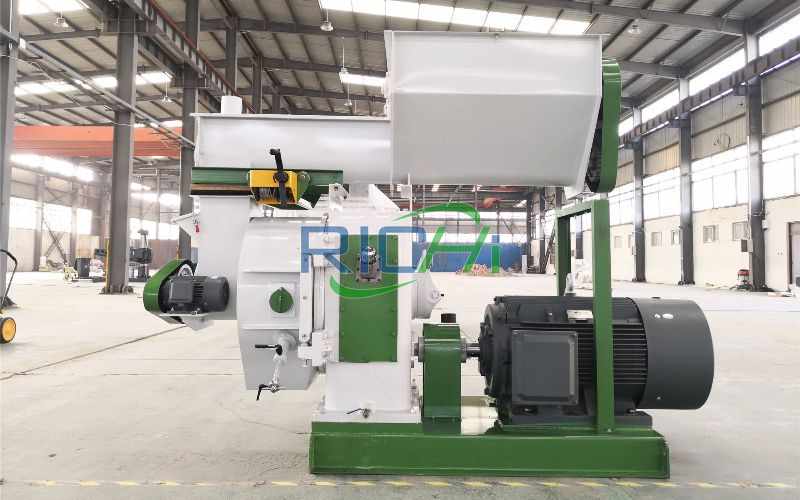
That residual stream became the basis for a new densified fuel product. The company installed two MZLH420 paper pellet making machines in Egypt inside an existing waste-processing facility near Cairo. Each 90 kW ring-die pelletizer is used as a standalone production unit after sorting, shredding, fine size reduction, moisture adjustment, and blending. The objective is not to produce a decorative “recycled paper pellet,” but a controlled paper-derived fuel for industrial users that are technically and legally able to burn alternative solid fuels.
Name:
Paper Cardboard Pelletizer
Country:
Egypt
Date:
2025
Capacity:
2.0–2.4 T/H
Model:
2*MZLH420
Main Motor Power:
90 kW
Raw Materials:
cardboard, packaging paper
Pellet diameter:
8 mm
This distinction determined the whole project.
The customer receives cardboard, commercial packaging paper, office paper, printing waste, paper sacks, damaged cartons, and mixed fiber residues from logistics centers, retailers, workshops, warehouses, and industrial customers in the Greater Cairo area.
The first step is material recovery rather than pelletizing.
Clean corrugated cardboard, suitable office paper, and other recyclable grades are separated and sold back into Egypt’s established paper-recycling industry. Only the fiber fraction that has insufficient recycling value or cannot meet the paper mill’s raw-material specification is evaluated for fuel production.
This makes the business model more credible than collecting good-quality cardboard specifically to burn it. Egypt already has commercial mills processing substantial volumes of recovered paper, so a fuel producer has to compete with that recycling market for clean fibers.
Paper waste looks simple until it reaches an industrial sorting floor.
A cardboard box may still contain plastic tape, stretch film, staples, metal clips, laminated layers, food contamination, wax coatings, labels, adhesives, or moisture. Some packaging papers also contain coatings or additives that make them inappropriate for the customer’s intended fuel specification.
The plant therefore classifies incoming material before shredding.
Plastics, metals, glass, stones, excessive dirt, and other foreign matter are removed. Material with questionable chemical contamination is rejected rather than mixed into the pellet feedstock.
This is especially important because the finished pellets are destined for thermal use. A machine can physically compress contaminated paper, but successful pellet formation does not demonstrate that the product is environmentally suitable for combustion.
The customer deliberately selected two identical medium-capacity units.
Its waste supply varies by week, and different paper-derived blends do not always pellet at exactly the same rate. Two independent pelletizers allow one machine to remain in production while the other is undergoing die inspection, roller adjustment, or scheduled service.
The arrangement also gives the customer more flexibility during lower-volume periods. It can run one unit instead of operating a much larger paper pellet mill substantially below design load.
| Project Parameter | Configuration |
|---|---|
| Equipment | Paper pellet making machine |
| Model | MZLH420 |
| Quantity | 2 units |
| Main Motor Power | 90 kW per unit |
| Arch-Breaking Feeder | 3 kW per unit |
| Forced Feeder | 1.5 kW per unit |
| Ring Die Inner Diameter | 420 mm |
| Project Pellet Diameter | Mainly 8 mm |
| Reference Capacity | Approximately 1.0–1.2 T/H per unit |
| Combined Reference Output | Approximately 2.0–2.4 T/H under suitable material conditions |
The capacity figures are treated as project references rather than permanent guarantees. Paper bulk density, fiber length, residual coating, moisture, blend composition, shredding quality, and die specification all influence real output.
Cardboard strips 30 or 50 mm long are not an ideal direct feed for a ring-die pellet mill.
Long lightweight fibers can bridge above the feeder, wrap around moving components, and enter the compression zone irregularly. Consistent pelletizing therefore requires more controlled size reduction.
After primary shredding, the accepted fiber material passes through a secondary crushing stage so that the pelletizer receives a much more uniform fibrous fraction.
The exact target size depends on the material, but the objective is to eliminate large folded cardboard pieces and long strips before they reach the forced feeder.
This step is one reason the customer could integrate the new pelletizers into its existing recycling facility: shredding and secondary size reduction were already available upstream.
Waste paper can arrive unusually dry, moderately humid, or locally wet depending on storage and collection conditions.
Very wet paper is unsuitable for stable pellet production and storage. Extremely dry material can also create excessive dust and may require process adjustment to obtain satisfactory pellet formation.
The plant therefore checks moisture after shredding and blending rather than assuming that all recovered paper is automatically ready for pelletizing.
Where drying is necessary, material is conditioned before entering the pelletizer. Where a dry blend needs a small moisture correction for stable compaction, that adjustment is made in a controlled way.
The final operating range is developed from actual pellet strength, machine load, throughput, and storage behavior instead of using one universal moisture percentage for every paper grade.
The MZLH420 is a ring-die pellet machine, but the die specification cannot simply be copied from a wood pellet project.
Recovered paper contains processed cellulose fibers, fillers, coatings, adhesives, and other components that change friction and compaction behavior.
Compression ratio therefore has to be selected from the actual blend.
If the die is too restrictive, power demand increases and output falls. If compression is insufficient, pellets can leave the die with poor mechanical strength and produce excessive fines during cooling and transport.
The Cairo customer developed the final die configuration through material testing rather than selecting it only from pellet diameter.
The facility tested several pellet diameters within the machine’s available range.
For this industrial fuel application, approximately 8 mm provided a useful compromise between throughput, mechanical strength, handling, and compatibility with the receiving customer’s fuel-feed system.
Smaller pellets are possible, but they are not automatically better. Reducing die-hole diameter generally increases resistance and can reduce capacity.
Larger pellets can also be produced where the industrial combustion system accepts them.
The final dimension is therefore selected according to the customer using the fuel rather than a generic claim that 6–10 mm paper pellets are suitable for every boiler.
This is an important commercial boundary.
Recovered paper is predominantly cellulose-based, but printing inks, mineral fillers, coatings, adhesives, and other non-fiber constituents may be present. Paper-derived fuel therefore should not automatically be marketed as equivalent to clean wood pellets.
The Egyptian customer treats it as a processed alternative solid fuel with specifications based on the actual material.
Representative batches can be evaluated for moisture, ash, calorific value, chlorine, sulfur, and other parameters relevant to the intended thermal user.
Only customers whose combustion and emissions-control systems are compatible with the fuel are targeted.
Egypt already has a developing market for alternative fuels in energy-intensive industries, particularly where facilities are looking to substitute part of their conventional fossil-fuel consumption with properly processed waste-derived fuels.
This does not mean any factory can simply purchase paper pellets and burn them.
The receiving industrial user must operate within applicable environmental requirements and evaluate whether the fuel specification is suitable for its combustion equipment and permits.
For this reason, the Cairo processor works business-to-business rather than trying to sell bags of paper pellets indiscriminately as household heating fuel.
That market positioning is more realistic for Egypt, where industrial thermal applications provide a clearer route for controlled waste-derived fuels.
The project does not end at the pellet mill discharge.
Fresh paper pellets are warm after compression. They also contain fines generated during pellet formation and handling.
The customer therefore cools the pellets before final screening and storage.
Cooling allows the compacted material to stabilize before conveying and prevents warm product from being sealed immediately into storage or bags.
Screening then removes loose fines. Where appropriate, clean paper fines can be returned to the feed system rather than discarded.
This produces a more consistent final product and reduces dust during loading into the industrial customer’s fuel-handling system.
The company initially considered packaging the product primarily in small bags, but its industrial buyers usually require larger-volume delivery.
Finished pellets are therefore stored according to the customer’s dispatch arrangement and can be supplied in larger bags or bulk-compatible formats where practical.
This reduces unnecessary packaging cost for a commodity industrial fuel.
The advantage of pelletizing is mainly physical: loose shredded paper is extremely bulky, difficult to meter, and expensive to transport relative to its mass. Densification makes storage and controlled feeding much more practical.
Paper-based materials can have useful calorific value, but it is inappropriate to assign every recovered-paper pellet one permanent heating value.
Clean corrugated cardboard, heavily printed paper, mineral-filled paper, and composite packaging residues can differ substantially in ash and combustible content.
The plant therefore samples representative production rather than advertising one universal energy figure.
This also helps the processor decide which incoming paper grades should remain in the fuel stream and which should be rejected or routed elsewhere.
The biggest improvement was not simply combined nameplate capacity.
Before pelletizing, low-grade paper residues occupied large storage volume and were difficult to sell consistently. After controlled preparation and densification, the company could offer an industrial fuel with much more predictable dimensions and bulk-handling characteristics.
Two machines also changed maintenance planning.
The plant can schedule ring-die or roller work on one MZLH420 while keeping the second unit available for priority production. During lower-demand periods, one unit can be shut down entirely.
This operating flexibility was more valuable to the recycler than installing one much larger machine solely to achieve a higher maximum hourly figure.
Paper itself is relatively soft, but recycled paper feedstock is not pure cellulose.
Mineral fillers, fine grit, residual staples, and other contaminants can accelerate wear. Abrasive contamination also affects die holes and roller surfaces over time.
The customer therefore maintains magnetic separation and feedstock inspection upstream of the pelletizers.
Ring die and roller condition are monitored according to actual production rather than replaced after one predetermined number of operating hours.
A change in motor amperage, throughput, pellet strength, or fines level can provide an early indication that the compression system needs inspection.
The two pellet machines were exported from Qingdao Port in China to Egypt.
For the Cairo-area project, Alexandria was selected as the maritime entry point, followed by inland transport to the customer's recycling facility.
RICHI supplied machine dimensions, electrical information, foundation requirements, feeder and discharge interface data, and wear-part recommendations before shipment so the customer could prepare the installation area in advance.
The pelletizers were positioned side by side but with sufficient maintenance clearance to remove ring dies and service the forced-feeding systems independently.
“We learned quickly that the important part is not putting every type of paper into the pellet mill. Clean cardboard is still worth separating for recycling. Our fuel product comes from the lower-grade fiber fraction. Once we improved sorting, secondary shredding, and moisture control, the two pelletizers became much more stable. The biggest benefit is that the material now has a form an industrial customer can actually store and feed consistently.”
The production team also stopped evaluating success only by tonnes per hour.
Yield of acceptable pellets, fines recirculation, electricity per tonne, wear, rejected contamination, and final fuel analysis are now included in the operating records.
For another recycler, the first question should be whether the material is genuinely a low-value residual fiber stream. If clean OCC has a stronger recycling market, converting it into fuel may not be the best use.
The second question is whether a stable industrial buyer exists. The combustion system must be suitable for the actual paper-derived fuel, not merely for wood pellets.
The third question is whether enough material remains after sorting to keep the pelletizer reasonably utilized. Gross collected paper volume can be misleading if a large share is sold into higher-value recycling channels.
Only after these three points are clear does machine capacity become the main selection issue.
This paper pellet making machine in Egypt project uses selected residual paper fiber for controlled densification into an industrial alternative fuel.
The Cairo recycler separates marketable paper grades first and uses two MZLH420 machines for a selected lower-grade cellulose-rich fraction that has been sorted, shredded, further reduced in size, and conditioned for pelletizing. Each unit uses a 90 kW main motor and has a reference production range around 1.0–1.2 T/H under suitable feedstock conditions.
The finished 8 mm pellets are then cooled, screened, analyzed, and supplied only to appropriate industrial thermal users. The machine solves the densification problem; sorting determines feedstock quality, magnetic separation protects downstream equipment, fuel analysis defines the market, and the receiving combustion plant determines whether the product can actually be used.
For another Egyptian paper recycling project, RICHI Machinery would first evaluate recovered-paper composition, percentage still suitable for conventional recycling, moisture, contaminants, required secondary shredding, available tonnes per day, desired pellet diameter, target industrial fuel specification, electrical supply, cooling and screening equipment, storage arrangement, and the end user’s combustion requirements before confirming the pelletizer configuration.
That approach gives a paper pellet project a real commercial foundation: use the highest-value recycling route first, then densify the residual paper fraction only where a technically suitable fuel market exists.
Having the right mix of reliable, high-quality pellet machine and pelletizing systems and expert support is essential to your success. Watch how our end-to-end feed pellet plant solutions have helped our customers optimize their performance.
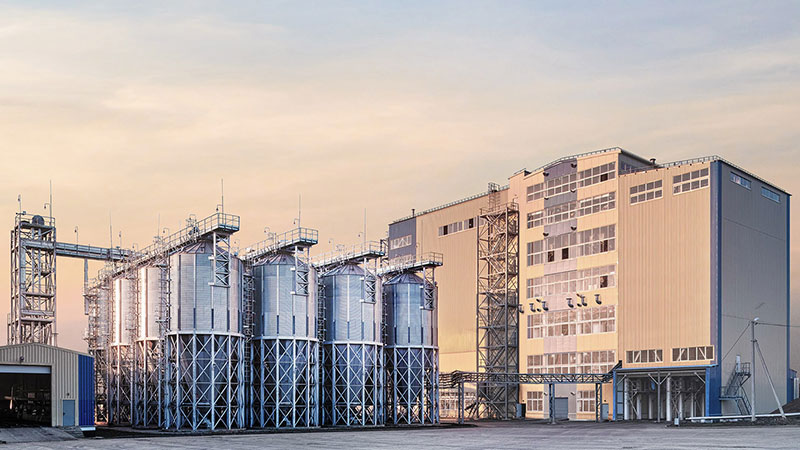
Our customized and future-proofed turnkey pellet plant solutions is designed with you at the core. From vision to reality and beyond, our team stays connected with yours. Giving you peace-of-mind with an expert at your side.
At RICHI, we go beyond project completion. With RICHI Servicee, we’re your dedicated partners in success. Count on us for expert guidance, minimal downtime, and optimized productivity. Choose RICHI for unmatched service and support.
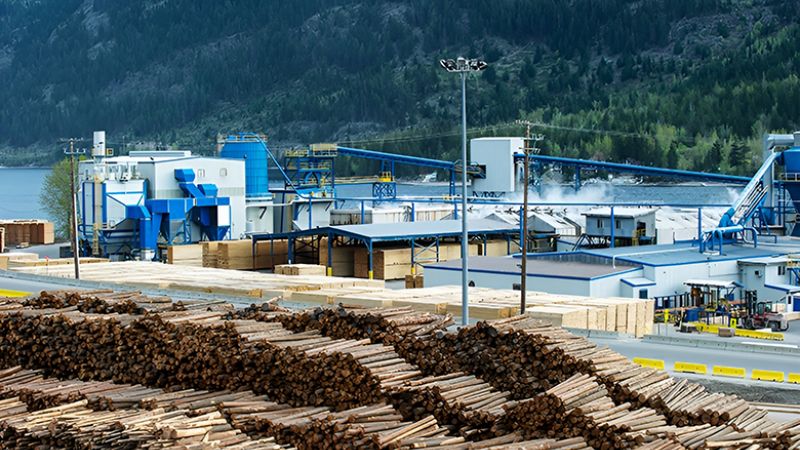


Meet global product demands and quality standards with industry-leading pellet plant design, engineering, equipment, and construction services for pellet processors.


Your Partner Beyond Project Completion
2000+ cases
RICHI is the leading designer, manufacturer and builder of pellet plants in the world, completing over 2000 projects in 140 countries across 6 continents.
Read More
Increase plant productivity, profitability, and safety by integrating high quality equipment into your pellet production line. Over the years, RICHI has become China's top pellet equipment manufacturer. At the same time, RICHI has established valuable partnerships with the world's leading component and raw material manufacturers to bring you the best there is in technology, automation, and efficiency in pelleting plant machinery.

For nearly 30 years, RICHI has been providing best-in-class pellet plant equipment and services to clients across a variety of industries, sizes, and needs. We pride ourselves on the knowledge and skill that each team member possesses – from our technical sales team to our process design engineers. You can count on RICHI Machinery to take your operation to the next level of innovation, quality, and success.
Need help with your pellet manufacturing plant project? Contact us today.
ANIMAL FEED
BIOMASS
WOOD
ORGANIC FERTILIZER
AQUA FEED
CAT LITTER
MUNICIPAL WASTE RECYCLING
SPECIAL PELLET PRODUCTION
RICHI Machinery continues to deliver world class pellet mill equipment, pellet plant engineering and project solutions that add value to our customers in the animal feed, wood waste, agriculture waste, organic fertilizer, cat litter and special pellet products industries. Throughout the years, we RICHI Machinery have built strong brand, becoming industry-leading pellet machine manufacturer. We value integrity, promise quality, and prioritize your success.
Learn MoreWith our expert team, we precisely implement your process engineering requirements in pellet mill and pelletizing plant systems. No matter which industry you’re in – we understand your needs and deliver solutions that meet the highest standards.
At RICHI, quality comes first. Our pellet making machine and related pellet line equipment undergo rigorous quality controls to ensure they meet the highest standards. Rely on products that are durable, safe, and efficient.
With decades of experience in pellet machine and pellet production line production, we have earned a reputation as a trusted partner in various industries. Our expertise allows us to cover a wide range of applications.
Not only do we offer premium pelleting equipment, but we are also experts at designing, building, installing, and maintaining facilities from the ground up. Our expertise is within pellt plant process design, discovering the most efficient, productive, and profitable way to handle your materials in an end-to-end cycle.
○ RICHI MACHINERY
Keeping in touch with us is an effective way to solve all your problems. If you have any needs or questions, please leave your contact information, then RICHI technical consultants will send design, quotation, videos to your mailbox. You can also contact us directly via WhatsApp: +86 13838389622
Copyright©2015-2026 by HENAN RICHI MACHINERY CO., LTD. All rights reserved.