
The Jakarta recycler did not start this project by asking how many tons of paper pellets it could produce. The first question was whether a waste-paper business that already knew how to collect, sort and shred fiber could move into a higher-value pet product without building an entirely new factory. Instead of selling all recovered paper as low-value secondary fiber, the company wanted to reserve its cleaner paper fractions for an absorbent pellet product aimed at Indonesia’s urban pet market.
The Jakarta recycler did not start this project by asking how many tons of paper pellets it could produce. The first question was whether a waste-paper business that already knew how to collect, sort and shred fiber could move into a higher-value pet product without building an entirely new factory. Instead of selling all recovered paper as low-value secondary fiber, the company wanted to reserve its cleaner paper fractions for an absorbent pellet product aimed at Indonesia’s urban pet market.
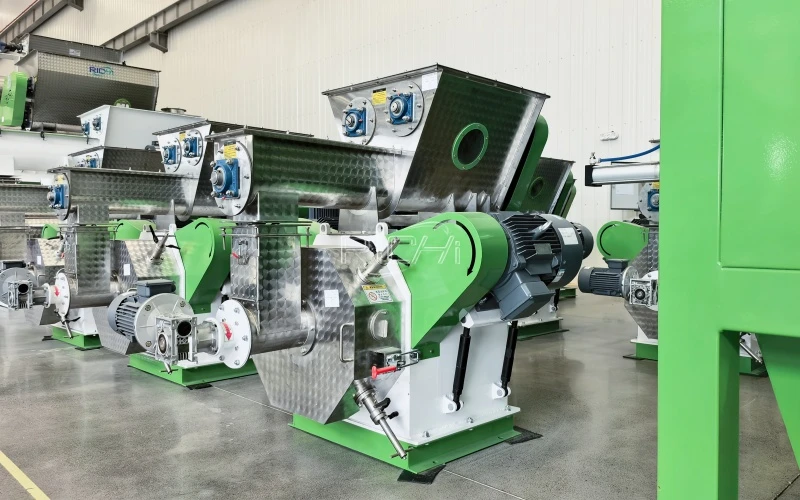
That decision led to the purchase of one MZLH350 paper pellet maker in Indonesia. The machine was added after the company’s existing sorting and shredding equipment and was configured to produce approximately 5–6 mm non-clumping paper litter pellets. With a rated output of about 0.3–0.5 T/H for suitable paper feedstock, the single-machine project gave the customer enough capacity to test commercial sales while avoiding the cost of a complete new production line.
Name:
Paper Pelletizer
Country:
Indonesia
Date:
2026
Capacity:
0.3–0.5 T/H
Model:
MZLH350
Main Motor Power:
37 kW
application:
recycled-paper cat litter
Pellet diameter:
5–6 mm
The customer operates a medium-sized paper recycling business serving commercial areas around Greater Jakarta. Its normal incoming material includes corrugated cartons from warehouses, rejected packaging from distribution centers, office paper and paper trim from printing and converting businesses.
Most of this material had previously been baled or sold onward as recovered fiber. Management began looking for another outlet for the cleaner fraction because conventional recovered-paper pricing did not always reward additional sorting effort.
Pet litter offered a different business model.
Instead of competing only on the value of waste paper per tonne, the company could manufacture a finished consumer product from selected fiber. The project was deliberately positioned around basic absorbent paper litter rather than a highly formulated clumping product, which would require additional ingredients and more complicated performance development.
This gave the paper pellet maker in Indonesia one clearly defined job: convert prepared recycled-paper fiber into durable, porous litter pellets that could be cooled, screened and packed for domestic pet-product distribution.
The original plan considered two machines, but the keyword and project scope are for one paper pellet maker, so the equipment arrangement was sized around a single MZLH350.
This also makes more commercial sense for the customer’s entry strategy.
The company was not trying to process every tonne of paper arriving at the recycling facility. Only selected clean fiber was suitable for the new product, and initial litter demand was still being developed through pet stores, distributors and online channels.
A 0.3–0.5 T/H machine can already produce several tonnes of pellets during a normal production shift. For a company launching a new paper-litter product, this provides enough commercial volume without forcing the business to secure much larger quantities of qualified fiber from the beginning.
If demand later exceeds the practical operating hours of one MZLH350, the customer can add another machine or move to a larger MZLH model based on real sales rather than forecasts.
The company does not feed unsorted municipal paper directly into the pellet mill.
For the litter product, it separates cleaner paper grades because product safety, odor, absorbency and appearance are more important than simply reducing waste volume.
The main feedstock includes:
Wax-coated board, laminated paper, thermal receipts, heavily contaminated food packaging and paper containing unsuitable non-fiber materials are kept out of this product stream.
Metal staples and clips are also removed as far as practical before size reduction. This protects the downstream equipment and prevents hard contaminants from entering the finished litter.
The MZLH350 is not used as the first waste-paper shredder.
Whole cartons are initially broken down by the customer’s existing recycling equipment. Primary shredding reduces bulky sheets and boxes into manageable pieces, typically several centimeters in size.
For more stable pellet production, the paper is then reduced or fiber-opened further so that the MZLH350 receives a relatively consistent loose fiber feed rather than long strips that can wrap, bridge or feed irregularly.
This is one of the important differences between a paper recycling project and a wood pellet project. Paper is lightweight and has low bulk density, so feeding behavior can become a larger limitation than main motor power if material preparation is poor.
The customer therefore pays close attention to both particle condition and bulk density before pelletizing.
| Project Parameter | Configuration |
|---|---|
| Equipment | Paper pellet maker |
| Model | MZLH350 |
| Quantity | 1 unit |
| Main Motor Power | 37 kW |
| Arch-Breaking Feeder Power | 2.2 kW |
| Forced Feeder Power | 0.75 kW |
| Ring Die Inner Diameter | 350 mm |
| Available Pellet Diameter | 4–12 mm |
| Project Pellet Diameter | Approximately 5–6 mm |
| Rated Capacity | Approximately 0.3–0.5 T/H under suitable material conditions |
| Main Product | Non-clumping recycled-paper cat litter |
The MZLH350 used here is the non-conditioner version appropriate for paper, litter and similar fibrous pellet applications. The arch-breaking and forced-feeding arrangement is especially useful because shredded paper does not fall through a hopper as freely as grain.
The capacity range is not a guaranteed fixed output for every type of waste paper. Cardboard content, fiber length, moisture, bulk density, compression ratio and pellet diameter all influence actual production.
The customer selected approximately 5–6 mm diameter pellets for the first commercial litter product.
This diameter provides a useful balance between mechanical strength and handling for conventional paper litter. It is large enough to avoid behaving like loose paper dust while remaining practical for packaging and litter-tray use.
Pellet diameter alone, however, does not determine absorbency.
The fiber structure, compression density, moisture, raw-paper composition and any formulation ingredients all influence how quickly a pellet takes up liquid and how it behaves after wetting.
For that reason, the company evaluated the product by actual absorption and breakdown tests rather than assuming that every 6 mm pellet would automatically perform the same way.
Paper that is too dry can be difficult to form consistently and may generate excessive fines. Material that is too wet can feed differently, consume more energy during subsequent moisture removal and produce pellets that are unsuitable for immediate packing.
The customer therefore adjusts moisture before pelletizing according to the behavior of the selected paper blend.
A practical operating range for prepared paper may fall around the low-to-mid teens in moisture, but the exact value is established through production trials rather than fixed permanently at one percentage.
After pelletizing, the product is cooled and checked again before packaging.
This matters in Indonesia’s warm, humid environment. Packing warm pellets or material with excessive residual moisture can encourage condensation inside bags and reduce storage stability.
The paper pellet maker in Indonesia is different from a conventional livestock feed pellet mill.
Animal feed machines often use a steam conditioner to prepare grain-based mash before compression. This project does not require that configuration.
The MZLH350 relies instead on mechanical compression between the rollers and ring die, with paper moisture and fiber condition adjusted beforehand.
This simplifies the standalone installation and makes it easier to connect the pellet machine to the customer’s existing recycling process.
It also means that stable paper preparation becomes even more important. The pelletizer cannot compensate for large pieces of plastic, long tangled strips or widely fluctuating moisture entering from upstream.
Loose shredded paper can occupy a large volume relative to its mass.
If it is simply allowed to fall toward the ring die, the material may bridge above the inlet or feed unevenly. This causes the pellet mill load to rise and fall, leading to unstable output and inconsistent pellet formation.
The arch-breaking feeder keeps the lightweight material moving in the hopper, while the forced feeder helps deliver it into the pelletizing chamber at a more controlled rate.
During commissioning, operators increased the feed rate gradually while monitoring main motor current, pellet appearance and the quantity of fines.
The most stable production point was not necessarily the setting with the highest instantaneous feed rate. Consistent feeding and pellet formation were more important for a retail litter product than chasing maximum T/H.
For fuel pellets, very high density can be desirable because transport and combustion characteristics are major concerns. Paper litter has a different requirement.
The pellet needs enough strength to survive cooling, screening, bagging and transport, but excessive compression can reduce the open fiber structure that contributes to liquid absorption.
RICHI therefore matched the ring die specification to the customer's litter application rather than using a die developed for dense paper fuel pellets.
This is another reason the original plan to produce fuel, cat litter and packaging pellets from one unchanged setup was removed. Those products may all use recovered paper, but their preferred density, pellet dimensions and quality criteria are not identical.
Fresh pellets leave the ring die warm and should not be packed immediately.
The customer uses downstream cooling to stabilize product temperature and moisture. Screening then separates loose fines and broken material from saleable pellets.
This step is particularly important for cat litter because consumers notice dust immediately when opening the bag or pouring litter into a tray.
Fines generated during production can be collected and returned to the process where appropriate instead of becoming finished-product waste.
The customer also checks pellet strength after cooling, because a product that looks good directly at the pelletizer discharge may still break excessively during conveying and packing.
The commercial significance of this project lies in the change in product value chain.
Before the MZLH350 was installed, the customer’s business largely ended when sorted recovered paper was baled or sold as recyclable fiber.
With the paper pellet maker, selected fiber can continue through another manufacturing stage and leave the facility as a finished absorbent product.
This does not mean every paper grade suddenly becomes more valuable as cat litter. The company has to spend more on sorting, processing, quality control, packaging and market development.
But it gives the recycler an additional destination for clean paper fractions and reduces dependence on selling every recovered grade into the same commodity recycling channel.
Indonesia has several potential markets for recycled-paper products, but this project needed one clearly defined commercial objective.
The customer chose non-clumping cat litter because it could be produced from selected clean fiber at a scale compatible with one MZLH350 and sold as a packaged consumer product rather than a bulk industrial fuel.
This also allowed the company to use its experience in paper sorting as a competitive advantage. A litter product demands cleaner feedstock than many bulk waste applications, and the recycler already had personnel and equipment for separating unsuitable paper and non-paper contaminants.
Indonesia also has an established and developing pet-litter market, particularly through urban retail and online channels, giving a locally manufactured paper-based litter product a plausible commercial route.
The customer’s existing shredding and material-handling equipment was retained wherever it could meet the new process requirements.
The MZLH350 was positioned after the paper preparation and temporary storage section. Downstream space was reserved for cooling, screening and packing.
Maintenance access around the pellet mill was planned before installation so the ring die and roller system could be inspected and serviced without removing neighboring equipment.
The customer also prepared the electrical connection according to the machine load and provided sufficient space for raw material buffering. That buffer was important because shredded paper has low bulk density and can otherwise create frequent interruptions if material preparation and pelletizing are not coordinated.
The MZLH350 paper pellet making machine was shipped by sea from Qingdao Port in China to Tanjung Priok in Jakarta, the practical destination for a project located in the Jakarta region.
Before shipment, RICHI supplied the machine dimensions, electrical requirements, foundation information and installation guidance so the customer could prepare the equipment position while the pellet mill was in transit.
Because this was a standalone-machine project, particular attention was given to the interfaces with equipment the recycler already owned.
The objective was to avoid unnecessary civil work and allow the customer to build the new litter process around its existing paper-handling experience.
The first trials were not aimed at running the machine immediately at 0.5 T/H.
The production team tested how different combinations of cardboard and softer paper fiber affected feeding and pellet strength. Material moisture was adjusted, and the operators compared finished-pellet durability with absorption behavior.
One practical observation was that increasing compression could improve physical strength but did not automatically improve the litter product. The company needed pellets that remained intact in the bag but still absorbed liquid effectively after use.
This shifted the production team’s attention from machine output alone toward finished-product performance.
Paper appears softer than wood, but wear still has to be managed.
Recovered paper can contain mineral fillers, printing residues and small contaminants that influence ring die and roller wear. Poor sorting can make the problem considerably worse.
The customer therefore inspects the ring die, rollers, feeding system and screens according to actual operating condition rather than expecting one fixed service life.
Keeping material clean before pelletizing provides two benefits at the same time: better litter quality and lower risk of abnormal equipment wear.
The project is most relevant to recyclers or paper-product businesses that already have access to a reliable clean-paper stream and want to manufacture a higher-value pellet product.
A company collecting only small amounts of mixed household paper would face a very different situation. Sorting cost and feedstock inconsistency could become more important than pellet-machine capacity.
For a commercial recycler with existing collection, shredding and storage infrastructure, a standalone pelletizer can be a more practical first investment because much of the upstream equipment is already available.
The amount of suitable paper, not total waste-paper collection, should be used when sizing the machine.
This paper pellet maker in Indonesia project shows how a recycling company can enter paper-based cat litter production without converting its entire facility into a new manufacturing plant.
The customer retained its existing paper collection and size-reduction equipment, selected the cleaner fiber streams already passing through the facility and added one MZLH350 as the core pelletizing machine.
For another project, RICHI would first need to know what paper grades are available, how much clean material can be supplied per day, current shredded size, moisture, desired pellet diameter, product use and required operating hours.
If the target product is cat litter, information about required absorbency, pellet strength, dust level and packaging size is also useful. These product requirements influence ring die selection and operating conditions just as much as the desired T/H.
With these details, RICHI Machinery can determine whether the MZLH350 used in this paper pellet maker in Indonesia project provides sufficient capacity or whether another model would match the raw-material supply and market plan more closely.
The purpose is not simply to compress waste paper into cylinders. It is to turn a carefully selected recycled fiber stream into a consistent product whose density, durability and absorption characteristics match the market the customer actually intends to serve.
Having the right mix of reliable, high-quality pellet machine and pelletizing systems and expert support is essential to your success. Watch how our end-to-end feed pellet plant solutions have helped our customers optimize their performance.
Our customized and future-proofed turnkey pellet plant solutions is designed with you at the core. From vision to reality and beyond, our team stays connected with yours. Giving you peace-of-mind with an expert at your side.
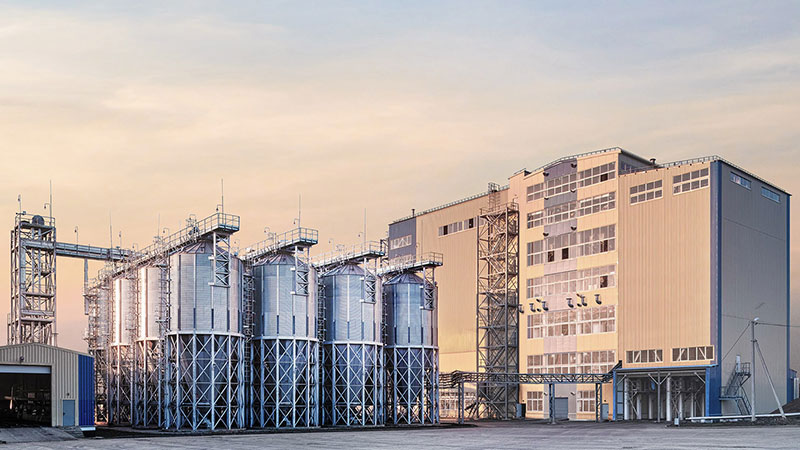
At RICHI, we go beyond project completion. With RICHI Servicee, we’re your dedicated partners in success. Count on us for expert guidance, minimal downtime, and optimized productivity. Choose RICHI for unmatched service and support.
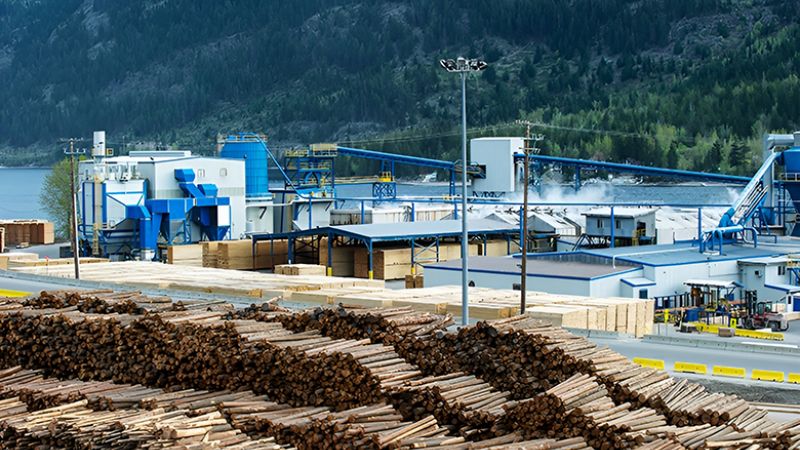


Meet global product demands and quality standards with industry-leading pellet plant design, engineering, equipment, and construction services for pellet processors.

Your Partner Beyond Project Completion
2000+ cases
RICHI is the leading designer, manufacturer and builder of pellet plants in the world, completing over 2000 projects in 140 countries across 6 continents.
Read More
Increase plant productivity, profitability, and safety by integrating high quality equipment into your pellet production line. Over the years, RICHI has become China's top pellet equipment manufacturer. At the same time, RICHI has established valuable partnerships with the world's leading component and raw material manufacturers to bring you the best there is in technology, automation, and efficiency in pelleting plant machinery.

For nearly 30 years, RICHI has been providing best-in-class pellet plant equipment and services to clients across a variety of industries, sizes, and needs. We pride ourselves on the knowledge and skill that each team member possesses – from our technical sales team to our process design engineers. You can count on RICHI Machinery to take your operation to the next level of innovation, quality, and success.
Need help with your pellet manufacturing plant project? Contact us today.
ANIMAL FEED
BIOMASS
WOOD
ORGANIC FERTILIZER
AQUA FEED
CAT LITTER
MUNICIPAL WASTE RECYCLING
SPECIAL PELLET PRODUCTION
RICHI Machinery continues to deliver world class pellet mill equipment, pellet plant engineering and project solutions that add value to our customers in the animal feed, wood waste, agriculture waste, organic fertilizer, cat litter and special pellet products industries. Throughout the years, we RICHI Machinery have built strong brand, becoming industry-leading pellet machine manufacturer. We value integrity, promise quality, and prioritize your success.
Learn MoreWith our expert team, we precisely implement your process engineering requirements in pellet mill and pelletizing plant systems. No matter which industry you’re in – we understand your needs and deliver solutions that meet the highest standards.
At RICHI, quality comes first. Our pellet making machine and related pellet line equipment undergo rigorous quality controls to ensure they meet the highest standards. Rely on products that are durable, safe, and efficient.
With decades of experience in pellet machine and pellet production line production, we have earned a reputation as a trusted partner in various industries. Our expertise allows us to cover a wide range of applications.
Not only do we offer premium pelleting equipment, but we are also experts at designing, building, installing, and maintaining facilities from the ground up. Our expertise is within pellt plant process design, discovering the most efficient, productive, and profitable way to handle your materials in an end-to-end cycle.
○ RICHI MACHINERY
Keeping in touch with us is an effective way to solve all your problems. If you have any needs or questions, please leave your contact information, then RICHI technical consultants will send design, quotation, videos to your mailbox. You can also contact us directly via WhatsApp: +86 13838389622
Copyright©2015-2026 by HENAN RICHI MACHINERY CO., LTD. All rights reserved.