
The Ghanaian customer did not start from the assumption that palm kernel shell must be pelletized simply because it is a biomass residue. In many palm oil operations, raw PKS can already be used directly as boiler fuel. The business case only became stronger when the customer identified industrial users that preferred a denser, more uniform fuel for storage, transport, metering, and controlled combustion.
The Ghanaian customer did not start from the assumption that palm kernel shell must be pelletized simply because it is a biomass residue. In many palm oil operations, raw PKS can already be used directly as boiler fuel. The business case only became stronger when the customer identified industrial users that preferred a denser, more uniform fuel for storage, transport, metering, and controlled combustion.
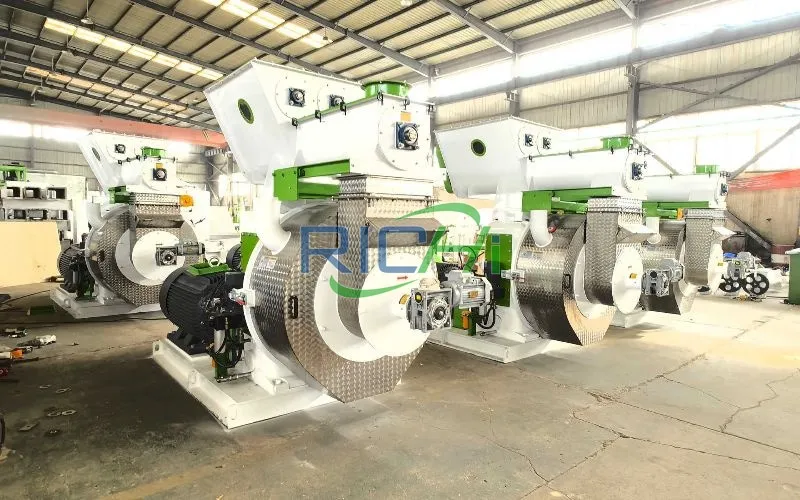
The project therefore focused on two MZLH420 palm kernel pellet machines in Ghana, installed inside an existing biomass-processing operation in the Western Region. The customer already had shell collection, crushing, drying, and storage capability. What it lacked was a commercial densification step capable of turning prepared PKS into consistent 8 mm pellets for selected industrial thermal users.
Name:
Palm kernel shell pelletizer
Country:
Ghana
Date:
2025
Capacity:
2.0–2.4 T/H
Model:
2* MZLH420
Main Motor Power:
90 kW
Raw Materials:
Palm kernel shell
Pellet diameter:
8 mm
Palm kernel shell is already a recognized solid fuel. Research on palm-oil processing shows that shells and other palm residues are commonly reused for thermal energy, while Ghanaian studies have also evaluated PKS specifically for boiler and briquette applications.
That meant the customer could not justify the investment by saying, “PKS has no use until it becomes a pellet.”
The real value came from physical standardization.
Loose shell is hard, irregular, and relatively dense compared with many agricultural residues, but it still creates variation in bulk handling. Pelletizing gives the customer a more uniform fuel geometry that is easier to meter through certain screw feeders, conveyors, and automated fuel-handling systems.
For buyers located farther from the palm-processing area, densification can also simplify handling and storage compared with mixed shell fractions containing irregular pieces.
The customer sources PKS from palm oil processors in Ghana’s southern oil-palm belt rather than from one small village mill.
This is important because two MZLH420 palm pellet machines can consume a meaningful quantity of prepared shell when both operate together. The business therefore relies on contracts with several processors and aggregators.
Ghana’s palm-oil sector produces shell, fiber, and empty fruit bunch residues as part of normal milling activity. Published energy analysis for Ghana has estimated substantial technical energy potential from these residues, including palm kernel shell.
The customer receives shell in different conditions depending on the supplier. Some lots are relatively clean and dry, while others contain fiber, kernel fragments, dirt, stones, or excess moisture.
Receiving inspection therefore became part of the fuel-quality system.
The MZLH420 is not used as a primary crusher.
Whole or oversized palm kernel shells are first reduced to a more uniform particle size before they reach the pelletizer. Magnetic and physical separation removes foreign material that could damage downstream equipment.
The customer uses its existing crushing system to break the shell into a finer feedstock suitable for ring-die compression.
This step is essential because a pellet mill performs most consistently when the material entering the forced feeder has controlled particle size and reasonably stable bulk density.
Palm kernel shell is often relatively dry compared with EFB, but incoming moisture is not fixed.
Storage conditions, rainfall exposure, processing method, and supplier practices can all change the moisture level.
The customer therefore checks each incoming lot before pelletizing.
Material that is too wet is dried. Material that is already within a workable range can bypass unnecessary drying.
This saves energy and avoids the opposite mistake of treating every tonne of PKS as though it needs the same preprocessing.
| Project Parameter | Configuration |
|---|---|
| Equipment | Palm kernel pellet machine |
| Model | MZLH420 |
| Quantity | 2 units |
| Main Motor Power | 90 kW per unit |
| Arch-Breaking Feeder | 3 kW per unit |
| Forced Feeder | 1.5 kW per unit |
| Ring Die Inner Diameter | 420 mm |
| Available Pellet Diameter | 4–12 mm |
| Project Pellet Diameter | 8 mm |
| Reference Capacity | Approximately 1.0–1.2 T/H per unit |
| Combined Reference Capacity | Approximately 2.0–2.4 T/H under suitable PKS conditions |
The two-unit arrangement allows production to follow real shell supply and order volume.
One machine can operate during routine production periods. Both can run when the customer has accumulated enough prepared PKS and has confirmed industrial demand.
The second unit also reduces the risk that scheduled ring-die or roller maintenance will stop the entire pelletizing section.
That modularity was more useful than installing one larger machine that would spend long periods underloaded.
The customer standardized the main product around 8 mm.
This simplified die management and gave industrial buyers a more consistent fuel specification.
Pellet diameter is not chosen only for appearance. Smaller holes increase resistance and may reduce throughput. Larger pellets may suit different feeding systems but can change combustion behavior and mechanical strength.
The 8 mm configuration therefore reflects this project’s handling and combustion requirements rather than a universal PKS pellet standard.
Palm kernel shell does not behave like rice straw or sawdust.
It is harder, denser, and can contain residual oil and mineral contamination. These characteristics affect friction inside the die and wear on compression components.
The customer therefore did not copy a wood-pellet compression ratio.
During commissioning, the ring-die specification was adjusted around motor load, throughput, pellet durability, and die temperature.
If compression is too high, the machine consumes unnecessary power and output falls. If it is too low, the pellets can fracture during cooling and transport.
Palm kernel residues may contain small amounts of residual oil depending on how the material was processed.
A limited amount can influence fuel value and pellet formation, but excessive oil is not automatically beneficial.
High surface oil can reduce friction unpredictably, affect pellet strength, increase residue buildup, and change storage behavior.
The customer therefore evaluates material condition rather than marketing “slightly oily PKS” as universally ideal for pelletizing.
PKS is attractive as a fuel because it can have a relatively high heating value. One recent field-scale study used an estimated lower heating value of about 4,358 kcal/kg for PKS in a palm-mill boiler application.
But the customer does not sell every pellet batch using one guaranteed energy number.
Actual fuel performance depends on moisture, ash, shell purity, residual kernel content, and contamination.
Representative batches are therefore checked for parameters such as moisture, ash, calorific value, bulk density, and mechanical durability before long-term supply agreements are signed.
The customer focuses on industrial thermal applications.
This is a more defensible market position because PKS can behave differently from standardized wood pellets in combustion systems. Research on PKS combustion has shown that boiler performance and slagging or emission behavior depend heavily on combustion conditions and equipment design.
The customer therefore supplies buyers that understand agricultural-residue fuels and can evaluate the pellets in their own boilers.
Household stove sales are not used as the main justification for the project.
Pellets leaving the MZLH420 biomass pellet mill are warm and not yet ready for bulk storage.
They first pass through the customer’s cooling equipment so that temperature and moisture stabilize.
The cooled pellets are then screened to remove fines and broken material.
Clean reusable fines can be returned to production where appropriate.
This improves handling quality for the final industrial customer and reduces dust during loading and storage.
The MZLH series can be configured for several biomass materials, but this Ghana project is dedicated to PKS fuel.
Changing from palm kernel shell to cocoa husk, coconut shell, or wood residues would require different grinding, moisture control, die settings, and possibly different fuel-quality specifications.
The customer therefore keeps the production logic narrow.
This improves repeatability and makes raw-material procurement easier to manage.
At a combined reference output around 2.2 T/H, six net production hours would require more than 13 tonnes of prepared shell in one day.
That means two MZLH420 units only make sense when the customer can aggregate PKS from several mills or larger processors.
The customer therefore tracks contracted shell volume before considering any additional pelletizer.
Expansion decisions are therefore based on contracted shell volume and confirmed demand.
Ghana’s southern and western zones are closely associated with oil-palm cultivation and processing, giving a biomass operator in the Western Region better access to PKS than an inland location far from palm mills.
That proximity reduces the cost of moving a relatively low-value residue before densification.
The business becomes much less attractive if the customer has to haul loose shell long distances before any value is added.
The two MZLH420 palm biomass pellet machine units were exported from Qingdao Port in China to the Port of Takoradi.
For a Western Region project, this route is practical because Takoradi serves industrial cargo on Ghana’s western coast and reduces unnecessary inland movement compared with routing the equipment farther east and trucking it back.
Before shipment, RICHI provided equipment dimensions, electrical information, foundation requirements, feeder and discharge interface data, and recommended service clearances.
This allowed the customer to prepare the installation area while the machines were in transit.
The first trials did not aim immediately at 1.2 T/H per machine.
Operators began with one MZLH420 and monitored main-motor current, feed consistency, die temperature, pellet surface condition, and fines after cooling.
Feed rate was increased only after the shell preparation and compression conditions became repeatable.
The second unit was commissioned after the first machine had established a stable operating window.
“We originally thought PKS would be easy because it is already a hard fuel. The real challenge was preparing it consistently. Shell from one supplier can be clean and dry, while another load has more fiber and dirt. Once we tightened our incoming-material specification, both pellet mills became much easier to run at the same settings.”
The company now sorts suppliers partly by shell consistency rather than only by purchase price.
Cheap PKS with high contamination can create more crushing cost, more wear, more ash, and less usable finished fuel.
Calling PKS a “waste problem” understates its existing value.
Palm kernel shell is already used as an energy resource in palm-processing systems, and Ghana-focused research has demonstrated its suitability for densified biomass fuels as well.
The customer’s opportunity comes from producing a more standardized fuel for buyers who value uniform size and feeding behavior.
That is a stronger commercial argument than claiming pelletization suddenly makes an otherwise useless material valuable.
This palm kernel pellet machine in Ghana project is a focused densification application built around a real oil-palm residue and an industrial fuel market.
Two MZLH420 machines, each with a 90 kW main motor, 3 kW arch-breaking feeder, and 1.5 kW forced feeder, provide approximately 1.0–1.2 T/H of reference capacity per unit. The customer standardizes the main product at 8 mm.
The machines only perform well when the surrounding process is equally controlled. PKS must be sourced consistently, cleaned, reduced to the correct particle size, checked for moisture, fed evenly, compressed with the correct die specification, cooled, screened, and tested before dispatch.
For another customer evaluating a palm kernel pellet machine in Ghana, RICHI Machinery would first calculate available PKS volume, supplier consistency, shell moisture, contamination, crushing requirement, target pellet diameter, industrial boiler specification, daily operating hours, cooling and screening capacity, electrical supply, and confirmed annual fuel demand before deciding whether one MZLH420, two units, or a larger configuration is appropriate.
That is what determines whether pelletizing adds real value: not simply the fact that Ghana produces palm kernel shell, but whether the customer has enough consistent shell and a buyer that benefits from the more uniform fuel form.
Having the right mix of reliable, high-quality pellet machine and pelletizing systems and expert support is essential to your success. Watch how our end-to-end feed pellet plant solutions have helped our customers optimize their performance.
Our customized and future-proofed turnkey pellet plant solutions is designed with you at the core. From vision to reality and beyond, our team stays connected with yours. Giving you peace-of-mind with an expert at your side.
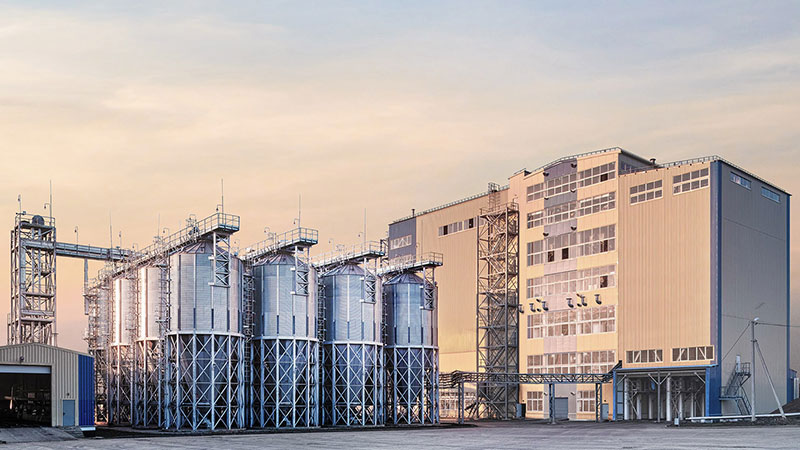
At RICHI, we go beyond project completion. With RICHI Servicee, we’re your dedicated partners in success. Count on us for expert guidance, minimal downtime, and optimized productivity. Choose RICHI for unmatched service and support.
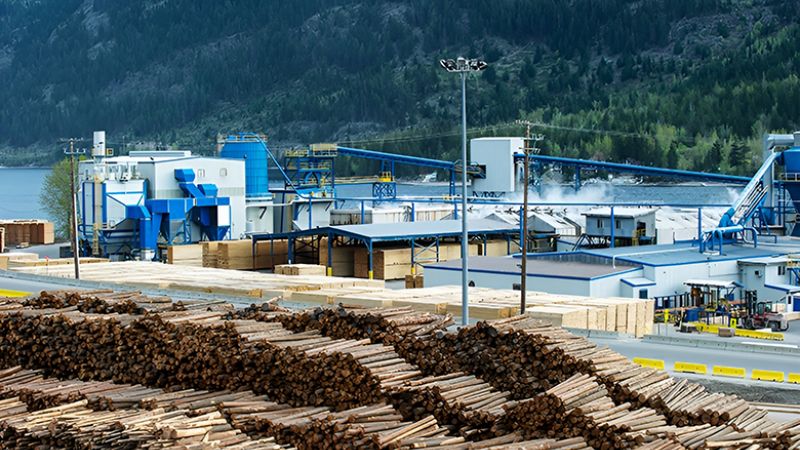


Meet global product demands and quality standards with industry-leading pellet plant design, engineering, equipment, and construction services for pellet processors.


Your Partner Beyond Project Completion
2000+ cases
RICHI is the leading designer, manufacturer and builder of pellet plants in the world, completing over 2000 projects in 140 countries across 6 continents.
Read More
Increase plant productivity, profitability, and safety by integrating high quality equipment into your pellet production line. Over the years, RICHI has become China's top pellet equipment manufacturer. At the same time, RICHI has established valuable partnerships with the world's leading component and raw material manufacturers to bring you the best there is in technology, automation, and efficiency in pelleting plant machinery.

For nearly 30 years, RICHI has been providing best-in-class pellet plant equipment and services to clients across a variety of industries, sizes, and needs. We pride ourselves on the knowledge and skill that each team member possesses – from our technical sales team to our process design engineers. You can count on RICHI Machinery to take your operation to the next level of innovation, quality, and success.
Need help with your pellet manufacturing plant project? Contact us today.
ANIMAL FEED
BIOMASS
WOOD
ORGANIC FERTILIZER
AQUA FEED
CAT LITTER
MUNICIPAL WASTE RECYCLING
SPECIAL PELLET PRODUCTION
RICHI Machinery continues to deliver world class pellet mill equipment, pellet plant engineering and project solutions that add value to our customers in the animal feed, wood waste, agriculture waste, organic fertilizer, cat litter and special pellet products industries. Throughout the years, we RICHI Machinery have built strong brand, becoming industry-leading pellet machine manufacturer. We value integrity, promise quality, and prioritize your success.
Learn MoreWith our expert team, we precisely implement your process engineering requirements in pellet mill and pelletizing plant systems. No matter which industry you’re in – we understand your needs and deliver solutions that meet the highest standards.
At RICHI, quality comes first. Our pellet making machine and related pellet line equipment undergo rigorous quality controls to ensure they meet the highest standards. Rely on products that are durable, safe, and efficient.
With decades of experience in pellet machine and pellet production line production, we have earned a reputation as a trusted partner in various industries. Our expertise allows us to cover a wide range of applications.
Not only do we offer premium pelleting equipment, but we are also experts at designing, building, installing, and maintaining facilities from the ground up. Our expertise is within pellt plant process design, discovering the most efficient, productive, and profitable way to handle your materials in an end-to-end cycle.
○ RICHI MACHINERY
Keeping in touch with us is an effective way to solve all your problems. If you have any needs or questions, please leave your contact information, then RICHI technical consultants will send design, quotation, videos to your mailbox. You can also contact us directly via WhatsApp: +86 13838389622
Copyright©2015-2026 by HENAN RICHI MACHINERY CO., LTD. All rights reserved.