
An organic fertilizer producer in the Riyadh Region selected one RICHI FZLH350 Organic Fertilizer Granulating Machine in Saudi Arabia to upgrade the granulation section of its existing fertilizer operation. The plant already had manure receiving, composting, crushing, screening, mixing and basic finished-product handling equipment, so the customer did not need another complete organic fertilizer production line.

An organic fertilizer producer in the Riyadh Region selected one RICHI FZLH350 Organic Fertilizer Granulating Machine in Saudi Arabia to upgrade the granulation section of its existing fertilizer operation. The plant already had manure receiving, composting, crushing, screening, mixing and basic finished-product handling equipment, so the customer did not need another complete organic fertilizer production line.
The project focuses on converting mature, stabilized manure-based fertilizer material into dense cylindrical granules for commercial agricultural use. Camel manure and poultry manure provide the main organic resource base, while selected date-palm and forage residues can be introduced during composting or formulation where their physical and nutrient characteristics support the target fertilizer product.
Name:
Country:
Saudi Arabia
Date:
2026
Capacity:
Model:
FZLH350
Main Motor Power:
37 kW
Main Raw Materials:
camel-manure and poultry-manure
Supplementary Materials:
date-palm residues, alfalfa residues
The customer had already developed a manure-composting operation but wanted to improve the physical form of the finished fertilizer.
Loose compost can be more difficult to package, transport, meter and mechanically apply than a controlled granular product.
The FZLH350 was therefore added after compost preparation rather than used as a replacement for the biological treatment stage.
This single-machine retrofit allowed the customer to retain usable upstream equipment and focus capital expenditure on the section that creates the final fertilizer granule.
The engineering question was not simply how many tonnes of camel or poultry manure were generated each day.
RICHI first needed to know how many tonnes of mature, prepared fertilizer material were available after composting, moisture adjustment, crushing and screening.
That figure determines the actual load reaching the granulator.
| Project Parameter | Configuration |
|---|---|
| Equipment | Ring die organic fertilizer granulating machine |
| Model | FZLH350 |
| Main Motor | 37 kW |
| Main Raw Materials | Mature camel-manure and poultry-manure compost |
| Supplementary Materials | Selected date-palm residues, alfalfa residues or other suitable organic materials where required |
| Finished Product | Granular organic fertilizer |
| Typical Pellet Diameter | Selected according to fertilizer specification and application method |
| Main Market | Date farms, greenhouse vegetable operations and other agricultural users |
| Project Type | Existing fertilizer plant granulation-section upgrade |
The FZLH350 uses a 37 kW main motor and is designed for ring die granulation of properly prepared organic fertilizer material.
A specific 3–5 T/H output is not assigned to this organic fertilizer production project.
Granulation capacity changes with manure source, compost maturity, moisture, particle size, fibre content, mineral addition and die configuration.
Camel-manure compost containing substantial fibrous material can behave differently from fine poultry-manure compost.
A formula containing shredded date-palm residue can also create different bulk density and compression resistance.
For that reason, RICHI determines the practical production rate from representative prepared material rather than motor power alone.
The Riyadh Region provides a credible raw-material environment for this type of project.
Saudi Arabia has a substantial camel population, and Riyadh contains a particularly large share of the national herd.
The region also has major poultry production.
This means the customer does not need to base its business model on importing manure from neighboring countries simply to secure feedstock.
Local manure supply can be developed through commercial livestock farms, poultry operations and manure-collection agreements.
The more important issue is consistency.
Camel manure can arrive with bedding, sand or coarse fibre. Poultry manure can vary substantially depending on whether it comes from layer houses, broiler litter systems or other collection methods.
The customer therefore controls source, moisture, contamination and bedding content before material enters composting.
Sand contamination is especially important in arid environments because excessive mineral contamination increases ash and can change fertilizer physical properties and granulator wear.
The FZLH350 organic fertilizer pellet machine does not receive fresh manure directly.
Fresh camel manure and poultry manure contain unstable organic matter and can have unsuitable moisture, ammonia and microbial characteristics for direct commercial fertilizer granulation.
The customer therefore uses a controlled composting stage before the material reaches the ring die machine.
The practical process is:
This separation between composting and granulation is essential.
The granulator changes physical form; it does not perform biological stabilization.
Date-palm residues are highly relevant to Saudi agriculture, but they should not be added to the fertilizer simply because they are locally recognizable biomass.
Leaves and other fibrous palm residues first need appropriate size reduction.
Long intact palm leaves are not suitable direct feed for a ring die granulator.
Where these materials are used during composting, their role can include providing carbon and improving physical structure.
After composting, any remaining coarse fibre needs to be reduced further before final formulation.
Alfalfa residues can play a similar supplementary role where they are available.
However, the customer does not use one permanent formula such as 50% camel manure, 25% chicken manure, 15% alfalfa residue and 10% date-palm residue.
The correct blend depends on the actual carbon-to-nitrogen relationship, moisture, nutrient analysis and physical condition of the incoming materials.
RICHI therefore configures the process around measured material properties rather than a generic Saudi fertilizer recipe.
The original concept fixed chicken manure at 15–18% moisture and used the same range as the final granulation target.
That is not realistic for all manure sources.
Fresh poultry manure can contain substantially more moisture, while composting changes the material again through biological heat and evaporation.
Camel manure from dry collection conditions can be considerably different from poultry litter.
The customer therefore measures moisture before composting, during the composting process and again after maturation.
Only then does RICHI determine whether further drying is required.
If mature compost is already within an appropriate granulation range, running it unnecessarily through a rotary dryer would increase thermal-energy cost.
If the material is still too wet, moisture reduction becomes necessary.
The final pelletizing window is established during commissioning from feed behavior, motor load and finished granule quality rather than fixed permanently at 15–18%.
The FZLH350 compresses prepared fertilizer into a denser and more controlled physical form.
This can make the product easier to bag, transport, store, meter and apply.
Granulation can also reduce the amount of loose powder associated with fine compost.
However, the machine does not create nutrients.
The nitrogen, phosphorus, potassium, organic matter and other fertilizer characteristics come from the raw materials and formulation entering the machine.
The granulator should therefore not be marketed as automatically increasing soil fertility, crop yield or water retention.
Those results depend on fertilizer composition, application rate, crop, irrigation, soil type and agronomic management.
This distinction is especially important in Saudi Arabia because agricultural systems can range from date plantations to controlled-environment greenhouse vegetable production, each with different nutrient and soil-management requirements.
The customer can produce a 7 mm granular fertilizer if that size matches its commercial product and application equipment.
However, 7 mm should not be described as a universal Saudi standard or an ideal diameter for all date and greenhouse operations.
Different customers may prefer different granule dimensions depending on spreaders, application rate and packaging format.
Pellet diameter can also influence machine resistance and output.
A die selected for one fertilizer formulation may not provide the same throughput with another formula or diameter.
RICHI therefore confirms pellet size together with the target product specification before final die selection.
Producing a mechanically uniform pellet is only one part of commercial fertilizer manufacturing.
Saudi Arabia regulates organic agricultural inputs and fertilizer production.
A product should not automatically be labeled or marketed as approved organic fertilizer simply because camel or poultry manure is the main raw material.
The customer needs to follow the applicable requirements for production, testing, registration and marketing.
Finished-product quality can involve nutrient analysis, organic matter, moisture, contaminant limits and other parameters according to the relevant product category.
Raw-material source and compost maturity are also important.
The FZLH350 supports the physical manufacturing stage but does not replace laboratory testing or certification.
If the customer intends to market the product specifically for certified organic agriculture, the relevant Saudi organic-input requirements and approval procedures need to be followed separately.
A standalone FZLH350 still needs properly matched downstream equipment.
Freshly formed granules should be stabilized before bagging.
Cooling reduces product temperature, while screening separates qualified granules from fines and oversized material.
The customer can return suitable fines to the process where the plant design allows it.
The cooler, screen and packaging section must all be sized according to the actual FZLH350 throughput.
This is why increasing granulator capacity alone does not guarantee a higher finished-product output.
If the existing cooler or bagging system is smaller than the new granulation section, the production bottleneck simply moves downstream.
The FZLH350 is prepared for export from Qingdao, China, to Saudi Arabia.
For a Riyadh-area customer, the final port should be selected according to actual shipping service, inland transport cost and freight availability.
Both Red Sea and Gulf entry routes can be evaluated.
King Abdulaziz Port in Dammam can provide a practical eastern entry route toward Riyadh, while Jeddah Islamic Port may also be used where the selected shipping service or logistics contract favors the Red Sea route.
The project therefore does not assume that Jeddah is automatically the only destination.
Before shipment, RICHI checks the installation interface, including feeding elevation, discharge position, support structure, maintenance access and electrical requirements.
The customer can retain its existing crushing, mixing, cooling and packaging equipment where those machines have enough real capacity for the new granulator.
This Organic Fertilizer Granulating Machine in Saudi Arabia project uses one RICHI FZLH350 ring die granulator to upgrade an existing organic fertilizer operation in the Riyadh Region.
The machine uses a 37 kW main motor and processes mature, crushed, screened and formulated organic fertilizer material rather than fresh manure.
Camel manure and poultry manure form the main organic resource base.
Date-palm and alfalfa residues can be introduced where composting or fertilizer formulation justifies their use, but the plant does not depend on one fixed percentage blend.
The complete production route starts with manure receiving and controlled aerobic composting.
After the material reaches the required maturity, moisture is checked and adjusted. The compost is then crushed, screened, formulated and mixed before entering the FZLH350.
The finished fertilizer granules proceed through cooling and screening before packaging.
For another buyer searching for an Organic Fertilizer Granulating Machine in Saudi Arabia, camel manure pellet machine, chicken manure granulator Saudi Arabia, FZLH350 organic fertilizer granulator, manure pellet press or ring die fertilizer granulating machine, RICHI first evaluates the quantity and condition of mature compost rather than only the number of animals or tonnes of fresh manure generated.
Useful project information includes manure source, fresh quantity, collection method, bedding or sand content, composting method, mature-compost output, mature material moisture, particle size, fertilizer formula, required granule diameter, daily operating hours and existing crushing, mixing, cooling, screening and packaging equipment.
If the customer already has a stable composting process and prepared fertilizer powder, one FZLH350 can be integrated as a standalone granulation upgrade.
If the project still handles only fresh manure, engineering needs to begin further upstream with collection, bulking, composting and moisture management.
If future demand increases, RICHI Machinery can determine whether expansion really requires another granulator or whether composting, crushing, cooling, screening or bagging is the actual bottleneck.
For a Saudi organic fertilizer project, send RICHI your mature-compost T/H, raw-material types, moisture, formula, target granule size and existing equipment list. These parameters allow the Organic Fertilizer Granulating Machine in Saudi Arabia to be selected around the real prepared material rather than an assumed 3–5 T/H output.
Having the right mix of reliable, high-quality pellet machine and pelletizing systems and expert support is essential to your success. Watch how our end-to-end feed pellet plant solutions have helped our customers optimize their performance.
Our customized and future-proofed turnkey pellet plant solutions is designed with you at the core. From vision to reality and beyond, our team stays connected with yours. Giving you peace-of-mind with an expert at your side.
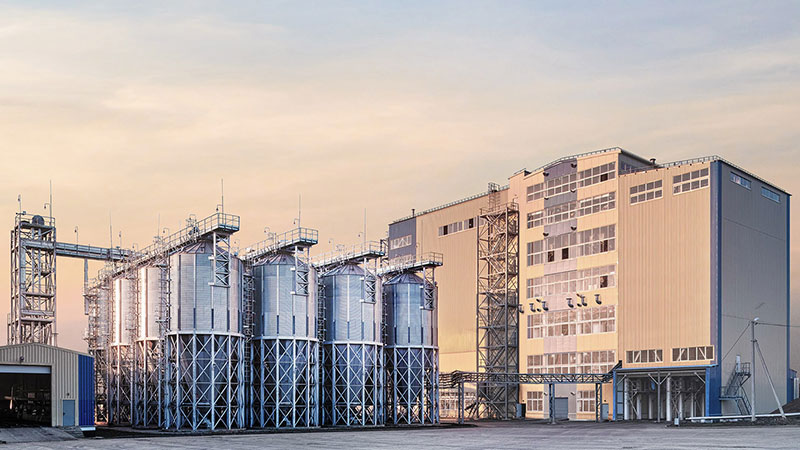
At RICHI, we go beyond project completion. With RICHI Servicee, we’re your dedicated partners in success. Count on us for expert guidance, minimal downtime, and optimized productivity. Choose RICHI for unmatched service and support.
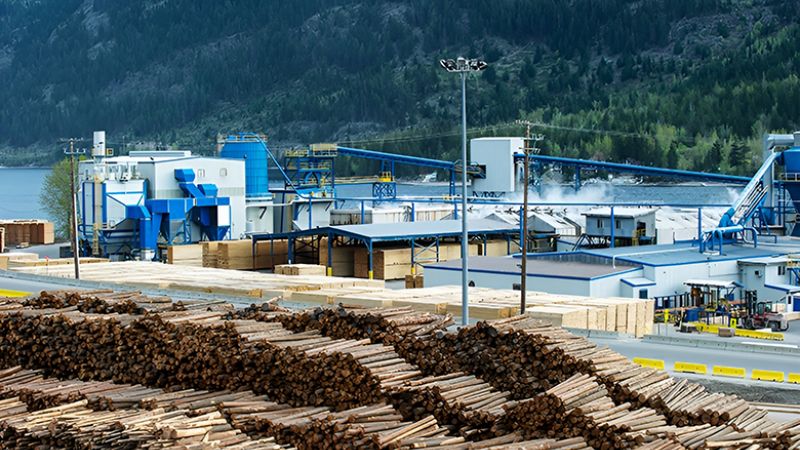


Meet global product demands and quality standards with industry-leading pellet plant design, engineering, equipment, and construction services for pellet processors.


Your Partner Beyond Project Completion
2000+ cases
RICHI is the leading designer, manufacturer and builder of pellet plants in the world, completing over 2000 projects in 140 countries across 6 continents.
Read More
Increase plant productivity, profitability, and safety by integrating high quality equipment into your pellet production line. Over the years, RICHI has become China's top pellet equipment manufacturer. At the same time, RICHI has established valuable partnerships with the world's leading component and raw material manufacturers to bring you the best there is in technology, automation, and efficiency in pelleting plant machinery.

For nearly 30 years, RICHI has been providing best-in-class pellet plant equipment and services to clients across a variety of industries, sizes, and needs. We pride ourselves on the knowledge and skill that each team member possesses – from our technical sales team to our process design engineers. You can count on RICHI Machinery to take your operation to the next level of innovation, quality, and success.
Need help with your pellet manufacturing plant project? Contact us today.
ANIMAL FEED
BIOMASS
WOOD
ORGANIC FERTILIZER
AQUA FEED
CAT LITTER
MUNICIPAL WASTE RECYCLING
SPECIAL PELLET PRODUCTION
RICHI Machinery continues to deliver world class pellet mill equipment, pellet plant engineering and project solutions that add value to our customers in the animal feed, wood waste, agriculture waste, organic fertilizer, cat litter and special pellet products industries. Throughout the years, we RICHI Machinery have built strong brand, becoming industry-leading pellet machine manufacturer. We value integrity, promise quality, and prioritize your success.
Learn MoreWith our expert team, we precisely implement your process engineering requirements in pellet mill and pelletizing plant systems. No matter which industry you’re in – we understand your needs and deliver solutions that meet the highest standards.
At RICHI, quality comes first. Our pellet making machine and related pellet line equipment undergo rigorous quality controls to ensure they meet the highest standards. Rely on products that are durable, safe, and efficient.
With decades of experience in pellet machine and pellet production line production, we have earned a reputation as a trusted partner in various industries. Our expertise allows us to cover a wide range of applications.
Not only do we offer premium pelleting equipment, but we are also experts at designing, building, installing, and maintaining facilities from the ground up. Our expertise is within pellt plant process design, discovering the most efficient, productive, and profitable way to handle your materials in an end-to-end cycle.
○ RICHI MACHINERY
Keeping in touch with us is an effective way to solve all your problems. If you have any needs or questions, please leave your contact information, then RICHI technical consultants will send design, quotation, videos to your mailbox. You can also contact us directly via WhatsApp: +86 13838389622
Copyright©2015-2026 by HENAN RICHI MACHINERY CO., LTD. All rights reserved.