
A biomass fuel processor in Chumphon uses one MZLH678 oil palm EFB pellet mill to produce 8 mm industrial fuel pellets from dried and finely prepared empty fruit bunch fibre.
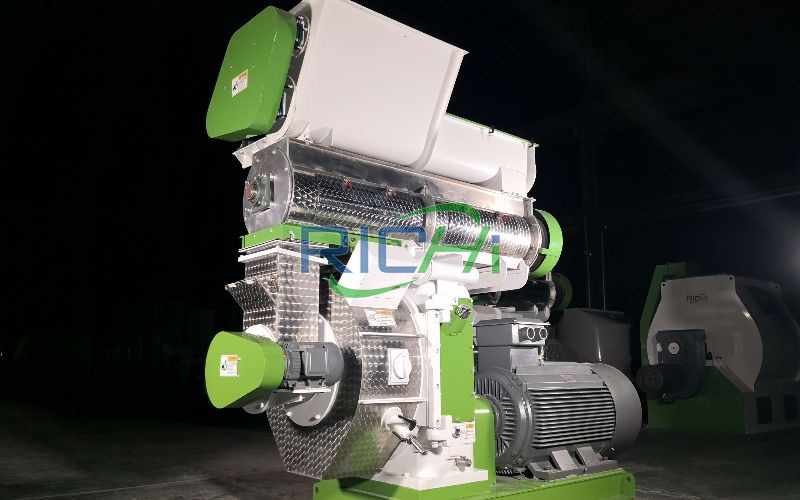
A biomass fuel processor in Chumphon selected one MZLH678 Oil Palm EFB Pellet Mill in Thailand to densify prepared empty fruit bunch fibre from nearby palm oil mills. The company already operated EFB shredding, moisture reduction, fine grinding, conveying and bulk storage, so the purchase focused on the pelletizing stage rather than another complete biomass production line.
The project uses one higher-duty ring-die machine instead of two smaller presses, giving the plant about 2.5–3.0 T/H of reference biomass capacity under suitable EFB conditions. This arrangement matches the existing preparation section and keeps one clear operating train from dried fibre storage through pelletizing, cooling and screening before bulk fuel is dispatched to industrial users.
Name:
Oil Palm EFB Pellet Machine
Country:
Thailand
Date:
2026
Capacity:
2.5–3.0 T/H
Model:
MZLH678
Main Motor Power:
200 kW
Raw Materials:
oil palm empty fruit bunch fibre
Pellet diameter:
8 mm
Southern Thailand has a long-established palm oil industry, and Chumphon is a credible location for collecting empty fruit bunches from palm oil processing. EFB is generated at the mill after fruit removal, so the project is built around short-haul collection from processing sites rather than forestry residues or municipal biomass that would require a separate sourcing and contamination-control system.
The customer focuses on industrial fuel rather than residential wood-pellet markets. EFB has a different ash chemistry from clean stemwood, including higher alkali-related combustion concerns, so the plant does not present every pellet lot as a direct substitute for premium wood pellets. Fuel acceptance depends on laboratory results and the combustion system used by the buyer.
Rubberwood sawdust is available in southern Thailand and can be evaluated as a secondary biomass stream when a customer specification justifies blending. It is not assigned a permanent percentage in this case. Pure EFB, EFB-rich fuel and blended biomass can behave differently during grinding, pelletizing and combustion, so each commercial grade is tested separately before routine production.
| Project Parameter | Configuration |
|---|---|
| Equipment | Ring-die biomass pellet mill for prepared EFB fibre |
| Model | MZLH678 |
| Quantity | 1 unit |
| Main Motor Power | 200 kW |
| Arch-Breaking Feeder Power | 3 kW |
| Forced Feeder Power | 1.5 kW |
| Ring Die Inner Diameter | 673 mm |
| Available Pellet Diameter | 4–12 mm |
| Main Project Pellet Diameter | 8 mm |
| Reference Capacity | Approximately 2.5–3.0 T/H under suitable prepared-biomass conditions |
| Main Feedstock | Dried and finely prepared oil palm empty fruit bunch fibre |
| Installation Type | Standalone pelletizing-stage addition |
The 2.5–3.0 T/H figure applies to suitably prepared biomass rather than fresh EFB arriving from a palm oil mill. Fibre moisture, particle size, bulk density, ash contamination, die specification and feeder stability all affect real output. The plant therefore plans production from actual prepared-fibre performance instead of treating the top reference figure as a guaranteed rate for every batch.
One MZLH678 biomass pellet machine also suits this project better than a pair of MZLH520 units because the existing cooler, screen and material buffer are built around one production train. A single press reduces duplicate feeders and transfer points while still giving more hourly capacity than one MZLH520. Future parallel capacity is considered only after the preparation and downstream sections show enough reserve.
Fresh empty fruit bunches are bulky, springy and normally too wet for direct pelletizing. The receiving section first opens and shreds the bunch structure so moisture reduction becomes more effective and the material can move through conveyors without severe bridging. Where incoming water is high, mechanical dewatering can be evaluated before thermal drying to reduce the heat load on the dryer.
After drying, the fibrous EFB passes through secondary size reduction so the pellet mill receives a much finer and more uniform fraction. Research on EFB processing commonly uses material below a few millimetres for densification studies, but the plant does not lock production to one universal screen opening. Fibre length, moisture and die loading are checked together during commissioning.
Moisture is controlled around the actual forming behaviour rather than one permanent 8–12% rule. Material that is too wet can feed poorly and form soft pellets, while excessively dry fibre can increase dust and compression resistance. The useful operating window is established from feeder stability, motor load, pellet surface, fines and cooler performance with the active EFB grade.
The Oil Palm EFB Pellet Mill in Thailand performs the densification step only. It does not replace shredding, dewatering, drying or fine grinding, and it cannot compensate for poorly prepared long fibre. Keeping those duties separate is important with EFB because its low bulk density and fibrous structure can create unstable feeding long before material reaches the compression zone.
The cooler is sized to the pelletizer's instantaneous discharge rather than the plant's average daily tonnage. Hot pellets need enough time to stabilize before bulk storage, while screening removes loose fines and gives operators feedback on material preparation and die condition. Persistent fines are investigated at the process level instead of being treated only as a screening problem.
The main product is an 8 mm fuel pellet. Published EFB pellet research includes both 6 mm and 8 mm products, and 8 mm is a credible format for industrial biomass handling. The machine can physically make other diameters within its 4–12 mm range, but this project does not select a larger size simply because the ring die can produce it.
Pellet length is controlled by cutter setting and operating condition, so the case does not invent one exact commercial length without a buyer specification. Diameter and length are physical dimensions only. They do not prove calorific value, ash performance or boiler compatibility, which must be determined from the actual EFB fuel and the combustion requirements of the customer.
EFB fuel quality also needs more than density and appearance. The processor tests moisture, ash, mechanical durability and calorific value, while buyers may also require information on potassium, chlorine and other ash-related elements. These factors matter because EFB can create slagging, fouling or corrosion concerns in combustion systems that were designed around cleaner woody biomass.
Dry milled EFB generates fine combustible dust, so enclosed transfer, aspiration, filtration, grounding and housekeeping are included around the grinding and pelletizing area. Airflow is sized from real pickup points and duct resistance rather than a generic dust-removal percentage. Bearings, friction points and material buildup are inspected as part of routine fire-risk management.
Wear is tracked by processed tonnes and material cleanliness instead of one promised service life. Sand, soil and mineral contamination collected with the bunches can accelerate hammer, die and roller wear. Magnetic protection helps with ferrous debris, but stones and non-ferrous contaminants need receiving inspection and suitable separation before the prepared fibre reaches high-speed equipment.
The 200 kW main motor is only part of the section load. Shredders, dewatering equipment, dryer auxiliaries, fine grinding, conveyors, cooler fans, screening and dust collection add substantial demand, so the customer checks the complete electrical system. Thermal energy for moisture removal can also be a major operating cost when incoming EFB is very wet.
For a Chumphon biomass pellet project, imported machinery can enter Thailand through a major deep-sea gateway and continue south by road according to the forwarding plan. The article does not assign a fixed port, sea-transit period or customs duration because routing depends on carrier service, package dimensions and inland delivery arrangements at the time of shipment.
The next expansion decision starts with prepared EFB supply rather than another pellet mill. If shredding, moisture reduction, fine grinding, cooling or storage is already full, a second press would only transfer the bottleneck. The plant first measures where fibre accumulates and how many pelletizing hours are available before adding parallel ring-die capacity.
For another buyer evaluating an Oil Palm EFB Pellet Mill in Thailand, RICHI Machinery would review fresh EFB tonnage, collection radius, incoming moisture, existing shredder and dewatering equipment, dryer evaporation capacity, target particle condition, 6 or 8 mm pellet requirement, hourly fuel demand, cooler capacity, electrical supply and buyer fuel specification before confirming the machine scope.
Having the right mix of reliable, high-quality pellet machine and pelletizing systems and expert support is essential to your success. Watch how our end-to-end feed pellet plant solutions have helped our customers optimize their performance.
Our customized and future-proofed turnkey pellet plant solutions is designed with you at the core. From vision to reality and beyond, our team stays connected with yours. Giving you peace-of-mind with an expert at your side.
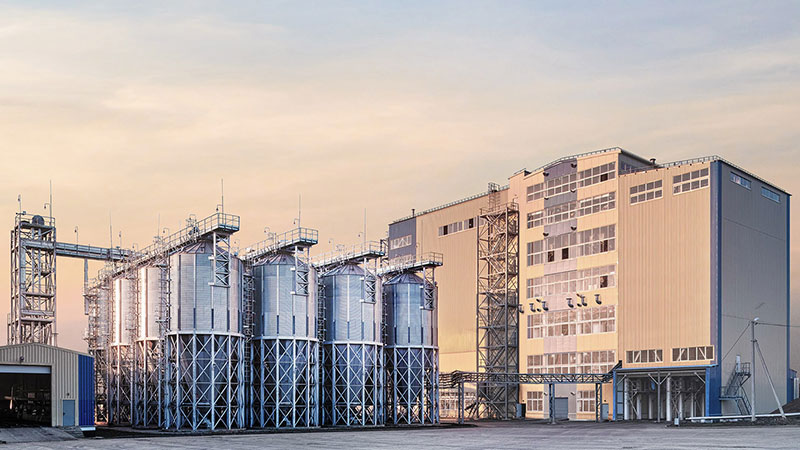
At RICHI, we go beyond project completion. With RICHI Servicee, we’re your dedicated partners in success. Count on us for expert guidance, minimal downtime, and optimized productivity. Choose RICHI for unmatched service and support.
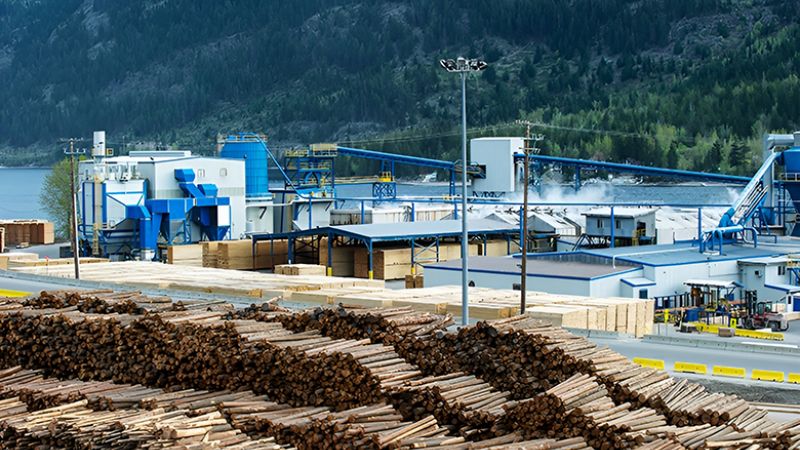


Meet global product demands and quality standards with industry-leading pellet plant design, engineering, equipment, and construction services for pellet processors.


Your Partner Beyond Project Completion
2000+ cases
RICHI is the leading designer, manufacturer and builder of pellet plants in the world, completing over 2000 projects in 140 countries across 6 continents.
Read More
Increase plant productivity, profitability, and safety by integrating high quality equipment into your pellet production line. Over the years, RICHI has become China's top pellet equipment manufacturer. At the same time, RICHI has established valuable partnerships with the world's leading component and raw material manufacturers to bring you the best there is in technology, automation, and efficiency in pelleting plant machinery.

For nearly 30 years, RICHI has been providing best-in-class pellet plant equipment and services to clients across a variety of industries, sizes, and needs. We pride ourselves on the knowledge and skill that each team member possesses – from our technical sales team to our process design engineers. You can count on RICHI Machinery to take your operation to the next level of innovation, quality, and success.
Need help with your pellet manufacturing plant project? Contact us today.
ANIMAL FEED
BIOMASS
WOOD
ORGANIC FERTILIZER
AQUA FEED
CAT LITTER
MUNICIPAL WASTE RECYCLING
SPECIAL PELLET PRODUCTION
RICHI Machinery continues to deliver world class pellet mill equipment, pellet plant engineering and project solutions that add value to our customers in the animal feed, wood waste, agriculture waste, organic fertilizer, cat litter and special pellet products industries. Throughout the years, we RICHI Machinery have built strong brand, becoming industry-leading pellet machine manufacturer. We value integrity, promise quality, and prioritize your success.
Learn MoreWith our expert team, we precisely implement your process engineering requirements in pellet mill and pelletizing plant systems. No matter which industry you’re in – we understand your needs and deliver solutions that meet the highest standards.
At RICHI, quality comes first. Our pellet making machine and related pellet line equipment undergo rigorous quality controls to ensure they meet the highest standards. Rely on products that are durable, safe, and efficient.
With decades of experience in pellet machine and pellet production line production, we have earned a reputation as a trusted partner in various industries. Our expertise allows us to cover a wide range of applications.
Not only do we offer premium pelleting equipment, but we are also experts at designing, building, installing, and maintaining facilities from the ground up. Our expertise is within pellt plant process design, discovering the most efficient, productive, and profitable way to handle your materials in an end-to-end cycle.
○ RICHI MACHINERY
Keeping in touch with us is an effective way to solve all your problems. If you have any needs or questions, please leave your contact information, then RICHI technical consultants will send design, quotation, videos to your mailbox. You can also contact us directly via WhatsApp: +86 13838389622
Copyright©2015-2026 by HENAN RICHI MACHINERY CO., LTD. All rights reserved.