
A fertilizer processor in Kenya integrated one FZLH520 manure fertilizer pellet granulator machine into an existing compost-based system for cylindrical organic fertilizer pellet production.
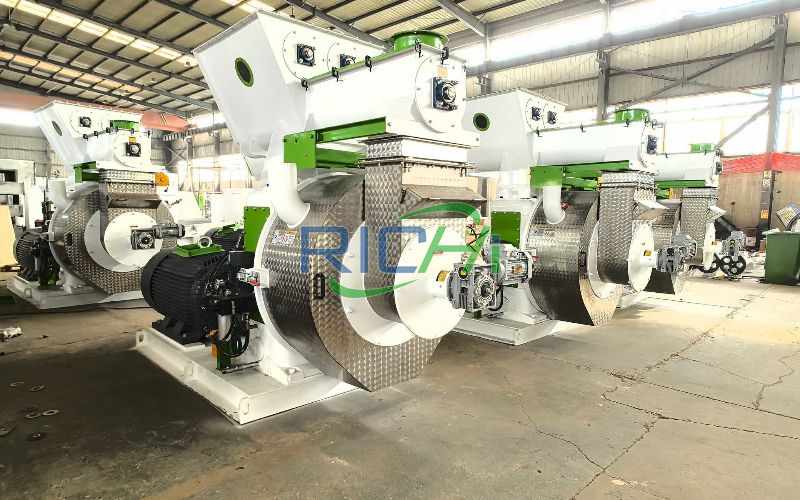
An organic fertilizer processor in Kenya's Rift Valley added one FZLH520 manure fertilizer pellet granulator machine to an existing compost-processing facility. The investment did not involve replacing the entire fertilizer plant. Composting, raw-material receiving, crushing and mixing equipment were already available, while the granulation section had become the main limitation as the company moved toward larger-volume commercial pellet production.
The customer had previously used smaller granulation equipment for part of its product range. Rather than adding several more small machines, it selected one ring-die unit capable of producing dense cylindrical fertilizer pellets from properly stabilized and prepared organic material.
This changed more than hourly capacity. A ring-die pellet granulator forms a different product from a conventional disc or pan granulator, so the customer also had to consider raw-material fineness, moisture, feeder behavior, pellet diameter, cooling and finished-product handling as one connected process.
Name:
Manure Fertilizer Granulator
Country:
Kenya
Date:
2025
Capacity:
9–12 T/H
Model:
FZLH520
Main Motor Power:
132 kW
Raw Materials:
livestock manure
Pellet diameter:
10 mm
The first process boundary in this project is biological rather than mechanical. Fresh cattle or sheep manure is not fed directly into the organic fertilizer pellet machine.
Manure collected from livestock operations can contain high moisture, unstable organic matter and considerable biological activity. Before commercial pelletizing, the material has to pass through an appropriate stabilization or composting stage. The objective is to obtain a mature organic base that is more stable during storage and easier to process mechanically.
The Kenya customer sources cattle manure as the principal organic material, with sheep manure available in smaller quantities depending on collection and supply. Agricultural plant residues can be used when the formulation needs additional organic matter or physical structure.
Maize residues are relevant in the region, while clean sawdust or other suitable carbon-rich material may be introduced during compost preparation when moisture balance and pile structure require adjustment.
These materials are not locked into one permanent percentage formula. Their actual proportions change with manure moisture, compost analysis, carbon-to-nitrogen balance, nutrient targets and the fertilizer product the customer intends to sell.
The customer did not simply replace a small pan granulator with a larger version of the same machine.
Disc granulation generally relies on rolling and agglomeration to form rounded particles. The FZLH520 uses mechanical compression through a ring die and produces dense cylindrical pellets. That difference affects both material preparation and the physical appearance of the finished fertilizer.
The customer chose the ring-die route because it wanted a compact pellet that could be handled, bagged and transported more easily than loose compost while using an existing upstream compost-processing system.
This also meant the plant had to prepare a more consistent feedstock. Large fibrous pieces, stones, uncomposted lumps and excessively wet material cannot simply be pushed through the pellet mill and expected to produce a uniform commercial product.
After stabilization, the organic material is screened and crushed before entering the final mixing stage. The target is not to turn compost into an extremely fine powder, but to remove oversized pieces and create a reasonably consistent feed that can move through the feeder and die without repeated blockage or load fluctuation.
For this type of ring-die manure pelletizing, the prepared material is generally reduced to a few millimeters, with the exact upper size controlled according to fibre content and die specification.
Moisture is adjusted at the same stage. A workable feed range is normally in the mid-to-high teens for many stabilized manure formulations, although the exact setting depends on the mixture. Material that is too wet may smear, compact poorly or overload the die, while material that is excessively dry can increase dust and make stable pellet formation more difficult.
The existing drying equipment is therefore used according to actual moisture rather than running at one fixed setting for every batch.
| Project Parameter | Configuration |
|---|---|
| Equipment | Manure fertilizer pellet granulator |
| Model | FZLH520 |
| Quantity | 1 unit |
| Main Motor Power | 132 kW |
| Anti-Bridging Feeder Power | 3 kW |
| Forced Feeder Power | 1.5 kW |
| Ring Die Inner Diameter | 520 mm |
| Available Pellet Diameter | 4–12 mm |
| Project Pellet Diameter | 10 mm |
| Reference Capacity | 9–12 T/H |
| Main Feedstock | Stabilized livestock-manure-based organic fertilizer mixture |
| Installation Type | Standalone granulator integrated into an existing fertilizer-processing system |
The 9–12 T/H figure is the reference capacity of the granulation machine under appropriate material conditions. It should not be interpreted as guaranteed output for every manure mixture or as the automatic capacity of the complete fertilizer factory.
Actual production depends on material bulk density, moisture, fibre level, particle size, formulation, die specification and the capacity of the equipment before and after the granulator.
The customer selected a 10 mm die for its main cylindrical fertilizer product. The choice was related primarily to handling and the planned market rather than an assumption that 10 mm pellets contain more nutrients than smaller ones.
A larger pellet can reduce the dusty character of loose organic fertilizer and provides a robust product for bulk handling and field distribution. However, it is not the only possible specification.
The FZLH520 can produce fertilizer pellets within the 4–12 mm range by changing the ring-die specification. A customer supplying horticultural retailers or requiring a finer spreading pattern might select another diameter.
Nutrient value still comes from the formulated organic material. Changing a 6 mm pellet to 10 mm does not increase nitrogen, phosphorus, potassium or organic matter by itself.
Prepared manure compost is not as free-flowing as clean cereal grain. Fibrous plant material, residual moisture and differences in bulk density can cause material to bridge above a conventional gravity inlet.
The FZLH520 therefore uses an anti-bridging mechanism together with a forced feeder. Their function is to maintain a more controlled material supply into the pelletizing chamber.
This becomes particularly useful when the formula contains fibrous fractions derived from maize residues or when compost density changes between production batches.
Stable feeding also protects the main drive from unnecessary load fluctuations. A 132 kW main motor cannot compensate for poorly prepared material entering the die irregularly.
For this organic fertilizerproduction project, the FZLH520 operates as one part of the existing fertilizer system:
If the finished fertilizer requires additional drying to reach the customer's storage specification, that requirement has to be evaluated from actual pellet moisture rather than assuming cooling alone removes all excess water.
The original project concept included cattle manure, sheep manure, maize residues and sawdust. These are technically possible components, but the pellet machine does not determine how much of each ingredient should be used.
Cattle manure may provide the main compost base. Sheep manure can contribute a different nutrient profile. Maize residues and clean woody material may provide carbon and structure during biological treatment.
The actual formulation should be finalized from laboratory analysis, compost maturity, organic-matter targets, nutrient declaration and the applicable fertilizer-market requirements.
Using more sawdust simply to improve pellet structure can dilute nutrients. Increasing manure content without controlling moisture and stabilization can create a different set of processing problems. The machine therefore follows the fertilizer formulation rather than defining it.
A 9–12 T/H fertilizer granulator requires enough prepared material to keep it supplied.
If compost maturation only releases 40 tonnes of qualified material during a production day, there is no benefit in operating the FZLH520 continuously at its upper reference capacity. The plant can instead run the granulator in scheduled campaigns.
The same logic applies downstream. Cooling, screening, conveying and packaging all have to accept the pellet flow produced during operation.
This makes the FZLH520 suitable even when the facility's average annual output is lower than the machine's theoretical eight-hour daily capacity. Granulation can be concentrated into fewer operating hours while composting and raw-material preparation continue on different time cycles.
The FZLH520 was prepared for sea shipment from Qingdao, China, to Mombasa, the practical maritime gateway for heavy processing equipment entering Kenya.
Before dispatch, the customer received the information needed for site preparation, including equipment dimensions, foundation requirements, electrical data and connection points.
Inland transport from the coast to the Rift Valley requires considerably more planning than moving a small farm machine. The customer and local logistics provider therefore arrange final trucking according to equipment dimensions, route conditions and site access after customs clearance.
Because the project involved one principal granulation machine rather than construction of an entire new fertilizer plant, the customer's existing building and material-flow arrangement could be retained where suitable.
The important result after commissioning was that the company gained a controlled ring-die granulation stage for its stabilized manure fertilizer.
Operators can adjust feed rate and material condition according to the batch rather than relying on manual intervention around several smaller granulators. The 10 mm product is also easier for the customer to distinguish from its loose compost and other fertilizer products.
Performance is monitored through motor load, feeder behavior, pellet formation, fines generation, die condition and the moisture of the incoming mixture.
The customer does not treat one observed hourly output as a permanent production guarantee. A more fibrous formulation or a batch with higher moisture can run differently from a denser, well-conditioned manure compost even when the same ring die is installed.
Ring dies and rollers are wear components. Their service interval depends partly on operating hours, but raw-material cleanliness and mineral contamination are also important.
Manure collected from open yards can contain stones, sand or other foreign material if collection and screening are poorly controlled. These contaminants can increase equipment wear without adding fertilizer value.
The processor therefore includes screening and material inspection before final grinding and pelletizing. Operators also monitor feeder cleanliness, die holes and roller condition instead of waiting for production capacity to fall sharply before maintenance begins.
The customer can expand the pelletizing section later, but the next investment should follow actual operating data.
Two FZLH520 fertilizer granulator machines would provide a combined reference pelletizing capacity of approximately 18–24 T/H under suitable conditions. That figure applies only to the granulation section.
Before installing another machine, the company would need to check whether compost preparation, crushing, drying, mixing, cooling, screening and packaging can support that flow. If the current dryer or cooler becomes the bottleneck first, expanding those sections would create more usable capacity than immediately purchasing another granulator.
The same applies to raw-material supply. A second pellet mill has little value unless enough mature compost is available throughout the production schedule.
This manure fertilizer pellet granulator machine in Kenya project represents a commercial organic-fertilizer processor adding one high-capacity mechanical stage to an existing compost-based operation. The FZLH520 is not used to pelletize fresh manure directly, and it does not determine the fertilizer recipe. Its job begins after the biological and physical preparation stages have produced a stable material suitable for compression.
For another Kenyan fertilizer producer, RICHI Machinery would first need to know the manure sources, daily and annual stabilized-compost volume, moisture after composting, particle size, fibrous-material content, intended fertilizer formula, required pellet diameter, operating hours and the capacities of the existing mixer, dryer, cooler and packing equipment.
These inputs determine whether the FZLH520 is the appropriate choice or whether an FZLH350, FZLH420 or larger fertilizer pellet machine would provide a more balanced investment. For a standalone equipment project, matching the granulator to the existing factory is more important than selecting the highest available nameplate output.
Having the right mix of reliable, high-quality pellet machine and pelletizing systems and expert support is essential to your success. Watch how our end-to-end feed pellet plant solutions have helped our customers optimize their performance.
Our customized and future-proofed turnkey pellet plant solutions is designed with you at the core. From vision to reality and beyond, our team stays connected with yours. Giving you peace-of-mind with an expert at your side.
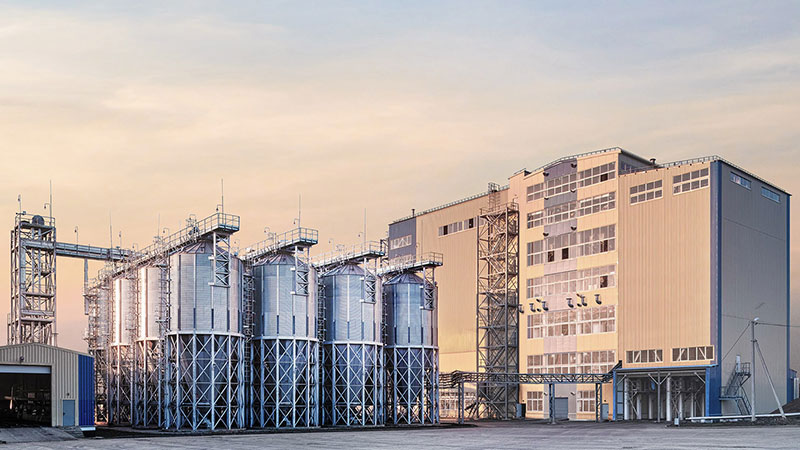
At RICHI, we go beyond project completion. With RICHI Servicee, we’re your dedicated partners in success. Count on us for expert guidance, minimal downtime, and optimized productivity. Choose RICHI for unmatched service and support.
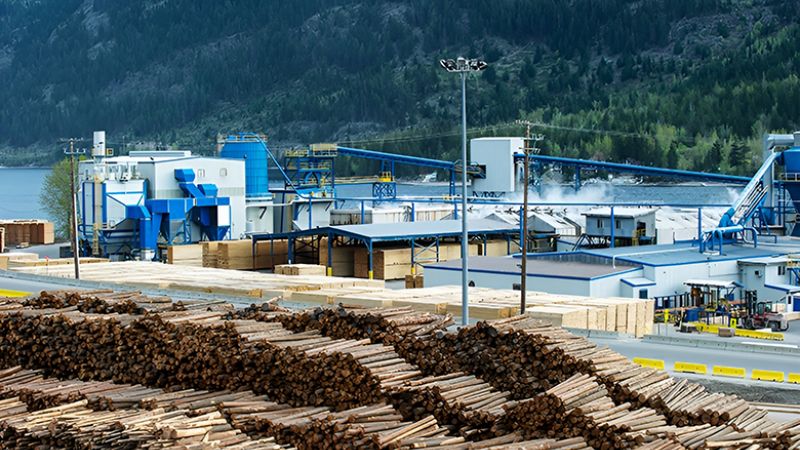


Meet global product demands and quality standards with industry-leading pellet plant design, engineering, equipment, and construction services for pellet processors.


Your Partner Beyond Project Completion
2000+ cases
RICHI is the leading designer, manufacturer and builder of pellet plants in the world, completing over 2000 projects in 140 countries across 6 continents.
Read More
Increase plant productivity, profitability, and safety by integrating high quality equipment into your pellet production line. Over the years, RICHI has become China's top pellet equipment manufacturer. At the same time, RICHI has established valuable partnerships with the world's leading component and raw material manufacturers to bring you the best there is in technology, automation, and efficiency in pelleting plant machinery.

For nearly 30 years, RICHI has been providing best-in-class pellet plant equipment and services to clients across a variety of industries, sizes, and needs. We pride ourselves on the knowledge and skill that each team member possesses – from our technical sales team to our process design engineers. You can count on RICHI Machinery to take your operation to the next level of innovation, quality, and success.
Need help with your pellet manufacturing plant project? Contact us today.
ANIMAL FEED
BIOMASS
WOOD
ORGANIC FERTILIZER
AQUA FEED
CAT LITTER
MUNICIPAL WASTE RECYCLING
SPECIAL PELLET PRODUCTION
RICHI Machinery continues to deliver world class pellet mill equipment, pellet plant engineering and project solutions that add value to our customers in the animal feed, wood waste, agriculture waste, organic fertilizer, cat litter and special pellet products industries. Throughout the years, we RICHI Machinery have built strong brand, becoming industry-leading pellet machine manufacturer. We value integrity, promise quality, and prioritize your success.
Learn MoreWith our expert team, we precisely implement your process engineering requirements in pellet mill and pelletizing plant systems. No matter which industry you’re in – we understand your needs and deliver solutions that meet the highest standards.
At RICHI, quality comes first. Our pellet making machine and related pellet line equipment undergo rigorous quality controls to ensure they meet the highest standards. Rely on products that are durable, safe, and efficient.
With decades of experience in pellet machine and pellet production line production, we have earned a reputation as a trusted partner in various industries. Our expertise allows us to cover a wide range of applications.
Not only do we offer premium pelleting equipment, but we are also experts at designing, building, installing, and maintaining facilities from the ground up. Our expertise is within pellt plant process design, discovering the most efficient, productive, and profitable way to handle your materials in an end-to-end cycle.
○ RICHI MACHINERY
Keeping in touch with us is an effective way to solve all your problems. If you have any needs or questions, please leave your contact information, then RICHI technical consultants will send design, quotation, videos to your mailbox. You can also contact us directly via WhatsApp: +86 13838389622
Copyright©2015-2026 by HENAN RICHI MACHINERY CO., LTD. All rights reserved.