
A Luzon fertilizer processor uses a manure dewater machine and FZLH420 granulator to separate wet livestock manure, prepare stabilized organic material, and produce 8 mm fertilizer pellets.
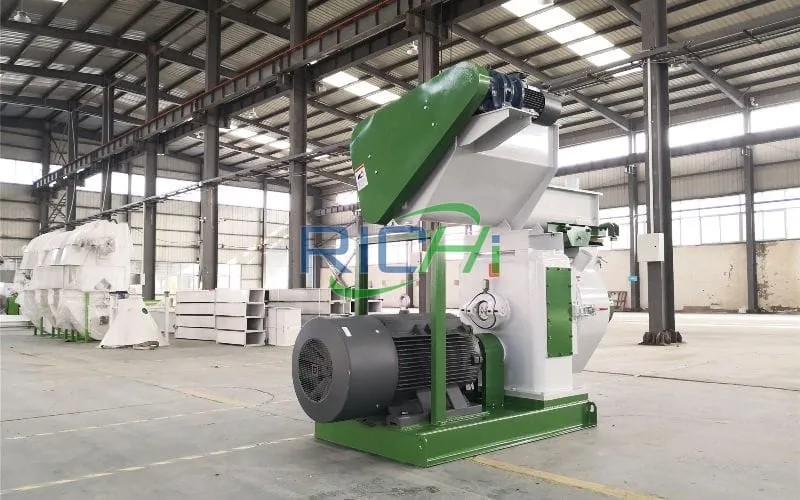
A Manure Dewater Machine and Granulator in Philippines was selected by an organic fertilizer processor in Luzon to upgrade two different stages of its manure-handling operation. The customer purchased a manure dewatering unit for wet livestock waste and one FZLH420 ring-die fertilizer granulator for the finished pellet section.
This was not a complete new fertilizer factory. The equipment package was intended to connect with the customer's existing organic-material preparation process, allowing the company to improve wet-manure handling at the front end and add higher-capacity cylindrical pellet production at the other end.
The two machines do very different jobs. Dewatering removes part of the free liquid from wet manure and reduces the amount of water carried into subsequent treatment. The FZLH420 only operates much later, after the solid material has been stabilized, prepared to a suitable particle size, blended and adjusted to a pelletizing moisture range.
Name:
ring-die granulator
Country:
Philippines
Date:
2026
Capacity:
6–8 T/H
Model:
FZLH420
Main Motor Power:
90 kW
Raw Materials:
manure, agricultural waste
Pellet diameter:
8 mm
The processor handles pig manure as the principal livestock waste, with chicken manure available for selected fertilizer formulations. These materials can arrive with high and variable moisture, especially where manure collection includes wash water or liquid handling.
Such material is unsuitable for direct ring-die granulation. Feeding high-moisture manure straight into the FZLH420 fertilizer granulator machine would create unstable material flow, poor compression and difficult downstream drying.
The manure dewatering machine is therefore positioned near the wet-manure receiving stage. Its job is to separate a portion of the liquid phase from the solids before biological treatment and fertilizer preparation.
The solid fraction leaving mechanical dewatering is not treated as finished granulator feed. It still requires stabilization and moisture management before it reaches the pelletizing section.
Mechanical dewatering changes water content and physical handling characteristics, but it does not mature fresh manure.
For this project, the separated solids continue into a controlled organic-fertilizer preparation route. Depending on the actual manure source and formulation, carbon-rich materials can be added to improve pile structure, aeration and moisture balance during biological treatment.
The customer evaluates materials such as rice husk and suitable coconut-derived fibre because both are available within Philippine agricultural supply chains. Their inclusion is based on the composting requirement and fertilizer specification rather than one permanent percentage formula.
Only after the manure-based material has been properly stabilized does it move toward crushing, screening, formulation and final moisture adjustment for pelletizing.
High-moisture manure is difficult to move and can create unnecessary volume in a fertilizer-processing operation. Removing part of the free liquid reduces the amount of water that has to be managed in later stages.
The dewatering step can also create two more manageable streams:
The liquid stream is not discharged simply because it has passed through a separator. Nutrients and suspended solids can remain in the liquid, so its management has to follow the customer's environmental and agricultural-use plan.
This separation is particularly useful where a fertilizer processor receives manure from pig farms using relatively wet collection systems.
The Philippines gives the customer access to several agricultural residues, but they should not be treated as interchangeable filler.
Rice husk can contribute dry structural material and help modify the physical behavior of a wet manure mixture. Its silica-rich ash characteristics also mean that excessive inclusion can change the mineral fraction of the finished fertilizer.
Coconut coir or properly prepared coco-based material can provide carbon and structure, but fibre length has to be controlled before ring-die pelletizing. Long coir strands are unsuitable for direct feeding into the granulator.
Chicken manure provides a different nutrient profile from pig manure and can be incorporated when it fits the fertilizer specification. It is not added simply to make every formula appear more nutrient-rich.
The plant therefore formulates from material analysis, moisture, maturity and finished-fertilizer targets rather than relying on a fixed 60:20:15:5 recipe.
| Project Parameter | Configuration |
|---|---|
| Equipment | Organic fertilizer ring-die granulator |
| Model | FZLH420 |
| Quantity | 1 unit |
| Main Motor Power | 90 kW |
| Anti-Bridging Feeder Power | 3 kW |
| Forced Feeder Power | 1.5 kW |
| Ring Die Inner Diameter | 420 mm |
| Available Pellet Diameter | 4–12 mm |
| Project Pellet Diameter | 8 mm |
| Reference Capacity | 6–8 T/H |
| Main Feedstock | Prepared and stabilized manure-based organic fertilizer mixture |
The FZLH420 provides a reference pelletizing capacity of 6–8 T/H under suitable feed conditions. Its 90 kW main motor, 3 kW anti-bridging feeder, 1.5 kW forced feeder and 420 mm ring die match the confirmed RICHI fertilizer granulator configuration.
The 6–8 T/H figure applies to the granulation machine, not to raw manure receiving or the entire fertilizer factory. Wet-manure input tonnage, composting output and finished-pellet production cannot be treated as one identical throughput figure because substantial water is removed and material composition changes throughout the process.
This is an important design point for a manure dewater machine and granulator project.
The dewatering unit handles wet manure before water removal. The pelletizer handles a much drier and more concentrated organic mixture after stabilization and preparation. A tonne entering the wet end is therefore not equivalent to a tonne reaching the ring die.
Selection of the dewatering machine should be based on daily manure volume, incoming solids concentration, collection method and required operating hours. Selection of the FZLH420 organic fertilizer pellet machine is based on the amount of qualified dry-basis fertilizer material that reaches the pelletizing section.
Matching the two machines by identical nameplate tonnes per hour would give a misleading capacity calculation.
The Manure Dewater Machine and Granulator in Philippines operate at different points in the customer's fertilizer process rather than as two machines connected directly outlet-to-inlet.
This process keeps biological treatment, moisture removal and mechanical densification in the correct order.
The manure separator is not expected to reduce fresh slurry directly to the final moisture required by the FZLH420.
After mechanical separation, biological treatment and any required drying or moisture adjustment continue until the stabilized mixture is suitable for ring-die pelletizing. For many manure-based fertilizer formulations, prepared feed entering this type of pellet mill is commonly controlled within roughly the low-to-mid twenties or below, with the actual operating point determined from material behavior.
RICHI's fertilizer pelletizing guidance uses approximately 12–25% as a broad feed-moisture window for properly prepared organic materials. The working value still depends on manure type, fibre content, bulk density and die specification.
Running wetter material simply because the feeder can move it does not guarantee a stable pellet.
The customer uses an 8 mm die for its principal cylindrical fertilizer pellet.
This size provides a practical product for bagging, storage and agricultural distribution while remaining within the FZLH420's 4–12 mm operating range.
The diameter is a physical specification rather than a nutrient specification. An 8 mm pellet does not contain more nitrogen or organic matter than a 6 mm pellet made from the same formulation.
If a distributor later requests another physical specification, the plant can evaluate a different ring die. Production is still centered on one principal size to reduce unnecessary die changes and simplify process control.
Stabilized manure fertilizer can remain relatively light and irregular compared with mineral fertilizer powder. Fibrous ingredients can also reduce natural flow through a conventional hopper.
The FZLH420 therefore uses an anti-bridging device together with a forced feeder. These components help maintain controlled delivery into the pelletizing chamber when bulk density changes between batches.
The feeding system cannot compensate for long coconut fibre, large rice-husk agglomerates or poorly crushed compost. Material preparation remains necessary before the mixture reaches the granulator.
Stable pellet production depends on both preparation quality and feeder control.
The processor can use pig manure, chicken manure, rice-derived material and coconut-derived material within the same fertilizer business, but the machine does not decide their nutritional proportions.
Formula design should consider laboratory analysis, organic matter, nutrient targets, moisture, maturity, ash content and the market specification of the finished fertilizer.
Adding large quantities of rice husk solely because it improves physical structure can dilute nutrient concentration. Increasing chicken manure only to raise nitrogen can also alter moisture, salts and pelletizing behavior.
The customer therefore treats formulation and mechanical pelletability as related but separate decisions.
Livestock manure and agricultural residues can contain stones, metal, sand and other contaminants depending on collection and storage practices.
These materials do not contribute to fertilizer value and can accelerate wear inside the granulator.
The plant therefore uses material inspection and screening before fine preparation. Long fibres are shortened, hard foreign objects are removed where practical, and large compost lumps are broken down before mixing.
This helps protect the FZLH420 ring die and rollers while producing a more consistent feed to the pelletizing chamber.
Freshly compressed fertilizer pellets leave the ring die warmer than ambient conditions. Packing them immediately can trap heat and residual moisture inside the bag.
The pellets therefore pass through a cooling stage before final screening and storage.
Screening separates qualified product from fines and broken particles. Suitable fines can be returned to an appropriate upstream processing point instead of being treated as finished product.
Where the pellet moisture remains above the customer's storage requirement, additional drying has to be evaluated separately. Cooling should not be assumed to perform the same function as a dryer.
Installing a manure dewatering machine changes how the customer manages livestock waste inside the facility.
The solid fraction becomes easier to move into fertilizer processing, but the separated liquid still contains recoverable nutrients and requires controlled handling.
Depending on the site, the liquid can enter storage, further treatment or an approved agricultural-use system. Pumps, tanks, drainage and cleaning arrangements therefore form part of dewatering-section planning even though they are not part of the FZLH420 pelletizer.
This is one reason manure dewatering should be considered a waste-handling operation as well as a fertilizer-preparation step.
The pelletizer can only use material that has completed the preceding stages.
If the composting section releases 30 tonnes of qualified stabilized material during a particular production period, the FZLH420 can pelletize that stock in scheduled batches. It does not need to run continuously throughout every hour that manure is being collected or composted.
The same principle applies downstream. Cooling, screening and packaging have to receive the real pellet output when the granulator is operating.
This separation between biological processing time and mechanical pelletizing time is especially important when evaluating a manure fertilizer project.
If finished-pellet demand grows, the customer can evaluate adding another FZLH420.
Two units would provide a combined reference granulation capacity of approximately 12–16 T/H under suitable material conditions. That increase would apply only to the pelletizing section.
Before duplication, the company would need to check compost availability, crushing capacity, mixer output, moisture-control equipment, cooling, screening and packaging. If one of those stages is already fully loaded, a second pelletizer would spend much of its time waiting for material.
Expansion therefore follows the measured process bottleneck rather than simply doubling every machine.
The manure-processing equipment was prepared for sea shipment from Qingdao, China, to the Manila port area before inland transport to the customer's fertilizer facility in Luzon.
Because the package includes both wet-manure handling equipment and a ring-die granulator, installation planning covers more than one foundation.
The project team checks the wet-manure feeding position, liquid-discharge arrangement, floor drainage, dewatering-machine access, FZLH420 foundation, electrical connection, prepared-material inlet, pellet discharge and maintenance clearance.
Shipping and customs schedules are coordinated against the confirmed cargo plan rather than presented as a fixed number of transit days.
Livestock manure and crop-derived organic materials are both relevant to Philippine fertilizer production. Pig and chicken manure can provide the biological and nutrient base, while rice and coconut processing create additional materials that may be incorporated when their properties match the fertilizer formulation.
The Philippine Coconut Authority lists pig manure, chicken manure, coconut husk and coir-related materials among organic resources used in agricultural soil-amendment systems, although their nutrient compositions differ substantially. This makes formulation and laboratory analysis more important than simply blending locally available wastes together.
For the Luzon customer, local availability creates flexibility in sourcing, but each material still has to meet the requirements of composting, nutrient formulation and pelletizing.
A Manure Dewater Machine and Granulator in Philippines should be selected as two connected process functions rather than as two machines with matching nominal capacities. The dewatering unit handles wet manure at the front of the process; the fertilizer granulator handles stabilized and prepared material much later.
For another Philippine manure-fertilizer project, RICHI Machinery would first review animal type, manure collection method, daily wet-manure volume, incoming solids content, required liquid-management route, composting method, structural materials, stabilized-material moisture, required pellet capacity, pellet diameter, operating hours and the capacities of existing crushing, mixing, cooling and packing equipment.
Those details determine the required manure dewatering machine and whether one FZLH420 is appropriately sized for the pellet section. They also show whether the most valuable investment is dewatering, compost preparation, granulation or another process stage that currently limits the factory.
Having the right mix of reliable, high-quality pellet machine and pelletizing systems and expert support is essential to your success. Watch how our end-to-end feed pellet plant solutions have helped our customers optimize their performance.
Our customized and future-proofed turnkey pellet plant solutions is designed with you at the core. From vision to reality and beyond, our team stays connected with yours. Giving you peace-of-mind with an expert at your side.
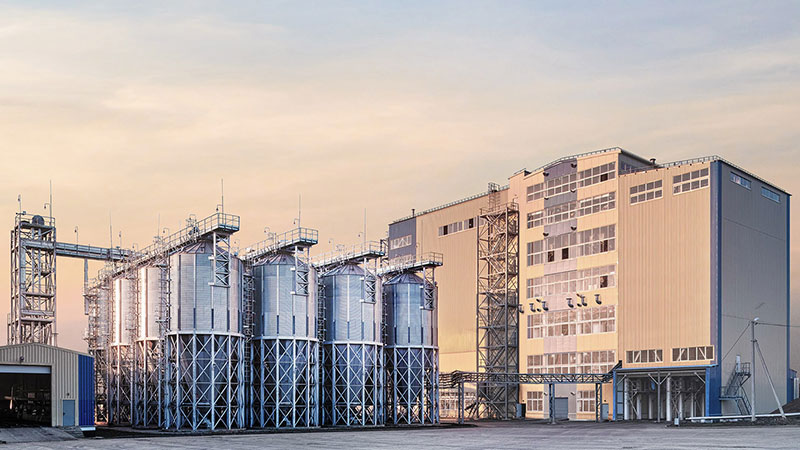
At RICHI, we go beyond project completion. With RICHI Servicee, we’re your dedicated partners in success. Count on us for expert guidance, minimal downtime, and optimized productivity. Choose RICHI for unmatched service and support.
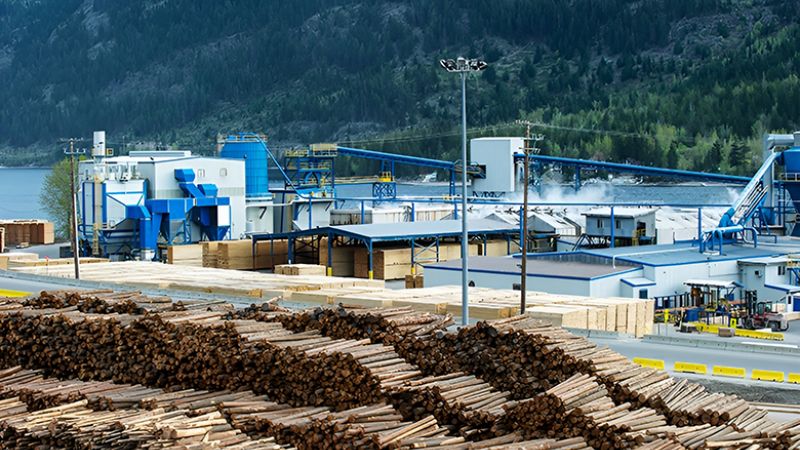


Meet global product demands and quality standards with industry-leading pellet plant design, engineering, equipment, and construction services for pellet processors.


Your Partner Beyond Project Completion
2000+ cases
RICHI is the leading designer, manufacturer and builder of pellet plants in the world, completing over 2000 projects in 140 countries across 6 continents.
Read More
Increase plant productivity, profitability, and safety by integrating high quality equipment into your pellet production line. Over the years, RICHI has become China's top pellet equipment manufacturer. At the same time, RICHI has established valuable partnerships with the world's leading component and raw material manufacturers to bring you the best there is in technology, automation, and efficiency in pelleting plant machinery.

For nearly 30 years, RICHI has been providing best-in-class pellet plant equipment and services to clients across a variety of industries, sizes, and needs. We pride ourselves on the knowledge and skill that each team member possesses – from our technical sales team to our process design engineers. You can count on RICHI Machinery to take your operation to the next level of innovation, quality, and success.
Need help with your pellet manufacturing plant project? Contact us today.
ANIMAL FEED
BIOMASS
WOOD
ORGANIC FERTILIZER
AQUA FEED
CAT LITTER
MUNICIPAL WASTE RECYCLING
SPECIAL PELLET PRODUCTION
RICHI Machinery continues to deliver world class pellet mill equipment, pellet plant engineering and project solutions that add value to our customers in the animal feed, wood waste, agriculture waste, organic fertilizer, cat litter and special pellet products industries. Throughout the years, we RICHI Machinery have built strong brand, becoming industry-leading pellet machine manufacturer. We value integrity, promise quality, and prioritize your success.
Learn MoreWith our expert team, we precisely implement your process engineering requirements in pellet mill and pelletizing plant systems. No matter which industry you’re in – we understand your needs and deliver solutions that meet the highest standards.
At RICHI, quality comes first. Our pellet making machine and related pellet line equipment undergo rigorous quality controls to ensure they meet the highest standards. Rely on products that are durable, safe, and efficient.
With decades of experience in pellet machine and pellet production line production, we have earned a reputation as a trusted partner in various industries. Our expertise allows us to cover a wide range of applications.
Not only do we offer premium pelleting equipment, but we are also experts at designing, building, installing, and maintaining facilities from the ground up. Our expertise is within pellt plant process design, discovering the most efficient, productive, and profitable way to handle your materials in an end-to-end cycle.
○ RICHI MACHINERY
Keeping in touch with us is an effective way to solve all your problems. If you have any needs or questions, please leave your contact information, then RICHI technical consultants will send design, quotation, videos to your mailbox. You can also contact us directly via WhatsApp: +86 13838389622
Copyright©2015-2026 by HENAN RICHI MACHINERY CO., LTD. All rights reserved.