
Layer Poultry Feed Pellet Machine for Egg Farm in Indonesia: two SZLH320 presses, 4 mm pellet bases, coarse calcium handling and daily feed capacity planning.
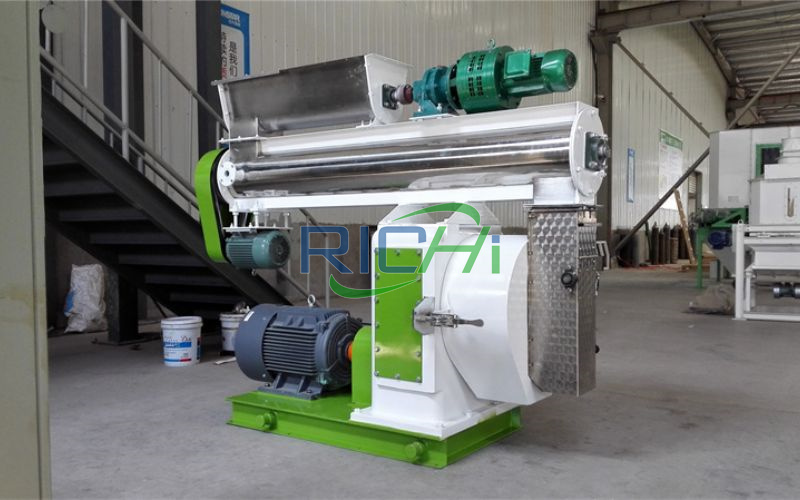
Hens still need feed when the mill stops for cleaning or its weekly rest day. For a large egg farm, a pellet press must fit the daily feeding schedule, available storage and the way calcium reaches each house.
This illustrative application considers an egg producer in Blitar, East Java, with a planning flock of 600,000 laying hens. The proposed equipment purchase is two SZLH320 pellet mills connected to existing grinding, mixing and cooling equipment. The farm would evaluate a pelleted feed base with coarse limestone blended after cooling, using selected-house trials before wider adoption.
Name:
Layer Feed Pellet Machine
Country:
Indonesia
Date:
2026
Capacity:
6–8 tonnes/hour combined
Model:
SZLH320
Main Motor Power:
37 kW
Ring die inner diameter:
320 mm
Pellet diameter:
4 mm
The product trial uses a 4 mm pellet base, cut to approximately 6–10 mm long. A controlled quantity of screened 2–4 mm limestone is added afterwards. The base is an intermediate product: it requires the specified calcium addition before feeding.
For sizing one example ration, the final blend comprises 94% cooled pellet base and 6% coarse limestone. Limestone assayed at 38% calcium would contribute 2.28 percentage points of calcium to that finished blend. Other calcium sources within the base contribute separately. The nutritionist sets total calcium, fine-to-coarse balance and phosphorus for each flock phase.
This route keeps the designated coarse calcium fraction outside the press. Limestone solubility, particle distribution and contamination need checking before purchase. Grinding all calcium sources to one fine size would remove the particle-size distinction the feeding programme is intended to preserve.
The farm should compare the proposed presentation with its established coarse mash in selected houses. Feed intake, segregation and feeder performance belong in that evaluation. Pelleting alone cannot establish an improvement in egg output or shell quality.
Each SZLH320 poultry feed pellet machine has a published general feed rating of 3–4 tonnes per hour. The application initially budgets 3 tonnes per hour per press, subject to trials with the approved base formula. Both units process the same batch when using a common cooler.
| Parameter | Each press | Two-unit arrangement |
|---|---|---|
| Model | SZLH320 | Two units in parallel |
| Main motor | 37 kW | 74 kW |
| Feeder motor | 1.5 kW | 3 kW |
| Conditioner motor | 2.2 kW | 4.4 kW |
| Combined listed motor power | 40.7 kW | 81.4 kW, excluding auxiliaries |
| Ring die inner diameter | 320 mm | One die per press |
| Published general capacity | 3–4 tonnes/hour | 6–8 tonnes/hour combined |
| Application planning rate | 3 tonnes/hour | 6 tonnes/hour of pellet base |
| Pellet dimensions | 4 mm diameter; 6–10 mm length | Same trial specification |
Two smaller feed pellet machines allow individual servicing and adjustment. One operating press provides partial production during maintenance; finished-feed stock covers the remaining requirement. Die material, compression ratio and roller settings must suit the mineral-bearing blend without relying on a promised wear-part lifespan.
A shared mash bin should feed each press through independent controlled feeders. Interlocks stop incoming feed if cooling or discharge is unavailable. During startup, the operator loads the units separately and checks steam pressure with both running. Boiler pressure at idle does not establish available steam under production load.
The proposed base uses maize, soybean meal, rice bran, approved protein ingredients, fine mineral sources and a layer-specific premix. Ingredient proportions follow analysed nutrient values. The coarse limestone fraction has its own measured addition route.
For trials, dry mash moisture starts at 12–14% on a wet basis. The existing hammer mill prepares grain to a provisional geometric mean particle size of 0.8–1.2 mm. Sieve analysis checks that distribution. Rice bran is assessed for freshness, moisture and residual oil because changing bran quality can change pressing behaviour.
Added fat must be considered alongside native ingredient oil. Excess lubrication can weaken binding, so any post-pellet liquid addition requires suitable equipment and a defined dosing sequence. The purchase specification should identify where each liquid enters.
Conditioning trials establish temperature, retention time and moisture together. Premix and enzyme suppliers should confirm stability under those conditions. Warm incoming mash changes the heat balance, while wet steam introduces uncontrolled moisture. Steam separators, traps and pressure regulation need inspection before blaming the die for soft pellets.
At an illustrative intake of 110 g per hen daily, 600,000 hens require 66 tonnes of finished ration per day, or 24,090 tonnes over 365 days. Actual consumption varies with flock age, strain, egg mass and temperature, so the farm’s records determine final sizing.
The working plan allows fourteen productive hours per operating day over 312 days annually. At 6 tonnes per hour, the presses provide 26,208 tonnes of pellet base before losses. At the example 94:6 final blending ratio, that corresponds to approximately 27,881 tonnes of finished ration before losses.
A 3-tonne mixer machine supplying both presses needs a complete filling, mixing and discharge cycle within thirty minutes. Cooling must handle their simultaneous output. The post-cooling blending and discharge route is provisionally sized for at least 7 tonnes per hour to accommodate the added limestone. A separate integration allowance covers the limestone dosing feeder and final blender.
Six operating days must support seven feeding days. One day of finished-feed reserve would equal 66 tonnes at the example intake. Additional stock depends on maintenance plans and delivery arrangements between the mill and houses.
Commissioning checks pellet dimensions, screened fines, moisture and durability after cooling. Samples from the final mixer and house feeders are compared for calcium and particle distribution. Coarse limestone can separate during conveying, so an acceptable mixer sample alone does not establish uniform delivery.
The operating plan assigns a trained pelleting operator per shift, supported by existing mixing, boiler, blending and quality staff. Electrical review covers the two presses, simultaneous auxiliary loads and motor starting. A 400 V, three-phase, 50 Hz design basis requires confirmation against the site supply.
Installation drawings should show separate press isolation, feed division, cooler entry and die-removal access. Delivery planning can assess Qingdao to Tanjung Perak in Surabaya, followed by road transport to Blitar. Freight, installation assistance and spares are defined in the quotation.
For an Indonesian egg farm considering layer feed pelleting, RICHI Machinery needs actual daily consumption, limestone analyses, the approved calcium route and mixer and cooler capacities. Those details allow the pellet machine proposal to address continuous flock feeding and final-ration consistency alongside press output.
Having the right mix of reliable, high-quality pellet machine and pelletizing systems and expert support is essential to your success. Watch how our end-to-end feed pellet plant solutions have helped our customers optimize their performance.
Our customized and future-proofed turnkey pellet plant solutions is designed with you at the core. From vision to reality and beyond, our team stays connected with yours. Giving you peace-of-mind with an expert at your side.
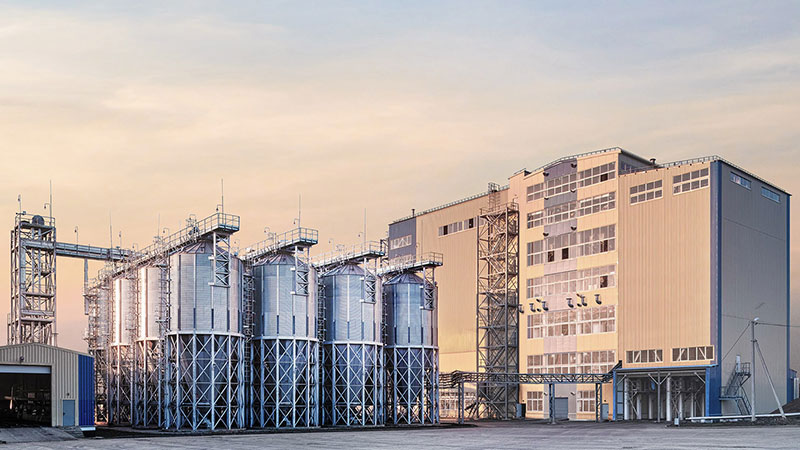
At RICHI, we go beyond project completion. With RICHI Servicee, we’re your dedicated partners in success. Count on us for expert guidance, minimal downtime, and optimized productivity. Choose RICHI for unmatched service and support.
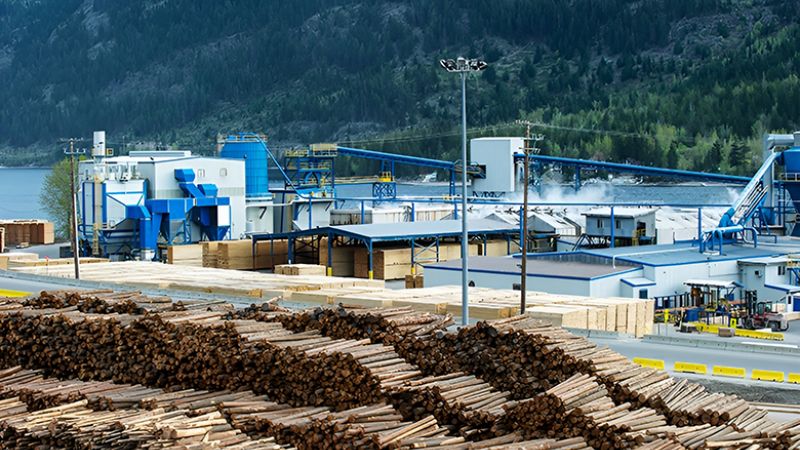


Meet global product demands and quality standards with industry-leading pellet plant design, engineering, equipment, and construction services for pellet processors.


Your Partner Beyond Project Completion
2000+ cases
RICHI is the leading designer, manufacturer and builder of pellet plants in the world, completing over 2000 projects in 140 countries across 6 continents.
Read More
Increase plant productivity, profitability, and safety by integrating high quality equipment into your pellet production line. Over the years, RICHI has become China's top pellet equipment manufacturer. At the same time, RICHI has established valuable partnerships with the world's leading component and raw material manufacturers to bring you the best there is in technology, automation, and efficiency in pelleting plant machinery.

For nearly 30 years, RICHI has been providing best-in-class pellet plant equipment and services to clients across a variety of industries, sizes, and needs. We pride ourselves on the knowledge and skill that each team member possesses – from our technical sales team to our process design engineers. You can count on RICHI Machinery to take your operation to the next level of innovation, quality, and success.
Need help with your pellet manufacturing plant project? Contact us today.
ANIMAL FEED
BIOMASS
WOOD
ORGANIC FERTILIZER
AQUA FEED
CAT LITTER
MUNICIPAL WASTE RECYCLING
SPECIAL PELLET PRODUCTION
RICHI Machinery continues to deliver world class pellet mill equipment, pellet plant engineering and project solutions that add value to our customers in the animal feed, wood waste, agriculture waste, organic fertilizer, cat litter and special pellet products industries. Throughout the years, we RICHI Machinery have built strong brand, becoming industry-leading pellet machine manufacturer. We value integrity, promise quality, and prioritize your success.
Learn MoreWith our expert team, we precisely implement your process engineering requirements in pellet mill and pelletizing plant systems. No matter which industry you’re in – we understand your needs and deliver solutions that meet the highest standards.
At RICHI, quality comes first. Our pellet making machine and related pellet line equipment undergo rigorous quality controls to ensure they meet the highest standards. Rely on products that are durable, safe, and efficient.
With decades of experience in pellet machine and pellet production line production, we have earned a reputation as a trusted partner in various industries. Our expertise allows us to cover a wide range of applications.
Not only do we offer premium pelleting equipment, but we are also experts at designing, building, installing, and maintaining facilities from the ground up. Our expertise is within pellt plant process design, discovering the most efficient, productive, and profitable way to handle your materials in an end-to-end cycle.
○ RICHI MACHINERY
Keeping in touch with us is an effective way to solve all your problems. If you have any needs or questions, please leave your contact information, then RICHI technical consultants will send design, quotation, videos to your mailbox. You can also contact us directly via WhatsApp: +86 13838389622
Copyright©2015-2026 by HENAN RICHI MACHINERY CO., LTD. All rights reserved.