
For a feed mill in Nakuru County, the value of a large alfalfa pellet machine in Kenya was not based on the idea that Kenyan dairy farms feed mainly on alfalfa. They do not. Napier grass, Rhodes grass, maize stover, maize silage, natural grasses and purchased concentrates are much more representative of everyday dairy feeding, while lucerne is used as a higher-protein forage or supplement where it is available. Kenyan agricultural programs in Nakuru also actively promote lucerne together with other protein-rich fodders rather than treating it as the country’s dominant forage crop.
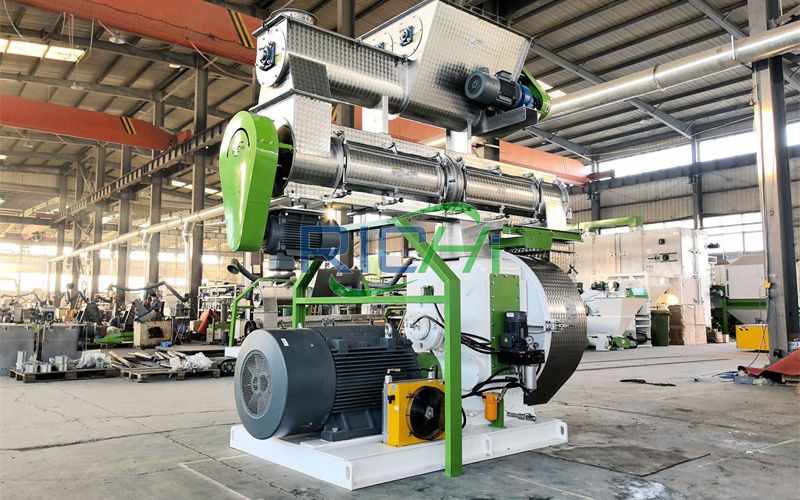
For a feed mill in Nakuru County, the value of a large alfalfa pellet machine in Kenya was not based on the idea that Kenyan dairy farms feed mainly on alfalfa. They do not. Napier grass, Rhodes grass, maize stover, maize silage, natural grasses and purchased concentrates are much more representative of everyday dairy feeding, while lucerne is used as a higher-protein forage or supplement where it is available. Kenyan agricultural programs in Nakuru also actively promote lucerne together with other protein-rich fodders rather than treating it as the country’s dominant forage crop.
That distinction shaped this project. The customer was an established forage processor and livestock-feed supplier serving commercial dairy farms and farmer cooperatives around Nakuru and neighboring dairy-producing areas. It already handled hay, dried grasses and crop residues. The new CZLH520 was purchased as a standalone pelletizer to add a concentrated forage-pellet product to the existing business, with lucerne as the principal high-protein component rather than pretending that every pellet contained 100% locally grown alfalfa.
Name:
Alfalfa Pellet Machine
Country:
Kenya
Date:
2025
Capacity:
2.8–3.0 T/H
Model:
CZLH520
Main Motor Power:
132 kW
Raw Materials:
dried lucerne, Rhodes grass hay
Pellet diameter:
6 mm
The machine was therefore sized around the customer’s existing forage collection network, not around one farm. At approximately 2.8–3.0 T/H under suitable material conditions, one CZLH520 requires a substantial and dependable supply of dry prepared forage. That scale makes considerably more sense for a commercial feed processor aggregating material from multiple suppliers than for an individual Kenyan dairy farmer.
The technical team developed the product around the forages that the mill could procure reliably throughout the year.
This reflects the reality of Kenyan dairy feeding. FAO references identify natural forage, cultivated fodder and crop by-products as major feed resources, with Napier particularly important in dairy systems. More recent Kenyan farm research also identifies Rhodes grass hay, Napier, maize and bean stover, maize silage and concentrates among commonly used feeds.
Lucerne nevertheless has a useful place in that system. Kenyan research has evaluated it as a protein supplement for dairy cattle, and current agricultural-development programs in Nakuru include lucerne among protein-rich fodders distributed to dairy groups.
For the Nakuru processor, that made lucerne valuable enough to justify a dedicated pellet product, but not abundant enough to assume that every tonne of output should be pure alfalfa.
The commercial formulation varies with the season. A representative dairy-forage pellet contains approximately 30–40% dried lucerne, 25–35% Rhodes grass hay or other suitable grass hay, 15–25% dried Napier grass, and a smaller proportion of milled cereal by-products such as wheat bran or maize bran.
The exact ratio is not fixed because forage availability and nutritional analysis change between purchasing periods.
During periods when good-quality lucerne hay is more readily available, its inclusion can be increased. When supply tightens, the processor does not substitute poor-quality lucerne simply to maintain a label claim. Instead, the formulation is recalculated around available grass hay, Napier and appropriate concentrate ingredients.
This makes the pellets a practical supplementary forage product for dairy cattle rather than a complete replacement for the farm’s entire feeding program.
Lucerne is the ingredient that differentiates this product commercially.
The customer buys dried lucerne from contracted forage growers and traders and uses it to raise the protein quality of the forage blend. The pellets are primarily sold to dairy farms that already feed silage, fresh forage or hay but want a denser and easier-to-handle supplementary feed during periods of variable forage quality.
A smaller volume of higher-lucerne pellets can also be produced for customers specifically requesting a protein-rich forage supplement.
The CZLH520 does not lock the processor into one formula. That flexibility was one of the reasons a standalone machine was preferred.
Machine capacity was evaluated against annual raw-material procurement before the order was confirmed.
At an actual average output close to 2.8 T/H, an eight-hour production day can require more than 20 tonnes of prepared dry material. Running 250 production days would put theoretical annual pellet output above 5,000 tonnes if the machine were continuously utilized at that rate.
The customer did not expect to operate at full load every working day from the beginning.
Instead, production is scheduled according to hay purchasing, contracts and finished-product demand. The mill can operate longer campaigns when dry forage is abundant and reduce pellet production when lucerne supply or market demand falls.
This procurement logic is particularly important in Kenya, where feed availability and quality can fluctuate substantially with rainfall and season. Research in Nakuru has documented intra-annual variation in available dairy feed resources.
The pelletizer is not designed to accept whole bales.
Rectangular or round hay bales must first be opened. Long forage is then chopped and ground so that the CZLH520 receives a reasonably uniform fibrous meal rather than long stems.
For this project, final material entering the pelletizing section is generally reduced to particles of several millimeters, with long fibers eliminated before the forced feeder.
Moisture is equally important.
The mill purchases hay as dry as practicable and stores it under cover. Material that has absorbed excessive moisture during storage is not sent directly to the pelletizer. Conversely, an excessively dry and dusty formulation may require controlled conditioning before compression.
The final operating point is adjusted according to formulation, ambient conditions, die load, pellet durability and actual production performance rather than applying one moisture number to every combination of lucerne, Rhodes grass and Napier.
| Parameter | Project Configuration |
|---|---|
| Machine | Large Alfalfa Pellet Machine |
| Model | CZLH520 |
| Main Motor Power | 132 kW |
| Arch-Breaking Feeder | 3 kW |
| Forced Feeder | 1.5 kW |
| Ring Die Inner Diameter | 520 mm |
| Available Pellet Diameter | 4–12 mm |
| Project Pellet Diameter | 6 mm |
| Reference Capacity | 2.8–3.0 T/H |
The customer settled on 6 mm pellets for its main dairy product. Rather than frequently switching between 4, 6 and 8 mm simply because the machine can produce different diameters, the processor standardized its commercial forage pellet around one specification.
This simplified die management, production planning, cooling, screening and customer communication.
Forage meal does not flow like maize meal.
Ground lucerne and dried grasses are light, fibrous and relatively low in bulk density. Material can bridge in a conventional hopper instead of falling evenly into the compression chamber.
That is why the arch-breaking and forced-feeding arrangement matters in this application. The first system keeps the prepared forage moving in the hopper, while the forced feeder meters the low-density fibrous material into the pelletizing chamber more consistently.
The customer also paid particular attention to ring-die compression.
A die selected for conventional grain-rich compound feed is not automatically suitable for a forage-heavy formula. Fiber content, particle size, formulation and moisture all change resistance through the die.
The final die specification was therefore matched to the Kenyan customer’s tested forage blend rather than selected only from the required 6 mm diameter.
Pellets leaving the CZLH520 grass pellet machine are warm and mechanically softer than the final product.
The customer already had conveying and product-handling equipment, but cooling capacity had to be checked against the new pelletizer’s output. Adequate cooling allows the pellets to stabilize before screening and storage.
Fines separated during screening can be returned to production when their quality remains acceptable.
The processor pays close attention to fines because one of the commercial reasons for pelletizing forage is to reduce the separation and handling losses associated with loose chopped material. Producing fragile pellets that disintegrate during trucking would defeat part of that purpose.
The processor was careful about how the new product was marketed.
Pelletizing forage does not mean every dairy farm should stop feeding fresh Napier, silage or hay. Napier remains deeply established in Kenyan dairy feeding, particularly in intensive and smallholder systems.
The pellets solve a different problem.
They provide a compact, standardized forage supplement that can be transported and stored more easily than bulky loose forage. They are particularly useful when a farm needs purchased feed during dry periods, has insufficient land for its own fodder production, or wants a more consistent supplementary ration.
That positioning also makes more commercial sense than promising that pelletization itself will automatically increase milk yield. Animal performance ultimately depends on the complete ration, forage quality, dry-matter intake, animal genetics, health and farm management.
Nakuru County gives this project access to an established dairy economy and a diverse forage base.
Government-supported dairy groups in the county are already involved in growing and bulking protein-rich fodders including lucerne, alongside fodder trees, grasses and other crops.
For the customer, this matters more than claiming that Kenya has unlimited year-round alfalfa.
A forage pellet business needs procurement diversity. Depending on one crop would expose the mill to unnecessary seasonal and price risk. The ability to combine lucerne with locally available grass hay, dried Napier and selected milling by-products gives the plant more control over both nutrition and cost.
The commissioning team did not immediately push the CZLH520 to its upper reference capacity.
Initial production was used to establish feeder settings, die behavior and acceptable pellet durability for several formulations. Lucerne-rich batches behaved differently from blends containing more grass fiber, and the operators learned to adjust feed rate rather than forcing every recipe through the machine at exactly the same tonnes per hour.
Once stable conditions were established, the customer could approach the 2.8–3.0 T/H reference range on suitable prepared formulations.
For higher-fiber or more difficult batches, the plant accepts a lower throughput if that produces a stronger pellet and avoids excessive motor load.
The customer already owned the most important upstream infrastructure: forage receiving space, bale handling, size-reduction equipment, mixing equipment and covered raw-material storage.
Buying a complete greenfield line would therefore have duplicated equipment.
The standalone CZLH520 was installed between the existing preparation section and the downstream cooling and handling system. Interface dimensions, conveyor capacity, electrical load and maintenance clearance were reviewed before installation.
The customer was adding commercial pelletizing capacity to an operating feed business rather than duplicating the existing forage-processing infrastructure.
The CZLH520 was exported from Qingdao Port, China, to the Port of Mombasa, Kenya.
Before shipment, the customer received foundation information, motor and electrical requirements, machine dimensions and interface drawings so that preparation work could continue while the equipment was in transit.
Commissioning concentrated on forage-specific operating issues: stable feeding of low-density material, ring-die and roller adjustment, correct start-up sequence, monitoring main-motor load, clearing the feeder safely, lubrication and wear-part inspection.
Operator training also covered the point that machine settings cannot compensate indefinitely for poorly prepared raw material. A large alfalfa pellet machine performs most consistently when particle size, moisture and formulation are controlled before the material reaches the feeder.
“Our biggest concern was feeding the machine consistently because our forage is not one uniform material throughout the year. Lucerne, Rhodes hay and dried Napier all behave differently. Once we standardized grinding and learned the feeder settings for each blend, production became much more predictable. We now have a 6 mm forage pellet that we can supply when dairy customers need purchased roughage supplements, especially when their own fodder supply is tight.”
The customer did not immediately order a second pelletizer.
Its next priority was securing more contracted forage supply and building the sales volume required to keep the existing CZLH520 utilized for longer campaigns. That decision reflects the economics of forage processing: adding machine capacity before securing raw material and customers can create expensive idle equipment.
The strongest opportunity is not necessarily a nationwide market for pure alfalfa pellets.
A more realistic opportunity lies in densified forage products built around regional feed resources. Kenyan dairy farms commonly work with Napier, Rhodes grass, crop residues, silage and concentrates, while lucerne and other protein forages can strengthen the nutritional value of selected products.
That creates several possible customers for a commercial forage processor: larger dairy farms purchasing supplementary feed, feed distributors, cooperatives, intensive livestock operations and farms facing seasonal forage deficits.
For these customers, consistency matters more than an exaggerated claim that pellets are automatically nutritionally superior to hay. Pelletizing mainly changes density, handling characteristics, physical uniformity and storage convenience. Nutritional value still begins with the ingredients entering the machine.
This large alfalfa pellet machine in Kenya project supports commercial forage-pellet production for the Nakuru feed processor.
The CZLH520 gives the Nakuru feed processor approximately 2.8–3.0 T/H of reference pelletizing capacity with suitable prepared materials, using a 132 kW main motor, 3 kW arch-breaking feeder, 1.5 kW forced feeder and 520 mm ring die. The principal commercial product is a 6 mm dairy forage pellet.
More importantly, the raw-material strategy matches the country. Lucerne remains an important protein forage, but it is combined with feeds that are much more deeply embedded in Kenyan dairy production rather than being presented as an unlimited year-round raw material.
For another Kenyan customer considering a CZLH520 or a larger forage pellet system, RICHI Machinery would first calculate available tonnes of dry lucerne and other forage, seasonal procurement changes, bale form, moisture, grinding requirements, planned operating hours, existing equipment, pellet specification and actual buyers. Only then should machine capacity be finalized.
A 3 T/H machine can process more than 20 tonnes during a full eight-hour production day. At that level, the key question is no longer simply “Can this machine pelletize alfalfa?” It is whether the business can continuously collect, prepare and sell enough forage to make that capacity economically useful.
Having the right mix of reliable, high-quality pellet machine and pelletizing systems and expert support is essential to your success. Watch how our end-to-end feed pellet plant solutions have helped our customers optimize their performance.
Our customized and future-proofed turnkey pellet plant solutions is designed with you at the core. From vision to reality and beyond, our team stays connected with yours. Giving you peace-of-mind with an expert at your side.
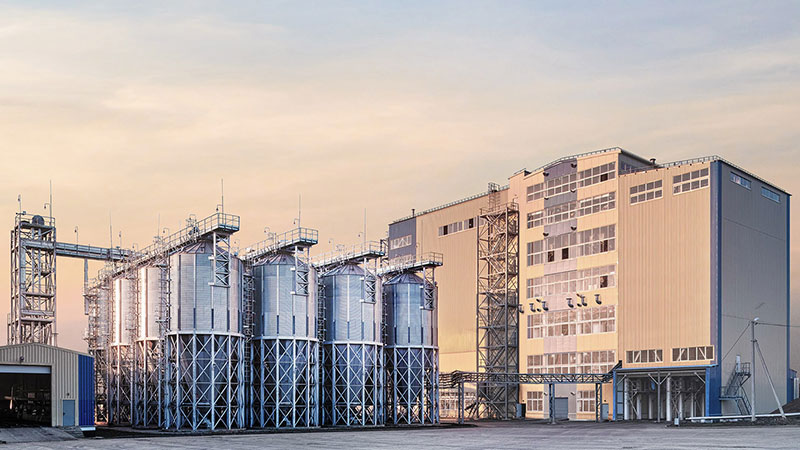
At RICHI, we go beyond project completion. With RICHI Servicee, we’re your dedicated partners in success. Count on us for expert guidance, minimal downtime, and optimized productivity. Choose RICHI for unmatched service and support.
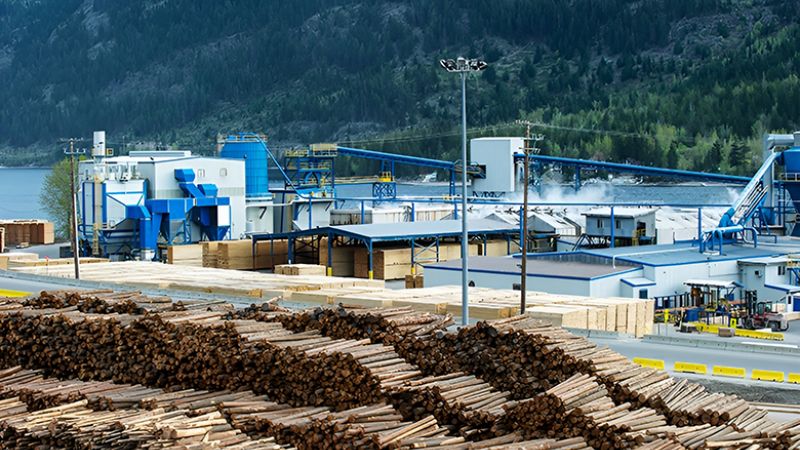


Meet global product demands and quality standards with industry-leading pellet plant design, engineering, equipment, and construction services for pellet processors.

Your Partner Beyond Project Completion
2000+ cases
RICHI is the leading designer, manufacturer and builder of pellet plants in the world, completing over 2000 projects in 140 countries across 6 continents.
Read More
Increase plant productivity, profitability, and safety by integrating high quality equipment into your pellet production line. Over the years, RICHI has become China's top pellet equipment manufacturer. At the same time, RICHI has established valuable partnerships with the world's leading component and raw material manufacturers to bring you the best there is in technology, automation, and efficiency in pelleting plant machinery.

For nearly 30 years, RICHI has been providing best-in-class pellet plant equipment and services to clients across a variety of industries, sizes, and needs. We pride ourselves on the knowledge and skill that each team member possesses – from our technical sales team to our process design engineers. You can count on RICHI Machinery to take your operation to the next level of innovation, quality, and success.
Need help with your pellet manufacturing plant project? Contact us today.
ANIMAL FEED
BIOMASS
WOOD
ORGANIC FERTILIZER
AQUA FEED
CAT LITTER
MUNICIPAL WASTE RECYCLING
SPECIAL PELLET PRODUCTION
RICHI Machinery continues to deliver world class pellet mill equipment, pellet plant engineering and project solutions that add value to our customers in the animal feed, wood waste, agriculture waste, organic fertilizer, cat litter and special pellet products industries. Throughout the years, we RICHI Machinery have built strong brand, becoming industry-leading pellet machine manufacturer. We value integrity, promise quality, and prioritize your success.
Learn MoreWith our expert team, we precisely implement your process engineering requirements in pellet mill and pelletizing plant systems. No matter which industry you’re in – we understand your needs and deliver solutions that meet the highest standards.
At RICHI, quality comes first. Our pellet making machine and related pellet line equipment undergo rigorous quality controls to ensure they meet the highest standards. Rely on products that are durable, safe, and efficient.
With decades of experience in pellet machine and pellet production line production, we have earned a reputation as a trusted partner in various industries. Our expertise allows us to cover a wide range of applications.
Not only do we offer premium pelleting equipment, but we are also experts at designing, building, installing, and maintaining facilities from the ground up. Our expertise is within pellt plant process design, discovering the most efficient, productive, and profitable way to handle your materials in an end-to-end cycle.
○ RICHI MACHINERY
Keeping in touch with us is an effective way to solve all your problems. If you have any needs or questions, please leave your contact information, then RICHI technical consultants will send design, quotation, videos to your mailbox. You can also contact us directly via WhatsApp: +86 13838389622
Copyright©2015-2026 by HENAN RICHI MACHINERY CO., LTD. All rights reserved.