
Feed mixer machine with efficient discharge system in Kenya for poultry feed production, featuring a 500 kg batch capacity, twin-shaft paddles and fast pneumatic discharge.
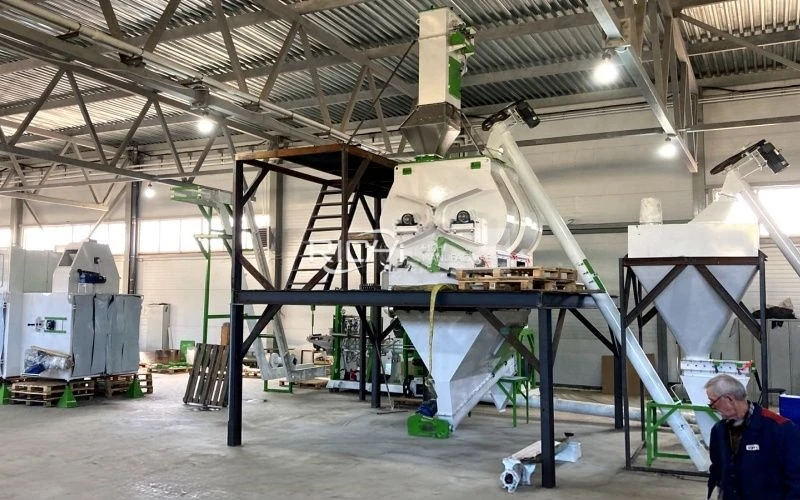
A layer farm in Kiambu County, north of Nairobi, needed to improve the way it prepared feed for its poultry operation. The farm housed approximately 25,000 laying hens across four barns and supplied eggs to the Nairobi market. It already had equipment for grinding maize and soybean meal, but its mixing stage had become a daily operational problem. The existing vertical screw mixer frequently retained feed in the bottom of its hopper, while its manual slide gate jammed during discharge.
After each batch, workers had to remove an estimated 50–70 kg of residual material by hand. The extra work added around 15 minutes to the batch cycle and made it more difficult to maintain consistent hygiene when changing between chick starter, grower and layer formulations. Replacing the gate twice had not solved the problem because the underlying limitation was the mixer’s discharge arrangement.
Name:
Feed Mixer Machine
Country:
Kenya
Date:
2026
Capacity:
500 kg per batch
Model:
SLHSJ1.0A
Main Motor Power:
7.5 kW
Drive arrangement:
Chain-driven
Construction material:
Carbon steel
Instead of purchasing a complete feed production line, the farm decided to replace only the mixer. Following a review of its daily production volume, ingredients and existing equipment, RICHI Machinery recommended the SLHSJ1.0A twin-shaft paddle mixer. With a 500 kg batch capacity, a 7.5 kW motor and a pneumatic drop-bottom discharge system, this feed mixer machine with efficient discharge system in Kenya was selected to reduce material carryover, shorten unloading time and simplify routine operation.
The farm required a mixer that could handle ground maize, soybean meal, wheat bran, limestone and vitamin-mineral supplements. It also needed to discharge each batch quickly enough to support several formulations during the working day. The SLHSJ1.0A offered a suitable batch size without requiring major changes to the farm's existing grinding and material-handling arrangements.
| Parameter | Specification |
|---|---|
| Machine model | SLHSJ1.0A |
| Equipment type | Twin-shaft paddle mixer |
| Main motor power | 7.5 kW |
| Batch capacity | 500 kg per batch |
| Discharge arrangement | Pneumatic full-opening drop-bottom doors |
| Discharge time | Approximately 5 seconds under the reported test conditions |
| Drive arrangement | Chain-driven |
| Construction material | Carbon steel |
| Primary application | Layer and pullet feed ingredient mixing |
The carbon steel construction was suitable for the farm's normal feed ingredients. The twin-shaft paddle arrangement provided the mixing action needed to distribute ground cereals, protein meals and mineral ingredients throughout the batch. The full-opening discharge was the decisive feature because it addressed the material retention problem that had affected the previous machine.
A mixer can achieve a satisfactory blend but still create problems if it cannot discharge the finished material cleanly. In this project, the old vertical mixer depended largely on gravity to empty its conical hopper. Material accumulated around the lower corners and outlet, leaving a substantial quantity behind even after the main batch had fallen out.
The SLHSJ1.0A uses two bottom doors that open together to create a wide discharge opening. Once the mixing cycle is complete, the pneumatic mechanism opens the doors and allows the paddles to continue moving material toward the outlet. Rather than forcing the feed through a relatively restricted slide gate, the full-opening arrangement provides a more direct path for the mixed material.
During the reported discharge test, the mixer emptied in approximately 4–6 seconds, with less than 0.5 kg of residue remaining. That result was a project-specific measurement rather than a guaranteed residue level for every formulation. Actual discharge performance depends on the ingredient blend, moisture, material flow characteristics, machine condition and correct adjustment of the doors.
The automatic discharge sequence was connected to the control system. At the end of the mixing cycle, the controller triggered the doors to open and then close before the next batch started. This reduced the need for manual intervention and helped operators maintain a more consistent production routine.
The farm produced several types of poultry feed, each with a different nutritional purpose. Chick starter feed required a different balance of protein and energy from grower feed, while layer feed needed an appropriate calcium supply to support eggshell formation. Changing formulations made reliable batch discharge particularly important.
The operating procedure established during commissioning included the following steps:
The operator used the specified loading sequence and filling level to maintain repeatable mixing conditions. The appropriate fill level must be based on the machine's effective working volume and the bulk density of the actual ingredients, rather than batch weight alone. The farm also checked the discharge doors and sealing surfaces between production runs.
The mixer supported the preparation of different layer-production diets. The following ingredient proportions represent the formulations reported for this project and are provided as examples of the materials handled, not as universal nutritional recommendations.
Commercial formulations should be verified by a qualified poultry nutritionist, particularly with respect to premix inclusion rates, calcium and available phosphorus, amino acid balance and the needs of birds at different production stages. The mixer provides uniform blending; it does not replace formulation control or ingredient quality testing.
For this farm, the ability to empty the mixer efficiently between batches was as important as blending performance. Reducing residual feed helped limit carryover between formulations and made the transition from one feed type to another easier to manage.
The pneumatic discharge system requires a suitable supply of clean, dry compressed air at the pressure and flow specified for the actuators. During installation, the farm found that its existing compressor was not adequate for reliable operation. The air contained oil, and the available supply did not meet the requirements of the discharge mechanism.
The farm addressed the issue by installing a dedicated compressor arrangement with a 50 L receiver, an air dryer and oil filtration. The final compressor output and working pressure must be matched to the pneumatic system's requirements; receiver volume alone does not determine whether a compressor is adequate.
The installation also required a stable foundation, appropriate electrical protection for the 7.5 kW motor, safe access for inspection and sufficient clearance beneath the discharge doors. The receiving hopper or conveyor needed to be positioned correctly so that the mixed feed could leave the mixer without creating a downstream bottleneck.
RICHI supplied installation guidance and operating instructions to help the customer integrate the SLHSJ1.0A with the existing feed preparation equipment. Since the farm was purchasing a single machine rather than a complete production line, the main task was to coordinate the mixer with the existing material flow and receiving equipment.
After the new mixer machine entered service, the farm reported that residual material between batches had been virtually eliminated under normal operating conditions. Workers no longer needed to climb into the old mixer or manually scoop out large quantities of leftover feed. This reduced routine cleaning work and removed an unsafe practice from the previous workflow.
The farm also reported saving approximately one hour of labour per day. The faster discharge cycle helped simplify the handling of different formulations, while the reduced carryover improved control over the changeover between chick, grower and layer diets.
These benefits were particularly relevant to a farm preparing relatively small batches of several feed types. When a mixer is emptied more reliably, operators can move to the next formulation with less manual intervention. Nevertheless, discharge performance alone cannot guarantee improved egg production or eggshell quality. Those outcomes also depend on feed formulation, ingredient quality, bird health, housing conditions and flock management.
During a follow-up approximately fourteen months after delivery, the farm reported around 1,000 operating hours on the mixer. The paddles showed some wear at their tips, and the operator had turned them at approximately 600 hours to use the less-worn surfaces. The pneumatic discharge doors had remained reliable after the compressed-air supply was upgraded.
The farm's experience also highlighted the importance of routine maintenance. Operators need to inspect paddle wear, door seals, hinges, pneumatic lines and actuators at suitable intervals. Any accumulation around the discharge opening should be investigated before it develops into a recurring blockage. Maintenance must be carried out only after the equipment has been stopped, isolated from electrical and pneumatic power, and made safe against unexpected movement.
The customer subsequently recommended the SLHSJ series to two other layer farms in the Kiambu region. The recommendation was based on the practical improvement in batch emptying and the reduction in manual cleaning work, rather than on the purchase of additional processing equipment.
The SLHSJ1.0A was shipped from Qingdao, China, to the Port of Mombasa, Kenya. The reported sea transit was approximately 28 days, followed by inland transport to Kiambu County. Actual delivery time depends on vessel schedules, customs clearance and local transport arrangements.
Before the order was finalized, RICHI provided guidance on discharge performance, compressed-air requirements, control sequencing and cross-contamination prevention. The discharge mechanism was demonstrated using materials with flow characteristics similar to the customer's feed ingredients. Installation instructions and operator training materials were also provided in English and Swahili to support communication with the farm's workers.
For customers purchasing a standalone feed mixer in Kenya, these details matter because a suitable machine must fit the existing production process. A mixer with a high nominal batch capacity will not solve a production bottleneck if the discharge outlet, compressed-air supply or downstream conveyor cannot handle the material efficiently.
For poultry farms and commercial feed producers handling multiple formulations, the discharge mechanism should be considered alongside mixing capacity, motor power, mixing time and ingredient characteristics. A mixer that empties reliably can reduce manual handling, improve batch changeovers and help control residual material between different diets.
The SLHSJ1.0A was selected for this Kenyan layer farm because its 500 kg batch capacity matched the customer's daily production requirements and its pneumatic drop-bottom discharge addressed a specific weakness in the existing process. The farm retained its grinding equipment and upgraded only the mixing stage, keeping the investment focused on the actual production problem.
RICHI Machinery supplies twin-shaft paddle mixers, single-shaft paddle mixers and ribbon mixers for different feed processing requirements. When selecting a feed mixer machine in Kenya, buyers should provide their target batch weight, ingredient list, required mixing uniformity, daily output, available power supply and preferred discharge arrangement. These details help determine the appropriate machine and the auxiliary equipment needed for reliable operation.
Having the right mix of reliable, high-quality pellet machine and pelletizing systems and expert support is essential to your success. Watch how our end-to-end feed pellet plant solutions have helped our customers optimize their performance.
Our customized and future-proofed turnkey pellet plant solutions is designed with you at the core. From vision to reality and beyond, our team stays connected with yours. Giving you peace-of-mind with an expert at your side.

At RICHI, we go beyond project completion. With RICHI Servicee, we’re your dedicated partners in success. Count on us for expert guidance, minimal downtime, and optimized productivity. Choose RICHI for unmatched service and support.



Meet global product demands and quality standards with industry-leading pellet plant design, engineering, equipment, and construction services for pellet processors.


Your Partner Beyond Project Completion
2000+ cases
RICHI is the leading designer, manufacturer and builder of pellet plants in the world, completing over 2000 projects in 140 countries across 6 continents.
Read More
Increase plant productivity, profitability, and safety by integrating high quality equipment into your pellet production line. Over the years, RICHI has become China's top pellet equipment manufacturer. At the same time, RICHI has established valuable partnerships with the world's leading component and raw material manufacturers to bring you the best there is in technology, automation, and efficiency in pelleting plant machinery.

For nearly 30 years, RICHI has been providing best-in-class pellet plant equipment and services to clients across a variety of industries, sizes, and needs. We pride ourselves on the knowledge and skill that each team member possesses – from our technical sales team to our process design engineers. You can count on RICHI Machinery to take your operation to the next level of innovation, quality, and success.
Need help with your pellet manufacturing plant project? Contact us today.
ANIMAL FEED
BIOMASS
WOOD
ORGANIC FERTILIZER
AQUA FEED
CAT LITTER
MUNICIPAL WASTE RECYCLING
SPECIAL PELLET PRODUCTION
RICHI Machinery continues to deliver world class pellet mill equipment, pellet plant engineering and project solutions that add value to our customers in the animal feed, wood waste, agriculture waste, organic fertilizer, cat litter and special pellet products industries. Throughout the years, we RICHI Machinery have built strong brand, becoming industry-leading pellet machine manufacturer. We value integrity, promise quality, and prioritize your success.
Learn MoreWith our expert team, we precisely implement your process engineering requirements in pellet mill and pelletizing plant systems. No matter which industry you’re in – we understand your needs and deliver solutions that meet the highest standards.
At RICHI, quality comes first. Our pellet making machine and related pellet line equipment undergo rigorous quality controls to ensure they meet the highest standards. Rely on products that are durable, safe, and efficient.
With decades of experience in pellet machine and pellet production line production, we have earned a reputation as a trusted partner in various industries. Our expertise allows us to cover a wide range of applications.
Not only do we offer premium pelleting equipment, but we are also experts at designing, building, installing, and maintaining facilities from the ground up. Our expertise is within pellt plant process design, discovering the most efficient, productive, and profitable way to handle your materials in an end-to-end cycle.
○ RICHI MACHINERY
Keeping in touch with us is an effective way to solve all your problems. If you have any needs or questions, please leave your contact information, then RICHI technical consultants will send design, quotation, videos to your mailbox. You can also contact us directly via WhatsApp: +86 13838389622
Copyright©2015-2026 by HENAN RICHI MACHINERY CO., LTD. All rights reserved.