
This is a project regarding grain expansion extruders in the United States. A large cattle feedlot in central Nebraska, near the town of Grand Island, was spending too much money on commercially processed bypass protein. The feedlot has about 45,000 head of cattle on feed at any given time. Their ration includes soybean meal as a protein source, but standard soybean meal is highly degradable in the rumen. For high-producing cattle, they need bypass protein – protein that escapes rumen fermentation and is digested in the small intestine.
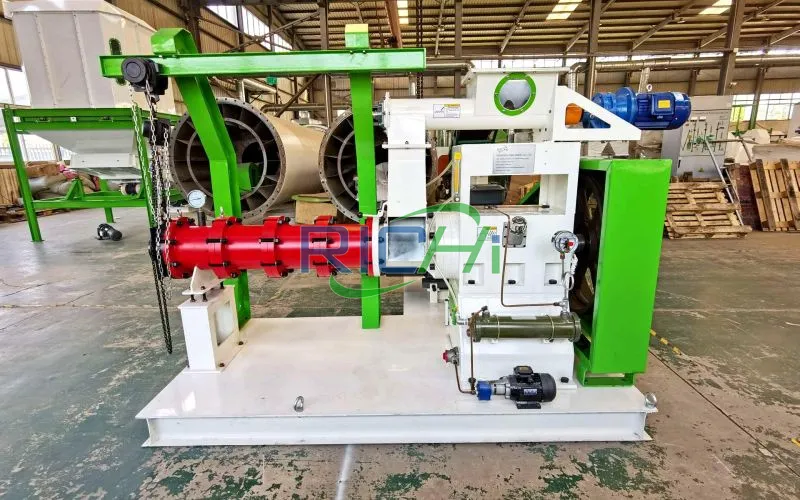
A large cattle feedlot in central Nebraska, near the town of Grand Island, was spending too much money on commercially processed bypass protein. The feedlot has about 45,000 head of cattle on feed at any given time. Their ration includes soybean meal as a protein source, but standard soybean meal is highly degradable in the rumen. For high-producing cattle, they need bypass protein – protein that escapes rumen fermentation and is digested in the small intestine.
The feedlot manager (let's call him Tom) explained the situation: "We were buying extruded soybeans from a supplier 200 miles away. The freight was killing us. Plus, the supplier's quality wasn't always consistent. We decided to bring extrusion in-house. We have plenty of raw soybeans – Nebraska grows a lot of soybeans. We just needed the right machine."
Tom looked at both wet and dry extrusion systems. Wet extrusion requires steam and a boiler. They didn't have a boiler. Dry extrusion runs on electricity only – perfect for their operation.
Name:
Soybean extruder
Country:
United States
Date:
2026
Capacity:
1.7-2.3 tons per hour
Model:
RCYP200G
Main Motor Power:
132kW
Raw Materials:
Soybean
technology:
Dry process
From the dry extrusion table, the RCYP200G was selected. Why this model?
Tom chose the dry extruder because they had no steam boiler and didn't want to install one. The RCYP200G runs on a 132kW motor – plenty of power for their 10-12 tons per day requirement.
Nebraska is a major soybean-producing state. Tom's feedlot sources:
The raw soybeans arrive at 10-12% moisture. They are cleaned to remove stones and foreign material, then hammer-milled to a coarse meal (about 1,000-1,500 microns). The ground soybeans are then fed into the RCYP200G extruder.
The extrusion process for bypass soybeans:
The final product is full-fat, expanded soybeans with excellent bypass protein characteristics (35-40% bypass compared to 25-30% for raw soybeans).
The RCYP200G expansion extruder arrived at the Port of Houston – one of the largest ports in the US, located on the Gulf Coast. From there, it was trucked about 800 miles north to Nebraska.
Shipping time from Qingdao to Houston is about 25-30 days. The machine was packed in a 40-foot container (the RCYP200G is large) with:
Customs clearance in Houston took about 3 days – very efficient. Total landed cost was about 22% higher than the FOB price.
Installation took two weeks. Tom's team prepared a concrete foundation in advance – the RCYP200G weighs about 4.5 tons. They poured a 200mm reinforced slab with anchor bolts.
The electrical hookup required a 460V, 60Hz three-phase supply (US standard). RICHI provided a 60Hz-compatible motor. The 132kW motor required a 200-amp breaker – Tom's electrician handled the installation.
No boiler was needed. No steam lines. No water treatment. This was the main advantage of dry extrusion.
The first test run was with hammer-milled soybeans at 11% moisture. The extruder started, the temperature climbed, and within 15 minutes, expanded soybeans were coming out of the die. The product temperature was 150°C. Tom's team let it cool, then ground it into meal. Lab tests showed excellent bypass protein levels.
After six months of operation, Tom documented the following results:
Old machine (before):
DCS-50P belt-fed scale (after):
Production output:
Quality improvements:
The machine cost delivered approximately $95,000. Payback period was about 3 months.
Here's what Tom said after six months (paraphrased from a conversation):
"The extruded soybeans we were buying were fine, but the freight was expensive and the quality varied. Some batches were darker than others. Some had lower bypass protein. We couldn't control it.
"The RCYP200G changed that. We control everything now – the raw beans, the extrusion temperature, the final grind. Our bypass protein is consistently 38-40%. The cattle are doing well – we've seen a slight improvement in average daily gain since switching to in-house extruded soybeans.
"The dry extrusion was the right choice because we don't have a boiler. The machine runs on electricity only. We plugged it in, connected the power, and started making extruded soybeans. It's that simple.
"A few operational notes: The temperature control is critical for bypass protein. Too low (under 130°C) and you don't get enough denaturation. Too high (over 170°C) and you damage the amino acids. We keep it at 145-155°C. We check the temperature every hour.
"The screw and barrel wear. After about 8,000 tons, the flights show wear. We bought spare parts with the machine. At our volume (3,000 tons/year), the original screw should last 2-3 years.
"Would I recommend this machine? Yes. For any feedlot that wants to control their own bypass protein production, dry extrusion is the way to go. No boiler. Lower cost. Better quality control."
Dry extrusion uses mechanical friction to generate heat. No external steam is needed. Here's why it was right for Tom:
Here's what happens inside the extruder for soybeans:
The result is full-fat, expanded soybeans with:
Tom's nutritionist was pleased with the lab results. The extruded soybeans are now a key component of their finishing ration.
One of the features Tom appreciated is the machine's versatility. By changing the die plate and screw configuration, the RCYP200G can also process:
Tom plans to experiment with corn expansion next. If successful, he can produce both expanded soybeans and expanded corn on the same machine.
The RCYP200G shipped from Qingdao to Port of Houston, Texas – one of the busiest ports in the United States.
Shipping time from Qingdao to Houston is about 25-30 days. The route goes across the Pacific, through the Panama Canal, and across the Gulf of Mexico.
The expansion extruder was packed in a 40-foot container. Customs clearance in Houston took about 3 days. Total landed cost was about 22% higher than the FOB price.
The truck transport from Houston to central Nebraska was about 800 miles – roughly 12-14 hours.
After six months of running the RCYP200G expansion extruder for grains, Tom shared several observations:
RICHI provided several services that helped Tom get the RCYP200G operational:
For a cattle feedlot looking to produce high-bypass protein in-house, the dry extruder is an excellent choice.
Consider the RCYP200G (132kW) if:
Consider a smaller model (RCYP160G, 110kW) if:
For Tom's feedlot, the RCYP200G expansion extruder for grains was the right investment. It reduced ingredient costs by 25%, improved bypass protein consistency, and paid for itself in three months.
If you're a cattle feedlot still buying extruded soybeans from a supplier, consider bringing extrusion in-house. The cost savings are significant – 25% or more. The quality control is better. And you eliminate freight costs.
The RCYP200G dry expansion extruder for grains makes full-fat, expanded soybeans with no boiler required. It runs on electricity only. It's powerful, efficient, and produces consistent bypass protein.
For feedlots, the math is simple: extruded soybeans cost less to make than to buy, and the quality is better.
RICHI offers documentation in English, 60Hz motors, spare parts kits, and remote support. Contact RICHI Machinery through the website with your daily soybean requirement, current soybean cost, and facility details for a recommendation. Tell them about your feedlot application – they can help you size the extruder properly and recommend temperature settings for optimal bypass protein.
Having the right mix of reliable, high-quality pellet machine and pelletizing systems and expert support is essential to your success. Watch how our end-to-end feed pellet plant solutions have helped our customers optimize their performance.
Our customized and future-proofed turnkey pellet plant solutions is designed with you at the core. From vision to reality and beyond, our team stays connected with yours. Giving you peace-of-mind with an expert at your side.
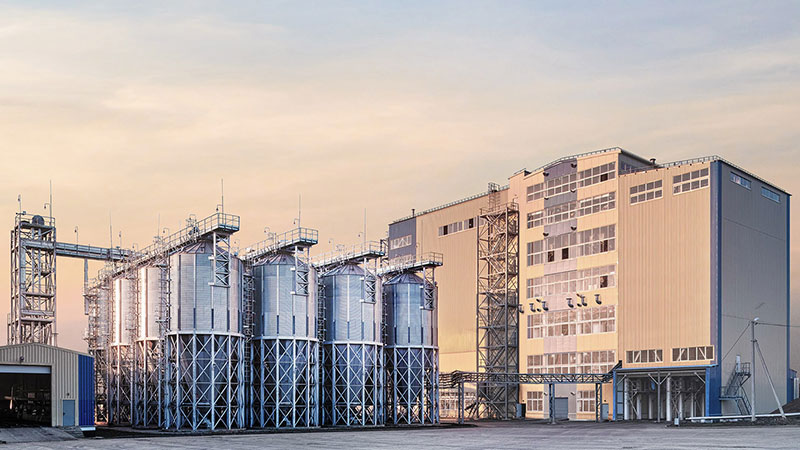
At RICHI, we go beyond project completion. With RICHI Servicee, we’re your dedicated partners in success. Count on us for expert guidance, minimal downtime, and optimized productivity. Choose RICHI for unmatched service and support.
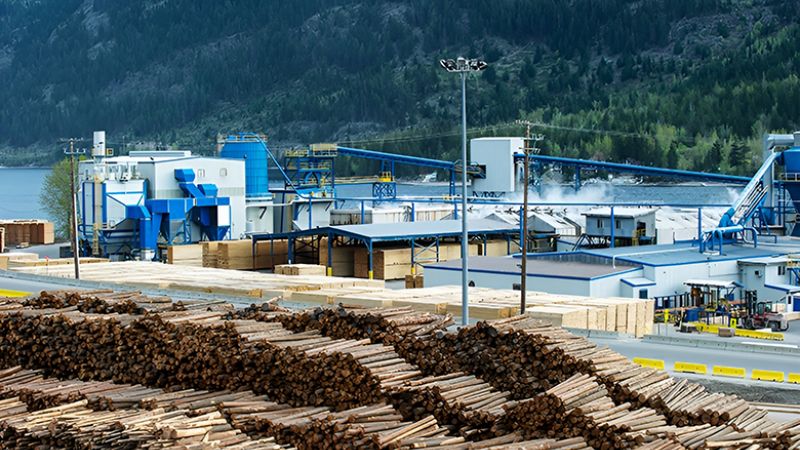


Meet global product demands and quality standards with industry-leading pellet plant design, engineering, equipment, and construction services for pellet processors.

Your Partner Beyond Project Completion
2000+ cases
RICHI is the leading designer, manufacturer and builder of pellet plants in the world, completing over 2000 projects in 140 countries across 6 continents.
Read More
Increase plant productivity, profitability, and safety by integrating high quality equipment into your pellet production line. Over the years, RICHI has become China's top pellet equipment manufacturer. At the same time, RICHI has established valuable partnerships with the world's leading component and raw material manufacturers to bring you the best there is in technology, automation, and efficiency in pelleting plant machinery.

For nearly 30 years, RICHI has been providing best-in-class pellet plant equipment and services to clients across a variety of industries, sizes, and needs. We pride ourselves on the knowledge and skill that each team member possesses – from our technical sales team to our process design engineers. You can count on RICHI Machinery to take your operation to the next level of innovation, quality, and success.
Need help with your pellet manufacturing plant project? Contact us today.
ANIMAL FEED
BIOMASS
WOOD
ORGANIC FERTILIZER
AQUA FEED
CAT LITTER
MUNICIPAL WASTE RECYCLING
SPECIAL PELLET PRODUCTION
RICHI Machinery continues to deliver world class pellet mill equipment, pellet plant engineering and project solutions that add value to our customers in the animal feed, wood waste, agriculture waste, organic fertilizer, cat litter and special pellet products industries. Throughout the years, we RICHI Machinery have built strong brand, becoming industry-leading pellet machine manufacturer. We value integrity, promise quality, and prioritize your success.
Learn MoreWith our expert team, we precisely implement your process engineering requirements in pellet mill and pelletizing plant systems. No matter which industry you’re in – we understand your needs and deliver solutions that meet the highest standards.
At RICHI, quality comes first. Our pellet making machine and related pellet line equipment undergo rigorous quality controls to ensure they meet the highest standards. Rely on products that are durable, safe, and efficient.
With decades of experience in pellet machine and pellet production line production, we have earned a reputation as a trusted partner in various industries. Our expertise allows us to cover a wide range of applications.
Not only do we offer premium pelleting equipment, but we are also experts at designing, building, installing, and maintaining facilities from the ground up. Our expertise is within pellt plant process design, discovering the most efficient, productive, and profitable way to handle your materials in an end-to-end cycle.
○ RICHI MACHINERY
Keeping in touch with us is an effective way to solve all your problems. If you have any needs or questions, please leave your contact information, then RICHI technical consultants will send design, quotation, videos to your mailbox. You can also contact us directly via WhatsApp: +86 13838389622
Copyright©2015-2026 by HENAN RICHI MACHINERY CO., LTD. All rights reserved.