
EFB pellet mill for sale in Indonesia for 3–4 T/H combined duty. Explore two MZLH520 presses with 132 kW motors and 8 mm pellets for a Riau palm estate.
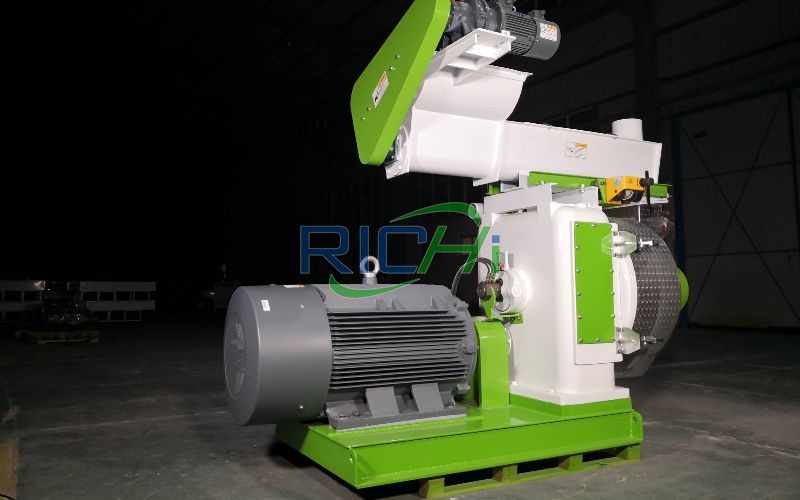
A maintenance stop was part of the purchasing decision at this Riau palm oil estate. The owner wanted to retain some pressing capacity while one machine was being serviced. That operating preference led the family-owned group to purchase two MZLH520 pellet mills from RICHI Machinery.
The brief for an EFB pellet mill for sale in Indonesia combined three requirements: process prepared empty fruit bunch fibre, produce nominal 8 mm industrial fuel pellets and provide a combined reference duty of 3–4 T/H. Existing shredding and drying equipment gave the two presses a place within the operation.
The group manages several thousand hectares of oil palm in Riau Province, Sumatra. Its biomass opportunity begins with the EFB generated during palm fruit processing. The investment focused on the pelleting stage, with the condition and capacity of the surrounding preparation equipment central to the installation assessment.
EFB also has established uses as plantation mulch and as a composting ingredient. Where a separate fertilizer product is intended, RICHI can configure the corresponding preparation and fertilizer-pelleting equipment. This project concentrates on the portion prepared for commercial biomass fuel.
Name:
Palm EFB pellet presses
Country:
Indonesia
Date:
2024
Capacity:
3–4 T/H combined
Equipment:
2 × MZLH520
Power:
2 × 132 kW
Raw Materials:
EFB fibre
Pellet diameter:
8mm
The selected MZLH520 biomass pellet mill has a reference capacity of 1.5–2 T/H per unit under suitable conditions. Two units therefore provide a combined selection range of 3–4 T/H. Material preparation, die configuration and operating conditions determine the capacity established during acceptance testing.
For an EFB pellet machine in Indonesia, separate feed control matters when two presses share one preparation system. Each unit needs a manageable supply of conditioned fibre. A common transfer conveyor must distribute that material without repeatedly starving one press or overfilling the other's inlet.
This arrangement supports partial continuity during maintenance at a pelleting position. The shredder, dryer, electrical supply and any shared cooler remain common dependencies. Their availability belongs in the operating plan because two presses do not create two independent factories.
For scheduling purposes, eight productive hours at the combined reference rate correspond to 24–32 tonnes through the pelleting stage. The same period with one unit corresponds to 12–16 tonnes. These are planning calculations; preparation delays, start-up and product rejection affect dispatched tonnage.
Empty fruit bunches are the bunch structures remaining after fruit removal at the mill. Indonesian operators commonly call the material tandan kosong kelapa sawit, abbreviated TKKS. Identifying that source keeps this project distinct from processing oil palm trunks, plantation fronds or palm kernel shells.
The distinction affects equipment selection. EFB forms a bulky, interlocked fibre mass and can retain substantial water. Palm kernel shells are harder fragments with a different grinding duty. Mesocarp fibre is another mill by-product with its own properties and existing uses as boiler fuel.
A palm biomass pellet mill in Indonesia therefore needs a material description more precise than “palm waste.” For this installation, receiving information should identify the EFB source, storage condition, moisture and contamination. Sand and soil introduced during handling add wear and can increase the fuel's ash content.
The estate's access to palm-processing residues is commercially useful, but plantation area alone cannot establish pellet output. The available EFB tonnage, existing uses and recoverable dry solids determine the quantity that can reach the presses. Those quantities need to be checked against the intended operating hours.
The existing shredder opens bunches into material that is easier to handle and dry. Long strands can still remain after coarse shredding. Final size reduction, where required, should produce a feed suitable for the selected die and forced feeder, with attention to fibrous pieces that bridge or wrap around components.
A screen specification helps describe the milling arrangement, but it does not establish every fibre's length. Samples should be examined for oversize strands and their tendency to interlock. The objective is a repeatable prepared material that both presses can receive steadily.
The existing dryer is assessed against the water it must remove. Outdoor drying may assist preparation when conditions permit, but a production commitment needs a dependable route during wet weather. Covered material handling also helps prevent prepared fibre from being rewetted before it reaches the pellet mills.
A reference balance illustrates the scale of preparation. Producing 1000 kg of fibre at 12% moisture requires 880 kg of dry solids. If incoming EFB contains 65% moisture, approximately 2514 kg of fresh material supplies those solids, assuming no dry-matter losses.
Under those assumptions, approximately 1514 kg of water must leave before the prepared fibre reaches the stated condition. If a mechanical dewatering stage first achieves 50% moisture, its output is 1760 kg. The remaining dryer duty is then 760 kg of water removal per 1000 kg of prepared fibre.
These figures are engineering examples with all moisture values on a wet basis. Mechanical pressing, where included, produces a liquid stream requiring suitable management; drying produces an exhaust stream requiring its own assessment. The actual preparation arrangement follows measured EFB conditions and the equipment available on site.
Each palm fiber pellet machine includes a 132 kW main drive, a 3 kW arch-breaking feeder and a 1.5 kW forced feeder. The feeding components help manage a material that is light and prone to forming an arch above the inlet.
| Equipment item | Per-unit configuration |
|---|---|
| Model | MZLH520 |
| Quantity in this project | Two units |
| Main motor | 132 kW |
| Arch-breaking feeder | 3 kW |
| Forced feeder | 1.5 kW |
| Ring die inner diameter | 520 mm |
| Available pellet diameters | 4–12 mm with corresponding dies |
| Project pellet diameter | 8 mm nominal |
| Reference capacity | 1.5–2 T/H |
| Combined reference capacity | 3–4 T/H |
The listed motors total 136.5 kW for each pelleting position and 273 kW for both positions. The two main drives account for 264 kW of that total. Drying, grinding, conveying, extraction and cooling add their separate requirements to the site's electrical schedule.
A palm fibre pellet press in Indonesia also needs the correct relationship between feeding rate and pressing resistance. Increasing the feed setting cannot compensate for excessively long fibre or unsuitable moisture. Load observations and product checks guide the settings established with representative material.
The ring die determines nominal diameter, while its effective pressing geometry influences resistance and pellet formation. The cutter establishes the intended length distribution. Die selection and cutter adjustment should follow the agreed fuel specification and trials with the estate's prepared EFB.
RICHI's technical support for this project covered feeder settings, die selection and moisture guidance. The operating objective was a stable material flow through each position. Retaining settings and material records makes later adjustments easier to assess when a new EFB batch behaves differently.
The project uses an 8 mm nominal pellet specification for industrial fuel supply. That diameter has also been used in Indonesian EFB pellet research. The customer's receiving boiler, hopper and fuel-feed arrangement determine acceptable length, fines and handling characteristics.
An EFB pellet press in Indonesia produces a densified agricultural fuel whose properties must suit the combustion installation. Laboratory assessment should cover moisture, ash, calorific value and relevant fuel chemistry. Boiler operators also need information on ash behaviour and the conditions required for reliable feeding and combustion.
EFB can contain ash-forming minerals that influence deposits, slagging and corrosion. Pelletizing does not remove those minerals. Where a buyer requires lower mineral content, washing or other pretreatment may be investigated, together with the resulting water-management and additional drying duties.
Fuel declarations should identify whether calorific value is reported on a dry or as-received basis and whether it is a gross or net value. That avoids misleading comparisons between products. An 8 mm diameter alone cannot establish a fuel's energy content, ash level or suitability for a boiler.
The commercial opportunity is therefore tied to an agreed fuel specification and a capable industrial user. Local process-heat customers can assess samples in their own systems. Export supply requires the importing buyer's specifications and acceptance arrangements to be established before production is committed.
Pellets leaving the die carry heat from pressing. Controlled cooling and screening prepare them for storage and delivery. Sealing warm pellets into bags can encourage moisture migration and condensation, while excessive handling after cooling can generate additional fines.
For an EFB pellet mill for sale in Indonesia, the finishing arrangement needs to accept the discharge from both machines. A shared cooler must have sufficient capacity at the combined rate. Its inlet and extraction arrangement should also remain workable when production continues with only one press.
The owner also considered palm kernel shells, coconut shells and clean wood residues for future blends. Each material needs suitable size reduction and a declared place in the recipe. Shells may already have a direct fuel market, so their inclusion should have a clear processing or commercial purpose.
Any proposed 10–30% addition needs a defined weighing basis and a separate trial. Ingredient moisture affects the mass actually loaded, and a change in composition can alter ash, pressing behaviour and combustion. A blend should retain its own product identity and test results.
The MZLH520 biomass pellet machine can be assessed for other suitable prepared residues, but each application needs its own operating basis. Maintaining the established EFB recipe and settings helps the customer return to its principal product after trial work.
Installation planning starts with the material split, independent isolation and discharge connections. Maintenance access should allow work at one machine without obstructing the other. Safe procedures must address the shared conveyors and stored material as well as the individual press being serviced.
Dust control and ignition prevention require attention around dry fibre handling, milling and pelleting. Blockages should be cleared under an appropriate isolation procedure. The selected protection measures need to reflect the connected process and material rather than rely on a general claim about the pellet mill.
Acceptance testing should include both machines operating together and the intended single-machine mode. Record prepared-fibre moisture, feed settings, motor load, running time and cooled product weight. Fines returned for reprocessing should be distinguished from accepted product to make the capacity record useful.
For dispatch from Qingdao Port, Dumai is a receiving-port option to assess for a Riau installation. The final route depends on available cargo services, packing dimensions and handling facilities. Inland transport and lifting access should be coordinated with the customer's site before shipment is booked.
The delivery documentation should identify the two machines and their loose accessories clearly. Matching die and roller specifications, maintenance instructions and spare-part identification help the estate organize service. These details support the planned rotation between operating and maintenance work.
This Riau purchase connects an existing EFB preparation operation with two controllable pelleting positions. The owner's priorities were dependable fibre feeding, maintainable equipment and technical support. The selected 3–4 T/H combined duty provides a clear basis for checking those requirements against the rest of the process.
If you are considering an EFB pellet mill for sale in Indonesia, provide your available EFB quantity, measured moisture and current preparation sequence. Add the required pellet specification, productive hours and any requirement to continue at reduced capacity during maintenance.
Contact RICHI Machinery for a proposal connecting the pellet presses to your actual fibre supply. Request the equipment schedule, material-trial conditions and connection drawings together, so the recommendation addresses the operating choices your palm biomass business needs.
Having the right mix of reliable, high-quality pellet machine and pelletizing systems and expert support is essential to your success. Watch how our end-to-end feed pellet plant solutions have helped our customers optimize their performance.
Our customized and future-proofed turnkey pellet plant solutions is designed with you at the core. From vision to reality and beyond, our team stays connected with yours. Giving you peace-of-mind with an expert at your side.
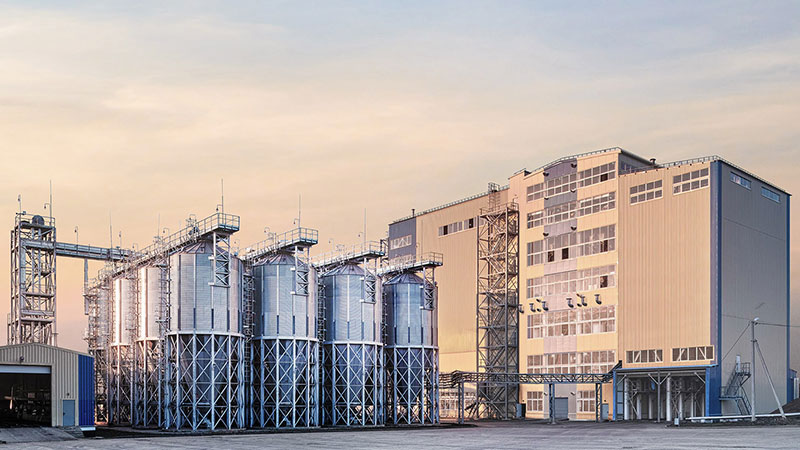
At RICHI, we go beyond project completion. With RICHI Servicee, we’re your dedicated partners in success. Count on us for expert guidance, minimal downtime, and optimized productivity. Choose RICHI for unmatched service and support.
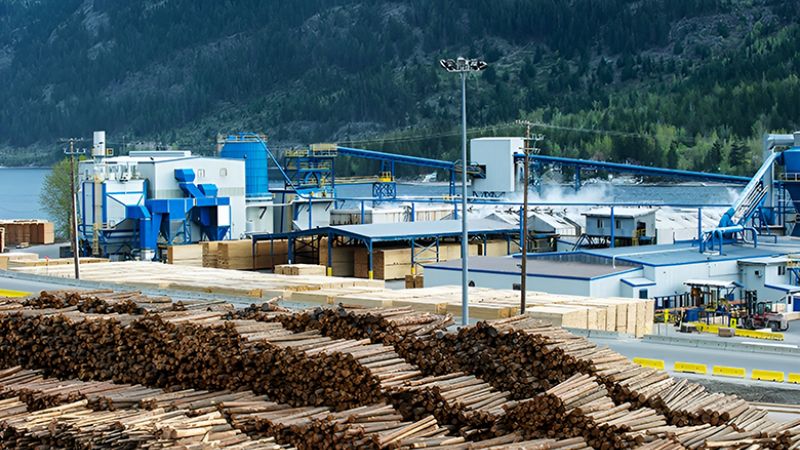


Meet global product demands and quality standards with industry-leading pellet plant design, engineering, equipment, and construction services for pellet processors.


Your Partner Beyond Project Completion
2000+ cases
RICHI is the leading designer, manufacturer and builder of pellet plants in the world, completing over 2000 projects in 140 countries across 6 continents.
Read More
Increase plant productivity, profitability, and safety by integrating high quality equipment into your pellet production line. Over the years, RICHI has become China's top pellet equipment manufacturer. At the same time, RICHI has established valuable partnerships with the world's leading component and raw material manufacturers to bring you the best there is in technology, automation, and efficiency in pelleting plant machinery.

For nearly 30 years, RICHI has been providing best-in-class pellet plant equipment and services to clients across a variety of industries, sizes, and needs. We pride ourselves on the knowledge and skill that each team member possesses – from our technical sales team to our process design engineers. You can count on RICHI Machinery to take your operation to the next level of innovation, quality, and success.
Need help with your pellet manufacturing plant project? Contact us today.
ANIMAL FEED
BIOMASS
WOOD
ORGANIC FERTILIZER
AQUA FEED
CAT LITTER
MUNICIPAL WASTE RECYCLING
SPECIAL PELLET PRODUCTION
RICHI Machinery continues to deliver world class pellet mill equipment, pellet plant engineering and project solutions that add value to our customers in the animal feed, wood waste, agriculture waste, organic fertilizer, cat litter and special pellet products industries. Throughout the years, we RICHI Machinery have built strong brand, becoming industry-leading pellet machine manufacturer. We value integrity, promise quality, and prioritize your success.
Learn MoreWith our expert team, we precisely implement your process engineering requirements in pellet mill and pelletizing plant systems. No matter which industry you’re in – we understand your needs and deliver solutions that meet the highest standards.
At RICHI, quality comes first. Our pellet making machine and related pellet line equipment undergo rigorous quality controls to ensure they meet the highest standards. Rely on products that are durable, safe, and efficient.
With decades of experience in pellet machine and pellet production line production, we have earned a reputation as a trusted partner in various industries. Our expertise allows us to cover a wide range of applications.
Not only do we offer premium pelleting equipment, but we are also experts at designing, building, installing, and maintaining facilities from the ground up. Our expertise is within pellt plant process design, discovering the most efficient, productive, and profitable way to handle your materials in an end-to-end cycle.
○ RICHI MACHINERY
Keeping in touch with us is an effective way to solve all your problems. If you have any needs or questions, please leave your contact information, then RICHI technical consultants will send design, quotation, videos to your mailbox. You can also contact us directly via WhatsApp: +86 13838389622
Copyright©2015-2026 by HENAN RICHI MACHINERY CO., LTD. All rights reserved.