
Two MZLH420 cotton stalk pellet machines in Egypt process prepared agricultural residues into 8 mm biomass fuel pellets for suitable industrial thermal applications.
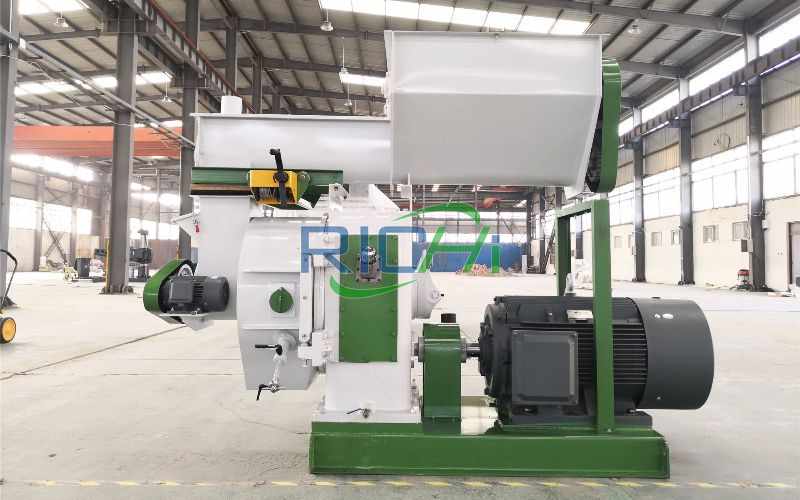
A biomass residue processor in Egypt added two MZLH420 pelletizers to convert prepared cotton stalks into a standardized solid fuel for industrial thermal users. The Dried Cotton Stalks Pellet Making Machine in Egypt project is built around one clear requirement: increase densification capacity without purchasing another complete biomass pellet production line.
The company handles seasonal agricultural residues and already has space for material receiving and preparation. Cotton stalks are collected after harvest, stored dry, reduced in size, and conditioned before they reach the pelletizing section. The two MZLH420 machines are therefore used as dedicated forming units rather than as shredders, dryers, or complete fuel-processing systems.
Each machine provides approximately 1.0–1.2 T/H of reference capacity under suitable biomass conditions. When both units are supplied with properly prepared cotton-stalk material, the pelletizing section can provide approximately 2.0–2.4 T/H of combined reference output.
Name:
Cotton Stalks Pelletizer
Country:
Egypt
Date:
2026
Capacity:
1.0–1.2 T/H
Model:
MZLH420
Main Motor Power:
90 kW
Raw Materials:
Pellet diameter:
8 mm
Cotton stalks are relatively woody agricultural residues. After harvest, the material can include thick stem sections, branches, root-end pieces, leaves, soil, and foreign matter collected during field handling. That physical structure makes direct feeding into a ring-die pelletizer impractical.
The customer first separates visibly contaminated material. Root ends carrying excessive soil are particularly important because mineral contamination increases ash and can accelerate wear in shredders, hammer mills, dies, and rollers.
Long stalks then pass through coarse size reduction before fine grinding. The pellet machines receive a controlled fibrous meal rather than 50 mm or 100 mm stem pieces.
For this application, the prepared material is generally reduced to a few millimeters before pelletizing. The plant works around a fine, free-feeding particle distribution and removes long strands that could bridge above the forced feeder.
| Project Parameter | Configuration |
|---|---|
| Equipment | Cotton stalk biomass pellet machine |
| Model | MZLH420 |
| Quantity | 2 units |
| Main Motor Power | 90 kW per machine |
| Anti-Bridging Feeder Power | 3 kW per machine |
| Forced Feeder Power | 1.5 kW per machine |
| Ring Die Inner Diameter | 420 mm |
| Available Pellet Diameter | 4–12 mm |
| Main Project Pellet | 8 mm |
| Reference Capacity | Approximately 1.0–1.2 T/H per machine |
| Combined Reference Capacity | Approximately 2.0–2.4 T/H under suitable cotton-stalk conditions |
| Main Application | Agricultural-residue fuel pellets for suitable industrial thermal systems |
The combined figure describes the pelletizing section only. Real output depends on material moisture, particle distribution, bulk density, feeder stability, die specification, and the capacities of the preparation and cooling equipment around the two machines.
Cotton stalk availability follows the agricultural calendar, while fuel orders do not necessarily arrive at the same rate. Two medium-size pelletizers give the customer more operating flexibility than one larger unit that would need to remain heavily loaded to use its installed capacity efficiently.
This arrangement is a modular commercial pelletizing section rather than a small experimental setup. The customer can gather operating data on cotton-stalk preparation, wear, pellet quality, and fuel demand before deciding which part of the factory should receive the next investment.
The two pelletizers operate after raw-material preparation and before cooling and finished-product handling. A practical cotton-stalk route for this facility follows these stages:
The ring-die machines perform the densification step. They do not take the place of coarse shredding, hammer milling, drying, cooling, or fuel-quality control.
A cotton stalk several centimeters long is still too irregular for stable ring-die feeding even when it has been cut from a full field stem. Coarse shredding first removes the long-stem structure and creates pieces that a secondary mill can accept consistently.
Fine grinding then reduces those pieces to the particle distribution needed by the pelletizer. For cotton stalks, a controlled fraction in roughly the 1–3 mm range provides a useful engineering reference for densification trials, although the commercial setting is adjusted according to actual stalk hardness, moisture, screen selection, and die load.
Grinding much finer than necessary increases electrical demand and can create more airborne dust. Grinding too coarsely leaves long fibres that feed irregularly and may reduce pellet consistency.
The plant therefore optimizes the complete preparation route rather than using the smallest possible hammer-mill screen as a quality target.
Field-dried cotton stalks can arrive in very different conditions. Material collected after a dry harvest period may need little additional moisture reduction, while stalks exposed to rainfall or stored against damp ground can require further drying.
The customer checks moisture after size reduction and storage. For cotton-stalk densification, a low-teens moisture range provides a practical operating window for commissioning, with the exact setpoint determined from feeder behavior, motor load, die temperature, pellet surface, fines, and post-cooling condition.
Material that is too wet can produce unstable compression and soft pellets. Material that is excessively dry can increase dust and compression resistance. The target is therefore a controlled working range rather than the lowest moisture number possible.
The customer standardizes routine production around an 8 mm pellet. The MZLH420 can use ring dies within the 4–12 mm product range, but maintaining one principal specification simplifies die management, production scheduling, cooling, screening, and discussions with fuel buyers.
The finished pellets are intended mainly for industrial or agricultural thermal systems that have been assessed for agricultural-residue fuels. Cotton-stalk pellets should not automatically be treated as interchangeable with premium wood pellets in every boiler.
A buyer needs to consider ash behavior, fuel feeding, combustion control, emissions, and the boiler manufacturer's accepted fuel specification before adopting the product. For this reason, the customer develops the fuel around qualified thermal users rather than positioning it as a universal household-heating pellet.
Pellet density and appearance are only part of biomass-fuel quality. Cotton stalks collected with substantial soil will carry more mineral matter into the finished pellet, increasing ash without adding useful energy.
Moisture, stalk maturity, contamination, and the proportion of woody stem also influence combustion behavior. The customer therefore separates visibly dirty loads and keeps stored stalks away from wet ground.
Representative finished batches can be checked for moisture, bulk density, mechanical durability, fines, ash, and heating value according to the requirements of the intended buyer. Combustion trials are especially useful when a customer's boiler has mainly operated on wood pellets or another agricultural residue.
The pellet machine standardizes physical form. It does not make every incoming cotton-stalk batch chemically identical.
Ground cotton stalk is lighter and more fibrous than many mineral or granular materials. It can bridge in a hopper and feed unevenly if it is allowed to rely on gravity alone.
Each MZLH420 therefore uses an anti-bridging feeder and a forced feeder. The anti-bridging mechanism helps keep material moving in the hopper, while the forced feeder delivers the prepared fibre more consistently into the pelletizing chamber.
These components are especially valuable when bulk density shifts between different cotton-stalk batches. Stable feeding reduces sudden changes in motor load and gives the die a more predictable material flow.
The feeding system still depends on good preparation. Long fibres, stones, and poorly ground stalk sections should be intercepted upstream rather than pushed toward the ring die.
Fresh pellets leave the die warm and need time to stabilize before storage or packing. Cooling removes heat and helps the pellet reach a more stable mechanical condition.
The cooler must be able to receive the real combined output when both MZLH420 units operate. If downstream capacity is lower than the pelletizing section, the two machines cannot remain at maximum feed rate continuously.
Screening after cooling separates loose fines from qualified pellets. Excessive fines can point to problems with moisture, die selection, grinding, cooling, or material contamination, so screening data also provides useful feedback to the operator.
Cooling should not be treated as a substitute for a dryer. If finished moisture remains above the required storage or fuel specification, the moisture-management route needs separate attention.
Two MZLH420 machines provide approximately 2.0–2.4 T/H of combined reference pelletizing capacity under suitable material conditions. The usable factory output can still be lower if another process becomes the limiting stage.
For example, a hammer mill preparing only 1.6 T/H of cotton-stalk meal would prevent the pelletizing section from sustaining 2.4 T/H, regardless of available motor power. The same is true if the cooler, screener, conveyor, or packing system cannot accept the combined flow.
Daily production is therefore calculated from the full material route and actual operating hours. Machine capacity and plant capacity remain separate engineering figures.
Cotton stalk supply is concentrated after harvest, so the business must manage a seasonal feedstock even if pellet sales continue through a longer part of the year.
Dry stalks require covered storage with protection from rain and soil contact. The customer also needs enough working inventory to keep the pelletizing section supplied after the collection period ends.
If future production increases, the first constraint may therefore be residue collection, storage area, shredding, or grinding rather than ring-die capacity.
This is particularly important for a two-machine installation. Adding installed pelletizing power creates little value if the company cannot secure, store, and prepare enough clean cotton stalks to use it.
The two MZLH420 cotton stalk pellet machines were prepared for sea transport from Qingdao, China, to Alexandria before inland delivery to the customer's operating area in Egypt.
For a standalone equipment package, site preparation focuses on the real interfaces around the machines: foundations, electrical supply, prepared-material inlets, discharge elevations, buffer bins, cooling capacity, aspiration, and maintenance clearance around the ring dies and rollers.
Transport and customs schedules are coordinated against the actual vessel and cargo arrangement rather than being treated as fixed project parameters.
The two-machine arrangement gives the customer room to increase production without immediately adding another pelletizer. The next expansion decision should follow operating data.
If prepared cotton-stalk meal regularly accumulates ahead of both machines and fuel orders support more output, additional pelletizing capacity can be evaluated. If the machines frequently wait for material, investment is better directed toward collection, primary shredding, fine grinding, drying, or storage.
Downstream capacity needs the same review. A larger cooler or more efficient screening and packing may create more usable output than simply installing another ring-die machine.
This keeps expansion tied to the actual process bottleneck and the fuel market rather than to available floor space alone.
A Dried Cotton Stalks Pellet Making Machine in Egypt should be selected from the real condition of the stalks and the requirements of the intended fuel buyer. Stem diameter, collection method, soil contamination, incoming moisture, grinding specification, pellet diameter, boiler compatibility, daily operating hours, and downstream cooling capacity all affect equipment selection.
For a similar Egyptian biomass project, RICHI Machinery would first review annual cotton-stalk availability, collection radius, storage method, primary shred size, hammer-mill output, prepared-material moisture, required fuel specification, target hourly pellet output, electrical supply, cooling and screening capacity, and confirmed industrial demand.
Those details determine whether two MZLH420 machines provide the right balance or whether another configuration is more appropriate. Reliable cotton-stalk pellet production depends on the entire preparation and densification route, not on the pellet mill alone.
Having the right mix of reliable, high-quality pellet machine and pelletizing systems and expert support is essential to your success. Watch how our end-to-end feed pellet plant solutions have helped our customers optimize their performance.
Our customized and future-proofed turnkey pellet plant solutions is designed with you at the core. From vision to reality and beyond, our team stays connected with yours. Giving you peace-of-mind with an expert at your side.
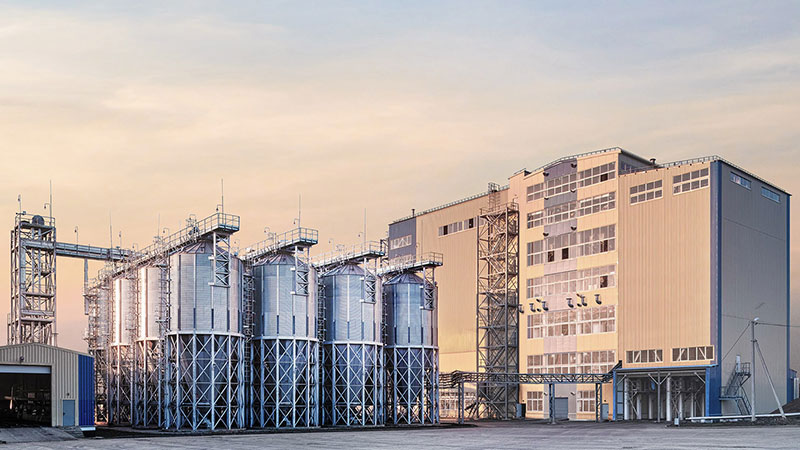
At RICHI, we go beyond project completion. With RICHI Servicee, we’re your dedicated partners in success. Count on us for expert guidance, minimal downtime, and optimized productivity. Choose RICHI for unmatched service and support.
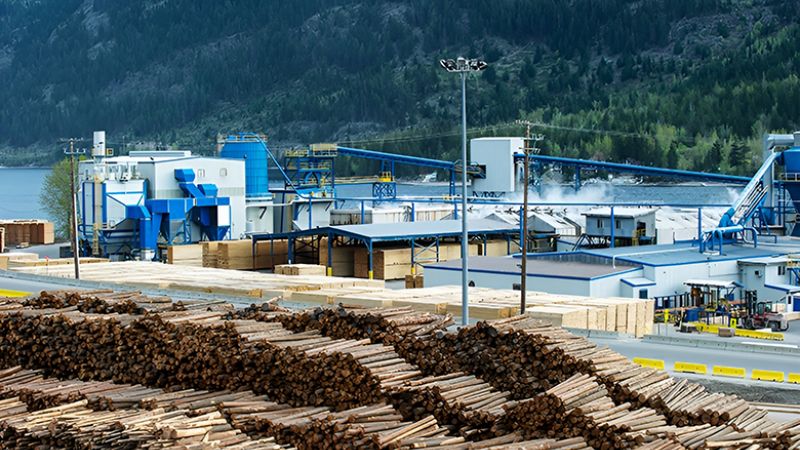


Meet global product demands and quality standards with industry-leading pellet plant design, engineering, equipment, and construction services for pellet processors.


Your Partner Beyond Project Completion
2000+ cases
RICHI is the leading designer, manufacturer and builder of pellet plants in the world, completing over 2000 projects in 140 countries across 6 continents.
Read More
Increase plant productivity, profitability, and safety by integrating high quality equipment into your pellet production line. Over the years, RICHI has become China's top pellet equipment manufacturer. At the same time, RICHI has established valuable partnerships with the world's leading component and raw material manufacturers to bring you the best there is in technology, automation, and efficiency in pelleting plant machinery.

For nearly 30 years, RICHI has been providing best-in-class pellet plant equipment and services to clients across a variety of industries, sizes, and needs. We pride ourselves on the knowledge and skill that each team member possesses – from our technical sales team to our process design engineers. You can count on RICHI Machinery to take your operation to the next level of innovation, quality, and success.
Need help with your pellet manufacturing plant project? Contact us today.
ANIMAL FEED
BIOMASS
WOOD
ORGANIC FERTILIZER
AQUA FEED
CAT LITTER
MUNICIPAL WASTE RECYCLING
SPECIAL PELLET PRODUCTION
RICHI Machinery continues to deliver world class pellet mill equipment, pellet plant engineering and project solutions that add value to our customers in the animal feed, wood waste, agriculture waste, organic fertilizer, cat litter and special pellet products industries. Throughout the years, we RICHI Machinery have built strong brand, becoming industry-leading pellet machine manufacturer. We value integrity, promise quality, and prioritize your success.
Learn MoreWith our expert team, we precisely implement your process engineering requirements in pellet mill and pelletizing plant systems. No matter which industry you’re in – we understand your needs and deliver solutions that meet the highest standards.
At RICHI, quality comes first. Our pellet making machine and related pellet line equipment undergo rigorous quality controls to ensure they meet the highest standards. Rely on products that are durable, safe, and efficient.
With decades of experience in pellet machine and pellet production line production, we have earned a reputation as a trusted partner in various industries. Our expertise allows us to cover a wide range of applications.
Not only do we offer premium pelleting equipment, but we are also experts at designing, building, installing, and maintaining facilities from the ground up. Our expertise is within pellt plant process design, discovering the most efficient, productive, and profitable way to handle your materials in an end-to-end cycle.
○ RICHI MACHINERY
Keeping in touch with us is an effective way to solve all your problems. If you have any needs or questions, please leave your contact information, then RICHI technical consultants will send design, quotation, videos to your mailbox. You can also contact us directly via WhatsApp: +86 13838389622
Copyright©2015-2026 by HENAN RICHI MACHINERY CO., LTD. All rights reserved.