
For a new dog food brand in the United States, choosing extrusion equipment is not simply a question of finding a machine with enough tons per hour. Recipe characteristics, starch sources, fresh or dry protein inclusion, kibble density, drying capacity, coating requirements, food-safety controls, electrical standards, and future SKU changes all affect whether an extruder can actually support commercial production.
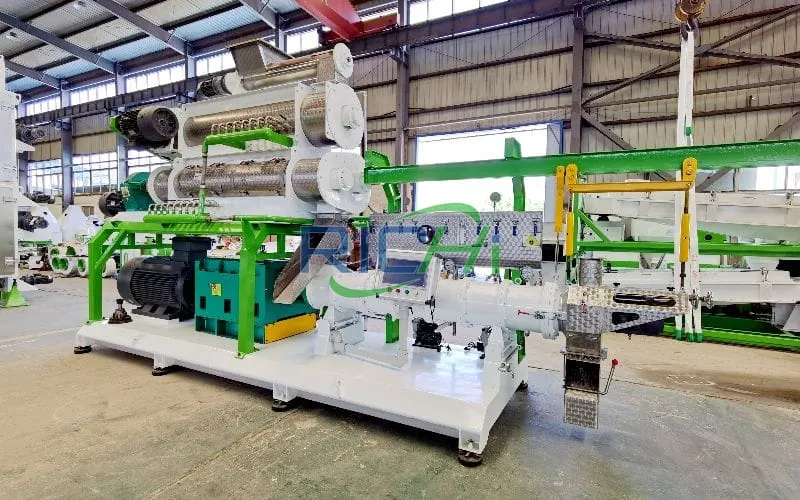
For a new dog food brand in the United States, choosing extrusion equipment is not simply a question of finding a machine with enough tons per hour. Recipe characteristics, starch sources, fresh or dry protein inclusion, kibble density, drying capacity, coating requirements, food-safety controls, electrical standards, and future SKU changes all affect whether an extruder can actually support commercial production.
A pet food company establishing a dry dog food operation in Colorado approached RICHI Machinery while evaluating a dog food machine for sale in United States. The company planned to enter the market with several premium dry-kibble formulas and wanted a moderate-capacity twin-screw extruder that could be integrated into its newly prepared production system without immediately investing in oversized extrusion equipment.
Name:
Dog Food Extrusion Machine
Country:
USA
Date:
2025
Capacity:
1.5–2.0 T/H
Model:
SPHS120×2
Main Motor Power:
90 kW
Finished Product:
Dry extruded dog food kibble
Food Size:
8–12 mm
The customer is an independent pet food manufacturer preparing to produce dry extruded dog food for regional distribution in the western United States. Rather than competing immediately on very large production volume, the company’s initial strategy centered on several differentiated formulas, controlled batch production, and the ability to change recipes and kibble specifications as its customer base developed.
The company had already planned the upstream grinding, weighing, mixing, and ingredient handling sections as well as downstream drying, coating, cooling, and packaging. What it needed from RICHI was the extrusion section.
For that reason, this was a single-machine project rather than a complete dog food production line. The customer selected one SPHS120×2 twin-screw extruder to establish its initial commercial extrusion capacity while retaining flexibility for future expansion.
The selected capacity supports the company’s current production plan while keeping supporting-equipment capacity, utility demand, initial investment, and minimum economical production batch size aligned with its commercial scale.
The customer expected the extrusion section to operate around the 1.5–2.0 T/H level for its initial product portfolio. The SPHS120×2 therefore provided an appropriate starting point for the planned commercial scale.
| Project Item | Configuration |
|---|---|
| Machine | SPHS120×2 dog food extruder |
| Extrusion Type | Twin-screw extrusion |
| Main Motor | 90 kW project configuration |
| Feeding System | Variable feeding matched to extrusion load |
| Pre-conditioning | Steam/water conditioning according to formula |
| Target Throughput | Approximately 1.5–2.0 T/H depending on recipe and product specification |
| Finished Product | Dry extruded dog food kibble |
| Kibble Range for This Project | Approximately 8–12 mm |
The capacity is treated as a working range rather than a fixed output. Extruder throughput changes with formula composition, starch characteristics, fat level before extrusion, feed moisture, screw configuration, die restriction, kibble density, expansion requirement, and cooking conditions.
This distinction is particularly important for premium pet food. Two recipes using the same die diameter can place very different loads on the extruder.
The Colorado customer planned several recipes using animal protein meals together with alternative carbohydrate and fiber sources such as peas, chickpeas, potato ingredients, and selected vegetable components.
The formulations also incorporate fats, vitamins, minerals, amino acids, and other nutritional components according to the nutritional specification of each product.
Not all fat is necessarily introduced before extrusion. Excessive pre-extrusion fat can reduce mechanical energy input and influence expansion. Depending on the recipe, part of the oil or fat can instead be applied after drying through the coating section.
This provides greater control over both processing behavior and finished-product palatability.
The customer therefore did not purchase the SPHS120×2 simply because it was described as a “grain-free dog food extruder.” The machine was selected because a twin-screw extrusion platform provides useful process flexibility when a manufacturer expects to work with formulations whose starch, protein, fiber, moisture, and fat characteristics vary substantially between products.
Alternative starch ingredients do not behave exactly like conventional cereal-based formulas during extrusion. Pea, potato, chickpea, and similar ingredients differ in starch composition, protein level, fiber content, water absorption, and extrusion response.
A twin-screw configuration gives the operator greater control over material conveying, mixing, shear, cooking, pressure development, and discharge behavior.
This does not mean that every grain-free formula automatically requires twin-screw extrusion. Well-designed single-screw systems can manufacture many pet foods successfully. For this customer, however, recipe flexibility was particularly important because the business intended to develop several premium SKUs rather than manufacture one high-volume standard formula continuously.
Extrusion performance begins well before material enters the SPHS120×2.
Dry ingredients are ground to an appropriate and reasonably uniform particle size before batching. Protein meals, starch ingredients, fiber sources, minerals, and other dry components are then accurately weighed and mixed.
This is especially important for a manufacturer producing several formulations. Poor mixing cannot be corrected by the extruder, and inconsistent particle size can create fluctuations in water absorption, cooking, pressure, expansion, and finished kibble appearance.
Low-inclusion ingredients also require accurate dosing. A commercial dog food manufacturer cannot rely on approximate addition of premixes, minerals, amino acids, or other micro-components.
Before entering the extrusion barrel, the mixed material passes through the conditioning system, where steam and/or water are introduced according to the formula.
Pre-conditioning begins hydration and thermal treatment and helps prepare the mash for the more intensive cooking and mechanical treatment inside the extruder.
There is no single correct conditioning temperature or moisture percentage for every dog food recipe. The appropriate settings depend on starch source, protein composition, fat level, fiber, desired expansion, extruder configuration, and final kibble characteristics.
During commissioning, these variables are adjusted using the customer’s actual formulations rather than applying one fixed parameter to puppy, adult, and senior recipes.
Once conditioned material enters the twin-screw barrel, the rotating screws convey and process it through controlled mechanical and thermal energy.
As the material travels toward the die, pressure and temperature change while ingredients are mixed and cooked. The process modifies starch and protein structures and creates the viscoelastic mass required for kibble formation.
At the die outlet, the pressure drops rapidly. Moisture flashes from the product, contributing to expansion. A cutting system then controls the length of the individual kibble pieces.
Die geometry, cutter speed, formula, process moisture, specific mechanical energy, and pressure all influence the final product. Changing from an 8 mm product to a 12 mm product therefore involves more than simply exchanging one round die opening for another.
The manufacturer planned several dry dog food products with kibble dimensions generally between approximately 8 and 12 mm.
| Product Concept | Approximate Kibble Size | Processing Priority |
|---|---|---|
| Small-dog / puppy product | About 8 mm | Smaller, readily consumed kibble with controlled hardness |
| Standard adult product | About 10 mm | Balanced density, durability, and palatability |
| Larger kibble product | About 12 mm | Controlled shape and structural strength |
The manufacturer does not define a dog food only by the animal’s weight and one die diameter. Kibble thickness, length, shape, bulk density, hardness, expansion, and texture are developed together according to the target product.
Different dies and cutting settings make it possible to create additional shapes as the brand develops new SKUs.
Kibble leaving an extruder is not a finished shelf-stable product.
It still contains substantial process moisture and must be dried under controlled conditions. Drying therefore has to be sized around both the extrusion capacity and the characteristics of the kibble.
The Colorado project was designed around finished dry kibble moisture appropriate for stable storage, but the plant’s quality system evaluates product safety and stability through controlled processing and product testing rather than relying on moisture percentage alone.
For commercial pet food, water activity is particularly important. Two products with similar moisture percentages can have different storage behavior, so moisture and water-activity targets need to be validated for the actual formulation and packaging system.
After drying, the kibble enters the coating stage.
This is where selected fats, oils, palatants, or other post-extrusion components can be applied according to the formulation. Separating part of the fat addition from the extrusion stage gives the manufacturer more freedom to optimize both extrusion performance and final product characteristics.
Uniform coating matters because inconsistent application can create differences in palatability and nutritional composition between kibble batches.
After coating, the product is cooled to an appropriate temperature before storage and packaging.
For a customer manufacturing pet food commercially in the United States, buying an extruder is only one part of establishing a compliant operation.
The production facility needs an appropriate food-safety system covering ingredient receiving, supplier controls, process controls, sanitation, traceability, preventive controls, storage, finished-product testing, and recall preparedness as applicable to the operation.
The customer therefore incorporated the extruder into a broader manufacturing and quality-control program rather than treating extrusion itself as proof that the finished dog food is safe.
Process parameters such as temperature and residence time must be validated within the manufacturer’s actual food-safety plan and formulation. RICHI provides the equipment and process-engineering support, while the pet food producer remains responsible for its product formulation, regulatory compliance, process validation, and finished-product release procedures.
The machine configuration was prepared for the electrical conditions of the customer’s Colorado facility.
For US industrial installations, voltage, frequency, motor configuration, control components, protection devices, cable sizing, and local electrical requirements need to be confirmed before manufacturing.
The customer’s project used a 60 Hz electrical configuration suitable for the site’s industrial power system.
Rather than assuming that every American plant uses exactly the same voltage arrangement, RICHI confirms the customer’s actual incoming supply and control requirements before finalizing the electrical design.
Used extrusion equipment initially appeared attractive because of the lower purchase price.
However, the customer was entering manufacturing for the first time. Unknown screw and barrel wear, obsolete controls, incomplete documentation, unavailable spare parts, and uncertain previous operating history represented additional risk.
For an established factory with experienced extrusion engineers, rebuilding a used machine can sometimes be economically reasonable.
For this project, the company preferred new equipment with a known configuration, new wear components, technical documentation, commissioning support, and spare-parts availability.
The decision was based on production risk rather than the assumption that used equipment is inherently unsuitable.
The SPHS120×2 was shipped from Qingdao Port, China, to the United States and then transported to the customer’s Colorado facility.
Before shipment, interface drawings were supplied so the customer could prepare the installation area, utilities, access space, and connections to upstream and downstream equipment.
This was particularly important because an extruder cannot be positioned in isolation. The arrangement must consider the conditioner above or ahead of the machine, material feeding, steam and water connections, product discharge, dryer interface, operator access, maintenance clearance, and removal space for screws and wear components.
The installation layout therefore reserved considerably more working space than the physical footprint of the extruder itself.
Initial commissioning focused on obtaining stable extrusion rather than immediately pursuing maximum throughput.
The engineering team worked through feed rate, conditioner settings, water and steam addition, screw speed, cutter speed, die configuration, motor load, and finished-product response.
Operators evaluated kibble shape, expansion, bulk density, internal structure, surface condition, fines, drying behavior, and final moisture together.
Once a stable processing window was established for one formulation, the settings were documented as a starting recipe. Additional formulations were then commissioned separately because a process setting developed for one dog food should not automatically be copied to another.
A 1.5–2.0 T/H extruder does not mean a startup manufacturer should immediately run eight hours every day.
At 1.5 T/H, even four extrusion hours represent approximately six tonnes of product before accounting for startup, changeover, cleaning, and other operating factors. That can already be substantial for a new regional brand.
The Colorado customer therefore schedules production by SKU and sales requirement. Larger batches are produced for the principal adult formula, while smaller runs are scheduled for specialty products.
This reduces unnecessary finished-goods inventory and makes better use of the flexibility that motivated the company to choose a moderate-capacity twin-screw machine in the first place.
Recipe changeover is more complicated than changing the die plate.
When switching products, operators have to consider residual material in the feeder, conditioner, barrel, die, dryer, coating system, conveyors, and other contact surfaces. The required cleaning procedure depends on the ingredients and the manufacturer’s food-safety and labeling program.
This becomes particularly important when formulas contain different animal proteins or ingredients that require segregation under the company’s quality system.
For that reason, the customer groups production runs where practical instead of continuously alternating between formulas.
Extrusion places substantial mechanical and thermal loads on screws, barrel components, dies, cutter assemblies, bearings, seals, and transmission components.
The customer therefore purchased critical wear and spare parts together with the machine and established an inspection schedule from startup.
Screw and barrel wear is monitored because gradual wear can affect pressure development, cooking behavior, throughput, and product consistency long before the machine experiences an obvious mechanical failure.
Operators were also trained to distinguish between normal wear and process problems. An unstable kibble is not automatically evidence that the screw is worn; raw-material variation, conditioning, moisture, die condition, or feeding instability may produce similar symptoms.
Because the company had pet-industry experience but limited extrusion-manufacturing experience, operator training was an important part of the project.
Training covered startup and shutdown sequences, feeder control, conditioning, extrusion adjustment, die and cutter changes, cleaning, lubrication, routine inspection, abnormal-load response, and troubleshooting.
More importantly, operators learned how individual process adjustments interact.
For example, an expansion problem should not automatically be corrected by increasing temperature. Formula moisture, starch characteristics, fat level, screw configuration, feed rate, die restriction, and mechanical energy may all contribute.
“We needed an extruder that gave us room to develop products without starting with industrial-scale capacity that we could not immediately use. The biggest learning curve was not operating the machine itself; it was understanding how each recipe behaves differently during extrusion. Once our team started treating feed rate, moisture, screw settings, die configuration, drying, and coating as one process, our production became much more consistent.”
The company has continued developing additional products around the same extrusion platform rather than immediately replacing the machine with a substantially larger unit.
Future capacity expansion will be evaluated against sales volume and the capacities of the dryer, coating system, material handling, packaging equipment, utilities, and warehouse. Increasing extruder motor power alone would not automatically double the output of the complete manufacturing system.
Not necessarily.
Extrusion capacity is determined by the complete mechanical and process configuration, not just the nameplate power of the main motor. Screw geometry, gearbox rating, barrel configuration, feeding capacity, conditioner, die, formula, and downstream equipment all impose limits.
Therefore, a future requirement of 3–4 T/H would be evaluated as a new engineering condition. Depending on the required products, modifying selected components may be possible, but in other cases a larger extruder or second production unit would be the more technically appropriate solution.
This prevents a startup customer from making expansion plans based on the misleading assumption that replacing a 90 kW motor with a 110 kW motor automatically creates twice the production capacity.
For an American pet food manufacturer, extruder selection should begin with the products rather than the equipment catalog.
Providing these details allows RICHI to determine whether a standalone SPHS extruder is sufficient or whether the customer actually requires additional process equipment.
This dog food machine for sale in United States project uses one SPHS120×2 twin-screw extruder to establish commercial dry dog food production at a capacity aligned with the Colorado customer’s current product portfolio and regional sales plan.
The Colorado customer selected one SPHS120×2 twin-screw extruder with a 90 kW project configuration and approximately 1.5–2.0 T/H target throughput. It provides the flexibility needed to develop several dry dog food products while remaining appropriate for the company’s initial commercial scale.
Just as importantly, the extruder is treated as one part of the manufacturing process. Grinding, accurate formulation, mixing, pre-conditioning, extrusion, drying, coating, cooling, sanitation, process validation, quality control, and packaging all determine whether the finished kibble can become a consistent commercial product.
For US customers searching for a dog food machine for sale, RICHI Machinery can configure the extrusion system according to actual formula characteristics, required output, kibble specifications, existing equipment, plant utilities, available space, and future expansion plan. This allows the customer to invest in the production capacity it can use today while designing the surrounding system around realistic growth rather than unsupported capacity assumptions.
Having the right mix of reliable, high-quality pellet machine and pelletizing systems and expert support is essential to your success. Watch how our end-to-end feed pellet plant solutions have helped our customers optimize their performance.
Our customized and future-proofed turnkey pellet plant solutions is designed with you at the core. From vision to reality and beyond, our team stays connected with yours. Giving you peace-of-mind with an expert at your side.
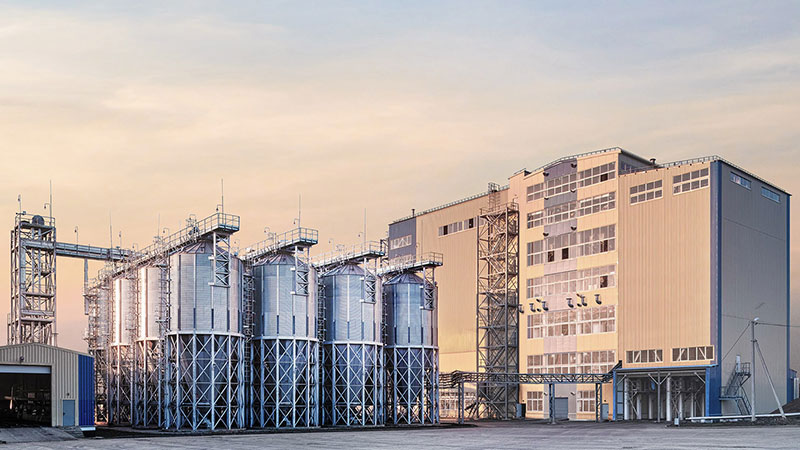
At RICHI, we go beyond project completion. With RICHI Servicee, we’re your dedicated partners in success. Count on us for expert guidance, minimal downtime, and optimized productivity. Choose RICHI for unmatched service and support.
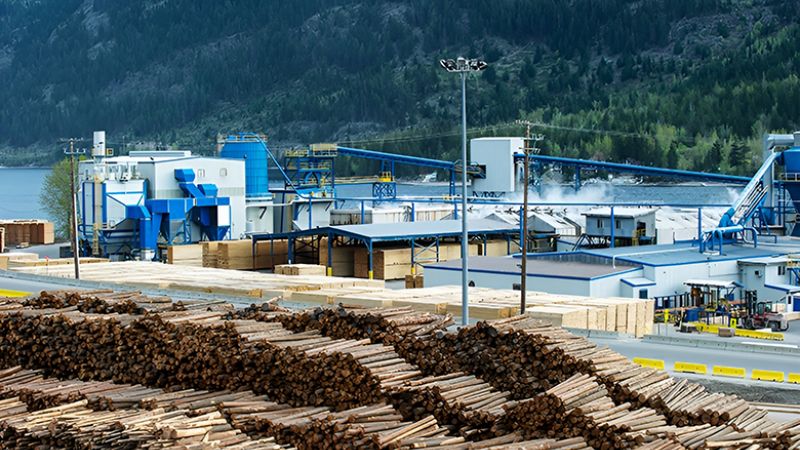


Meet global product demands and quality standards with industry-leading pellet plant design, engineering, equipment, and construction services for pellet processors.


Your Partner Beyond Project Completion
2000+ cases
RICHI is the leading designer, manufacturer and builder of pellet plants in the world, completing over 2000 projects in 140 countries across 6 continents.
Read More
Increase plant productivity, profitability, and safety by integrating high quality equipment into your pellet production line. Over the years, RICHI has become China's top pellet equipment manufacturer. At the same time, RICHI has established valuable partnerships with the world's leading component and raw material manufacturers to bring you the best there is in technology, automation, and efficiency in pelleting plant machinery.

For nearly 30 years, RICHI has been providing best-in-class pellet plant equipment and services to clients across a variety of industries, sizes, and needs. We pride ourselves on the knowledge and skill that each team member possesses – from our technical sales team to our process design engineers. You can count on RICHI Machinery to take your operation to the next level of innovation, quality, and success.
Need help with your pellet manufacturing plant project? Contact us today.
ANIMAL FEED
BIOMASS
WOOD
ORGANIC FERTILIZER
AQUA FEED
CAT LITTER
MUNICIPAL WASTE RECYCLING
SPECIAL PELLET PRODUCTION
RICHI Machinery continues to deliver world class pellet mill equipment, pellet plant engineering and project solutions that add value to our customers in the animal feed, wood waste, agriculture waste, organic fertilizer, cat litter and special pellet products industries. Throughout the years, we RICHI Machinery have built strong brand, becoming industry-leading pellet machine manufacturer. We value integrity, promise quality, and prioritize your success.
Learn MoreWith our expert team, we precisely implement your process engineering requirements in pellet mill and pelletizing plant systems. No matter which industry you’re in – we understand your needs and deliver solutions that meet the highest standards.
At RICHI, quality comes first. Our pellet making machine and related pellet line equipment undergo rigorous quality controls to ensure they meet the highest standards. Rely on products that are durable, safe, and efficient.
With decades of experience in pellet machine and pellet production line production, we have earned a reputation as a trusted partner in various industries. Our expertise allows us to cover a wide range of applications.
Not only do we offer premium pelleting equipment, but we are also experts at designing, building, installing, and maintaining facilities from the ground up. Our expertise is within pellt plant process design, discovering the most efficient, productive, and profitable way to handle your materials in an end-to-end cycle.
○ RICHI MACHINERY
Keeping in touch with us is an effective way to solve all your problems. If you have any needs or questions, please leave your contact information, then RICHI technical consultants will send design, quotation, videos to your mailbox. You can also contact us directly via WhatsApp: +86 13838389622
Copyright©2015-2026 by HENAN RICHI MACHINERY CO., LTD. All rights reserved.