
The decision to install a new dog food extruder machine in Thailand came after the Samut Sakhon manufacturer reached an awkward point in its expansion. The factory still had enough grinding, batching, drying, coating and packing capacity to accept more contract orders, but the extrusion section could no longer keep pace.
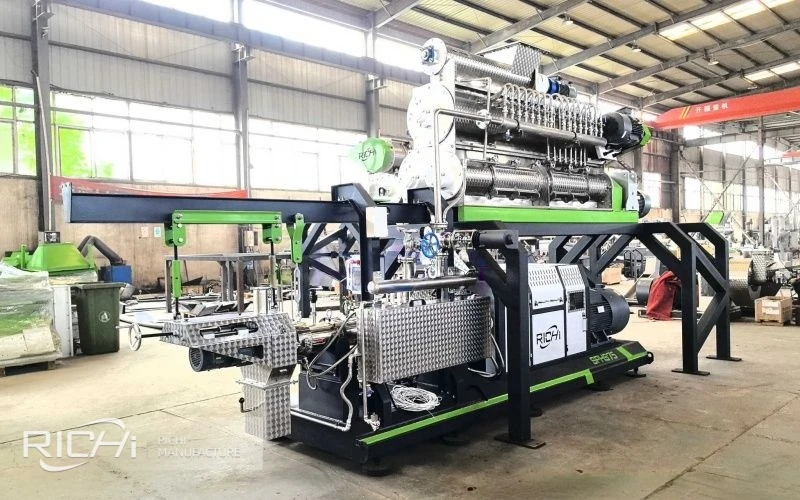
The decision to install a new dog food extruder machine in Thailand came after the Samut Sakhon manufacturer reached an awkward point in its expansion. The factory still had enough grinding, batching, drying, coating and packing capacity to accept more contract orders, but the extrusion section could no longer keep pace.
Three older single-screw machines were dividing production between different recipes, and frequent product changes were consuming too much available manufacturing time.
The customer is an established OEM pet food producer serving several regional and international brands. Instead of adding another single-screw extruder, the production team wanted one higher-capacity twin-screw unit that could handle conventional rice-based kibble, formulas containing higher levels of animal protein, and selected grain-free products without forcing every recipe onto the same screw and operating conditions.
One SPHS150×2 twin screw dog food extruder was therefore added to the existing dry pet food production system, with a reference output of 5–6 T/H depending on formula, kibble density and processing conditions.
Name:
Dog food extruder
Country:
Thailand
Date:
2026
Capacity:
5–6 T/H
Model:
SPHS150×2
Main Motor Power:
200 kW
Main Product:
Dry extruded dog food kibble
Pellet diameter:
8–12 mm
The plant produces several tens of thousands of tonnes of pet food annually, but that does not mean every tonne runs through this one SPHS150×2.
The factory retains additional extrusion capacity for other products and production campaigns.
The new machine was installed to consolidate part of the production previously divided between two older extruders and to create a more flexible manufacturing cell for higher-volume dog food contracts.
This distinction matters because a 5–6 T/H commercial dog food extruder can be entirely appropriate inside a much larger factory without being described as the machine responsible for the plant’s complete annual output.
Thailand is not merely a country with a growing domestic pet market. It is an established international pet food manufacturing and export base with a strong OEM sector.
That influenced the customer’s equipment priorities.
A factory producing only one local dog food formula could optimize a machine around a narrow recipe window. A Thai contract manufacturer serving several brands instead has to cope with changes in protein source, starch system, fat level, kibble dimensions, bulk density, coating program and export specification.
For this customer, flexibility became almost as important as tonnes per hour.
The SPHS150×2 is dedicated primarily to dry extruded kibble.
It does not manufacture canned wet food, retort pouches, freeze-dried meat products or baked treats.
Typical products assigned to this extrusion section include:
This narrower positioning makes the dog food extrusion machine application technically clearer and also avoids turning one equipment case into a generic pet food factory page.
| Project Parameter | Configuration |
|---|---|
| Equipment | Dog food extruder machine |
| Model | SPHS150×2 |
| Extrusion Type | Twin-screw extrusion |
| Main Motor Power | 200 kW |
| Feeder Power | 1.5 kW |
| Conditioning Configuration | Dual-stage conditioning system |
| Reference Output | Approximately 5–6 T/H |
| Main Product | Dry extruded dog food kibble |
| Typical Finished Kibble Range | Approximately 8–12 mm, customized by product |
The reason was not that single-screw extruders are obsolete.
Single-screw pet food extrusion remains widely used and can produce excellent dry kibble when formulas and operating windows are stable.
The problem at this factory was product diversity.
Two contracts running in the same week might use very different starch and protein systems. One formula could be built around rice and poultry meal, while the next could contain peas, potato ingredients and substantially different fat and fibre levels.
The production team wanted greater control over conveying, mixing and thermal-mechanical treatment as these recipes changed.
Intermeshing twin screws provide positive conveying and more intensive distributive and dispersive mixing than a simple single-screw configuration.
That does not mean every recipe automatically runs better on twin screw.
It means the processor has more variables available when a difficult formula needs adjustment.
Screw element arrangement, screw speed, steam, water addition, feed rate and barrel conditions can be balanced around the actual material instead of relying primarily on the friction and conveying characteristics generated by one screw.
For an OEM pet food plant, that processing window can be commercially valuable.
The customer had increasing requests for formulas containing peas, lentil ingredients, potato products and other non-traditional starch or protein sources.
These formulations can behave differently from a conventional rice- or maize-dominant kibble.
Grain-free dog food can be produced on both single- and twin-screw extruders when the machine and process are matched to the formulation.
Research has successfully produced grain-free canine diets on both single- and twin-screw extruders. The advantage of twin screw for this customer lies in processing flexibility and control when formulations vary, rather than a universal rule that single screw cannot process pulses or alternative starches.
Some premium dog food contracts use higher animal-protein inclusion than conventional economy kibble.
As protein, fat and fresh-material content increase, the extrusion system has less starch available to create expansion and structural binding.
The melt can become more difficult to manage, and kibble density may increase unless formulation and process conditions are adjusted.
The SPHS150×2 gives the operator additional screw-configuration and process-control options for these products.
It does not remove the need for formulation expertise.
Changing from an 8 mm product to a 10 mm or 12 mm product involves more than installing a die with a different hole diameter.
The customer may also adjust cutter speed, feed rate, moisture, steam, screw configuration and process energy depending on the required geometry and bulk density.
An 8 mm kibble for a small-dog formula can be relatively dense or highly expanded.
A 12 mm product can also be produced in several shapes and densities.
The final kibble specification comes from the brand brief rather than dog weight alone.
Pet food companies may design round, triangular, cross-shaped, pillow-shaped or other kibble geometries with different dimensions for product positioning, dental characteristics and feeding experience.
RICHI supplies the die and cutting configuration around the customer’s finished-product specification rather than assigning one fixed kibble diameter to every dog-weight category.
The old factory arrangement required extended downtime when the production team moved between products with significantly different ingredients or kibble specifications.
Changeover time depends on what has to change.
A simple die and cutter adjustment is much quicker than a switch requiring cleaning, formula purge, allergen-control procedures, screw changes, downstream dryer adjustments and coating-system cleaning.
The SPHS150×2 allowed the plant to standardize more products on one controlled extrusion platform.
Operators no longer needed to compensate for two older machines that behaved differently with the same formula.
For compatible products, recipe transitions became considerably shorter because the team could purge, adjust process parameters and change the required forming parts within one extrusion cell.
For high-risk or allergen-sensitive transitions, the plant still follows the full cleaning procedure required by its quality system.
This customer manufactures for multiple brands.
That means quick changeover cannot be allowed to undermine sanitation or formulation integrity.
If one recipe contains a specific animal protein, functional additive or other ingredient that must not carry into the next contract, the extruder and relevant upstream/downstream contact surfaces are cleaned according to the plant’s validated procedure.
The value of flexible pet food extrusion equipment is therefore not simply “change recipes faster.”
It is the ability to change products efficiently while keeping process and quality control under control.
The dry mixture does not enter the extruder barrel in the same condition in which it leaves the mixer.
The conditioning section introduces controlled moisture and thermal energy before the mash reaches the screws.
This starts hydration and softening of the starch-protein matrix and reduces the amount of transformation that must occur entirely inside the extruder barrel.
Conditioning becomes especially valuable at commercial throughput because stable preconditioning reduces fluctuations reaching the screw section.
The SPHS150×2 project uses dual-stage conditioning, but the process is not locked to one temperature chart.
Steam addition, water addition, residence time and discharge temperature depend on recipe composition and required extrusion conditions.
A rice-rich formula and a pea-potato formulation may require different preconditioning strategies.
The operator therefore controls the process around the formula rather than forcing every dog food product through identical thermal settings.
Extrusion cooking can produce substantial starch transformation, but the actual level depends on moisture, temperature, shear, screw configuration, residence time and raw-material starch properties.
The second conditioner alone cannot determine the final level of gelatinization.
The extrusion system is evaluated from final kibble characteristics, process stability and laboratory quality results.
The customer does not judge the SPHS150×2 only by main-motor kilowatts.
Steam and water added during conditioning contribute thermal energy, while the screws contribute mechanical energy.
Screw speed, configuration, feed rate and moisture all change the specific mechanical energy transferred to the product.
The correct combination determines expansion, texture, density and cooking behavior.
A 200 kW motor divided by a nominal 5 T/H output gives a simple arithmetic value of 40 kW per tonne of instantaneous rated capacity.
That is not the same as measured total extrusion energy consumption.
The main motor does not necessarily operate continuously at 100% nameplate load, while feeders, conditioners and other equipment consume additional electricity.
Steam energy is also separate.
Energy performance is therefore evaluated from actual meter data under comparable recipes and operating conditions.
A starch-rich dry dog food and a high-protein, low-starch formula can place very different mechanical loads on an extruder.
Recent technical literature on pet food and aquafeed extrusion emphasizes that specific mechanical energy varies with formulation, feed rate, moisture, screw configuration and operating conditions.
For this Thai manufacturer, energy consumption is therefore tracked by product family instead of assigning one universal kWh/T figure to the SPHS150×2.
A powerful twin-screw extruder cannot compensate indefinitely for poor upstream batching.
Rice flour, poultry meal, fish ingredients, pulse flours, minerals and other components must be ground and mixed to the required specification before conditioning.
Large particle-size differences can influence hydration and extrusion behavior.
The existing milling and batching system was therefore reviewed before the new extruder was commissioned.
Dog food formulas frequently contain fats, oils and palatability components.
Not all of those liquids should necessarily be added before extrusion.
Excess pre-extrusion fat can lubricate the mass, reduce mechanical energy transfer and change expansion.
The customer therefore balances internal formula fat with downstream coating.
Part of the final palatability system is applied after drying when the recipe requires it.
The process continues after the die.
Fresh extrudate contains substantially more moisture than the final dry kibble and is still hot and relatively soft.
The factory therefore sends it through drying, cooling, coating and final screening before packaging.
The SPHS150×2 is the cooking and forming center of the system, not the complete pet food plant.
Increasing extrusion capacity without checking the existing dryer would simply move the bottleneck downstream.
The customer therefore confirmed that the drying section could accommodate the new product flow and the moisture load associated with planned formulas.
High-moisture or high-density products can require a different drying residence time from highly expanded kibble.
Dryer settings are linked to each product specification.
Once dried and cooled to the required condition, the kibble can receive fats, oils, palatants or other surface-applied ingredients depending on the brand formulation.
This stage influences palatability and final nutrient composition.
A premium dry dog food extrusion line therefore cannot be assessed from extruder performance alone.
The coating system must also distribute liquids and powders consistently across the kibble surface.
Thai pet food manufacturers have access to domestic agricultural and animal-protein supply chains as well as imported specialty ingredients.
For this plant, rice is particularly useful in conventional dog food formulations, while poultry-derived proteins and selected marine ingredients can be used depending on the customer recipe.
Alternative starch and plant-protein ingredients are incorporated where the brand formulation requires them.
The factory does not force every “Thai-made dog food” to contain fish, rice or cassava merely because those materials are associated with the country.
The growing market for specialty and grain-free dog food does not mean conventional cereal-based kibble has disappeared.
Rice-containing recipes remain relevant to many export and private-label programs.
This is another reason the customer valued a flexible dry dog food extruder rather than a machine configured around one fashionable formulation category.
Pea, lentil, chickpea, potato and similar ingredients have different protein, fibre and starch characteristics.
The amount of expandable starch in the total formula matters.
A formula with too little functional starch may not achieve the desired kibble expansion simply because it runs through a twin-screw extruder.
Recipe development and extrusion trials remain necessary.
The plant does not target one universal 350–380 g/L bulk density for all dog foods.
Some products require a lighter, more expanded kibble; others are designed to be denser.
Bulk density is adjusted through formulation, moisture, screw conditions, die design and cutting parameters.
This allows the contract manufacturer to meet different brand specifications without presenting one density as an international standard.
The factory sells into markets with different commercial expectations, but kibble density is not assigned according to country alone.
Those are product-specific parameters rather than national technical standards.
The customer therefore works from individual buyer specifications and applicable regulatory requirements.
Thailand’s pet food industry is strongly export-oriented, and OEM manufacturing is an established part of the sector.
For an export factory, however, installing an SPHS150×2 does not itself demonstrate compliance with Japanese, Chinese or European requirements.
Ingredient approval, plant hygiene, traceability, labeling, testing, registrations and customer audits remain separate from equipment selection.
The extruder provides controlled processing; the complete quality system supports market access.
The Bangkok metropolitan and surrounding industrial region provides strong logistics access for food processing and export manufacturing.
A Samut Sakhon location allows the customer to receive ingredients and packaging, recruit industrial labor and move containerized finished products toward major export gateways without placing the plant in a remote agricultural area.
The project therefore fits the profile of a Thai OEM pet food processor rather than an on-farm dog food business.
The SPHS150×2 was exported from Qingdao and delivered through the Bangkok-area port system before inland transport to the plant.
The exact terminal is selected according to vessel route, container arrangement and freight planning.
Transit time and customs clearance depend on the actual shipping conditions and import arrangements.
The main drive is 200 kW, but electrical design cannot be reduced to saying the machine needs a particular breaker size.
The engineer also has to account for feeder, conditioners, lubrication, cutting system, pumps, conveyors, controls and any other simultaneous loads.
Starting method, voltage, transformer capacity, cable sizing and protection are determined from the final electrical design.
The factory’s industrial three-phase supply was reviewed before installation.
The SPHS150×2 requires a stable installation base, but the correct civil design depends on equipment loads, support points, existing floor structure and local engineering calculations.
RICHI provided foundation and installation drawings for the actual machine.
The civil work was therefore completed according to the actual equipment and site conditions.
Commissioning did not begin with the customer’s most difficult grain-free recipe.
The team first used a familiar rice-based adult dog food formulation whose historical product characteristics were already known.
This gave operators a baseline for feed rate, conditioning, screw load, die behavior, cutting and downstream drying.
Only after the extrusion cell was stable did the plant move into formulas requiring wider process adjustments.
If the first trial had combined a new machine, new screw arrangement and completely new recipe, it would have been difficult to identify the cause of any density or expansion problem.
Using an established formula separated equipment commissioning from recipe development.
This is a practical approach for any commercial pet food extrusion machine installation.
The twin screws are not treated as two permanently fixed shafts that perform identically on every formula.
Different screw elements can be arranged to influence conveying, mixing, shear and residence behavior.
The customer retains standard configurations for routine product families and adjusts them when a substantially different recipe requires another processing window.
Most routine product changes do not require complete screw disassembly.
Recipe parameters, die, cutter and operating settings can often be changed without rebuilding the entire screw profile.
Screw-element changes are reserved for product families where the mechanical treatment really needs to be different.
This distinction is important when evaluating twin screw pet food extruder flexibility.
Screw elements, barrel liners, dies and cutters are wear components.
Their life varies greatly with mineral content, formulation abrasiveness, operating load, screw speed and maintenance.
The customer therefore measures component condition and product performance instead of automatically replacing all screw elements after 3,000 or 4,000 hours.
Critical wear parts are kept in inventory to avoid excessive downtime.
After commissioning, the quality team monitors variables such as:
No single metric determines whether the dog food extrusion process is performing correctly.
Replacing two nominal 2 T/H units with one machine capable of approximately 5–6 T/H gives the factory more potential extrusion capacity.
Actual improvement depends on recipe, downtime, cleaning schedule and downstream equipment.
A dense high-protein kibble may run below the output achieved by an easier starch-rich formula.
The factory therefore plans production around the equipment capacity range and the operating behavior of each product family.
One modern extrusion cell can simplify operation compared with two aging lines.
But employee requirements extend beyond standing beside the extruder.
Operators also monitor conditioning, drying, coating, material supply and quality.
Labor planning therefore reflects the complete production cell and the factory’s operating schedule.
The financial case includes more than extruder purchase price.
The manufacturer evaluates increased production availability, reduced changeover loss, energy use, maintenance, spare parts, quality consistency, rejected product, labor, contract volume and contribution margin.
Those values belong to the customer’s actual commercial data.
Investment return is therefore calculated from verified operating and financial information rather than from one universal payback period.
The production team valued repeatability more than one spectacular speed record.
Instead of adjusting two aging extrusion lines differently to produce comparable products, the factory could transfer more contracts onto one controlled process platform.
Recipe development became easier because the technical team could relate changes in screw configuration, conditioning, moisture and die settings to a single extrusion system.
“Our main reason for changing the extrusion section was not simply to buy a larger machine. As a contract manufacturer, we have to move from one product specification to another without losing control of the process. The twin-screw system gives our technical team more room to adjust how different formulas are conveyed, hydrated, mixed and cooked. Once we standardized our operating windows, production planning became much easier.”
OEM plants face a different equipment-selection problem from single-brand factories.
A single-brand producer may run one core recipe for weeks.
A contract manufacturer may need to produce several kibble specifications in much shorter campaigns.
That increases the value of repeatable recipe settings, flexible dies, controlled conditioning, screw configurability and efficient cleaning.
These are the areas where a commercial twin screw dog food extruder can justify its additional complexity.
For conventional rice-, maize- or other starch-based recipes, the SPHS150×2 provides a stable platform for cooking and expansion.
The formula still needs enough functional starch for the desired structure.
Protein, fat and fibre are balanced around target density and palatability.
For pea-, potato-, lentil- or other alternative-starch formulations, the value lies in the machine’s ability to provide more controllable mixing and conveying conditions.
Product development trials establish the required screw configuration and moisture-energy balance.
As animal-protein inclusion rises, kibble expansion can become more difficult because starch has a central structural role during extrusion.
The customer uses twin-screw flexibility to manage these formulas, but recipe composition remains the controlling factor.
The SPHS150×2 also fits private-label production because a single extrusion platform can be configured for multiple product families.
This reduces the need to dedicate separate extruders permanently to every customer specification.
A reference output of 5–6 T/H places the SPHS150×2 in the commercial industrial range rather than the startup or laboratory category.
It is suitable for processors that already have sufficient grinding, batching, drying, cooling and coating capacity to support this extrusion rate.
If those surrounding systems are smaller, purchasing a 5–6 T/H extruder alone will not create a 5–6 T/H dog food line.
Not every Thai pet food factory needs an SPHS150×2.
A startup producing a few tonnes per day or a specialist manufacturer running small recipe campaigns may be better served by a smaller extruder.
Machine selection should be based on real annual sales, working hours, number of recipes and downstream drying capacity rather than buying the largest unit available.
If the processor genuinely requires substantially more than 5–6 T/H from one extrusion line and has dryers, coaters and raw-material systems sized accordingly, a larger twin-screw model can be evaluated.
The correct step is to complete the whole-line mass balance first.
Extruder nameplate capacity alone is not enough.
This dog food extruder machine in Thailand project centers on one SPHS150×2 twin-screw unit installed inside an existing contract pet food factory in Samut Sakhon.
The machine uses a 200 kW main drive, dual-stage conditioning and a 1.5 kW feeding system, with approximately 5–6 T/H reference output depending on dog food formulation and final kibble specification.
The customer selected twin-screw extrusion because its production problem was recipe diversity as much as capacity. Conventional rice-based dog food, higher-protein kibble and selected alternative-starch formulas place different demands on conveying, hydration, shear, cooking and expansion. A configurable twin-screw platform gives the production team more control over these changes.
The complete process remains raw-material receiving, grinding, batching, mixing, conditioning, twin-screw extrusion, cutting, drying, cooling, coating, screening and packaging. Increasing extruder capacity only makes sense when each surrounding process can support the same production target.
For another manufacturer comparing a dog food extruder machine in Thailand, twin screw dog food extruder, dry pet food extruder, commercial pet food extrusion machine, grain-free dog food extruder or high-protein kibble extrusion equipment, RICHI Machinery would first review formula types, required tonnes per hour, fresh-meat or meal inclusion, starch sources, fat level, target kibble density, dimensions and shapes, annual number of changeovers, cleaning requirements, existing dryer capacity, coating method, steam supply and available electrical power.
The best extruder is not necessarily the machine with the highest motor power. For an OEM pet food producer, the stronger investment is the extrusion system that can repeatedly move between profitable product specifications without sacrificing process stability.
Having the right mix of reliable, high-quality pellet machine and pelletizing systems and expert support is essential to your success. Watch how our end-to-end feed pellet plant solutions have helped our customers optimize their performance.
Our customized and future-proofed turnkey pellet plant solutions is designed with you at the core. From vision to reality and beyond, our team stays connected with yours. Giving you peace-of-mind with an expert at your side.
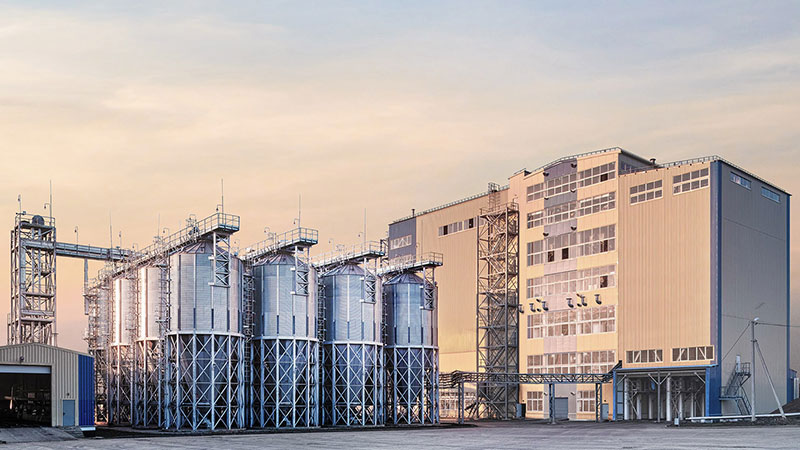
At RICHI, we go beyond project completion. With RICHI Servicee, we’re your dedicated partners in success. Count on us for expert guidance, minimal downtime, and optimized productivity. Choose RICHI for unmatched service and support.
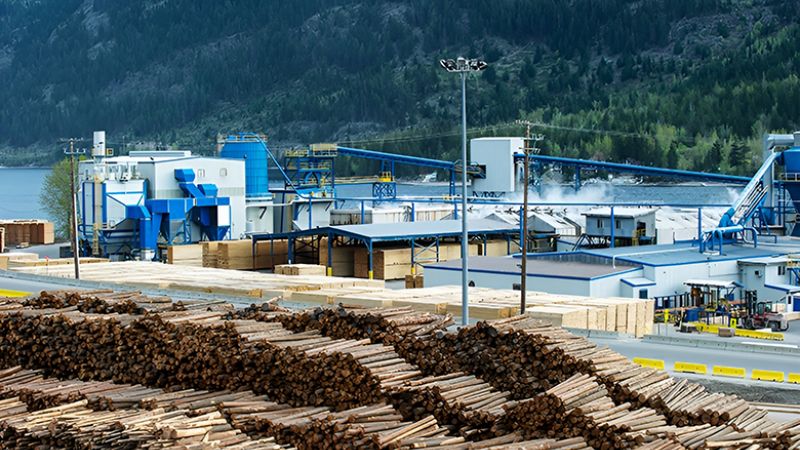


Meet global product demands and quality standards with industry-leading pellet plant design, engineering, equipment, and construction services for pellet processors.


Your Partner Beyond Project Completion
2000+ cases
RICHI is the leading designer, manufacturer and builder of pellet plants in the world, completing over 2000 projects in 140 countries across 6 continents.
Read More
Increase plant productivity, profitability, and safety by integrating high quality equipment into your pellet production line. Over the years, RICHI has become China's top pellet equipment manufacturer. At the same time, RICHI has established valuable partnerships with the world's leading component and raw material manufacturers to bring you the best there is in technology, automation, and efficiency in pelleting plant machinery.

For nearly 30 years, RICHI has been providing best-in-class pellet plant equipment and services to clients across a variety of industries, sizes, and needs. We pride ourselves on the knowledge and skill that each team member possesses – from our technical sales team to our process design engineers. You can count on RICHI Machinery to take your operation to the next level of innovation, quality, and success.
Need help with your pellet manufacturing plant project? Contact us today.
ANIMAL FEED
BIOMASS
WOOD
ORGANIC FERTILIZER
AQUA FEED
CAT LITTER
MUNICIPAL WASTE RECYCLING
SPECIAL PELLET PRODUCTION
RICHI Machinery continues to deliver world class pellet mill equipment, pellet plant engineering and project solutions that add value to our customers in the animal feed, wood waste, agriculture waste, organic fertilizer, cat litter and special pellet products industries. Throughout the years, we RICHI Machinery have built strong brand, becoming industry-leading pellet machine manufacturer. We value integrity, promise quality, and prioritize your success.
Learn MoreWith our expert team, we precisely implement your process engineering requirements in pellet mill and pelletizing plant systems. No matter which industry you’re in – we understand your needs and deliver solutions that meet the highest standards.
At RICHI, quality comes first. Our pellet making machine and related pellet line equipment undergo rigorous quality controls to ensure they meet the highest standards. Rely on products that are durable, safe, and efficient.
With decades of experience in pellet machine and pellet production line production, we have earned a reputation as a trusted partner in various industries. Our expertise allows us to cover a wide range of applications.
Not only do we offer premium pelleting equipment, but we are also experts at designing, building, installing, and maintaining facilities from the ground up. Our expertise is within pellt plant process design, discovering the most efficient, productive, and profitable way to handle your materials in an end-to-end cycle.
○ RICHI MACHINERY
Keeping in touch with us is an effective way to solve all your problems. If you have any needs or questions, please leave your contact information, then RICHI technical consultants will send design, quotation, videos to your mailbox. You can also contact us directly via WhatsApp: +86 13838389622
Copyright©2015-2026 by HENAN RICHI MACHINERY CO., LTD. All rights reserved.