
The British customer did not abandon its artisan dog-treat identity simply because demand had outgrown hand production. The real decision was to separate two products that had previously been grouped under the same word: traditional flat oven-baked biscuits and crunchy extruded dog treats.
The British customer did not abandon its artisan dog-treat identity simply because demand had outgrown hand production. The real decision was to separate two products that had previously been grouped under the same word: traditional flat oven-baked biscuits and crunchy extruded dog treats.
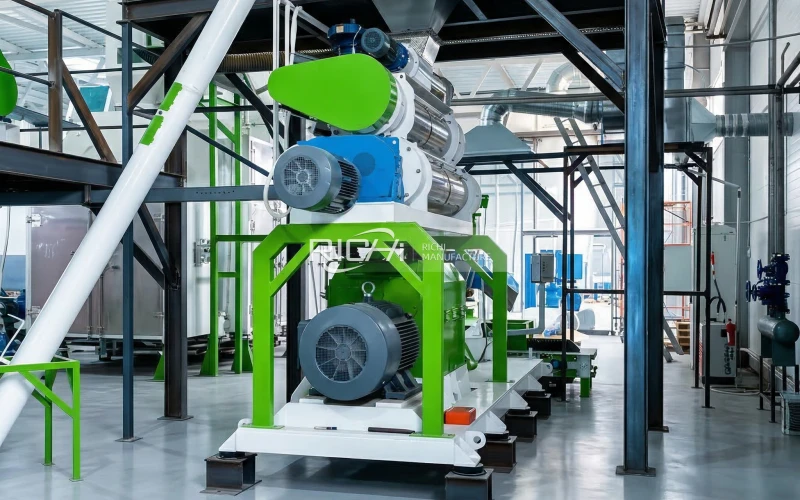
A growing premium pet-treat manufacturer in the Cotswolds selected one RICHI SPHS75×2 dog biscuit making machine in the United Kingdom to establish a new continuous extrusion section for its higher-volume treat range.
The company retained its existing small-batch bakery for limited-edition sheeted biscuits, while the twin-screw system took over repeat products such as bone-profile treats, sticks, stars and other shapes that could be formed continuously through an extrusion die and then dried.
Name:
dog biscuit extruder
Country:
United Kingdom
Date:
2026
Capacity:
0.5–1.0 T/H
Model:
SPHS75×2
Main Motor Power:
55 kW
Extrusion Type:
Twin-screw
Finished Product:
Crunchy extruded dog treats
The SPHS75×2 has a reference production range of approximately 0.5–1.0 T/H under suitable recipe and product conditions.
The dog biscuit making machine is configured for the customer’s move from artisan manufacturing into small commercial wholesale production, with a planned extruded-treat requirement of several tonnes per production day.
At this production scale, the extruder can operate in scheduled commercial campaigns while allowing time for start-up, product changeover and cleaning.
Automation does not have to mean replacing every existing product.
The customer’s highly decorated seasonal biscuits and certain thick, flat baked treats remain on the existing sheeting and oven-baking route.
The SPHS75×2 handles products for which continuous extrusion improves consistency and throughput.
This allows the company to preserve an artisanal premium range while creating a second, scalable manufacturing route.
Traditional flat baked cookies and continuously extruded treats require different forming technologies.
A rotary moulder, dough sheeter and tunnel oven are appropriate when the target is a traditional flat baked cookie.
A twin-screw extruder is appropriate when the target is a continuously formed cooked or semi-cooked treat that can be cut and dried into a stable crunchy product.
The customer’s product definition therefore came before machine selection.
| Project Parameter | Specification |
|---|---|
| Equipment | Dog biscuit / extruded dog treat making machine |
| Model | SPHS75×2 |
| Extrusion Type | Twin-screw |
| Main Motor | 55 kW |
| Feeder | 1.5 kW |
| Conditioning System | Single-stage conditioner, project configuration 7.5 kW |
| Reference Capacity | Approximately 0.5–1.0 T/H depending on recipe, shape, density and moisture |
| Main Finished Product | Crunchy extruded dog treats / dog biscuits |
| Installation Type | Standalone extrusion section added to an existing pet-treat factory |
The SPHS75×2 configuration provides the processing capacity required for the customer’s commercial extruded-treat range while remaining compatible with its multi-SKU production plan.
The new treat range contains cereal flours, starch-containing vegetables, animal-protein ingredients and liquid additions.
That creates a more demanding process than simply pushing a dry cereal powder through a die.
The two screws provide active conveying, mixing and mechanical working, giving the manufacturer a wider operating window as recipe composition changes.
This flexibility was more valuable to the customer than simply maximizing hourly tonnage.
Single-screw extruders can manufacture many excellent pet-food and pet-treat products.
The customer selected twin-screw extrusion because it wanted to develop multiple recipes and product densities inside a relatively small commercial range.
The decision was based on processing flexibility, not on a claim that twin-screw technology is required for every premium dog biscuit.
Recipes that work when mixed by hand in a bakery bowl do not automatically run correctly through a continuous extruder.
The company therefore reformulated several products around processability as well as ingredient declaration.
Typical ingredients include cereal or oat fractions, selected starch sources, animal-protein meals, vegetable ingredients, fats and palatability components.
Each ingredient has a technical role as well as a marketing role.
Different cereal ingredients change water absorption, dough rheology and extrusion response.
Wholegrain fractions also introduce more fibre and bran than refined starch ingredients.
The operator therefore adjusts water addition and screw conditions by formula rather than using one permanent moisture setting.
Vegetable ingredients contribute starch, fibre and solids, and their processing form matters.
Dried pumpkin powder behaves very differently from wet pumpkin purée.
A commercial extruder therefore requires ingredient specifications for moisture and particle form instead of accepting unlimited quantities of fresh kitchen-style ingredients.
Once the business uses animal-derived ingredients in commercial dog treats, it is no longer simply operating as a conventional human-food bakery.
The sourcing, approval, handling and traceability requirements for pet-food ingredients apply.
The customer therefore sources eligible processed animal-derived ingredients through approved channels rather than buying ordinary meat ingredients and assuming bakery registration alone is sufficient.
In England, premises processing animal by-products into pet food require the appropriate Animal and Plant Health Agency approval.
Depending on its activities, the business may also need registration or approval as a feed business through the relevant local authority.
Equipment commissioning therefore forms only one part of bringing a new pet-treat production section into commercial operation.
RICHI can supply processing equipment and technical documentation, but purchasing an extruder does not authorize the customer to manufacture pet food.
The operator remains responsible for approvals, feed hygiene, ingredient traceability, product specifications, microbiological control and labelling applicable to the finished dog treats.
The products manufactured on this line are sold as treats.
They are therefore not presented as a complete daily diet unless the formulation has actually been designed and substantiated for that purpose.
The customer develops feeding guidance so treats do not unintentionally displace a nutritionally balanced main diet.
The extruder can influence cooking, texture, density and shape.
It cannot prove that a biscuit is “healthy,” “high protein,” “hypoallergenic” or suitable for a particular medical condition.
Those claims depend on formulation, analytical results and applicable pet-food communication rules.
The customer prefers ingredient lists without artificial colours or certain synthetic antioxidants.
That positioning may suit its brand, but extrusion itself does not guarantee shelf stability.
Microbiological safety, oxidation control and water activity still have to be engineered into the product and packaging.
Mixed tocopherols are primarily used as antioxidants to help manage oxidation in fat-containing products.
They should not be described as a substitute for moisture control, hygienic processing or appropriate packaging.
A biscuit at 8% moisture can behave differently from another biscuit at the same moisture percentage because recipe composition changes water activity.
The manufacturer therefore verifies both physical drying and finished-product stability.
Shelf life is established through validation rather than an unsupported claim that every extruded dog biscuit lasts 12 months.
There is no universal rule that an extruded dog biscuit should finish at 8–10% while baked biscuits must be 5–6%.
Target moisture depends on product thickness, formulation, desired crunch, packaging and required water activity.
The correct endpoint is therefore developed for the specific product rather than copied from another processing method.
Oven-baked biscuits can be formulated with excellent, uniform texture.
Likewise, poorly controlled extrusion can create dense, hard or irregular products.
The customer chose extrusion for throughput and forming flexibility rather than because one forming method is inherently superior for every dog treat.
Prepared material enters the feeder and conditioner before moving into the twin-screw barrel.
Inside the extruder, mechanical energy, moisture and thermal input modify the dough structure.
The material then exits through a die profile and is cut to the required length.
That forming principle determines which shapes are realistically possible.
A specially machined die can form a bone-like cross-section.
When the continuous extrudate is cut, each piece carries that cross-sectional profile.
This is different from rolling a sheet of dough and stamping a flat bone silhouette with a cookie cutter.
Star-shaped cross-sections, tubes, sticks, rings and other continuous profiles can be developed through die design.
Product expansion and recipe rheology still influence how sharply the final profile is retained after it exits the die.
A flat Christmas tree, Easter egg with a broad face or detailed paw-print cookie cannot simply be created by replacing one standard extrusion die plate.
If the customer wants detailed planar shapes, a sheeting, rotary-moulding or cutting system is more appropriate.
The company therefore keeps those limited-edition products on its existing bakery process.
The most recognisable artisan seasonal biscuits remain genuinely baked and decorated.
Higher-volume everyday treats move to continuous extrusion.
The customer therefore uses each manufacturing method according to the required product shape, production volume and commercial positioning.
A simple profile change can be relatively quick when the product family and recipe remain similar.
But a complete changeover may also involve stopping material flow, cleaning product-contact areas, exchanging the die, adjusting cutter settings and restarting under stable conditions.
Allergen or animal-protein changes can require substantially more cleaning.
The customer does not randomly run five shapes in one day simply because the die can be changed.
Production is grouped into campaigns.
Products sharing similar recipes are scheduled together to reduce waste and cleaning time.
Switching from one die profile to another while using the same chicken-based dough may be straightforward.
Switching from chicken to salmon or to a formulation marketed for a different ingredient profile involves much more than changing the die.
Ingredient residues, traceability and declared product composition all have to be considered.
Minor ingredients cannot simply be poured separately into the extruder and expected to distribute perfectly.
The plant uses controlled weighing and premixing upstream so each production batch starts with a consistent dry formula.
Water and other permitted liquids can be introduced according to the recipe and required dough condition.
The amount changes with flour absorption, starch content, fibre and product density.
The project therefore does not lock every recipe to 25–28% conditioner moisture.
Conditioning temperature depends on ingredient functionality and the thermal work performed later in the extrusion barrel.
Parameters are established during product trials rather than applying one fixed temperature to every biscuit recipe.
Screw configuration, barrel temperature, feed rate, moisture, die restriction and cutter speed interact.
This gives the manufacturer considerable flexibility, but it also means one recipe cannot simply inherit settings from another product.
The 55 kW figure is the rated main-motor power rather than a fixed specific-energy consumption value.
Actual consumption depends on operating load and also includes the feeder, conditioner, dryer, conveying and other connected equipment.
The manufacturer therefore evaluates energy consumption from the operating production system rather than calculating it from main-motor nameplate power alone.
Extrusion and conventional baking do not necessarily perform identical thermal duties.
A dog treat extrusion system normally still needs drying after forming.
Total production energy therefore includes both extrusion and the downstream drying process rather than the extruder motor alone.
Fresh product leaving the extrusion and cutting section generally contains too much moisture for a stable crunchy shelf product.
The pieces therefore pass to a dryer where moisture is removed progressively.
Dryer selection depends on the actual hourly wet-product mass and required water evaporation.
A 0.5–1.0 T/H extruder cannot be paired intelligently with a small bakery dryer sized only for 100 kg/h unless the plant deliberately buffers product and accepts a severe bottleneck.
The customer therefore checked dryer throughput before finalizing the extrusion production target.
Two products entering the dryer at the same mass flow may require very different thermal capacity if their incoming moisture differs.
RICHI therefore considers wet-product moisture, target moisture and evaporation load as well as tonnes per hour.
Drying temperature and residence time depend on treat dimensions, density, airflow and formulation.
A thick bone-profile treat and a thin stick cannot be expected to dry identically.
The customer establishes product-specific dryer recipes.
Warm dried treats should not be immediately sealed into retail packaging simply because they have reached target moisture.
The product is allowed to cool to a suitable packaging condition before final inspection and packing.
A low-moisture product can still absorb water from humid air after production.
Barrier properties, seal integrity and pack size therefore influence shelf stability.
The machine cannot compensate for inadequate packaging.
Moisture percentage describes the total amount of water present.
Water activity provides additional information about how available that water is for microbial growth and chemical reactions.
For a shelf-stable dog treat, the company therefore does not rely on moisture percentage alone.
A treat immediately leaving the dryer may not have exactly the same texture several hours later after internal moisture redistributes.
Product development therefore includes evaluation after cooling and equilibration, not only at the dryer discharge.
The machine’s approximately 0.5–1.0 T/H reference range should not be interpreted as one guaranteed output for every dog biscuit.
Highly expanded light treats, dense chewy-style products, large profiles and restrictive dies can all change actual throughput.
The UK customer values short production campaigns and recipe diversity.
Running the extruder at a stable moderate rate can make more commercial sense than pushing for maximum tonnes per hour while the dryer, packaging section or order book does not require it.
The new wholesale plan requires several tonnes on designated production days, followed by cleaning and changeover periods.
The machine therefore runs in scheduled campaigns according to actual order volume and the customer’s multi-SKU production plan.
A compliant commercial pet-treat facility requires more than the extruder footprint.
Ingredient storage, weighing, mixing, extrusion, drying, cooling, packing, finished-goods storage, cleaning access and hygienic segregation all require space.
The customer moved from its smaller bakery into a larger light-industrial production unit before installing the complete extrusion section.
The layout was designed to prevent operators carrying ingredients repeatedly across finished-product areas.
Material moves progressively from raw storage to mixing, extrusion, drying, cooling and packing.
Maintenance access is retained around the extruder barrel, motor and die area.
Foundation and supporting requirements are determined from the confirmed equipment drawing and local structural conditions.
The customer prepared the installation area according to the final machine arrangement rather than using a generic foundation specification.
The production site provides three-phase industrial power.
The equipment electrical configuration was prepared for the customer’s actual voltage and 50 Hz frequency.
RICHI does not rely on the phrase “UK standard” alone because industrial sites can have different distribution arrangements.
Electrical protection depends on voltage, motor efficiency, power factor, starting method and the complete connected load.
The customer’s electrical contractor therefore selects cables and protection from the final electrical documentation.
The first production trial used a starch-containing chicken formulation that the customer expected to manufacture regularly.
This provided a stable baseline for checking feeding, moisture addition, die pressure, cutter speed and dryer response.
Starting commissioning with the highest-fibre, highest-fat or most unusual recipe would make it difficult to distinguish machine settings from formulation problems.
The team therefore established the equipment window before introducing more demanding products.
Fats improve palatability and energy density, but they also lubricate the extrusion system.
Excessive pre-extrusion fat can reduce mechanical energy transfer and change expansion.
Recipe developers therefore decide how much fat is included before extrusion and whether additional coating is appropriate afterward.
Wholegrain ingredients and vegetable fibres may suit a premium positioning, but they can make sharp die profiles more difficult to retain.
The customer balances visual shape with the formulation rather than assuming any ingredient list can produce an identical bone profile.
Chicken meal, fish protein and dairy-derived ingredients interact differently with starch and water during thermal-mechanical processing.
A die that performs well on one recipe can require operating adjustments on another.
Where dairy-derived material is used, its composition, salt, fat and protein contribution are included in formulation and sourcing controls.
The customer does not simply add more cheese powder to increase aroma without considering process and nutritional consequences.
Colour develops from raw ingredients and processing reactions.
Pumpkin, beetroot, animal protein and cereal composition can all produce different finished colours.
The customer therefore accepts recipe-specific natural appearance instead of promising identical golden colour for every SKU.
Some formulations may form successfully through starch functionality and natural ingredient interactions.
Others may require formulation adjustments to achieve the desired shape and durability.
The required functional ingredients are therefore determined during formulation and product trials.
A technically well-formed treat still needs to meet the target market’s palatability requirements.
After the manufacturing parameters are stable, the brand evaluates aroma, hardness, size and acceptance with its target customer group.
Those results feed back into recipe and shape selection.
A very dense large treat may be unsuitable for some small dogs, while an extremely fragile product can disappoint customers purchasing a crunchy biscuit.
The company therefore develops more than one product dimension and texture rather than assigning one universal biscuit to every dog.
Two products with the same bone profile can be cut to different lengths and weights.
The rotating cutter therefore works together with the die to control the final piece.
This gives the customer more flexibility than storing a separate die for every possible weight.
The company sells treats by declared pack weight rather than by a promised fixed number of biscuits.
Variation in piece weight therefore has to remain controlled enough for the packing system to meet label requirements.
Food and feed manufacturing equipment contains wear components, and incoming ingredients can also introduce contaminants.
The customer integrates suitable foreign-body controls into its overall quality plan instead of assuming the extruder itself guarantees contaminant-free product.
Continuous processing increases throughput, which means an uncontrolled problem can affect more product in less time.
The manufacturer therefore formalized operating procedures around ingredient reception, production parameters, cleaning, traceability and release of finished treats.
UK APHA guidance for animal-by-product processing specifically requires operators to document process controls and, where applicable, demonstrate suitable HACCP-based management.
The British plant cannot select chicken meal or salmon meal solely on price.
Suppliers and transported animal-derived materials must meet the relevant pet-food and animal-by-product requirements.
The customer therefore keeps traceability records linking finished production batches back to approved ingredients.
A salmon recipe followed immediately by a chicken-only product can create undeclared carryover if equipment is not adequately cleaned.
Production planning therefore considers formula declarations and cleaning requirements as well as die-change speed.
A commercial system may include ingredient grinding or sieving, weighing, mixing, feeding, conditioning, extrusion, cutting, drying, cooling and packaging.
The SPHS75×2 performs the central shaping and thermal-mechanical processing stage.
The surrounding equipment must be sized according to the same production target to establish a balanced dog biscuit manufacturing system.
The customer already owned a suitable batch mixer from its previous bakery expansion.
After checking batch size and discharge arrangement, that mixer was retained and connected to the new feeding system.
This reduced unnecessary capital expenditure.
The existing small ovens did not provide the throughput required for the 0.5–1.0 T/H extrusion section.
A dedicated drying solution was therefore selected around expected wet-product flow and evaporation demand.
This prevented the new extruder from immediately creating another bottleneck.
The increase to several hundred kilograms per hour also required the weighing and packaging section to keep pace with the extrusion and drying equipment.
The customer therefore evaluated weighing and packing capacity as part of the scale-up plan.
Continuous extrusion removes much of the repetitive hand-forming work previously required for the higher-volume treat range.
Operators are still needed for ingredients, quality checks, line supervision, drying, packaging, sanitation and changeovers.
Labour requirements are therefore evaluated from the complete production arrangement rather than from the extruder alone.
Real operating cost depends on labour rates, ingredients, electricity, drying energy, packaging, maintenance and utilization.
The customer therefore tracks actual production costs after scale-up instead of applying a fixed percentage reduction to every batch.
The SPHS75×2 can increase manufacturing capacity substantially compared with hand cutting, but payback depends on sales volume and contribution margin as much as machine speed.
The customer therefore evaluates return on investment from actual wholesale growth and equipment utilization.
The customer supplies its dog treats through independent pet retail, online channels and wholesale distribution.
The higher-capacity extrusion section gives the manufacturer additional production capability for repeat commercial products while the smaller bakery continues to support limited-edition and artisan ranges.
UK Pet Food’s 2026 pet-population research estimates approximately 15.5 million pet dogs in the UK and dog ownership in roughly 41% of households.
This provides a substantial domestic consumer base for manufacturers targeting differentiated dog products, while commercial success still depends on product positioning, distribution, quality and repeat demand.
The customer competes through ingredient selection, manufacturing consistency, brand positioning and product format.
It avoids suggesting that a premium price automatically makes a treat nutritionally superior.
For complete and complementary dog foods, European pet-food industry guidance provides practical reference points for nutritional evaluation and responsible product communication.
The customer uses nutrition expertise alongside process engineering rather than asking the extruder supplier to formulate veterinary claims.
The SPHS75×2 was prepared for export from Qingdao and shipped to the Port of Felixstowe before inland transport to the customer’s production facility in England.
Felixstowe provides a container gateway for imported industrial machinery serving the customer’s production location.
Actual transit time depends on vessel schedules, routing and port operations.
Actual clearance time depends on documentation, customs processing, inspection requirements and port conditions.
RICHI supplies the commercial and equipment documentation required for the shipment while the customer and freight partners manage the applicable UK import process.
Ocean freight, insurance, duties where applicable, port charges, inland transport and import-service costs vary by shipment.
The landed equipment cost is therefore calculated according to the actual quotation and logistics arrangement.
“We originally thought the project was simply about making more biscuits. During the trials we realised the bigger change was separating products by manufacturing method. Our decorated baked range stayed in the bakery, while repeat treats moved to extrusion. Once we stopped trying to make the extruder imitate every handmade biscuit, the new process became much easier to control.”
A dog treat extruder is appropriate for brands seeking continuously formed products such as sticks, profiles and cut extrudates.
It should be selected from formula rheology, required product density, shape and drying demand rather than from daily sales volume alone.
A dog biscuit extruder machine can produce crunchy biscuit-style treats, but it does not replicate every product made by a traditional biscuit cutter and oven.
Buyers should decide whether the required shape is an extrusion profile or a flat stamped biscuit before requesting a quotation.
A commercial dog biscuit making machine may describe either an extrusion system or a bakery-style forming line.
For several-tonne daily output with multiple continuous profiles, twin-screw extrusion can provide a practical route.
A pet treat making machine installed in the UK must be integrated into a compliant pet-food manufacturing operation.
Where animal-derived ingredients are used, APHA approval and applicable feed-business requirements need to be addressed before commercial production starts.
A dog snack extruder machine is particularly useful for dense or moderately expanded shaped treats that are subsequently dried and packed.
Recipe moisture, fat, fibre and starch all influence whether the finished shape remains clean and durable.
A twin-screw dog treat extruder gives manufacturers a wider processing window when they are running multiple recipes.
That flexibility can be valuable for private-label manufacturers and premium brands, although it does not remove the need for product development and process trials.
Automation can replace repetitive mixing, forming and cutting tasks, but a complete automatic dog biscuit production system also needs correctly sized drying, cooling and packaging equipment.
The extruder alone should not be used to calculate the capacity of the whole factory.
A small dog treat production line can be built around the SPHS75×2 when commercial demand reaches a level that justifies several hundred kilograms per hour.
For a bakery still producing only 100–300 kg per day, a smaller forming or baking solution may offer a better investment match.
This Dog Biscuit Making Machine in United Kingdom project uses one SPHS75×2 twin-screw extruder as the central forming machine for a growing premium dog-treat manufacturer in England.
The company began with traditional mixed, sheeted and oven-baked biscuits, but wholesale growth made manual forming increasingly difficult to scale. Instead of forcing every artisan product onto one new machine, the manufacturer separated its portfolio. Detailed flat and decorated seasonal biscuits remain on the bakery process, while higher-volume bone-profile, stick, star-profile and similar crunchy treats are manufactured through continuous extrusion and drying.
The SPHS75×2 uses a 55 kW main drive, 1.5 kW feeder and project-configured conditioning system, with approximately 0.5–1.0 T/H reference output depending on recipe, density, die restriction, moisture and required finished shape. That capacity is appropriate for a business moving toward multi-tonne production days and scheduled commercial production campaigns.
The production process includes ingredient specification and weighing, dry mixing, controlled feeding and conditioning, twin-screw extrusion, die forming, cutting, drying, cooling, quality control and packaging. Finished moisture and shelf life are validated by product rather than fixed at one generic percentage. Animal-derived ingredients such as chicken meal or fishmeal are sourced and handled within the UK pet-food regulatory framework.
For another buyer comparing a dog biscuit making machine in United Kingdom, dog treat extruder, dog biscuit extruder machine, commercial dog biscuit making machine, pet treat making machine UK, dog snack extruder machine, twin-screw dog treat extruder or small dog treat production line, RICHI Machinery would first review the required biscuit shape, whether the product is extruded or traditionally baked, formulation ingredients, animal-protein use, target piece dimensions, finished texture, hourly output, daily production plan, drying requirement, available factory space and existing mixing and packaging equipment.
The most important selection question is not how many shapes appear in the equipment catalogue. It is whether the proposed forming technology matches the dog treat the brand actually wants to sell.
Having the right mix of reliable, high-quality pellet machine and pelletizing systems and expert support is essential to your success. Watch how our end-to-end feed pellet plant solutions have helped our customers optimize their performance.
Our customized and future-proofed turnkey pellet plant solutions is designed with you at the core. From vision to reality and beyond, our team stays connected with yours. Giving you peace-of-mind with an expert at your side.
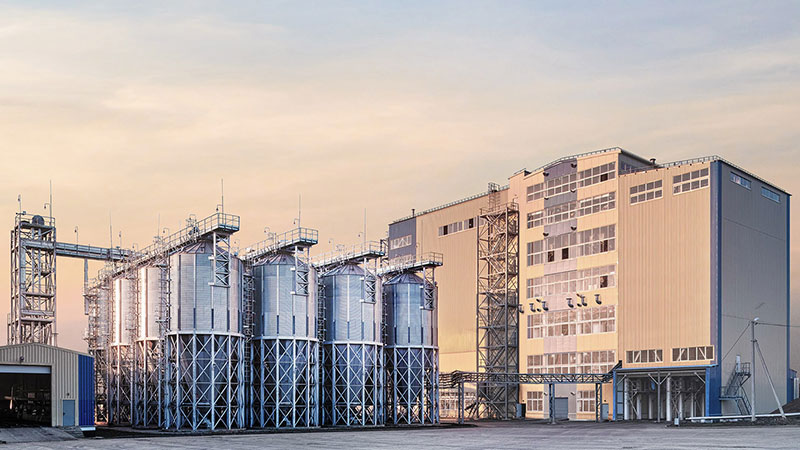
At RICHI, we go beyond project completion. With RICHI Servicee, we’re your dedicated partners in success. Count on us for expert guidance, minimal downtime, and optimized productivity. Choose RICHI for unmatched service and support.
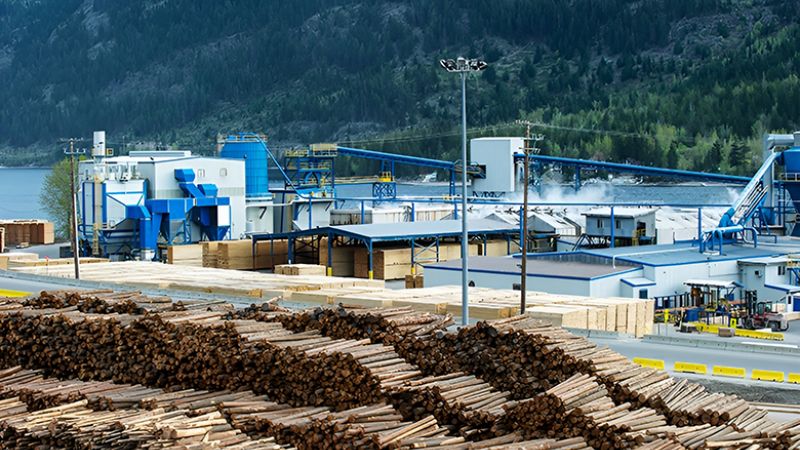


Meet global product demands and quality standards with industry-leading pellet plant design, engineering, equipment, and construction services for pellet processors.


Your Partner Beyond Project Completion
2000+ cases
RICHI is the leading designer, manufacturer and builder of pellet plants in the world, completing over 2000 projects in 140 countries across 6 continents.
Read More
Increase plant productivity, profitability, and safety by integrating high quality equipment into your pellet production line. Over the years, RICHI has become China's top pellet equipment manufacturer. At the same time, RICHI has established valuable partnerships with the world's leading component and raw material manufacturers to bring you the best there is in technology, automation, and efficiency in pelleting plant machinery.

For nearly 30 years, RICHI has been providing best-in-class pellet plant equipment and services to clients across a variety of industries, sizes, and needs. We pride ourselves on the knowledge and skill that each team member possesses – from our technical sales team to our process design engineers. You can count on RICHI Machinery to take your operation to the next level of innovation, quality, and success.
Need help with your pellet manufacturing plant project? Contact us today.
ANIMAL FEED
BIOMASS
WOOD
ORGANIC FERTILIZER
AQUA FEED
CAT LITTER
MUNICIPAL WASTE RECYCLING
SPECIAL PELLET PRODUCTION
RICHI Machinery continues to deliver world class pellet mill equipment, pellet plant engineering and project solutions that add value to our customers in the animal feed, wood waste, agriculture waste, organic fertilizer, cat litter and special pellet products industries. Throughout the years, we RICHI Machinery have built strong brand, becoming industry-leading pellet machine manufacturer. We value integrity, promise quality, and prioritize your success.
Learn MoreWith our expert team, we precisely implement your process engineering requirements in pellet mill and pelletizing plant systems. No matter which industry you’re in – we understand your needs and deliver solutions that meet the highest standards.
At RICHI, quality comes first. Our pellet making machine and related pellet line equipment undergo rigorous quality controls to ensure they meet the highest standards. Rely on products that are durable, safe, and efficient.
With decades of experience in pellet machine and pellet production line production, we have earned a reputation as a trusted partner in various industries. Our expertise allows us to cover a wide range of applications.
Not only do we offer premium pelleting equipment, but we are also experts at designing, building, installing, and maintaining facilities from the ground up. Our expertise is within pellt plant process design, discovering the most efficient, productive, and profitable way to handle your materials in an end-to-end cycle.
○ RICHI MACHINERY
Keeping in touch with us is an effective way to solve all your problems. If you have any needs or questions, please leave your contact information, then RICHI technical consultants will send design, quotation, videos to your mailbox. You can also contact us directly via WhatsApp: +86 13838389622
Copyright©2015-2026 by HENAN RICHI MACHINERY CO., LTD. All rights reserved.