
A cow dung making machine in Kenya was selected by an organic fertilizer producer in the Nakuru area to upgrade the granulation section of an existing manure recycling facility. The customer already collected and composted livestock manure and had crushing, mixing, screening and material-handling equipment in operation, so purchasing another complete fertilizer production line would have duplicated equipment that was still working effectively.
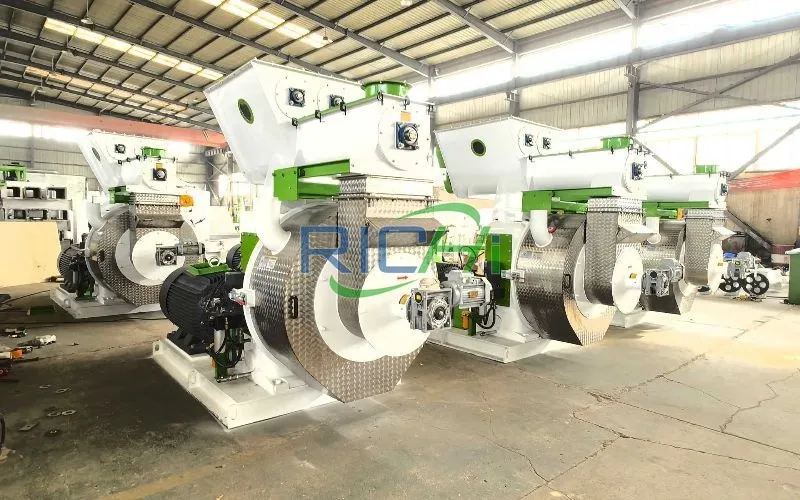
A cow dung making machine in Kenya was selected by an organic fertilizer producer in the Nakuru area to upgrade the granulation section of an existing manure recycling facility. The customer already collected and composted livestock manure and had crushing, mixing, screening and material-handling equipment in operation, so purchasing another complete fertilizer production line would have duplicated equipment that was still working effectively.
The customer purchased one FZLH350 ring die fertilizer pellet machine with a rated capacity of 3–5 T/H. Its job is to convert properly composted and prepared cattle-manure fertilizer into uniform 6 mm pellets for bagged agricultural fertilizer products, giving the producer a more standardized product than the loose compost it had traditionally supplied.
Name:
cow dung making equipment
Country:
Kenya
Date:
2025
Capacity:
3–5 T/H
Model:
FZLH350
Main Motor Power:
37 kW
Raw Materials:
livestock manure
Pellet diameter:
6 mm
The scale of this project is important because a 3–5 T/H organic fertilizer pellet machine needs considerably more prepared material than the manure output of a small livestock farm.
The customer operates as an organic fertilizer producer rather than relying on cattle from one farm. Its raw material is collected from dairy and livestock operations in and around the Nakuru agricultural area and brought to the fertilizer facility for centralized treatment.
This arrangement gives the company a much more stable manure supply. Fresh cattle manure can be accumulated and composted in batches, while mature material is held for subsequent crushing, formulation and granulation.
Before the FZLH350 fertilizer granulator machine was installed, much of the customer's finished organic material was sold as loose compost. That business already had established buyers, but loose material was not ideal for every market. It occupies considerable volume, produces more mess during handling and is harder to present as a standardized bagged fertilizer.
The facility had also experimented with smaller pelletizing equipment, but output and finished pellet consistency were no longer sufficient for its planned commercial production.
Management therefore did not need to solve a manure-disposal problem from zero. It needed to improve one specific part of an established fertilizer business.
This is the main purchasing logic behind the cow dung making machine in Kenya project.
Composting areas were already available. The customer already had equipment for reducing and screening composted material, blending different organic components and transferring material between processing stages.
Buying those machines again would have increased capital expenditure without creating additional value.
The weak point was granulation.
RICHI therefore matched one FZLH350 to the existing plant instead of proposing a new turnkey organic fertilizer production line. This allowed the customer to use infrastructure it had already paid for while concentrating the new investment on the stage that directly determines pellet formation and commercial product consistency.
It also leaves a practical route for later expansion. If sales of granular organic fertilizer increase enough to justify another pelletizer, additional capacity can be considered based on actual operating data rather than forecast demand alone.
Cattle manure is the principal raw material for the project. The fertilizer producer obtains it from several livestock sources rather than claiming that one small dairy herd can continuously supply a 3–5 T/H pelletizing operation.
The condition of incoming material varies.
Some manure arrives mixed with small quantities of bedding or dry plant matter. Moisture can also vary according to collection method, storage conditions and season. These differences are handled before the material reaches the cow dung fertilizer pellet machine.
Dry crop residues available through the local agricultural supply chain can be incorporated during compost preparation when additional carbon or structural material is required. The formulation is not fixed simply to make the pelletizer run.
This is one correction from the earlier version of the project. Coconut husk does not need to be artificially included in a Nakuru cattle-manure project when more locally logical agricultural residues are available.
For buyers researching a cow dung making machine in Kenya, this is probably the most important technical distinction to understand.
An FZLH350 is a cow dung pellet making machine. It is not a machine that receives fresh, slurry-like cattle manure at one end and immediately produces dry commercial pellets at the other.
Fresh manure must first go through appropriate treatment.
At this facility, manure is biologically stabilized through the existing composting process. Mature material is subsequently crushed and screened to remove oversized pieces and reduce unsuitable foreign matter.
Different composted organic components can then be mixed according to the fertilizer specification. Moisture is checked before pelletizing because excessively wet material can feed poorly and become difficult to form through the ring die, while material that is too dry can also reduce forming performance and increase fines.
Only after these conditions are brought into the appropriate operating range does the prepared fertilizer enter the FZLH350.
This distinction matters commercially as well. When RICHI receives an inquiry saying only “I have cow manure and need a 5 T/H machine,” the raw manure quantity alone is not enough to select the equipment. What matters to the pelletizer is how much prepared, composted material will actually reach the granulation stage.
RICHI selected the FZLH350 after considering the customer's prepared-material volume, existing upstream capacity and expected granular fertilizer production.
| Project Item | Specification |
|---|---|
| Equipment | Cow dung fertilizer pellet machine |
| Model | FZLH350 |
| Quantity | 1 unit |
| Main Motor Power | 37 kW |
| Arch-Breaking Feeder Power | 2.2 kW |
| Forced Feeder Power | 0.75 kW |
| Ring Die Inner Diameter | 350 mm |
| Available Pellet Diameter | 4–12 mm |
| Project Pellet Diameter | 6 mm |
| Rated Capacity | 3–5 T/H under suitable material conditions |
| Main Product | Granular organic fertilizer based on composted cattle manure |
The customer does not assume that every manure formulation will continuously produce exactly 5 tons per hour. Moisture, bulk density, particle size, formulation and ring die configuration all influence actual production.
This is why RICHI considers raw material samples and process conditions when selecting an organic fertilizer pellet machine rather than using capacity alone.
The Kenyan customer chose approximately 6 mm as its principal finished pellet diameter.
The objective was not to make the smallest possible pellet. The company wanted a reasonably uniform granular product that could be cooled, screened, bagged and distributed without the inconsistent pieces and excessive loose powder associated with its previous granulation method.
Pellet length can be controlled through the cutting arrangement, while another ring die specification can be considered if future customers require a different diameter within the applicable range.
For the current market, however, the customer prefers to maintain one principal specification rather than unnecessarily changing pellet sizes from batch to batch.
This consistency matters to fertilizer dealers as well as end users. When a producer sells a branded bagged organic fertilizer, the physical appearance of the product becomes part of the customer's perception of quality.
The cow dung making machine in Kenya is the core forming machine in the granulation section, but it does not work independently of the surrounding process.
Composted fertilizer first goes through preparation. Crushing reduces oversized agglomerates, screening removes unsuitable material, and mixing distributes the required organic components through the batch.
The prepared mixture is then transferred to the FZLH350.
The arch-breaking and forced-feeding arrangement is particularly useful for loose organic fertilizer materials that do not flow as freely as conventional grain. Stable feeding helps maintain a more consistent load at the pelletizing chamber.
Inside the machine, the prepared material is compressed through the ring die openings and formed into cylindrical pellets. The cutting arrangement controls pellet length as the material exits the die.
Newly formed pellets then require suitable downstream handling. Cooling helps bring the product to a more stable condition, while screening removes excessive fines before packaging. Whether additional drying is required depends on the actual material condition and finished-product specification rather than being automatically required after every pellet mill.
A common mistake in fertilizer equipment purchasing is to select the pelletizer first and calculate the rest of the process later.
For this customer, RICHI checked whether the existing preparation equipment could supply enough material to the FZLH350.
If compost preparation, crushing or mixing can deliver only 2 T/H, installing a pelletizer rated for 3–5 T/H does not turn the facility into a 5 T/H plant. The upstream bottleneck simply leaves the pellet mill underfed.
Raw material inventory has to match the machine as well.
A business considering this model should calculate how many tons of mature compost are actually available for granulation per day, how many hours the machine will operate and how much finished fertilizer the market can absorb.
This is especially important for farms. A high-capacity machine is not automatically a better investment simply because the farm owns cattle. The manure supply and processing schedule have to justify it.
The principal product remains cattle-manure-based granular organic fertilizer.
The customer's buyers include agricultural distributors and growers looking for organic soil nutrient products that are more convenient to handle than loose compost. Maize and vegetable production are among the potential agricultural applications served by the fertilizer business.
The FZLH350 also gives the company room to develop other formulations.
Composted poultry manure can be incorporated when available and appropriate. Selected crop residues can contribute organic matter or help modify the physical properties of the compost mixture. Other permitted fertilizer ingredients can be included when a particular product specification calls for them.
These materials still have to be properly prepared before pelletizing.
The machine provides physical densification and pellet formation. It does not automatically determine nutrient composition, compost maturity or fertilizer quality. Those remain formulation and process-control responsibilities.
The customer's previous problem was not simply low output. It was difficult to maintain a consistent physical product from batch to batch.
The ring die system gives the fertilizer producer a defined pellet diameter and a controlled compression process. For commercial production, this helps create a repeatable product specification.
The feeding arrangement is another practical consideration. Prepared manure-based fertilizer can have relatively poor flow characteristics compared with free-flowing grain, particularly when formulations contain fibrous organic components.
The arch-breaking feeder and forced feeder help deliver this material into the pelletizing section more steadily.
Wear components still require inspection. Ring dies and rollers operate under mechanical pressure and are not lifetime components. Their service life depends on material condition, foreign matter, operating practices and production hours.
RICHI therefore provided the customer with maintenance guidance covering the feeding system, ring die, rollers, transmission and lubrication points rather than presenting the machine as maintenance-free.
The FZLH350 was shipped by sea from Qingdao Port in China to Mombasa Port in Kenya.
Before shipment, RICHI prepared the equipment for long-distance ocean transportation and supplied the technical information required for installation preparation.
Because this was a standalone-machine project, equipment interfaces were checked before delivery. The customer's existing system had to accommodate the pelletizer's inlet position, discharge arrangement, electrical requirements, foundation and maintenance space.
This type of preliminary work is particularly important when a customer is adding one new machine to an older production facility. The objective is not simply to deliver a pelletizer to Kenya, but to make sure the selected machine can actually become part of the customer's existing process.
The most noticeable improvement was the consistency of the finished fertilizer.
The customer could maintain the selected pellet specification more systematically instead of accepting large variations in shape and excessive loose material from the previous pelletizing method.
Production planning also became easier.
Once a batch of mature compost had passed preparation and moisture adjustment, the plant had a defined commercial granulation stage with known operating procedures. Operators could concentrate on maintaining feed consistency and machine condition instead of repeatedly compensating for limitations in older pressing equipment.
The customer also appreciated that most of the original fertilizer plant remained in use. The project improved the section that needed upgrading without forcing the company to replace functioning composting, crushing and mixing equipment.
That made the investment easier to justify internally and left room for future expansion if granular fertilizer sales continue to increase.
This project is a useful reference for established organic fertilizer producers, manure recycling businesses and larger livestock operations that have enough raw material to support commercial pellet production.
It is not a realistic template for every dairy farm.
A small operation generating limited manure may be better suited to a lower-capacity system. A centralized manure recycling company collecting material from multiple farms may require the FZLH350 or an even larger model.
The starting condition of the manure is equally important.
If a customer already has mature compost that has been crushed, screened, mixed and brought to a suitable moisture condition, a standalone cow dung fertilizer pellet machine may be close to what is needed.
If the project starts with fresh cattle manure, the equipment scope is very different. Composting, crushing, screening, mixing, moisture management, cooling and packaging may all need to be considered around the pelletizer.
The FZLH350 used in this project was selected because its capacity matched an established fertilizer producer with a stable manure collection network and existing processing equipment. That does not mean the same model should automatically be used for every Kenyan cow manure project.
Before recommending equipment, RICHI Machinery needs to know where the manure comes from, how much is generated or collected each day, whether it is fresh or already composted, its approximate moisture condition, what other organic materials are added and how many hours the customer expects to operate.
Existing equipment should also be listed.
A customer that already owns compost turners, crushers, mixers, screens, dryers or packaging equipment should not pay for unnecessary duplication. Conversely, a buyer starting with fresh manure should not purchase only a pelletizer and expect it to perform the work of an entire fertilizer processing system.
Customers evaluating a cow dung making machine in Kenya can therefore send RICHI their raw material quantities, manure condition, proposed formulations, required capacity, target pellet diameter, available power supply, workshop information and existing equipment list.
With those details, RICHI can determine whether the 3–5 T/H FZLH350 used in this Kenyan organic fertilizer production project is appropriate, whether a smaller machine would provide better utilization, or whether the available manure volume supports a larger granulation system. The aim is to match the pelletizer to the fertilizer business that actually exists around it—not simply to sell a machine with the highest possible output.
Having the right mix of reliable, high-quality pellet machine and pelletizing systems and expert support is essential to your success. Watch how our end-to-end feed pellet plant solutions have helped our customers optimize their performance.
Our customized and future-proofed turnkey pellet plant solutions is designed with you at the core. From vision to reality and beyond, our team stays connected with yours. Giving you peace-of-mind with an expert at your side.
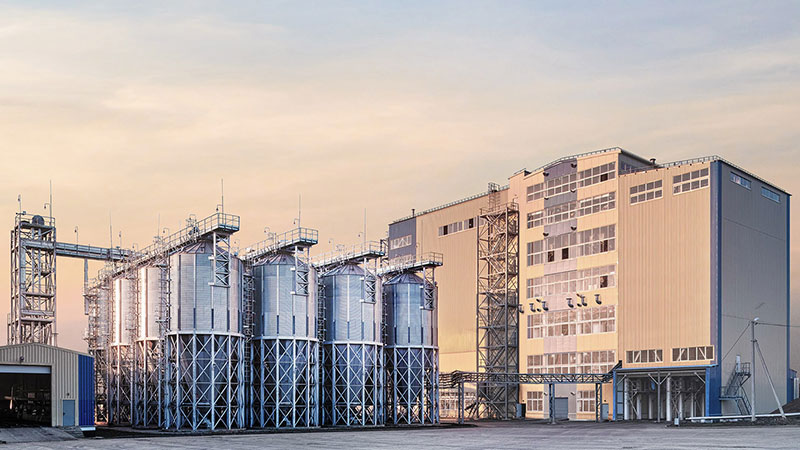
At RICHI, we go beyond project completion. With RICHI Servicee, we’re your dedicated partners in success. Count on us for expert guidance, minimal downtime, and optimized productivity. Choose RICHI for unmatched service and support.
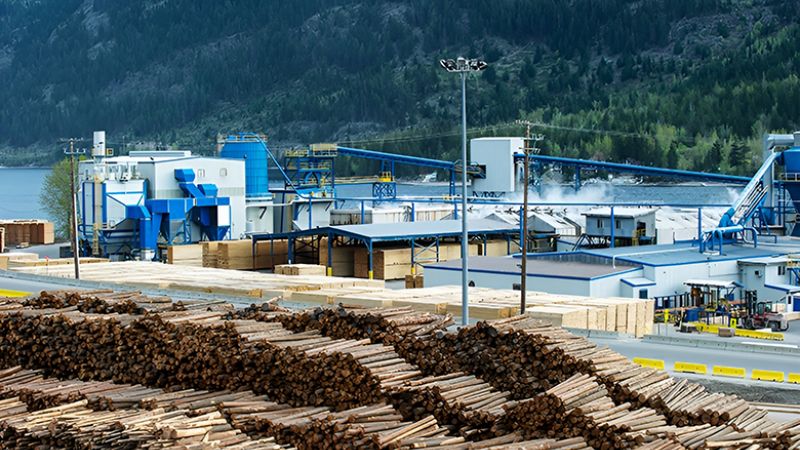


Meet global product demands and quality standards with industry-leading pellet plant design, engineering, equipment, and construction services for pellet processors.


Your Partner Beyond Project Completion
2000+ cases
RICHI is the leading designer, manufacturer and builder of pellet plants in the world, completing over 2000 projects in 140 countries across 6 continents.
Read More
Increase plant productivity, profitability, and safety by integrating high quality equipment into your pellet production line. Over the years, RICHI has become China's top pellet equipment manufacturer. At the same time, RICHI has established valuable partnerships with the world's leading component and raw material manufacturers to bring you the best there is in technology, automation, and efficiency in pelleting plant machinery.

For nearly 30 years, RICHI has been providing best-in-class pellet plant equipment and services to clients across a variety of industries, sizes, and needs. We pride ourselves on the knowledge and skill that each team member possesses – from our technical sales team to our process design engineers. You can count on RICHI Machinery to take your operation to the next level of innovation, quality, and success.
Need help with your pellet manufacturing plant project? Contact us today.
ANIMAL FEED
BIOMASS
WOOD
ORGANIC FERTILIZER
AQUA FEED
CAT LITTER
MUNICIPAL WASTE RECYCLING
SPECIAL PELLET PRODUCTION
RICHI Machinery continues to deliver world class pellet mill equipment, pellet plant engineering and project solutions that add value to our customers in the animal feed, wood waste, agriculture waste, organic fertilizer, cat litter and special pellet products industries. Throughout the years, we RICHI Machinery have built strong brand, becoming industry-leading pellet machine manufacturer. We value integrity, promise quality, and prioritize your success.
Learn MoreWith our expert team, we precisely implement your process engineering requirements in pellet mill and pelletizing plant systems. No matter which industry you’re in – we understand your needs and deliver solutions that meet the highest standards.
At RICHI, quality comes first. Our pellet making machine and related pellet line equipment undergo rigorous quality controls to ensure they meet the highest standards. Rely on products that are durable, safe, and efficient.
With decades of experience in pellet machine and pellet production line production, we have earned a reputation as a trusted partner in various industries. Our expertise allows us to cover a wide range of applications.
Not only do we offer premium pelleting equipment, but we are also experts at designing, building, installing, and maintaining facilities from the ground up. Our expertise is within pellt plant process design, discovering the most efficient, productive, and profitable way to handle your materials in an end-to-end cycle.
○ RICHI MACHINERY
Keeping in touch with us is an effective way to solve all your problems. If you have any needs or questions, please leave your contact information, then RICHI technical consultants will send design, quotation, videos to your mailbox. You can also contact us directly via WhatsApp: +86 13838389622
Copyright©2015-2026 by HENAN RICHI MACHINERY CO., LTD. All rights reserved.