
RICHI supplied a 1.5–2.5 T/H SFSP66×80 Cotton Stalk Hammer Mill in Turkmenistan to grind 20–40 mm pre-chopped cotton stalk into 4–6 mm fiber near Mary.
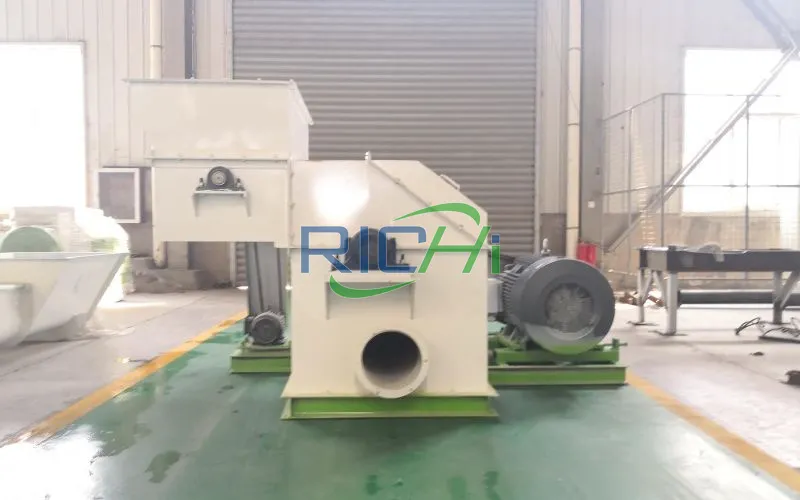
An agricultural processing company in Mary selected one RICHI SFSP66×80 Cotton Stalk Hammer Mill in Turkmenistan to process cotton stalks collected from contracted cotton-growing areas around its existing cotton business. The stalks are field residues collected after cotton harvesting rather than waste generated inside the gin itself. The company already owned a coarse chipping system, so it did not need another complete biomass-processing line. The missing operation was fine grinding.
The selected SFSP66×80 uses a 75 kW main motor. For properly dried and pre-chopped cotton stalks, the project operates within an approximately 1.5–2.5 T/H grinding range depending on screen opening, stalk density, moisture and soil contamination. Long stalks are first reduced to approximately 20–40 mm, then ground to around 4–6 mm for supply as prepared lignocellulosic raw material to a mushroom-substrate producer.
Name:
Cotton Stalk Grinder
Country:
Turkmenistan
Date:
2026
Capacity:
1.5–2.5 T/H
Model:
SFSP66×80
Main Motor Power:
75 kW
Typical Grinding Moisture:
10–15%
Target Ground Size:
4–6 mm
Cotton stalks cannot be fed into a fine hammer mill directly as whole field stalks. They are long, woody and irregular, and branches can bridge at the inlet or create severe load fluctuations if the upstream material is not controlled. The customer's existing chipper therefore performs the first stage of size reduction before the SFSP66×80 begins fine grinding.
After collection, stalks are inspected and excessive soil, stones, wire and other foreign material are removed. The chipper then reduces the stalks to approximately 20–40 mm pieces. This size is short enough for controlled hammer-mill feeding but still much coarser than the customer's required final product.
The SFSP66×80 completes the second stage, reducing the prepared material to approximately 4–6 mm. This creates a much more uniform fiber fraction for downstream substrate preparation and also makes conveying, blending and metering easier than handling long chopped stalk pieces.
| Project Parameter | Specification |
|---|---|
| Equipment | Cotton stalk hammer mill |
| Model | SFSP66×80 |
| Main Motor | 75 kW |
| Rotor Diameter | 660 mm |
| Grinding Chamber Width | 800 mm |
| Rotor Speed | Approximately 2,980 rpm |
| Hammer Tip Speed | Approximately 103 m/s |
| Project Grinding Capacity | Approximately 1.5–2.5 T/H |
| Input Size to Hammer Mill | Approximately 20–40 mm |
| Target Ground Size | Approximately 4–6 mm |
| Typical Grinding Moisture | Approximately 10–15% |
| Main Application | Prepared cotton stalk fiber for mushroom substrate |
The 1.5–2.5 T/H range is deliberately linked to the actual cotton-stalk duty rather than copied from grain-grinding capacity. The same SFSP66×80 can process grain at a much higher rate because grain is denser and easier to feed. Cotton stalk occupies more volume per tonne, contains long fibers and requires more work to pass a fine screen.
When the customer operates with a coarser screen and clean, evenly chopped stalks, throughput can move toward the upper end of the range. When producing approximately 4–6 mm material or handling more difficult stalks, practical output can move toward the lower end.
Mary is one of Turkmenistan's major cotton-growing regions, making cotton stalk collection a realistic local raw-material scenario. The customer works with surrounding agricultural areas rather than claiming that tens of thousands of tonnes of stalks are physically generated by one cotton gin.
Raw-material availability also needs to be separated from recoverable volume. Not every tonne of field stalk can economically be collected. Part of the material may remain in the field, be used locally or contain too much soil and foreign matter for efficient grinding. The hammer mill is therefore sized around the quantity that can actually be collected, dried and delivered to the processing site.
Gin trash is handled separately. Leaves, burrs, short sticks, immature bolls and other residues removed during cotton processing have a different bulk density and contamination profile from field stalks. They are not automatically mixed into this project's primary cotton-stalk grinding stream.
A major wear issue with cotton stalk does not come only from the plant fiber itself. Field-collected stalks can carry soil, sand and mineral contamination, particularly when harvesting and collection take place close to the ground. These abrasive contaminants accelerate wear on hammers and screens and can reduce grinding efficiency over time.
The customer therefore places emphasis on cleaning before fine grinding. Magnetic separation protects against ferrous material, while stones and excessive soil are removed as far upstream as practical. A wear-resistant hammer configuration can also be selected for this application, but RICHI does not promise a fixed hammer life because wear depends strongly on contamination level, screen size and total processed tonnage.
The operator monitors hammer edges, screen condition, vibration and motor load rather than replacing wear parts after an arbitrary number of hours.
The SFSP66×80 crusher machine is used on dry cotton stalk rather than freshly harvested green material. For this project, the normal grinding condition is approximately 10–15% moisture. Material significantly above the intended range can become tougher to fracture, reduce screen throughput and increase the risk of buildup inside the grinding chamber.
Moisture is therefore checked before the stalks enter fine grinding. The customer does not install a dryer simply because a hammer mill is present; drying is only required when collected stalks exceed the acceptable processing range. Material already field-dried and properly stored can proceed through chipping and grinding without unnecessary thermal processing.
The ground cotton stalk is supplied as a prepared fiber ingredient for mushroom-substrate production. The approximately 4–6 mm target gives the downstream producer a more consistent material for blending and moisture adjustment than long stalk fragments.
The hammer mill does not produce a finished mushroom substrate by itself. After grinding, the substrate producer still needs to formulate the growing medium, adjust moisture and carry out the appropriate biological or thermal preparation required by the mushroom production process. Cotton stalk particle size is only one part of that downstream system.
This distinction keeps the machine's function clear: the SFSP66×80 controls physical size. It does not guarantee mushroom yield, biological performance or substrate sterilization.
Dry cotton stalk grinding creates fine fibrous dust, particularly when operating with smaller screen openings. The customer therefore combines the hammer mill with aspiration and dust collection rather than discharging ground stalk into an open work area.
A cyclone can perform primary material-air separation, while a suitable filtration system handles the finer suspended fraction where required by the plant design. RICHI does not assign a universal 99% collection efficiency without the actual filter specification, air volume and dust-loading data.
Correct aspiration also supports hammer-mill performance. Airflow helps move particles through the screen and away from the grinding chamber. Poor aspiration can increase internal recirculation and reduce the practical 1.5–2.5 T/H output.
The project is a single-machine retrofit because coarse size reduction was already available. The existing chipper produces approximately 20–40 mm stalk pieces, while the new SFSP66×80 provides the missing fine-grinding stage. Upstream storage and basic material handling are also retained where their capacities remain adequate.
This prevents unnecessary duplication of equipment and keeps investment focused on the actual bottleneck. If the customer later increases raw-material collection, RICHI would first check the chipper, feeder, hammer mill, dust system and downstream handling capacities before recommending another grinder.
The Cotton Stalk Hammer Mill in Turkmenistan is prepared for export from Qingdao, China, with Turkmenbashi International Seaport used as the Caspian entry point before inland transport to the Mary region. Because Turkmenistan is located on the landlocked Caspian Sea, equipment cannot travel directly by ocean vessel from Qingdao to Turkmenbashi.
The shipment therefore requires a multimodal route arranged through the freight forwarder, combining international container transport with a Caspian feeder connection and subsequent road or rail movement. Turkmenbashi has container and general-cargo handling facilities suitable for imported industrial equipment, after which the machine can continue inland toward Mary.
This Cotton Stalk Hammer Mill in Turkmenistan project uses one SFSP66×80 with a 75 kW main motor to process dry cotton stalk collected from agricultural areas around Mary. The stalks are first cleaned and chopped to approximately 20–40 mm, then ground to approximately 4–6 mm at a project working capacity of around 1.5–2.5 T/H.
For another cotton-processing or agricultural company selecting a hammer mill, RICHI Machinery needs the stalk moisture, collection method, soil and sand content, percentage of woody stem, pre-chopped size, required final particle range, target T/H, operating hours and existing chipper and dust-control equipment. These parameters determine whether the SFSP66×80 is correctly matched to the material or whether another grinding configuration is required.
Having the right mix of reliable, high-quality pellet machine and pelletizing systems and expert support is essential to your success. Watch how our end-to-end feed pellet plant solutions have helped our customers optimize their performance.
Our customized and future-proofed turnkey pellet plant solutions is designed with you at the core. From vision to reality and beyond, our team stays connected with yours. Giving you peace-of-mind with an expert at your side.
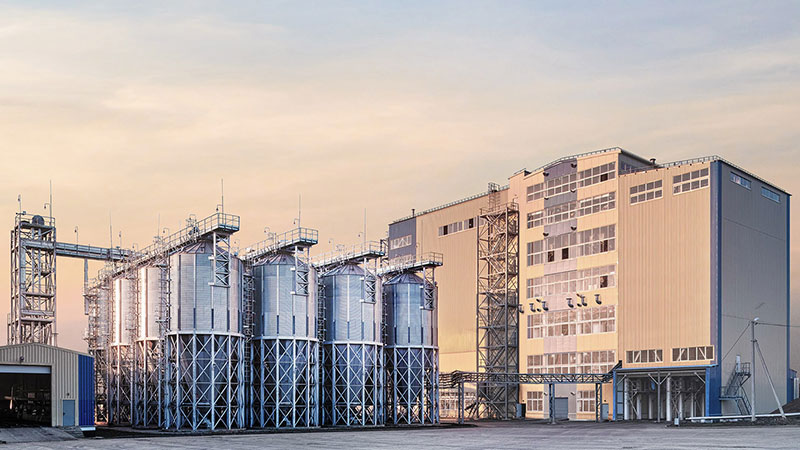
At RICHI, we go beyond project completion. With RICHI Servicee, we’re your dedicated partners in success. Count on us for expert guidance, minimal downtime, and optimized productivity. Choose RICHI for unmatched service and support.
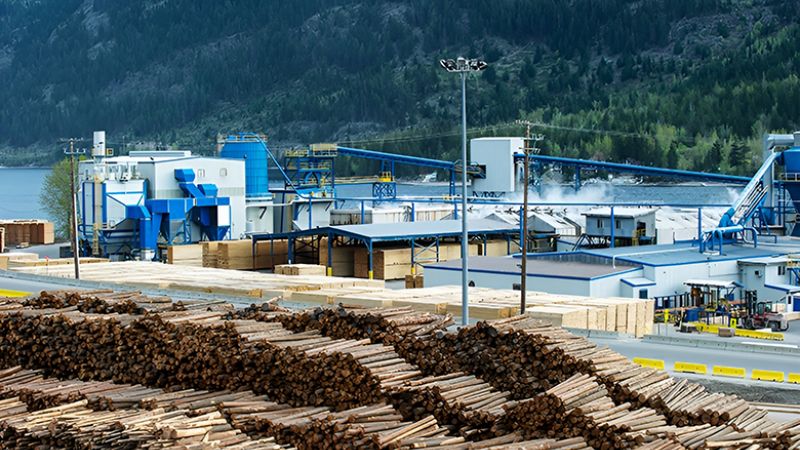


Meet global product demands and quality standards with industry-leading pellet plant design, engineering, equipment, and construction services for pellet processors.


Your Partner Beyond Project Completion
2000+ cases
RICHI is the leading designer, manufacturer and builder of pellet plants in the world, completing over 2000 projects in 140 countries across 6 continents.
Read More
Increase plant productivity, profitability, and safety by integrating high quality equipment into your pellet production line. Over the years, RICHI has become China's top pellet equipment manufacturer. At the same time, RICHI has established valuable partnerships with the world's leading component and raw material manufacturers to bring you the best there is in technology, automation, and efficiency in pelleting plant machinery.

For nearly 30 years, RICHI has been providing best-in-class pellet plant equipment and services to clients across a variety of industries, sizes, and needs. We pride ourselves on the knowledge and skill that each team member possesses – from our technical sales team to our process design engineers. You can count on RICHI Machinery to take your operation to the next level of innovation, quality, and success.
Need help with your pellet manufacturing plant project? Contact us today.
ANIMAL FEED
BIOMASS
WOOD
ORGANIC FERTILIZER
AQUA FEED
CAT LITTER
MUNICIPAL WASTE RECYCLING
SPECIAL PELLET PRODUCTION
RICHI Machinery continues to deliver world class pellet mill equipment, pellet plant engineering and project solutions that add value to our customers in the animal feed, wood waste, agriculture waste, organic fertilizer, cat litter and special pellet products industries. Throughout the years, we RICHI Machinery have built strong brand, becoming industry-leading pellet machine manufacturer. We value integrity, promise quality, and prioritize your success.
Learn MoreWith our expert team, we precisely implement your process engineering requirements in pellet mill and pelletizing plant systems. No matter which industry you’re in – we understand your needs and deliver solutions that meet the highest standards.
At RICHI, quality comes first. Our pellet making machine and related pellet line equipment undergo rigorous quality controls to ensure they meet the highest standards. Rely on products that are durable, safe, and efficient.
With decades of experience in pellet machine and pellet production line production, we have earned a reputation as a trusted partner in various industries. Our expertise allows us to cover a wide range of applications.
Not only do we offer premium pelleting equipment, but we are also experts at designing, building, installing, and maintaining facilities from the ground up. Our expertise is within pellt plant process design, discovering the most efficient, productive, and profitable way to handle your materials in an end-to-end cycle.
○ RICHI MACHINERY
Keeping in touch with us is an effective way to solve all your problems. If you have any needs or questions, please leave your contact information, then RICHI technical consultants will send design, quotation, videos to your mailbox. You can also contact us directly via WhatsApp: +86 13838389622
Copyright©2015-2026 by HENAN RICHI MACHINERY CO., LTD. All rights reserved.