
The Dutch customer did not build a business around burning clean corrugated cardboard that could still be recycled into new packaging. In the Netherlands, that would be difficult to justify commercially or environmentally: paper and cardboard packaging already achieved an 89% recycling rate in 2024, and more than 87% of the paper and board manufactured in the country was made from recovered paper.
The Dutch customer did not build a business around burning clean corrugated cardboard that could still be recycled into new packaging. In the Netherlands, that would be difficult to justify commercially or environmentally: paper and cardboard packaging already achieved an 89% recycling rate in 2024, and more than 87% of the paper and board manufactured in the country was made from recovered paper.
This corrugated sheet pellet machine in the Netherlands project therefore uses a much narrower feedstock stream. The customer is a Rotterdam-area paper and packaging recycler that separates high-quality corrugated cardboard for conventional paper recycling first.
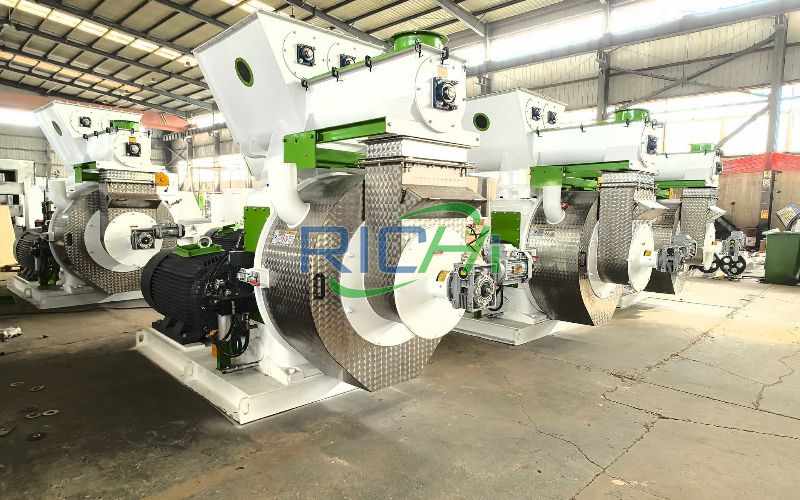
The MZLH420 receives only clean, dry short-fibre corrugated residues and converting rejects for which the company has developed a separate market as compressed animal-bedding pellets. The project is a diversification step inside an existing recycling facility, not an attempt to divert recyclable OCC into fuel.
Name:
Corrugated sheet pellet mill
Country:
Netherlands
Date:
2025
Capacity:
1.0–1.2 T/H
Model:
MZLH420
Main Motor Power:
90 kW
Finished Product:
Compressed paper-fibre animal bedding pellets
Pellet diameter:
8 mm
The Netherlands already has a highly developed recovered-paper chain.
In 2024, approximately 1.421 million tonnes of paper and cardboard packaging were placed on the Dutch market and about 1.262 million tonnes were recycled. The recycling rate for packaging paper and board was 89%. :
That means an ordinary stream of clean supermarket boxes, e-commerce cartons or industrial corrugated cases generally has a more logical destination: the paper recycling system.
The customer therefore sorts incoming cardboard before it ever reaches the pelletizing section.
Material that meets recovered-paper specifications remains in the fibre loop.
The pelletizer receives a controlled secondary fraction generated within the recycler’s own processing and from nearby packaging converters.
The customer does not accept mixed municipal waste simply because it contains cardboard.
Plastic film, excessive tape, metal clips, heavily coated papers, wet food-contaminated boxes and chemically contaminated packaging are removed from this product stream.
Paper-rich material can technically be pelletized for combustion, but in the Netherlands the regulatory and circular-economy implications are much more complicated than calling a paper pellet “biomass.”
Dutch RVO guidance distinguishes clean biomass from waste-derived fuels such as RDF and SRF. Once a fuel is produced through mechanical processing of waste, its classification and combustion requirements can fall under waste-fuel rules rather than the relatively straightforward rules used for clean woody biomass.
For this recycler, making animal-bedding pellets from a clean selected fibre fraction offered a simpler product direction and avoided designing the project around waste combustion permits, boiler compatibility and emissions compliance.
The Netherlands certainly has a large greenhouse horticulture sector and continues to diversify its heat supply.
Biomass still contributes to Dutch renewable heating: in 2025, company biomass boilers accounted for 17,892 TJ of gross final renewable heat consumption.
But that does not mean Dutch greenhouse operators can simply replace natural gas with pellets made from corrugated packaging.
Fuel classification, boiler design, ash composition, emissions limits and permitting all matter.
For this project, the finished product is positioned as animal bedding rather than as a direct natural-gas replacement for Westland greenhouse operators.
The recycler purchased one MZLH420 rather than two machines.
The reason was straightforward: this is a secondary outlet for a selected fibre fraction, while conventional paper recycling remains the company’s main business.
Installing two pelletizers immediately would have forced the recycler to find extra feedstock simply to keep equipment occupied, potentially undermining the rule that better-quality corrugated material should stay in the paper loop.
| Project Parameter | Configuration |
|---|---|
| Equipment | Corrugated sheet pellet machine |
| Model | MZLH420 |
| Quantity | 1 unit |
| Main Motor Power | 90 kW |
| Arch-Breaking Feeder | 3 kW |
| Forced Feeder | 1.5 kW |
| Ring Die Inner Diameter | 420 mm |
| Available Pellet Diameter | 4–12 mm |
| Project Pellet Diameter | 8 mm |
| Reference Capacity | Approximately 1.0–1.2 T/H |
| Finished Product | Compressed paper-fibre animal bedding pellets |
The customer standardized the product at 8 mm.
For animal bedding, the objective is not to create a large slow-burning fuel pellet.
The pellet needs enough strength to survive bagging, palletizing and transport, but it should also absorb moisture and open into a softer fibre structure during use.
An 8 mm product gives the customer a practical balance between packaging durability and breakdown behavior.
A complete corrugated sheet cannot enter the forced feeder.
The customer’s existing recycling line first separates unsuitable materials and reduces the selected board to manageable pieces.
A secondary size-reduction stage then prepares the fibre for the MZLH420.
The objective is a relatively uniform, free-feeding material rather than long strips that can bridge above the pellet mill.
Large flattened cartons are first shredded to break their sheet structure.
Where necessary, the resulting material undergoes finer fibre reduction so the majority of oversized pieces are removed before pelletizing.
This is particularly important with corrugated board because the material has low bulk density.
A hopper can appear full while delivering very little mass per minute if the shredded pieces remain too large and fluffy.
Ground paper behaves very differently from sawdust or grain.
The lightweight fibres can bridge and resist gravity feeding.
The 3 kW arch-breaking system keeps material moving above the outlet, while the 1.5 kW forced feeder actively delivers fibre into the ring-die chamber.
For this application, stable feeding is one of the main reasons the customer selected an MZLH biomass-type ring-die machine rather than a basic gravity-fed pellet press.
The recycler receives most corrugated material from indoor commercial and packaging operations.
Properly stored paper fibre is already comparatively dry.
Installing a gas-fired drum dryer merely to reduce material from 15–18% moisture would add equipment, fuel consumption, dust handling and fire-management complexity that the project does not normally require.
The customer instead keeps raw material under covered storage and checks moisture before production.
Material that is excessively wet because of poor collection or outdoor exposure is separated rather than automatically dried and pelletized.
Wet corrugated packaging can contain mould, dirt or other contamination.
Drying it does not automatically make it appropriate for an animal-contact product.
The customer therefore prioritizes clean dry commercial fibre rather than building the plant around storm-damaged or heavily wetted cardboard.
This improves finished-product hygiene and reduces unnecessary drying cost.
Corrugated board is principally cellulose fibre, and properly prepared fibre can develop substantial bonding under pressure.
The customer therefore tests pellet formation before introducing an external binder.
If a formulation adjustment is required, the additive has to be appropriate for the final bedding application.
The project does not add starch or chemicals merely to increase pellet hardness.
A very hard cardboard pellet would be easy to transport but could perform poorly as bedding.
The customer wants the 8 mm pellets to remain intact in the bag and then gradually expand as they encounter moisture.
Ring-die compression is therefore selected around the final application rather than the highest achievable density.
This differs from fuel-pellet production, where high mechanical durability and combustion logistics may dominate the specification.
The cellulose fibre already has the ability to absorb moisture.
Densification mainly changes transportation and handling characteristics.
Loose shredded cardboard occupies considerable warehouse volume and can be difficult to meter cleanly.
Pelletizing reduces bulk volume and creates a product that can be automatically weighed and packed more easily.
After use, the pellet can loosen as moisture enters the fibre structure.
The customer does not market the product as completely dust-free.
Paper shredding and pelletizing inevitably produce some fine material.
Finished pellets are therefore cooled and screened before packaging.
Suitable clean fines are returned to the production process rather than being left in the saleable bedding product.
E-commerce boxes often contain pressure-sensitive labels and plastic packing tape.
Small residual quantities may pass through ordinary recovered-paper systems, but an animal-bedding product requires tighter control.
The recycler uses sorting and quality checks to reduce non-paper content before the fibre enters the pellet section.
PRN’s own data emphasize that contamination remains an important quality issue for Dutch recovered paper; product-foreign contamination averaged 2.54% in the 2023–2024 study period.
Staples and other ferrous fragments can occasionally occur in commercial packaging waste.
The customer retains magnetic separation ahead of fine processing.
This protects shredding equipment and prevents metal from entering the ring-die section.
Material quality control is therefore as important to machine life as die and roller selection.
The phrase sounds attractive, but paper-mill rejects are not necessarily clean cellulose.
Depending on the recycling process, reject streams may contain plastics, adhesive residues, screening contaminants and other unwanted materials.
The Dutch customer therefore does not describe generic paper-mill reject as acceptable animal-bedding raw material.
Only traceable clean corrugated fibre fractions meeting the company’s own product specification enter the MZLH420.
PRN states that paper and board can be recycled repeatedly and reports that Dutch paper manufacture already relies heavily on recovered fibre.
The commercial opportunity for this project is therefore not an enormous theoretical mountain of “dead fibre.”
It is a relatively small, controlled fraction that the recycler cannot economically place in its normal high-quality recovered-paper channel at a particular time.
The Rotterdam area provides access to logistics companies, importers, distribution centres, packaging converters and manufacturing businesses that generate significant commercial corrugated-board flows.
That does not mean all boxes arriving through Rotterdam become pellet feedstock.
The location is valuable because it gives the recycler enough material diversity to maintain a strict sorting hierarchy while still accumulating a consistent secondary fibre fraction for the pellet unit.
The facility already operated industrial shredding, conveying and baling equipment, so a three-phase industrial electrical system was available.
The project electrical design was checked against the actual simultaneous load of the pelletizer, shredder, dust-control equipment, conveyors and other operating machines.
The customer did not rely on a simple statement that a “200 A service is enough for two 90 kW motors.”
Motor starting current, voltage, power factor, protection and transformer capacity all had to be considered.
The larger MZLH520 would provide more capacity, but capacity was not the customer’s limiting problem.
The limiting factor was the amount of clean secondary corrugated fibre available after better-quality material had been sent to conventional recycling.
Choosing a 132 kW machine simply to obtain a larger nameplate output would have increased installed power while lowering equipment utilization.
The MZLH420 was therefore a better match for the actual feedstock hierarchy.
The MZLH420 reference capacity is approximately 1.0–1.2 T/H for suitable biomass-type material.
Actual output on corrugated fibre changes with shredding size, fibre bulk density, moisture, feeder settings, die compression and target pellet durability.
The customer therefore monitors actual tonnes per hour during production campaigns instead of assuming that clean cardboard will always perform exactly like sawdust.
Pellets leave the ring die warm.
Immediate bagging could trap heat and make the final product less stable.
The customer therefore uses cooling and screening before automatic weighing and packaging.
Bags are stored under dry indoor conditions because paper pellets can reabsorb moisture from humid surroundings.
No fixed 16, 18 or 20 MJ/kg calorific-value claim is needed for this project.
No natural-gas equivalence calculation is required.
The product is evaluated on practical bedding characteristics: clean material, acceptable dust level, absorption behavior, ease of handling, pellet integrity during logistics and breakdown during use.
Densifying a selected low-grade fraction into bedding does not make the project perfectly circular by itself.
However, it keeps the material in a physical-use application rather than immediately destroying the fibre through combustion.
After use, the final disposal or recovery route depends on the animal operation, contamination and applicable waste rules.
The customer therefore sees pelletizing as an additional outlet below conventional paper recycling in its material hierarchy, not as a replacement for recycling.
The MZLH420 was exported from Qingdao Port directly to Rotterdam, which is the natural entry point for equipment destined for this customer’s facility.
RICHI supplied machine dimensions, power information, installation interfaces, feeder requirements and maintenance-clearance data before shipment.
Because the recycler already had shredding and material-handling equipment, installation focused primarily on connecting the existing prepared-fibre stream to the new pelletizing and cooling section.
During commissioning, the most obvious variation came from bulk density.
Some shredded corrugated batches were fluffy and filled the feeding hopper quickly while delivering relatively little mass to the ring die.
Other batches contained shorter, denser fibre and fed much more easily.
The customer therefore adjusted its shredding specification and feeder settings before changing die compression.
“The difficult part was not making cardboard form a pellet. It was deciding exactly which cardboard should be pelletized. Good corrugated material still goes to paper recycling. Once we limited the pellet section to a consistent clean secondary fibre stream, feeding became more predictable and the bedding product became easier to standardize.”
The Rotterdam facility has enough room to add another pellet machine if demand grows.
That does not mean a second MZLH420 is already planned.
The customer will first determine whether there is enough additional clean secondary fibre available without diverting recyclable corrugated board from higher-value recycling channels.
If that condition is met and the bedding market expands, a parallel unit could be considered later.
This corrugated sheet pellet machine in the Netherlands project uses a controlled secondary corrugated-fibre fraction to produce animal bedding pellets.
The Rotterdam-area recycler first separates corrugated material suitable for conventional paper recycling. Only a clean secondary fraction of short-fibre corrugated residues and converting waste is shredded, conditioned and sent to one MZLH420 for production of 8 mm animal-bedding pellets.
The machine uses a 90 kW main motor, 3 kW arch-breaking feeder, 1.5 kW forced feeder and 420 mm ring die. Reference capacity is approximately 1.0–1.2 T/H under suitable material conditions, with actual output determined by fibre size, bulk density, moisture, feeding behavior and pellet specification.
The complete process consists of sorting, contaminant removal, shredding and fibre preparation, moisture checking, forced feeding, ring-die pelletizing, cooling, screening and packaging. High-quality OCC remains in the paper-recycling loop, while the pelletizing section provides a separate physical-use outlet for a controlled lower-grade fibre stream.
For another customer considering a corrugated sheet pellet machine in the Netherlands, RICHI Machinery would first ask what exact corrugated fraction is available, whether it can still be economically recycled as paper, contamination level, moisture, shredding size, annual qualified tonnage, intended pellet use, required diameter, electricity supply, cooling and screening capacity and applicable product or waste classification before recommending a machine.
In the Netherlands, that first question—“Should this cardboard still be recycled as cardboard?”—is more important than the pelletizer capacity.
Having the right mix of reliable, high-quality pellet machine and pelletizing systems and expert support is essential to your success. Watch how our end-to-end feed pellet plant solutions have helped our customers optimize their performance.
Our customized and future-proofed turnkey pellet plant solutions is designed with you at the core. From vision to reality and beyond, our team stays connected with yours. Giving you peace-of-mind with an expert at your side.
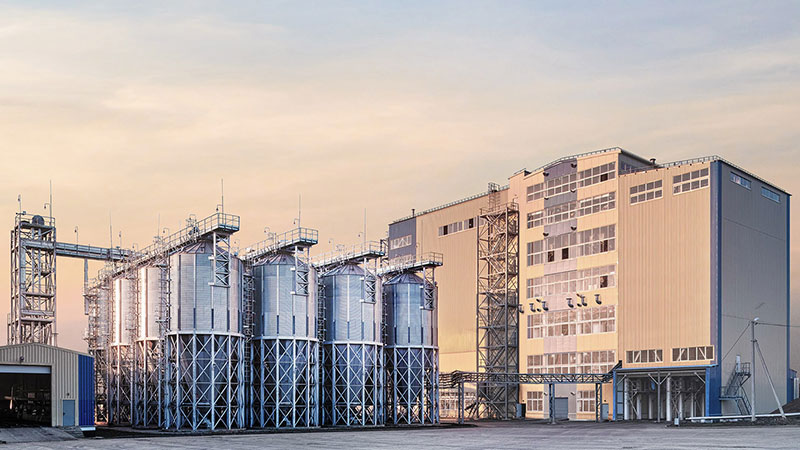
At RICHI, we go beyond project completion. With RICHI Servicee, we’re your dedicated partners in success. Count on us for expert guidance, minimal downtime, and optimized productivity. Choose RICHI for unmatched service and support.
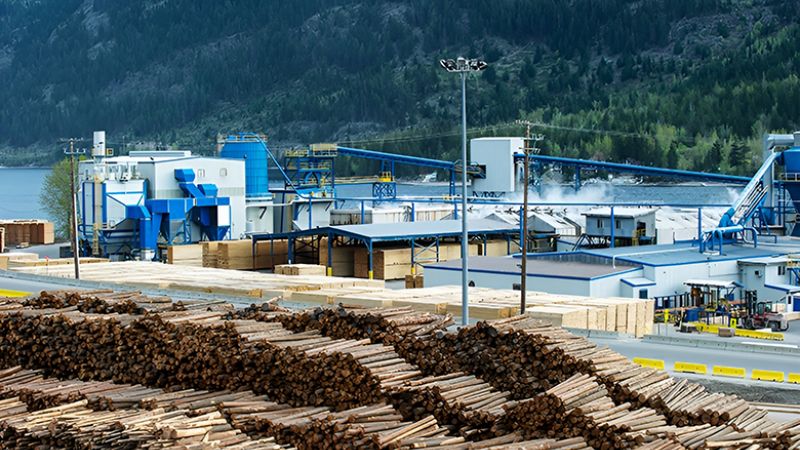


Meet global product demands and quality standards with industry-leading pellet plant design, engineering, equipment, and construction services for pellet processors.

Your Partner Beyond Project Completion
2000+ cases
RICHI is the leading designer, manufacturer and builder of pellet plants in the world, completing over 2000 projects in 140 countries across 6 continents.
Read More
Increase plant productivity, profitability, and safety by integrating high quality equipment into your pellet production line. Over the years, RICHI has become China's top pellet equipment manufacturer. At the same time, RICHI has established valuable partnerships with the world's leading component and raw material manufacturers to bring you the best there is in technology, automation, and efficiency in pelleting plant machinery.

For nearly 30 years, RICHI has been providing best-in-class pellet plant equipment and services to clients across a variety of industries, sizes, and needs. We pride ourselves on the knowledge and skill that each team member possesses – from our technical sales team to our process design engineers. You can count on RICHI Machinery to take your operation to the next level of innovation, quality, and success.
Need help with your pellet manufacturing plant project? Contact us today.
ANIMAL FEED
BIOMASS
WOOD
ORGANIC FERTILIZER
AQUA FEED
CAT LITTER
MUNICIPAL WASTE RECYCLING
SPECIAL PELLET PRODUCTION
RICHI Machinery continues to deliver world class pellet mill equipment, pellet plant engineering and project solutions that add value to our customers in the animal feed, wood waste, agriculture waste, organic fertilizer, cat litter and special pellet products industries. Throughout the years, we RICHI Machinery have built strong brand, becoming industry-leading pellet machine manufacturer. We value integrity, promise quality, and prioritize your success.
Learn MoreWith our expert team, we precisely implement your process engineering requirements in pellet mill and pelletizing plant systems. No matter which industry you’re in – we understand your needs and deliver solutions that meet the highest standards.
At RICHI, quality comes first. Our pellet making machine and related pellet line equipment undergo rigorous quality controls to ensure they meet the highest standards. Rely on products that are durable, safe, and efficient.
With decades of experience in pellet machine and pellet production line production, we have earned a reputation as a trusted partner in various industries. Our expertise allows us to cover a wide range of applications.
Not only do we offer premium pelleting equipment, but we are also experts at designing, building, installing, and maintaining facilities from the ground up. Our expertise is within pellt plant process design, discovering the most efficient, productive, and profitable way to handle your materials in an end-to-end cycle.
○ RICHI MACHINERY
Keeping in touch with us is an effective way to solve all your problems. If you have any needs or questions, please leave your contact information, then RICHI technical consultants will send design, quotation, videos to your mailbox. You can also contact us directly via WhatsApp: +86 13838389622
Copyright©2015-2026 by HENAN RICHI MACHINERY CO., LTD. All rights reserved.