
Corn Cob Bedding Pellet Machine in Bulgaria for converting prepared corn cobs into animal bedding pellets. Explore the MZLH350 specifications, raw material preparation, moisture control, pellet sizing and customized biomass pellet production solutions from RICHI Machinery.
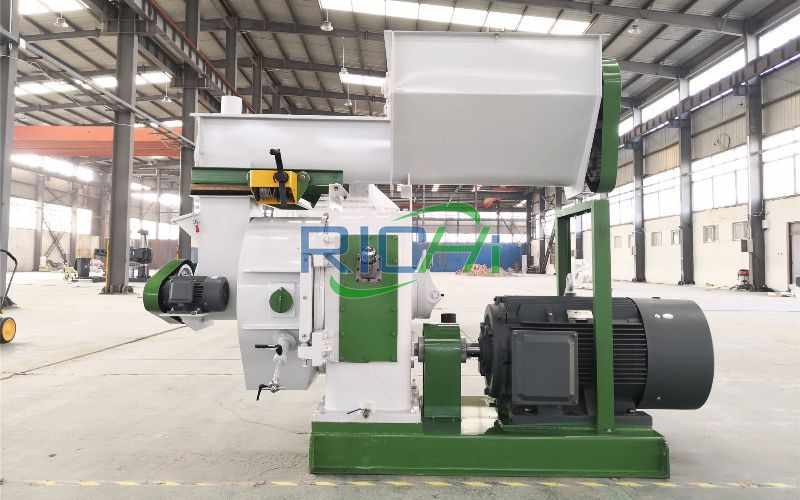
The Corn Cob Bedding Pellet Machine in Bulgaria is intended for an agricultural by-product processor that wants to turn surplus corn cobs into a compact bedding product for farms and animal-care businesses.
The planned investment is one MZLH350 ring-die biomass pellet machine, added to the customer's existing raw-material preparation operation. Instead of purchasing a complete new plant, the business can use its current handling and size-reduction equipment, then introduce pelletizing as a new processing step.
Bulgaria has an established grain-growing sector, including maize production, which creates opportunities to collect and use suitable corn residues. For this project, the focus is on the cobs separated during grain processing, not on whole maize plants or grain intended for food and feed markets.
Name:
Corn Cob Bedding Pelletizer
Country:
Bulgaria
Date:
2026
Capacity:
0.3–0.5 T/H
Model:
MZLH350
Power:
37 kW
Raw Materials:
Prepared corn cobs
Pellet diameter:
8mm
The finished pellets are planned for non-feed animal bedding, with an initial target diameter of 8 mm. Before commercial production, the corn cobs will be tested for moisture, particle size, cleanliness and pellet durability to confirm that the proposed configuration fits the customer's actual material.
The customer is a small commercial agricultural-residue processor serving farms and regional distributors. During the maize harvest, corn cobs can be collected from farms or obtained from operations that separate grain from the cob. In loose form, this material is bulky and can be awkward to store, move and sell in consistent quantities. Its availability is also seasonal, so the processor needs a practical way to prepare and store the material for sales beyond the harvest period.
The customer is not starting from zero. Existing equipment can receive and move the raw material, while a crusher or hammer mill can reduce the cobs before pelletizing. The missing piece is a machine that compresses the prepared material into a denser, more uniform product. The MZLH350 is being considered for this purpose, allowing the business to evaluate demand without immediately investing in a fully automated production line.
The intended buyers are poultry farms, small livestock operations and animal-care suppliers that need a manageable bedding product. Corn cob bedding can be useful where a dry, absorbent plant-based material is required, but its performance depends on the condition of the raw material and the way the finished pellets are used. The product must be clean, adequately dried and screened; simply compressing agricultural waste does not automatically make it suitable for animal housing.
For the customer, the commercial question is straightforward. Can locally sourced corn cobs be converted into a consistent bedding pellet at a cost that leaves enough margin for packaging, storage and delivery? A single-machine project gives the business a way to answer that question through production trials and small orders before committing to a larger investment.
The proposed feedstock is corn cob material collected after maize kernels have been removed. It is not a mixture of whole maize plants, wet silage or grain. The cobs may arrive as broken pieces or as larger sections, depending on the collection and grain-separation equipment used upstream. This distinction matters because whole cobs cannot be fed directly into the pellet mill without suitable size reduction.
The initial process is designed around a single raw material rather than a complicated blend. That makes it easier to understand the machine's performance and determine the real cost per tonne. If the customer later wants to incorporate another suitable agricultural residue, such as clean, dry cereal straw, the new blend should be tested separately. Different materials can change feeding behavior, compression, pellet durability and absorbency, so the original operating settings should not automatically be carried over.
Corn cobs should be collected from a source that can keep the material reasonably clean. Soil, stones, metal fragments, plastic twine and other foreign matter need to be removed before grinding. Cobs that have been exposed to rain or stored under damp conditions require closer inspection for mold and deterioration. Material intended for animal bedding should not be accepted solely because it is available at a low price.
The customer's proposed preparation target is a reasonably uniform particle size, using approximately 3 mm as a preliminary grinding guideline. This is a starting point rather than a fixed requirement for every cob. The final screen size should be selected after examining the material and checking how it feeds through the machine. If the particles are too large or uneven, the feed may bridge or enter the pelletizing chamber inconsistently. Excessive grinding, on the other hand, can add power consumption and create unnecessary fines.
RICHI's MZLH350 is the proposed choice for a small commercial operation that wants to establish a new product line without committing to high-volume production from the beginning. Its reference capacity is 0.3–0.5 T/H, making it a reasonable starting point for a business that needs to test the market and refine its process. Actual output depends on the prepared corn cobs, moisture, particle-size distribution, die configuration and operating conditions.
| Item | Proposed specification |
|---|---|
| Machine model | MZLH350 |
| Equipment type | Ring-die biomass pellet machine without a conditioner |
| Main motor power | 37 kW |
| Arch-breaker feeder power | 2.2 kW |
| Forced feeder power | 0.75 kW |
| Ring-die inner diameter | 350 mm |
| Reference capacity | 0.3–0.5 T/H |
| Proposed pellet diameter | 8 mm, subject to material trials and die selection |
| Raw material | Prepared corn cobs |
| Purchase quantity | One machine |
| Application | Non-feed animal bedding pellets |
The 8 mm pellet is a proposed target within the machine's stated finished-pellet range of 4–12 mm. It offers a practical starting size for handling, screening and bagging, but the final diameter should be confirmed against the needs of the intended buyers. Pellet size alone does not establish bedding quality. The customer also needs to assess the amount of fines, pellet breakage during transport, moisture absorption and how readily the pellets break down when exposed to liquid.
The machine's ring die and rollers compress prepared biomass into cylindrical pellets. The arch-breaker feeder helps limit material bridging in the hopper, while the forced feeder assists with delivering material into the pelletizing chamber. These features are useful when the prepared raw material does not flow as freely as a uniform granular feedstock.
One point needs to be clear at the purchasing stage. The MZLH350 is supplied in the specified configuration without a conditioner. This project is for biomass bedding, not livestock feed production. The machine should not be presented as a feed pelletizer, and no feed-processing claims should be made on the basis of this configuration.
Most of the work that determines the final pellet quality happens before the material reaches the ring die. The proposed workflow uses the customer's existing preparation equipment where it is suitable, adding new machinery only if the material trials show that a necessary process step is missing.
Drying deserves particular attention. Corn cobs collected during wet weather or stored in poorly ventilated conditions may carry more moisture than the pelletizing process can accommodate. Excessive moisture can affect compression and pellet stability, while material that is too dry may also behave differently during densification. The operating target should be determined from trials rather than assumed from the raw material's appearance.
Cooling and screening are also part of the finished-product process, even though the customer is purchasing only one pellet machine. If these functions are already available, the existing equipment may be retained. If not, RICHI can help the customer evaluate the additional units required for a complete line. A pellet mill's rated capacity is not the same as the output of the entire operation if upstream preparation or downstream handling becomes a bottleneck.
The customer plans to begin with poultry farms and regional bedding distributors, then evaluate demand from other livestock and animal-care businesses. Corn cob material is a plant-based bedding option, but the product should be marketed according to its tested characteristics rather than broad claims that it suits every animal or housing system.
For poultry operations, the bedding must be dry, reasonably low in dust and suitable for the farm's litter-management practices. For other animals, the buyer may place greater emphasis on absorbency, softness, pellet breakdown and ease of cleaning. The customer should confirm the intended application with each buyer instead of assuming that one formulation will perform identically in every setting.
Before scaling up, the first batches should be checked for several practical indicators:
These checks help the customer decide whether the proposed 8 mm size is appropriate or whether another die size should be considered. They also provide a basis for comparing corn cob pellets with the loose bedding materials already used by prospective buyers. A product that is easy to store but generates excessive dust or breaks apart too quickly may not secure repeat orders.
The customer is not replacing a complete production line. The plan is to add one MZLH350 to an existing agricultural-residue operation that already has basic raw-material handling and size-reduction capability. This keeps the first investment focused on the step that creates the new product: densification.
Starting with one machine also makes the cost calculation more manageable. The business can measure raw-material purchasing or collection costs, grinding and drying requirements, electricity consumption, labor, packaging, storage losses and delivery expenses. These figures will show whether the bedding pellets can be sold at a viable margin and whether the business should expand its output.
There is no need to purchase every auxiliary machine before confirming the product's market potential. If the customer already has a suitable hammer mill, conveyor or screening equipment, those units may be integrated into the process after their capacity and condition are checked. If the current equipment cannot provide consistent feed or handle the planned output, the missing step can be addressed before commissioning.
RICHI Machinery supplies individual biomass pellet machines as well as complete biomass pellet production lines. A customized system can include receiving and conveying equipment, a crusher or hammer mill, drying equipment where necessary, a pellet mill, a cooler, a screen and packing machinery. The exact arrangement depends on the raw material, the desired output, the available space and the customer's budget. A single-machine purchase can therefore be the first stage of a larger project rather than a limitation on future expansion.
Before finalizing the MZLH350 configuration, RICHI can review representative corn cob samples and discuss the customer's intended product. The key questions concern moisture, particle size, contamination, the target pellet diameter and the conditions under which the pellets will be used. These details help establish a sensible trial plan and reduce the risk of selecting equipment based only on a nominal capacity figure.
RICHI can also review the existing preparation and handling arrangement. For this project, the practical objective is to determine whether the customer's current grinder can produce the required particle size, whether drying is necessary during the expected operating season, and whether the discharge side can cool and screen the pellets at the required rate.
During initial operation, the customer should record feedstock moisture, output per hour, machine load, fines content and finished-pellet appearance. Those records are more useful than relying on a single production run. If the material varies between deliveries, the operating settings and preparation requirements may need to be adjusted accordingly.
For a customer planning to expand later, these results provide the basis for a more complete production-line design. Additional equipment can be selected around actual operating data instead of purchasing an oversized system before demand is established.
The planned shipment route is from Qingdao Port in China to the Port of Varna, Bulgaria. Varna is the nominated destination port for this equipment shipment.
Before dispatch, the customer and supplier should confirm the machine's packing dimensions, gross weight, delivery terms and installation requirements. The installation area should provide enough room for the feeding and discharge sections, routine maintenance and safe access to the machine. The customer should also verify the electrical supply and check the compatibility of any existing conveyors or preparation equipment.
Commissioning should include inspection of the machine, ring die and rollers, verification of feeder operation, electrical checks and confirmation that guards and emergency stops are correctly installed. The first trial should use prepared corn cobs within the agreed moisture and particle-size range. Operators should then assess the pellet quality and operating stability before moving to routine production.
The key point for the customer is that the project does not depend on buying a large plant before understanding the market. The MZLH350 provides a way to test corn cob bedding production using a controlled raw-material preparation process. The first priority is to establish whether the finished pellets meet buyers' expectations for handling, dust, durability and bedding performance.
For a project of this type, useful customer feedback should come from the first production trial and the people who actually handle the product. The questions to resolve are practical: does the pellet stay intact during bagging, does the package contain too many fines, does the product remain dry in storage, and does it perform as expected in the intended bedding application? Those observations can guide the next adjustment to the formulation, preparation method or die size.
RICHI Machinery can supply the individual pellet machine and, when required, design a complete biomass pellet production line around the customer's materials and production target. For the proposed Corn Cob Bedding Pellet Machine in Bulgaria project, the sensible starting point is to test the available cobs, confirm the required preparation conditions and establish a stable operating result before increasing production. That gives the customer a clearer basis for making the next investment decision.
Having the right mix of reliable, high-quality pellet machine and pelletizing systems and expert support is essential to your success. Watch how our end-to-end feed pellet plant solutions have helped our customers optimize their performance.
Our customized and future-proofed turnkey pellet plant solutions is designed with you at the core. From vision to reality and beyond, our team stays connected with yours. Giving you peace-of-mind with an expert at your side.
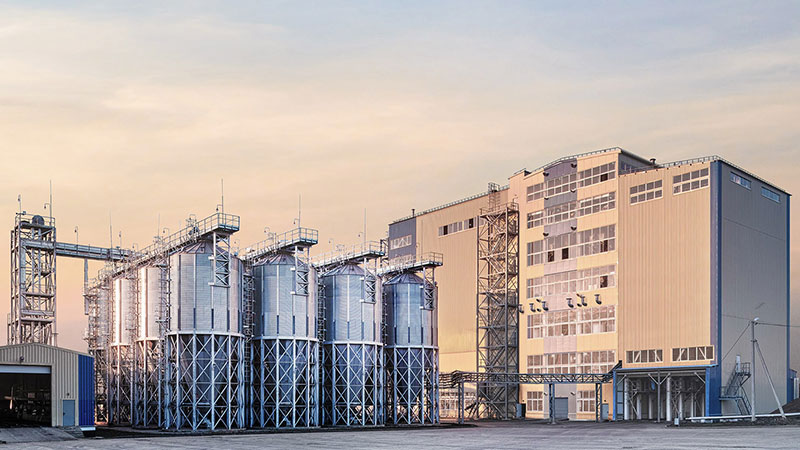
At RICHI, we go beyond project completion. With RICHI Servicee, we’re your dedicated partners in success. Count on us for expert guidance, minimal downtime, and optimized productivity. Choose RICHI for unmatched service and support.
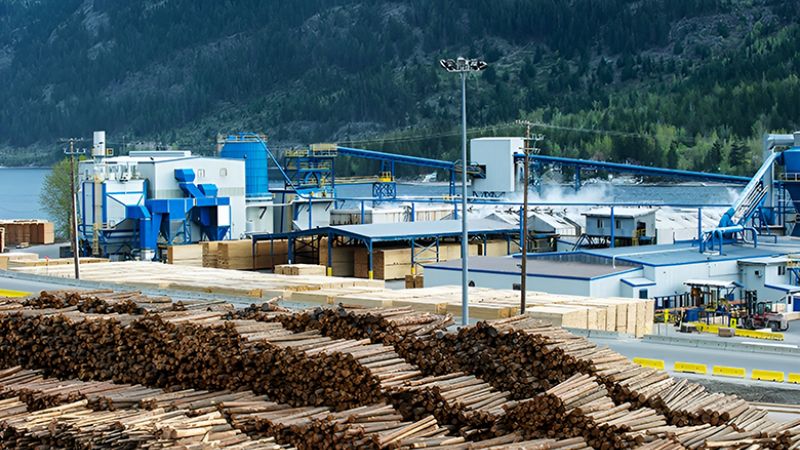


Meet global product demands and quality standards with industry-leading pellet plant design, engineering, equipment, and construction services for pellet processors.


Your Partner Beyond Project Completion
2000+ cases
RICHI is the leading designer, manufacturer and builder of pellet plants in the world, completing over 2000 projects in 140 countries across 6 continents.
Read More
Increase plant productivity, profitability, and safety by integrating high quality equipment into your pellet production line. Over the years, RICHI has become China's top pellet equipment manufacturer. At the same time, RICHI has established valuable partnerships with the world's leading component and raw material manufacturers to bring you the best there is in technology, automation, and efficiency in pelleting plant machinery.

For nearly 30 years, RICHI has been providing best-in-class pellet plant equipment and services to clients across a variety of industries, sizes, and needs. We pride ourselves on the knowledge and skill that each team member possesses – from our technical sales team to our process design engineers. You can count on RICHI Machinery to take your operation to the next level of innovation, quality, and success.
Need help with your pellet manufacturing plant project? Contact us today.
ANIMAL FEED
BIOMASS
WOOD
ORGANIC FERTILIZER
AQUA FEED
CAT LITTER
MUNICIPAL WASTE RECYCLING
SPECIAL PELLET PRODUCTION
RICHI Machinery continues to deliver world class pellet mill equipment, pellet plant engineering and project solutions that add value to our customers in the animal feed, wood waste, agriculture waste, organic fertilizer, cat litter and special pellet products industries. Throughout the years, we RICHI Machinery have built strong brand, becoming industry-leading pellet machine manufacturer. We value integrity, promise quality, and prioritize your success.
Learn MoreWith our expert team, we precisely implement your process engineering requirements in pellet mill and pelletizing plant systems. No matter which industry you’re in – we understand your needs and deliver solutions that meet the highest standards.
At RICHI, quality comes first. Our pellet making machine and related pellet line equipment undergo rigorous quality controls to ensure they meet the highest standards. Rely on products that are durable, safe, and efficient.
With decades of experience in pellet machine and pellet production line production, we have earned a reputation as a trusted partner in various industries. Our expertise allows us to cover a wide range of applications.
Not only do we offer premium pelleting equipment, but we are also experts at designing, building, installing, and maintaining facilities from the ground up. Our expertise is within pellt plant process design, discovering the most efficient, productive, and profitable way to handle your materials in an end-to-end cycle.
○ RICHI MACHINERY
Keeping in touch with us is an effective way to solve all your problems. If you have any needs or questions, please leave your contact information, then RICHI technical consultants will send design, quotation, videos to your mailbox. You can also contact us directly via WhatsApp: +86 13838389622
Copyright©2015-2026 by HENAN RICHI MACHINERY CO., LTD. All rights reserved.