
Compost pelleting machine in France: FZLH250 for 5 mm pig-and-poultry compost pellets, with a defined feed rate, batch plan and farm installation scope.
A pellet can survive the journey to a vineyard and still cause trouble if it will not meter through the grower's applicator. For a mixed livestock farm in Occitanie, southern France, the purchasing brief starts with the finished compost: its dimensions, handling behaviour and condition when the bag is opened.
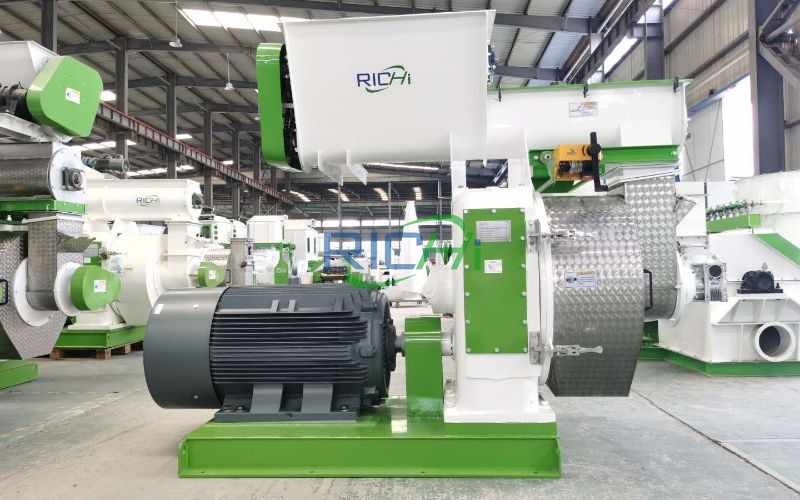
The compost pelleting machine in France project centres on one RICHI FZLH250. The farm selected a separate pelleting unit to develop a bagged soil-amendment product alongside its livestock business. A design feed rate of 1.2 tonnes per hour gives the equipment a defined task within a batch-based operation.
This organic fertilizer production project links the farm's manure resources with potential vineyard, vegetable-growing and gardening customers. Its commercial proposition depends on a repeatable product specification, supported by suitable biological treatment and clear production records.
Name:
Animal manure pelletizer
Country:
France
Date:
2025
Capacity:
1-1.5T/H
Model:
FZLH250
Main Power:
22KW
Raw Materials:
Pig & poultry compost
Pellet diameter:
5mm
French organic-amendment suppliers already market 5 mm pellets. This provides a relevant commercial reference for the project's proposed diameter. The working specification pairs a 5 mm ring die with an approximate finished length of 5–12 mm, subject to the material trial and the receiving grower's equipment.
Diameter comes from the die holes; length is influenced by the cutting arrangement and subsequent breakage. Inspection should cover cooled, screened pellets taken across the production run. Recording the length distribution and fines gives a more useful purchasing specification than a single attractive sample.
Vineyard application deserves a practical test. Pellet bulk density and flow affect the amount discharged at a given machine setting. A trial through the intended applicator establishes usable settings and reveals bridging or excessive breakage before a larger commercial delivery is arranged.
The same product may appeal to vegetable growers or garden centres in 25 kg bags. These customers need a legible French product sheet, a traceable lot number and a bag that withstands normal handling. Packaging trials can include stacking, transport and reopening after representative storage.
For order planning, 48 bags at 25 kg represent 1,200 kg of accepted pellets. The available bag count comes from finished-product weight after cooling and screening. This gives a local distributor a practical delivery quantity while keeping the press-feed rate on its own clearly stated basis.
Pellet durability and soil behaviour are assessed together. The product should retain enough strength for delivery while breaking down appropriately after application. Field conditions, compost maturity and moisture influence that behaviour; a harder pellet alone does not establish a better soil amendment.
Choosing a compost pellet mill in France consequently involves the grower's use as well as the press. The proposed 5 mm product keeps the development work focused on a recognisable local format, with handling tests establishing whether this particular compost meets the customer's needs.
The family-run farm keeps approximately 400 pigs and 1,500 broilers. Those livestock numbers describe the business, but the quantity available for pressing comes from weighing collectable solids after treatment. Water removed during preparation has a substantial effect on the eventual production volume.
Where pig manure is handled as slurry, solid-liquid separation or another suitable preparation method belongs upstream of composting and pelleting. The separated liquid retains its own storage and nutrient-management requirements. The press receives the prepared solid fraction specified for this application.
Broiler litter follows the poultry-house cleanout schedule. It may already contain straw or untreated wood bedding, so each collection brings a different combination of manure, moisture and fibre. Recording that bedding avoids adding more dry material simply because a nominal recipe calls for it.
Suitable cereal straw supplies structure during compost preparation when the mixture requires it. Its inclusion is determined by aeration, moisture and the carbon balance. After composting, persistent straw fragments need size reduction before they can pass consistently through a small-diameter ring die.
The working blend therefore follows the available pig-manure solids and poultry litter, with measured additions where necessary. The batch sheet identifies both ingredient weights and moisture. This lets the operator distinguish a genuine formulation change from a load that merely contains more water.
For a manure pellet machine in France, that distinction matters at quotation stage. A sample of mature, prepared compost gives the manufacturer useful evidence about pressing behaviour. A sample of fresh slurry describes a different processing duty and a different set of equipment requirements.
The selected chicken manure pellet machine uses a ring die and rollers to compact suitably prepared organic material. An arch-breaking feed mechanism and forced feeder support material delivery into the pressing section. Feed consistency remains important throughout the run.
| Equipment item | Specification for this application |
|---|---|
| Selected model and quantity | FZLH250; one pelleting unit |
| Main motor rating | 22 kW |
| Arch-breaking feeder drive | 2.2 kW |
| Forced feeder drive | 0.75 kW |
| Ring die inner diameter | 250 mm |
| Manufacturer's published capacity | 1–1.5 T/H; material and configuration dependent |
| Project design feed rate | 1.2 T/H of prepared compost entering the press |
| Pellet development specification | 5 mm diameter × approximately 5–12 mm length |
| Published available diameters | 4–12 mm, using the appropriate die |
| Combined rating of the three listed drives | 24.95 kW; ancillary equipment additional |
The 1.2 T/H figure is the design target for this compost pelleting machine in France. Acceptance needs an agreed recipe, feed moisture and pellet specification. A sustained trial, with feed and accepted output weighed separately, establishes performance for the farm's actual compost.
Feeder adjustment follows motor load and pellet formation. Excessively wet feed, residual fibrous lumps and abrasive contaminants can each change the operating response. A representative trial helps select the die specification and feeding arrangement before production settings are fixed.
Electrical planning uses all connected equipment. The listed pelleting and feeding drives total 24.95 kW; conveyors, extraction, cooling and packing add further loads. Measured electricity per tonne requires a defined meter boundary and the accepted finished weight from the same production period.
RICHI's role is to supply and configure the fertilizer granulator machine for that defined duty. The quotation should identify the included drives, controls, die, guarding and commissioning support, together with the interfaces to equipment retained by the farm.
Biological treatment establishes a stable compost feedstock. Aeration, moisture management, treatment records and sufficient maturation belong to that stage. Release for pelleting follows checks appropriate to the material and its intended market, including the applicable animal-by-product hygiene requirements.
Preparation then addresses contaminants, particle condition and moisture. Screening removes unsuitable oversize material, while appropriate size reduction deals with remaining aggregates and fibres. Drying is required where the matured material exceeds the moisture condition established for satisfactory pressing and storage.
A reference batch illustrates the scheduling. Consider 5,600 kg of mature compost at 28% moisture, measured on a wet basis. It contains 4,032 kg of dry solids. Reducing moisture to 16% leaves 4,800 kg of prepared feed, after removing 800 kg of water.
This calculation assumes constant dry solids and uses 16% solely as an engineering reference. The operating moisture window must come from testing the actual blend. The press capacity provides no substitute for calculating and supplying the drying duty needed to prepare that material.
At the project's 1.2 T/H design feed rate, the 4,800 kg lot represents four productive pressing hours. Material preparation, start-up, cooling, screening, cleaning and packaging require additional time. That schedule allows accumulated mature compost to be processed in planned campaigns around livestock work.
After pressing, cooling and screening prepare the product for its storage assessment. Any additional drying depends on the agreed final condition. Bagging follows checks for residual heat and moisture, with accepted pellets protected from rain, damp floors and moisture uptake.
Finished-product accounting follows the scales at the packing stage. Removed fines, further water loss and handling losses affect saleable weight. Keeping those figures alongside press-feed weight makes the batch record useful for costing and for comparing later runs of the same recipe.
The proposed pelleting workcell occupies a 5 × 8 m indoor area. It accommodates the local machine arrangement and associated handling positions, subject to the final layout. Compost preparation, drying capacity, bulk feed storage and finished-pallet storage require their own space outside this allocation.
Access governs the drawing as much as the machine footprint. The layout needs room to service the die and rollers, remove components and attend the feeder. Material-loading routes and bag movement also need sufficient clearance to keep the workcell practical during a production campaign.
The farm's electrical installer can use the supplier's load list, motor-starting information and control drawings to check the connection. The machine control arrangement should coordinate material supply and discharge, with accessible isolation and emergency-stop provisions included in the installation review.
Dust extraction is assessed at the transfer and handling points that generate dust. Suitable housekeeping and ventilation support that arrangement. The equipment specification should identify the required extraction connections and any separately supplied collector, allowing their costs and power demand to be included.
For equipment transport, Qingdao to Marseille-Fos is a routing option to assess with the freight forwarder, followed by inland delivery to Occitanie. Packing dimensions, unloading facilities and access to the farm determine the handling plan. The booked service establishes the final route and delivery schedule.
The intended commercial category is a compost-based organic soil amendment, commonly described in France as an amendement organique. The product's actual composition and claims determine its classification. That decision guides analysis, labelling and the market-access route selected by the operator.
French rules provide several routes for marketing fertilising materials. These include an ANSES marketing authorisation where required, or an applicable exemption such as conformity with a mandatory standard. An EU fertilising-product route has its own requirements under Regulation (EU) 2019/1009.
Where NF U 44-051 is proposed for the amendment, the actual ingredients and analytical results need assessment against the applicable requirements. Animal-by-product treatment and establishment obligations are checked separately with the competent services. The product file should demonstrate the route that applies to this manure-containing compost.
Lot analysis supports useful agricultural advice: dry matter, organic matter, nitrogen, phosphate, potash, pH and electrical conductivity, together with relevant hygiene and contaminant checks. Results must state their basis. Suitable application rates then follow the soil analysis, crop programme and product composition.
For customers farming organically, eligibility for that use needs its own verification. The same care applies to claims about nutrient release or soil benefits. The label and sales sheet should communicate supported properties that a vineyard or horticultural buyer can use in a purchasing decision.
An organic fertilizer pelletizer in France is easier to evaluate when its offer follows a specific prepared material. A useful enquiry includes the compost's treatment history, moisture range, bedding content, particle condition and the quantity available per campaign, alongside the proposed pellet dimensions.
The equipment review can then cover the organic fertilizer pellet machine, its feed and discharge connections, finishing requirements and workshop drawing. Existing equipment can be retained where its condition and capacity suit the duty. Each additional module should have a stated function and supply boundary.
For buyers assessing a compost granulator for sale in France, compare quotations on the same basis: prepared feed, sustained trial conditions, accepted pellet quality, included equipment and installation responsibilities. Freight, site work and operating consumables can then be budgeted alongside the machine purchase.
RICHI MACHINERY manufactures pelleting equipment and develops the process arrangement around the customer's material. For this farm, the purchase centres on a manageable compost campaign and a 5 mm product specification that local growers can evaluate with their own application equipment.
Discuss a compost pelleting machine in France with RICHI MACHINERY. Send a representative compost sample, your batch requirement and a workshop sketch to request a material-specific equipment proposal, trial arrangements and an itemised quotation for the pelleting stage.
Having the right mix of reliable, high-quality pellet machine and pelletizing systems and expert support is essential to your success. Watch how our end-to-end feed pellet plant solutions have helped our customers optimize their performance.
Our customized and future-proofed turnkey pellet plant solutions is designed with you at the core. From vision to reality and beyond, our team stays connected with yours. Giving you peace-of-mind with an expert at your side.
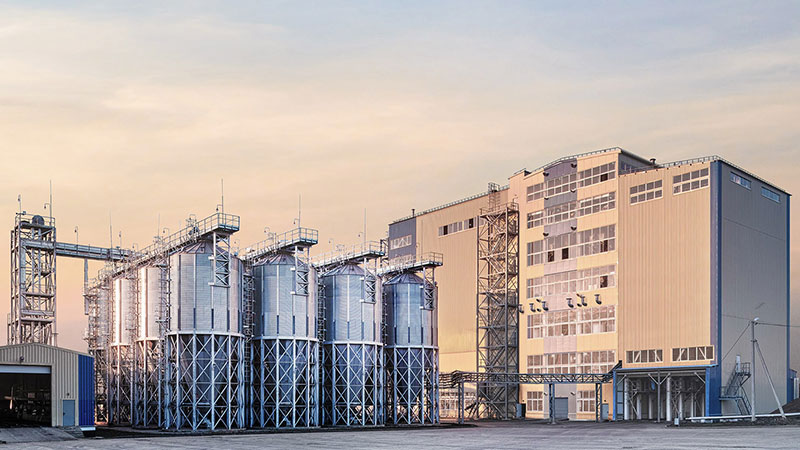
At RICHI, we go beyond project completion. With RICHI Servicee, we’re your dedicated partners in success. Count on us for expert guidance, minimal downtime, and optimized productivity. Choose RICHI for unmatched service and support.
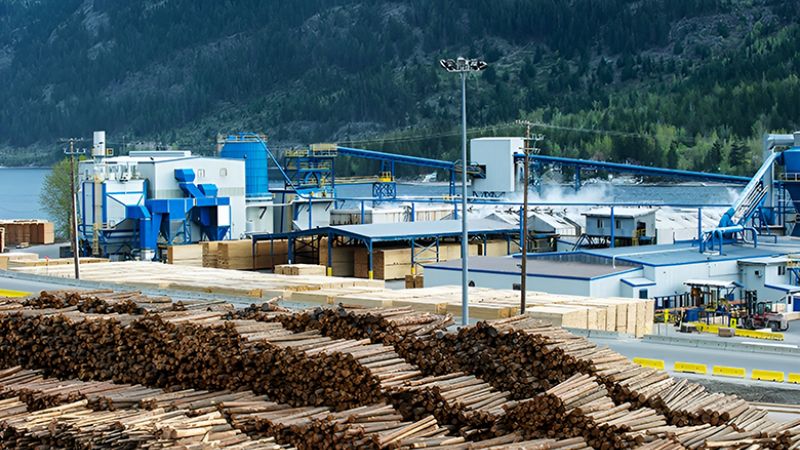


Meet global product demands and quality standards with industry-leading pellet plant design, engineering, equipment, and construction services for pellet processors.


Your Partner Beyond Project Completion
2000+ cases
RICHI is the leading designer, manufacturer and builder of pellet plants in the world, completing over 2000 projects in 140 countries across 6 continents.
Read More
Increase plant productivity, profitability, and safety by integrating high quality equipment into your pellet production line. Over the years, RICHI has become China's top pellet equipment manufacturer. At the same time, RICHI has established valuable partnerships with the world's leading component and raw material manufacturers to bring you the best there is in technology, automation, and efficiency in pelleting plant machinery.

For nearly 30 years, RICHI has been providing best-in-class pellet plant equipment and services to clients across a variety of industries, sizes, and needs. We pride ourselves on the knowledge and skill that each team member possesses – from our technical sales team to our process design engineers. You can count on RICHI Machinery to take your operation to the next level of innovation, quality, and success.
Need help with your pellet manufacturing plant project? Contact us today.
ANIMAL FEED
BIOMASS
WOOD
ORGANIC FERTILIZER
AQUA FEED
CAT LITTER
MUNICIPAL WASTE RECYCLING
SPECIAL PELLET PRODUCTION
RICHI Machinery continues to deliver world class pellet mill equipment, pellet plant engineering and project solutions that add value to our customers in the animal feed, wood waste, agriculture waste, organic fertilizer, cat litter and special pellet products industries. Throughout the years, we RICHI Machinery have built strong brand, becoming industry-leading pellet machine manufacturer. We value integrity, promise quality, and prioritize your success.
Learn MoreWith our expert team, we precisely implement your process engineering requirements in pellet mill and pelletizing plant systems. No matter which industry you’re in – we understand your needs and deliver solutions that meet the highest standards.
At RICHI, quality comes first. Our pellet making machine and related pellet line equipment undergo rigorous quality controls to ensure they meet the highest standards. Rely on products that are durable, safe, and efficient.
With decades of experience in pellet machine and pellet production line production, we have earned a reputation as a trusted partner in various industries. Our expertise allows us to cover a wide range of applications.
Not only do we offer premium pelleting equipment, but we are also experts at designing, building, installing, and maintaining facilities from the ground up. Our expertise is within pellt plant process design, discovering the most efficient, productive, and profitable way to handle your materials in an end-to-end cycle.
○ RICHI MACHINERY
Keeping in touch with us is an effective way to solve all your problems. If you have any needs or questions, please leave your contact information, then RICHI technical consultants will send design, quotation, videos to your mailbox. You can also contact us directly via WhatsApp: +86 13838389622
Copyright©2015-2026 by HENAN RICHI MACHINERY CO., LTD. All rights reserved.