
Explore a compost organic fertilizer making machine in Ghana for processing composted poultry manure, cocoa pod husks and rice husks into organic fertilizer pellets.
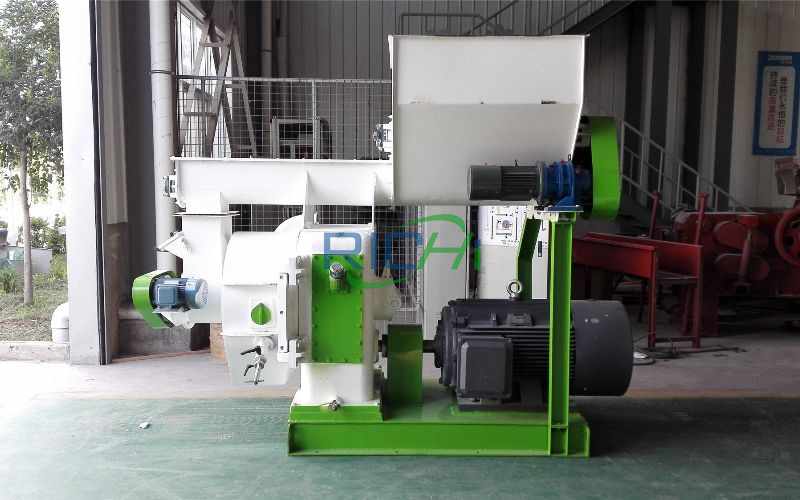
Compost organic fertilizer making machine in Ghana was the equipment selected for a proposed expansion project by a medium-sized organic fertilizer producer serving cocoa growers, vegetable farms and other agricultural customers. The business had access to composted poultry manure and plant residues from the surrounding agricultural supply chain.
Its objective was to turn these materials into more uniform, easier-to-handle fertilizer pellets without immediately investing in another complete production line. RICHI's FZLH320 ring die organic fertilizer pellet machine was selected as the proposed core equipment, with a reference capacity of 2–3 T/H.
The project is designed around a practical problem: loose compost is relatively straightforward to produce, but transporting, measuring and applying it can be inconvenient for customers who prefer a consistent granular product. The planned equipment will pelletize properly composted, blended and dried material prepared by the customer's existing processing facilities.
The target finished pellet diameter is approximately 6 mm. Rather than replacing the entire fertilizer operation, the customer is adding a dedicated pelletizing stage to an existing workflow, leaving room for further improvements in cooling, screening and bagging as demand develops.
Name:
Compost Fertilizer Pellet Machine
Country:
Ghana
Date:
2026
Capacity:
2–3 T/H
Model:
FZLH320
Main Motor Power:
22 kW
Raw Materials:
poultry manure, cocoa pod husks
Pellet diameter:
6 mm
Agriculture provides an important market for fertilizer products in Ghana. Cocoa cultivation, food-crop production and livestock farming create different demands for soil nutrients and organic matter. At the same time, agricultural residues and livestock manure can become useful inputs for composting when they are collected, processed and managed appropriately.
The proposed customer is an independent organic fertilizer producer working with local poultry operators and agricultural residue suppliers. It is not a poultry farm purchasing a complete fertilizer plant for its own manure alone. Instead, its business model is based on collecting suitable organic materials, composting them and preparing fertilizer products for agricultural customers.
The business has already established a compost preparation process and is considering pelletization as the next processing step. Loose compost can be bulky, and its particle size and physical consistency may vary from batch to batch. A properly designed pelletizing stage can produce a more uniform product that is easier to screen, weigh and package.
For this buyer, purchasing a single compost organic fertilizer making machine is a measured investment. The existing composting area, material-handling equipment and drying facilities can be assessed for continued use. The immediate requirement is to convert prepared compost into pellets, not to purchase equipment for every stage of fertilizer production again.
The proposed arrangement also gives the customer a way to evaluate the market for bagged organic fertilizer before committing to a larger automated line. Output can initially be directed toward agricultural distributors, horticultural suppliers and farms that require manageable quantities of granular organic fertilizer.
The proposed formulation combines composted poultry manure with cocoa pod husks, rice husks and a limited proportion of clean sawdust. These materials have different physical properties, so the blend must be prepared carefully. Poultry manure contributes nutrients, while plant residues provide organic matter and influence the texture and handling characteristics of the compost.
The initial blend is a project-planning formulation rather than a universal recipe. The percentages below are expressed on a dry-solids basis, and the actual proportions should be adjusted after laboratory analysis and pelletizing trials.
| Raw material | Proposed share | Role in the blend |
|---|---|---|
| Composted poultry manure | 50% | Main nutrient-bearing organic component |
| Composted cocoa pod husks | 25% | Agricultural residue and organic matter source |
| Prepared rice husks | 15% | Fibrous residue affecting structure and bulk density |
| Clean sawdust | 10% | Supplementary dry organic material for blend adjustment |
Poultry manure is assumed to come from local poultry operations. It should be composted and stabilized before pelletizing rather than fed directly from the poultry house. Fresh manure can have excessive moisture, an unstable organic composition and a stronger odor than properly managed compost. Compost maturity, sanitation and the intended fertilizer application must be considered before the material enters the pellet production stage.
Cocoa pod husks are a relevant residue to investigate in a cocoa-producing country such as Ghana. Their availability depends on the location, season, collection arrangements and the share of residues already used or returned to farmland. The project therefore assumes a contracted or otherwise dependable supply rather than unlimited access to free material.
Rice husks can be sourced from rice milling operations. Their relatively light, fibrous structure means that the blend should be tested for feeding stability and pellet durability. Sawdust is included at a modest level and must be clean, untreated and free of paint, preservatives or other contaminants that could make the fertilizer unsuitable for its intended use.
These proportions are a starting point for process development, not a nutrient guarantee. A representative sample should be tested for moisture, organic matter, nutrient content, pH and other parameters relevant to the intended fertilizer market. The final formulation may need adjustment if the compost has high ash content, excessive fiber or insufficient binding characteristics.
Composting and pelletizing are separate operations. Composting stabilizes the organic material; pelletizing compresses prepared material into a defined physical form. The pelletizer should not be expected to correct immature compost, unsuitable raw materials or poor moisture management.
For this project, the compost and plant residues are assumed to pass through the customer's existing preparation system before entering the FZLH320. The material should be screened or otherwise cleaned to remove stones, metal, plastic and other unwanted matter. Oversized fibers and lumps should be reduced to a size suitable for consistent feeding.
The planned operating moisture range for initial trials is approximately 12–15%, subject to material testing and machine performance. This is a starting target, not a fixed requirement for every organic fertilizer formulation. If the prepared blend contains more than 20% moisture, the customer needs an appropriate drying stage before pelletizing. The project therefore assumes access to a suitable existing dryer or the addition of one if the site assessment shows that it is necessary.
Excessively wet material may feed poorly, deform after leaving the die or require additional drying. Material that is too dry may also form weak pellets, depending on its composition and binding characteristics. Moisture should therefore be measured at the pelletizer inlet, not estimated solely from the appearance of the compost.
Consistent particle size is another operating requirement. Cocoa pod husks, rice husks and sawdust do not behave identically during compression. The preparation stage needs to produce a sufficiently uniform blend without creating excessive fines. A trial with the actual formulation will help determine whether further grinding, mixing or moisture adjustment is required.
The proposed equipment is one FZLH320 ring die organic fertilizer pellet machine. Its feeder arrangement is intended to provide controlled material delivery and help reduce bridging during operation. The selected capacity is appropriate as a planning basis for a medium-sized fertilizer operation, but actual throughput depends on the prepared compost, moisture, formulation and required pellet quality.
| Technical specification | FZLH320 |
|---|---|
| Equipment type | Ring die organic fertilizer pellet machine |
| Purchase quantity | 1 unit |
| Main motor power | 22 kW |
| Anti-bridging feeder motor power | 2.2 kW |
| Forced feeder motor power | 0.75 kW |
| Ring die inner diameter | 320 mm |
| Reference capacity | 2–3 T/H |
| Available pellet diameter range | 4–12 mm |
| Proposed finished pellet diameter | Approximately 6 mm |
The proposed 6 mm pellet diameter falls within the machine's stated 4–12 mm range. It is a suitable initial specification to test for bagged organic fertilizer, although the final diameter and pellet length should be confirmed according to the customer's application, spreading equipment and packaging requirements.
The reference capacity of 2–3 T/H should not be treated as a guaranteed output under every operating condition. The actual production rate may change with compost texture, moisture, fiber content, feeding consistency, die configuration and the durability required of the finished pellets.
For that reason, the customer should confirm the expected operating rate through a representative material trial. The electrical supply, foundation, access for maintenance and material flow around the pellet machine should also be reviewed before installation.
The FZLH320 fertilizer granulator machine performs the pelletizing stage. It does not replace composting, drying, raw material inspection or final product testing. Its role is to compress the prepared organic blend into more uniform particles that can be cooled, screened and packed for distribution.
For the proposed customer, the main benefit is a more standardized product format. Loose compost can vary considerably in texture, and its bulk handling characteristics may complicate filling and weighing. Properly formed pellets can make it easier to establish consistent package weights and provide customers with a product that is simpler to handle.
The ring die design applies mechanical compression to material delivered through the feeding system. The anti-bridging feeder helps maintain material movement, while the forced feeder provides controlled delivery to the pelletizing chamber. These components are particularly relevant when the blend contains fibrous plant residues and compost particles with different flow characteristics.
However, good pellet formation depends on the entire process. If the compost is immature, excessively wet or poorly blended, the pellet machine cannot compensate for those problems on its own. The preparation stage and the selected formulation remain central to product quality.
After pelletizing, the hot or warm pellets may need cooling and screening before packaging. Screening can separate fines and broken pellets from the saleable fraction. The separated material may be recycled into the process where appropriate, subject to the customer's quality-control procedures.
The customer can initially retain suitable existing equipment and add downstream machinery as production needs become clearer. If bagged sales grow, a more integrated arrangement with conveyors, a cooler, a screener and a weighing and packing machine may improve the workflow.
The decision to purchase one fertilizer pellet machine reflects the customer's existing process. Composting and raw material preparation are already part of the planned operation, so replacing those stages would add cost without necessarily solving the immediate requirement.
A single-machine purchase also makes it easier to assess the most important unknowns: whether the selected blend forms durable pellets, how much screening is required, what moisture range works best and how the finished product behaves during storage and transport.
The project can therefore progress in stages. First, the customer validates the formulation and establishes stable pellet formation. Next, the business evaluates cooling, screening and packaging requirements based on the actual output. A complete production line can then be considered if the operating schedule and sales volume justify a larger investment.
RICHI supplies individual fertilizer pellet machines as well as complete organic fertilizer production line equipment. For a customer who already has part of the preparation infrastructure, equipment selection can be based on the machinery that can be retained safely and effectively, rather than automatically replacing every existing component.
Before the final quotation, the customer should provide representative raw material samples, the expected daily operating hours, the desired finished pellet size and details of the existing dryer and mixing equipment. These details help determine whether the proposed machine and its reference capacity are appropriate for the actual process.
Pellet appearance is only one part of fertilizer quality. A commercially suitable product should also meet the relevant requirements for nutrient content, maturity, contaminants, moisture and microbiological safety. Those requirements depend on the intended market and applicable local regulations.
For the proposed formulation, representative laboratory analysis should be completed before the product is marketed. The customer should establish a quality-control procedure for incoming manure compost and agricultural residues, along with checks on the final pellets.
Physical checks should include pellet diameter, length, breakage, fines and resistance to ordinary handling. The customer should also assess whether the pellets remain stable during cooling, bagging, storage and transport. If the product breaks easily, the cause may be related to moisture, formulation, particle size or operating conditions rather than a single machine setting.
Storage conditions deserve attention in Ghana's varied climatic conditions. Finished pellets should be protected from rain and excessive moisture. Packaging should be selected to suit the expected storage period and distribution channel, with suitable precautions against moisture uptake and package damage.
The final product should be marketed according to its tested characteristics. Nutrient claims, crop recommendations and application rates should be based on laboratory results and suitable agronomic guidance rather than inferred from the raw material recipe alone.
RICHI's equipment range covers more than organic fertilizer pelletizing. Depending on the customer's raw materials and intended market, suitable equipment can also be configured for biomass fuel pellets and other non-feed pellet products. These are potential applications for separate projects, not a claim that this fertilizer customer has already purchased additional machines.
Ghana's agricultural and processing sectors offer several material streams worth assessing. Cocoa pod husks and other suitable plant residues may be evaluated for biomass pellet production, while rice husks may be considered for suitable non-feed applications. Actual feasibility depends on the availability, moisture, contamination level and competing uses of each residue.
A biomass fuel pellet project would require a separate review of combustion properties, ash behavior, moisture and the requirements of the intended boiler or heating system. Cocoa pod husks or rice husks should not be assumed to have the same fuel characteristics as wood. Nor should a fertilizer pellet formulation automatically be reused for fuel production.
Other agricultural residues may also be suitable for pelletizing where the material properties and market requirements align. Before selecting equipment, the customer should identify the precise raw material, the required pellet specification and the intended end use.
For fertilizer manufacturers considering future diversification, this is where a supplier with experience across several pelletizing applications can be useful. RICHI can assess individual machines or discuss a complete customized process, but each proposed application needs its own technical review and appropriate testing.
Organic fertilizer production depends on coordination between compost preparation, moisture control, feeding, pelletizing and downstream handling. RICHI can help the customer review these stages and determine which existing machines are suitable for continued use.
Technical discussions can cover the proposed raw material blend, target pellet size, operating capacity, drying requirements and the available installation space. The assessment should also consider electrical infrastructure, equipment access, dust management, cleaning procedures and routine maintenance.
If the customer later expands the operation, the process can be adapted to include additional conveying, cooling, screening and packaging equipment. The design should follow actual production needs rather than adding automation that the current operation does not require.
For the initial installation, clear operating instructions and a preventive maintenance schedule are important. The operator should monitor feeding stability, lubrication, wear parts and changes in pellet quality. Recording moisture, formulation, output and screening losses can help identify problems and improve repeatability over time.
The proposed FZLH320 poultry chicken manure pellet machine is therefore one part of a larger fertilizer process. Its suitability depends on the material supplied to it and the quality standards established for the finished product. A well-planned preparation and handling system is just as important as selecting the correct pellet machine.
No verified post-installation customer statement or operating report has been provided for this proposed project. The following describes the buyer's planning priorities and should not be presented as a verbatim testimonial from a confirmed customer.
The main concern is whether the mixed compost can be processed consistently without requiring major changes to the existing preparation area. The customer needs the proposed equipment to work with the available raw materials and to produce a pellet size that can be handled by local distributors and agricultural users.
The buyer also needs clarity about the limits of the single-machine package. The FZLH320 handles pelletizing, while composting, drying, cooling, screening and bagging must be provided by suitable existing equipment or selected separately. Understanding that division of responsibility is important when planning the installation and evaluating the overall investment.
These priorities provide a practical basis for the next technical discussion with RICHI. A representative sample of the compost blend, together with the desired pellet specification and operating schedule, would help determine whether the proposed configuration needs adjustment before the order is finalized.
The proposed sea-freight route is from Qingdao Port in China to Tema Port in Ghana. The actual shipping schedule, routing, cargo dimensions and freight arrangements should be confirmed with the shipping provider before dispatch.
Before shipment, the customer should verify the installation space, foundation, electrical supply and lifting access. The existing dryer and preparation equipment should also be checked to confirm that they can deliver material at the moisture and particle size required by the pelletizer.
After installation, commissioning should focus on stable feeding and repeatable pellet formation. Recording the blend composition, moisture, production rate and finished pellet quality will help the operating team establish a consistent process. Routine inspection and maintenance should follow the equipment documentation.
The proposed compost organic fertilizer making machine in Ghana project is based on one FZLH320 ring die organic fertilizer pellet machine with a reference capacity of 2–3 T/H. Its purpose is to convert prepared, composted organic material into approximately 6 mm fertilizer pellets, adding a standardized product format to an existing fertilizer workflow.
The planned blend of poultry manure compost, cocoa pod husks, rice husks and clean sawdust reflects agricultural materials that may be available through Ghana's farming and processing sectors. The final recipe must be validated against actual supply conditions, laboratory analysis and pelletizing trials. Moisture control, compost maturity and raw material cleanliness remain essential.
For the customer, the single-machine approach provides a way to evaluate pellet quality before investing in a complete automated line. If the project progresses, RICHI Machinery can support further process planning and supply suitable equipment for cooling, screening, conveying and packaging.
The next step is to review representative material samples and confirm the operating requirements. With a suitable formulation and properly prepared feedstock, the FZLH320 can be evaluated as the pelletizing stage of a practical organic fertilizer production process. Customers planning a similar project can contact RICHI to discuss their raw materials, target capacity and the most appropriate equipment configuration.
Having the right mix of reliable, high-quality pellet machine and pelletizing systems and expert support is essential to your success. Watch how our end-to-end feed pellet plant solutions have helped our customers optimize their performance.
Our customized and future-proofed turnkey pellet plant solutions is designed with you at the core. From vision to reality and beyond, our team stays connected with yours. Giving you peace-of-mind with an expert at your side.

At RICHI, we go beyond project completion. With RICHI Servicee, we’re your dedicated partners in success. Count on us for expert guidance, minimal downtime, and optimized productivity. Choose RICHI for unmatched service and support.



Meet global product demands and quality standards with industry-leading pellet plant design, engineering, equipment, and construction services for pellet processors.


Your Partner Beyond Project Completion
2000+ cases
RICHI is the leading designer, manufacturer and builder of pellet plants in the world, completing over 2000 projects in 140 countries across 6 continents.
Read More
Increase plant productivity, profitability, and safety by integrating high quality equipment into your pellet production line. Over the years, RICHI has become China's top pellet equipment manufacturer. At the same time, RICHI has established valuable partnerships with the world's leading component and raw material manufacturers to bring you the best there is in technology, automation, and efficiency in pelleting plant machinery.

For nearly 30 years, RICHI has been providing best-in-class pellet plant equipment and services to clients across a variety of industries, sizes, and needs. We pride ourselves on the knowledge and skill that each team member possesses – from our technical sales team to our process design engineers. You can count on RICHI Machinery to take your operation to the next level of innovation, quality, and success.
Need help with your pellet manufacturing plant project? Contact us today.
ANIMAL FEED
BIOMASS
WOOD
ORGANIC FERTILIZER
AQUA FEED
CAT LITTER
MUNICIPAL WASTE RECYCLING
SPECIAL PELLET PRODUCTION
RICHI Machinery continues to deliver world class pellet mill equipment, pellet plant engineering and project solutions that add value to our customers in the animal feed, wood waste, agriculture waste, organic fertilizer, cat litter and special pellet products industries. Throughout the years, we RICHI Machinery have built strong brand, becoming industry-leading pellet machine manufacturer. We value integrity, promise quality, and prioritize your success.
Learn MoreWith our expert team, we precisely implement your process engineering requirements in pellet mill and pelletizing plant systems. No matter which industry you’re in – we understand your needs and deliver solutions that meet the highest standards.
At RICHI, quality comes first. Our pellet making machine and related pellet line equipment undergo rigorous quality controls to ensure they meet the highest standards. Rely on products that are durable, safe, and efficient.
With decades of experience in pellet machine and pellet production line production, we have earned a reputation as a trusted partner in various industries. Our expertise allows us to cover a wide range of applications.
Not only do we offer premium pelleting equipment, but we are also experts at designing, building, installing, and maintaining facilities from the ground up. Our expertise is within pellt plant process design, discovering the most efficient, productive, and profitable way to handle your materials in an end-to-end cycle.
○ RICHI MACHINERY
Keeping in touch with us is an effective way to solve all your problems. If you have any needs or questions, please leave your contact information, then RICHI technical consultants will send design, quotation, videos to your mailbox. You can also contact us directly via WhatsApp: +86 13838389622
Copyright©2015-2026 by HENAN RICHI MACHINERY CO., LTD. All rights reserved.