
The Colombian customer was not a coffee farm trying to pelletize fresh cherry waste. It was a coffee cooperative with a dry-milling operation in Huila, where parchment coffee from member farms is cleaned, hulled, graded, and prepared for commercial sale. That distinction matters because the residue available at this stage is coffee husk—locally known as cisco—rather than the wet pulp and mucilage generated during wet processing on the farm.
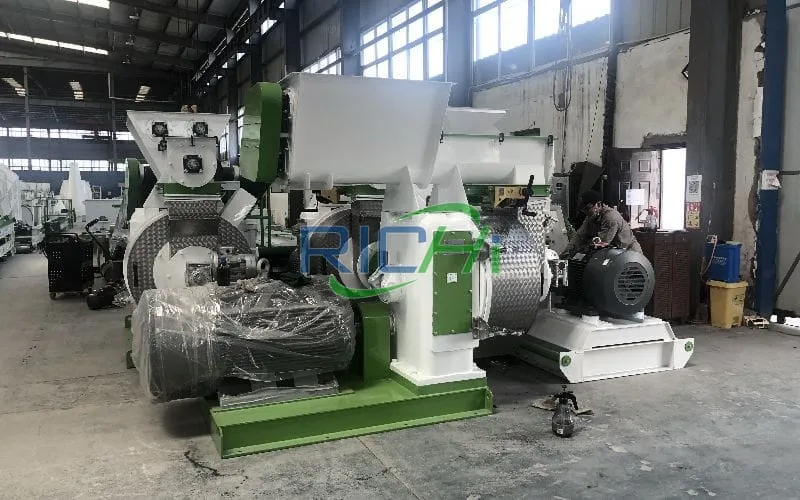
The Colombian customer was not a coffee farm trying to pelletize fresh cherry waste. It was a coffee cooperative with a dry-milling operation in Huila, where parchment coffee from member farms is cleaned, hulled, graded, and prepared for commercial sale. That distinction matters because the residue available at this stage is coffee husk—locally known as cisco—rather than the wet pulp and mucilage generated during wet processing on the farm.
The cooperative already used part of this dry coffee husk as loose biomass fuel, but loose cisco was difficult to store, generated dust during handling, and fed inconsistently into smaller thermal systems. One MZLH320 coffee husk pelletizing machine in Colombia was therefore added as a standalone densification unit. The objective was not to build a new fertilizer plant, but to convert a controlled portion of the dry-mill residue into 6 mm fuel pellets for coffee drying and other compatible thermal applications within the cooperative’s own operations.
Name:
Coffee husk pelletizing machine
Country:
Colombia
Date:
2025
Capacity:
0.2–0.3 T/H
Model:
MZLH320
Main Motor Power:
22 kW
Raw Materials:
dry coffee husk
Pellet diameter:
6 mm
Colombia is one of the world’s most important washed Arabica producers. In that processing system, fresh coffee cherries are normally pulped at or near the farm, generating wet pulp and mucilage. The beans then continue through fermentation or demucilaging, washing, drying, and storage as parchment coffee.
Only later, during dry milling, is the parchment layer removed from the dried coffee bean.
That dry, lightweight fibrous residue is what this biomass pellet project refers to as coffee husk or cisco.
This avoids a common technical mistake: treating coffee pulp, coffee cherry husk, parchment, and dry-mill cisco as though they were the same material with the same moisture, chemical composition, and processing requirements.
Huila is one of Colombia’s major coffee-producing departments, but individual farms generally do not generate large quantities of dry-mill cisco because many growers sell parchment coffee rather than operating their own commercial dry mills.
The customer in this project aggregates coffee from multiple member farms.
That gives the cooperative a much more concentrated supply of dry husk after hulling and grading. The pelletizer can therefore operate in planned campaigns instead of waiting for enough material from one plantation.
This scale is better matched to one 22 kW MZLH320 than a small individual farm whose primary residue would actually be wet coffee pulp.
The cooperative did not describe cisco as a useless waste.
In Colombian coffee processing, dry coffee husk has already been recognized as a useful biomass fuel, particularly for mechanical coffee drying. The commercial question was therefore whether densification would improve the way the cooperative handled and used a portion of that fuel.
Loose cisco has very low bulk density. It occupies substantial storage volume, creates dust during transfer, and can be difficult to meter at a stable rate into smaller automatic fuel-feeding systems.
Pelletizing changes those physical characteristics.
The cooperative gains a denser, more uniform fuel that is easier to bag, store, convey, and dose. The project is therefore better understood as fuel upgrading rather than waste disposal.
Coffee husk leaving a dry-milling process is considerably different from fresh coffee pulp.
It is already relatively dry, lightweight, and fibrous. However, the material still contains variation in particle size, dust content, and occasional foreign matter from handling.
Before pelletizing, the cooperative screens the cisco and removes unsuitable contaminants. A magnetic protection stage is used where necessary to prevent accidental metal from reaching the biomass pellet mill.
The material then passes through controlled grinding so that oversized fibrous pieces are reduced and the feed entering the pelletizer has a more uniform particle distribution.
The MZLH320 biomass pellet machine is not used as a primary grinder.
The customer does not assume that dry coffee husk always arrives at one fixed moisture percentage.
Cisco stored under good dry-mill conditions can already be close to a workable pelletizing range. Material exposed to humid air or poor storage can regain moisture, while excessively dry material can generate more dust and may require controlled adjustment before densification.
The operator therefore checks moisture before production.
If the material is already suitable, unnecessary drying is avoided. If conditions have changed during storage, moisture is corrected before the feed enters the ring die.
The final setting is determined from feeding stability, motor load, pellet strength, and cooling behavior rather than one permanent number printed on an operating sheet.
| Project Parameter | Configuration |
|---|---|
| Equipment | Coffee husk pelletizing machine |
| Model | MZLH320 |
| Quantity | 1 unit |
| Main Motor Power | 22 kW |
| Arch-Breaking Feeder | 2.2 kW |
| Forced Feeder | 0.75 kW |
| Ring Die Inner Diameter | 320 mm |
| Project Pellet Diameter | 6 mm |
| Reference Capacity | Approximately 0.2–0.3 T/H depending on husk condition and die configuration |
| Main Application | Densified biomass fuel for coffee drying and compatible thermal use |
At approximately 0.25 T/H, a six-hour production campaign can convert roughly 1.5 tonnes of prepared material.
For the cooperative, this is enough to process selected cisco batches without creating an oversized pelletizing section that would remain idle for much of the year.
A larger MZLH420 or MZLH520 would have required substantially more continuous husk supply and higher downstream fuel demand.
The cooperative selected 6 mm pellets for the main fuel product.
The choice was based on handling and feeder compatibility rather than the idea that smaller pellets automatically burn better.
Six-millimeter pellets are easy to convey, store, and meter through compact fuel-feeding equipment. Moving to a smaller die diameter would increase compression resistance and could reduce throughput, while a larger diameter was unnecessary for the customer’s existing fuel systems.
The project therefore standardized one diameter instead of routinely changing among 4, 6, and 8 mm products.
Coffee husk does not behave exactly like wood sawdust.
Its fiber structure, ash content, bulk density, and natural composition create a different compression response inside the die.
During commissioning, the cooperative evaluated the relationship among feed rate, motor current, die temperature, pellet surface, and mechanical durability.
If the die creates excessive resistance, production falls and power consumption rises. If compression is too low, pellets can fracture during cooling and handling.
The final die specification was therefore selected around the actual Colombian cisco rather than using a generic wood-pellet setting.
The cooperative also composts other organic residues, including coffee pulp generated by some member farms, but that material belongs to a separate process.
Wet coffee pulp can be composted and returned to agricultural soils under appropriate management.
Dry-mill coffee husk has a different physical condition and an established energy-use pathway.
For this project, the MZLH320 is dedicated to fuel pellets. The cooperative does not pelletize the same material and advertise it simultaneously as fuel, fertilizer, animal feed, and soil amendment.
Keeping one clear application makes operating settings and product quality easier to control.
Densification changes density and handling characteristics; it does not create additional energy inside the biomass.
The heating value of the finished product is determined primarily by the coffee husk itself and its moisture and ash content.
The advantage is that more fuel mass can be stored in a given volume and delivered more uniformly into a combustion system.
This is especially useful when the cooperative wants a predictable fuel feed rather than intermittent manual loading of loose cisco.
Coffee husk is not identical to premium clean-wood fuel.
Its mineral and ash characteristics have to be considered when selecting the combustion system and maintenance schedule.
The cooperative therefore tests representative production batches instead of assuming that every 6 mm biomass pellet can be burned in the same equipment.
Moisture, ash, calorific behavior, fines, and pellet durability are among the practical characteristics checked before expanding use in another thermal system.
Loose cisco remains useful in applications where a boiler is already designed for it and storage space is not a major constraint.
The cooperative therefore does not pelletize every kilogram of husk it produces.
Pelletizing is reserved for applications where the denser format provides a clear operational benefit: controlled feeding, smaller storage volume, cleaner handling, bagged reserve fuel, or transport to another compatible thermal user.
This prevents the project from adding electrical consumption where densification does not create enough value.
The most logical initial consumer was inside the coffee business itself.
The cooperative uses mechanical drying during periods when solar drying alone cannot provide enough capacity or weather conditions are unfavorable.
Using a densified fuel made from the dry-mill by-product creates a practical internal biomass loop: the coffee processing operation produces cisco, part of that cisco is densified, and the fuel can then support controlled thermal drying of coffee.
The customer can still use other approved biomass fuels when required.
Fresh pellets leave the ring die warm and are not immediately sealed into bags.
The cooperative uses a small downstream cooling section to bring the product closer to ambient conditions and allow its structure to stabilize.
After cooling, loose fines are screened out.
Clean reusable fines can return to the preparation stage where appropriate.
This reduces dust in the finished fuel and improves handling through the customer’s storage and feeding equipment.
The customer is handling cisco from dry milling, which is already a dry-process residue. The main requirement is keeping it protected from rainfall and ambient moisture after separation.
A drying patio may still be useful for other coffee-processing materials, but it is not presented as an essential industrial pretreatment stage for this pelletizer.
The project works because the customer is connected to a substantial coffee-growing region and aggregates parchment coffee from many producers.
The machine’s raw-material supply therefore depends on dry-mill throughput rather than on the hectare count of one estate.
This also creates a more realistic annual operating pattern. Pellet production follows the cooperative’s milling and storage schedule, with heavier campaigns when sufficient cisco has accumulated.
The MZLH320 does not need to run continuously throughout the calendar year to justify the investment.
After installation, the production team found that the challenge was not crushing resistance.
The coffee husk was so light that inconsistent hopper loading could make the pellet mill appear unstable even though the ring die itself was operating normally.
The arch-breaking and forced-feeding system therefore became particularly important.
Operators adjusted feeder speed according to bulk density and material condition instead of trying to maintain one fixed setting for every batch.
Once feeding became stable, main-motor load and pellet output also became more predictable.
Cisco itself is not an extremely abrasive material, but dirt and mineral contamination can accelerate wear.
The cooperative therefore keeps the dry-mill residue off the ground and protects storage areas from soil contamination.
Ring die and roller condition are inspected according to actual production behavior rather than replaced after an arbitrary number of tonnes.
Changes in current draw, throughput, pellet surface, die temperature, and fines level are used to decide when maintenance is required.
The MZLH320 was exported from Qingdao Port in China to Colombia through Buenaventura on the Pacific coast, followed by inland transport to the customer’s facility in Huila.
Before shipment, RICHI provided equipment dimensions, motor information, foundation requirements, electrical documentation, feeder and discharge interface data, and recommended maintenance clearance.
This allowed the cooperative to prepare the machine position and supporting equipment before arrival.
The logistics section was planned around confirmed freight arrangements rather than relying on a fixed number of ocean-transit or customs-clearance days.
“We originally thought our main challenge would be pressing such a light material into a dense pellet. The bigger issue was feeding the coffee husk evenly. Once we controlled particle size, storage moisture, and feeder speed, the pellet mill became much more predictable. We now densify the cisco when the pellet form gives us a clear handling advantage instead of trying to pelletize every tonne we produce.”
That operating philosophy also improved economics.
The cooperative no longer evaluates success only by how many tonnes pass through the pellet machine. It compares electricity consumption, storage volume, fuel-handling labor, fines generation, and the value of densification for each intended thermal application.
This coffee husk pelletizing machine in Colombia project is based on a specific residue from Colombia’s coffee-processing chain: dry coffee husk, or cisco, produced when parchment coffee is hulled during dry milling.
The Huila cooperative uses one MZLH320 with a 22 kW main motor, 2.2 kW arch-breaking feeder, 0.75 kW forced feeder, and 320 mm ring die. The machine produces 6 mm densified fuel at a reference capacity of approximately 0.2–0.3 T/H under suitable material conditions.
Cisco is kept separate from wet coffee pulp and other coffee-processing residues because these materials have different physical conditions and processing routes. Loose husk remains useful where existing combustion systems can handle it efficiently; pelletizing is used where higher bulk density, controlled feeding, cleaner storage, and transportability create an operational advantage.
For another customer considering a coffee husk pelletizing machine in Colombia, RICHI Machinery would first determine exactly which coffee residue is available, where in the processing chain it is generated, annual dry quantity, moisture, ash and contamination, existing grinding and storage equipment, target pellet diameter, intended thermal user, daily operating hours, cooling method, and electrical supply before selecting the machine.
That distinction is essential in coffee projects. Coffee pulp, mucilage, parchment, cisco, and dry cherry husk may all be described casually as “coffee waste,” but they are not interchangeable materials. The correct pelletizing solution begins by identifying which one the customer actually has.
Having the right mix of reliable, high-quality pellet machine and pelletizing systems and expert support is essential to your success. Watch how our end-to-end feed pellet plant solutions have helped our customers optimize their performance.
Our customized and future-proofed turnkey pellet plant solutions is designed with you at the core. From vision to reality and beyond, our team stays connected with yours. Giving you peace-of-mind with an expert at your side.
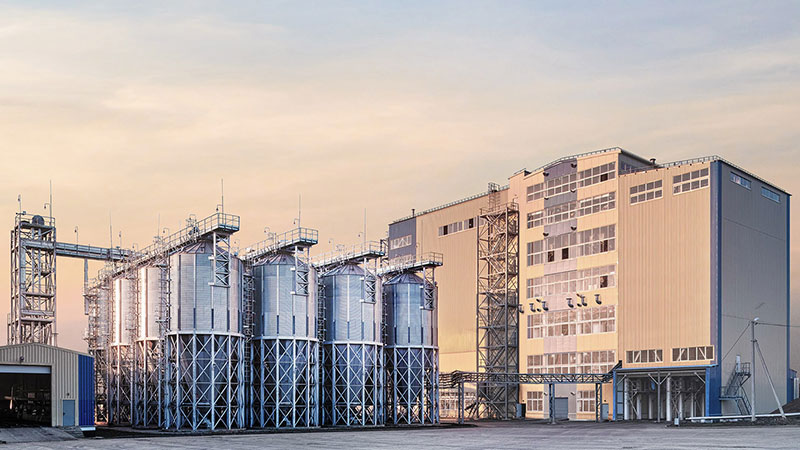
At RICHI, we go beyond project completion. With RICHI Servicee, we’re your dedicated partners in success. Count on us for expert guidance, minimal downtime, and optimized productivity. Choose RICHI for unmatched service and support.
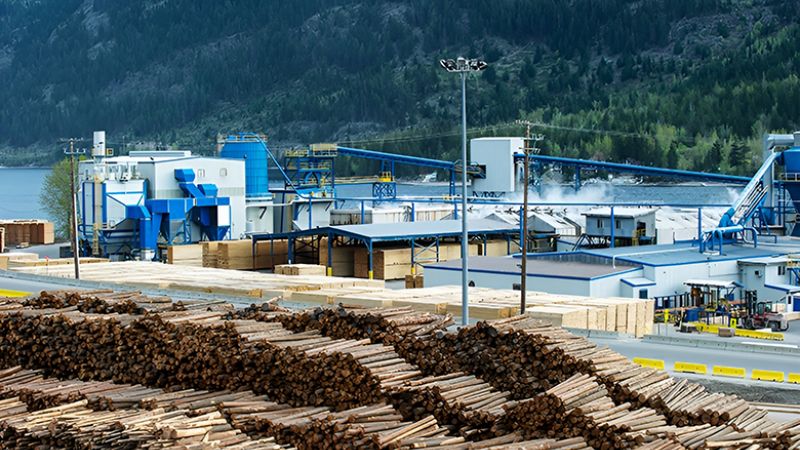


Meet global product demands and quality standards with industry-leading pellet plant design, engineering, equipment, and construction services for pellet processors.


Your Partner Beyond Project Completion
2000+ cases
RICHI is the leading designer, manufacturer and builder of pellet plants in the world, completing over 2000 projects in 140 countries across 6 continents.
Read More
Increase plant productivity, profitability, and safety by integrating high quality equipment into your pellet production line. Over the years, RICHI has become China's top pellet equipment manufacturer. At the same time, RICHI has established valuable partnerships with the world's leading component and raw material manufacturers to bring you the best there is in technology, automation, and efficiency in pelleting plant machinery.

For nearly 30 years, RICHI has been providing best-in-class pellet plant equipment and services to clients across a variety of industries, sizes, and needs. We pride ourselves on the knowledge and skill that each team member possesses – from our technical sales team to our process design engineers. You can count on RICHI Machinery to take your operation to the next level of innovation, quality, and success.
Need help with your pellet manufacturing plant project? Contact us today.
ANIMAL FEED
BIOMASS
WOOD
ORGANIC FERTILIZER
AQUA FEED
CAT LITTER
MUNICIPAL WASTE RECYCLING
SPECIAL PELLET PRODUCTION
RICHI Machinery continues to deliver world class pellet mill equipment, pellet plant engineering and project solutions that add value to our customers in the animal feed, wood waste, agriculture waste, organic fertilizer, cat litter and special pellet products industries. Throughout the years, we RICHI Machinery have built strong brand, becoming industry-leading pellet machine manufacturer. We value integrity, promise quality, and prioritize your success.
Learn MoreWith our expert team, we precisely implement your process engineering requirements in pellet mill and pelletizing plant systems. No matter which industry you’re in – we understand your needs and deliver solutions that meet the highest standards.
At RICHI, quality comes first. Our pellet making machine and related pellet line equipment undergo rigorous quality controls to ensure they meet the highest standards. Rely on products that are durable, safe, and efficient.
With decades of experience in pellet machine and pellet production line production, we have earned a reputation as a trusted partner in various industries. Our expertise allows us to cover a wide range of applications.
Not only do we offer premium pelleting equipment, but we are also experts at designing, building, installing, and maintaining facilities from the ground up. Our expertise is within pellt plant process design, discovering the most efficient, productive, and profitable way to handle your materials in an end-to-end cycle.
○ RICHI MACHINERY
Keeping in touch with us is an effective way to solve all your problems. If you have any needs or questions, please leave your contact information, then RICHI technical consultants will send design, quotation, videos to your mailbox. You can also contact us directly via WhatsApp: +86 13838389622
Copyright©2015-2026 by HENAN RICHI MACHINERY CO., LTD. All rights reserved.