
The Sri Lankan customer was not trying to force whole coconut husks directly through a pellet mill. Its business already sat inside the country’s established coconut and coir industry, where husks are first processed for higher-value fibre products. What remained after fibre separation was a much more suitable material for densification: short coir fibres, coir pith and screened husk residues that were difficult to handle efficiently in loose form.
The Sri Lankan customer was not trying to force whole coconut husks directly through a pellet mill. Its business already sat inside the country’s established coconut and coir industry, where husks are first processed for higher-value fibre products. What remained after fibre separation was a much more suitable material for densification: short coir fibres, coir pith and screened husk residues that were difficult to handle efficiently in loose form.
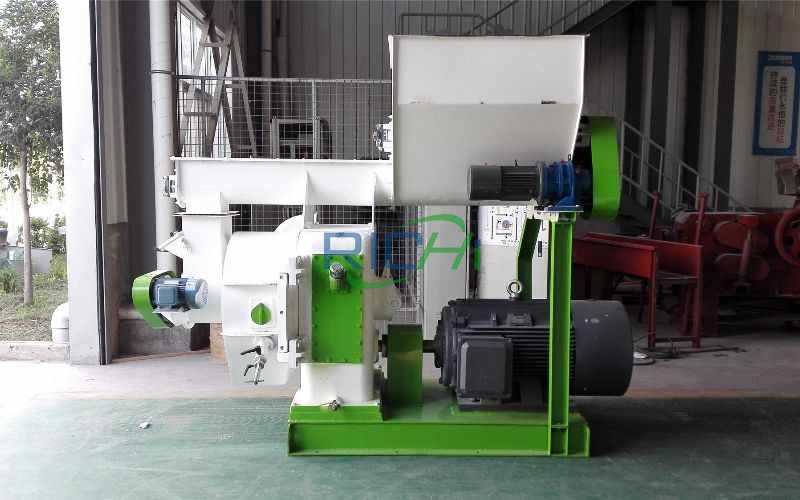
The company, located in the Gampaha area within Sri Lanka’s main coconut-processing belt, purchased two MZLH350 coconut husk pellet machines in Sri Lanka to convert part of this residual coir stream into 8 mm absorbent bedding pellets. The project did not depend on creating a new use for intact coconut husks. Instead, it added value to lower-grade material remaining after the better fibre fractions had already been recovered for conventional coir products.
Name:
Coconut husk pellet machine
Country:
Sri Lanka
Date:
2026
Capacity:
0.3–0.5 T/H
Model:
MZLH350
Main Motor Power:
37 kW
Main Product:
Absorbent coconut-based animal bedding pellets
Pellet diameter:
8 mm
This distinction is fundamental to the project.
Sri Lanka has a mature coir industry. Coconut husks can be processed into brown fibre, white fibre, coir pith, chips and other horticultural or industrial products. High-quality long fibre already has established uses and should not be ground unnecessarily simply to create pellet-machine feedstock.
The customer therefore keeps valuable fibre products in their normal sales channels.
The MZLH350 section receives lower-grade coir fractions that are more difficult to market in loose form, including short fibre, screened pith and suitable husk-fibre residues generated during processing.
Gampaha lies within Sri Lanka’s major coconut-producing and processing region and gives the customer access to multiple coconut and coir suppliers rather than depending on the husks from one small plantation.
This supply structure is important because two MZLH350 machines can consume a meaningful amount of prepared fibre when both operate at the same time.
The customer aggregates residual material from its own operation and several nearby processors, giving the plant enough flexibility to run one machine during normal periods and both during larger bedding orders.
Coconut output changes materially from year to year.
The customer therefore does not calculate available raw material by taking one national coconut-production figure and multiplying it by a fixed husk weight.
Its investment is based on contracted tonnes of usable coir residue from actual suppliers.
This is especially important in Sri Lanka because coconut raw-material availability can tighten during lower-production periods, creating competition between food processors, coir manufacturers and other coconut-product industries.
Sri Lankan producers already manufacture coco-based animal bedding products, including products specifically marketed for horse stalls. The appeal comes from the absorbent coir structure, renewable origin and potential for reduced reliance on conventional wood-based bedding.
The customer saw greater value in selling a prepared bedding product than in trying to compete only in a commodity biomass-fuel market.
Its target customers include equestrian distributors and livestock-product importers rather than relying entirely on the number of horses inside Sri Lanka.
This export-oriented approach is more consistent with Sri Lanka’s established coir-products industry.
| Project Parameter | Configuration |
|---|---|
| Equipment | Coconut husk pellet machine |
| Model | MZLH350 |
| Quantity | 2 units |
| Main Motor Power | 37 kW per unit |
| Arch-Breaking Feeder | 2.2 kW per unit |
| Forced Feeder | 0.75 kW per unit |
| Ring Die Inner Diameter | 350 mm |
| Available Pellet Diameter | 4–12 mm |
| Project Pellet Diameter | 8 mm |
| Reference Capacity per Unit | Approximately 0.3–0.5 T/H |
| Main Product | Absorbent coconut-based animal bedding pellets |
The customer preferred two smaller machines because its orders are not constant throughout the year.
One MZLH350 can run when only moderate quantities are required. Both can operate when export orders accumulate.
The arrangement also gives the factory maintenance flexibility. A ring-die inspection or roller adjustment on one machine does not automatically stop all pellet production.
A coconut husk is a large, tough fibrous structure. It cannot simply be pushed through the forced feeder of an MZLH350.
In this project, the material has already passed through coir-processing equipment before reaching the bedding-pellet section.
Long fibre is separated for other products, while the residual fraction is screened and reduced to a manageable size.
If any remaining fibre pieces are still too long, a secondary shredder or fibre-opening machine is used before final conditioning.
The objective is to prevent long strands from wrapping around the feeding system or producing unstable flow into the ring die.
The customer already had several small grinding machines elsewhere in the business, but equipment used for spices was not simply reassigned to heavy coir processing.
Coconut fibre is bulky and stringy and requires a feeding and size-reduction system designed for fibrous material.
Dedicated fibre-opening, shredding or crushing equipment is therefore used where required.
This avoids damaging a machine that was never intended to process long coconut fibre.
The bedding formulation is not made from one perfectly uniform coconut fraction.
The customer combines screened coir pith with short fibre and selected husk-fibre residues according to the physical properties required from the finished bedding.
Too much fine pith can increase dust and create overly compact pellets.
Too much long fibre makes feeding difficult and can reduce pellet consistency.
The blend is therefore adjusted to maintain both absorbency and stable ring-die operation.
Coir-processing residues can vary widely in moisture.
Freshly processed or poorly stored material can be too wet for direct pelletizing, while overly dry pith may create excessive airborne dust and weak feeding behavior.
The customer therefore measures moisture by batch.
Material above the operating range is dried before densification. Drier material can be blended with a slightly wetter fraction where appropriate rather than automatically sending everything through a dryer.
The final pelletizing condition is determined from motor load, pellet formation, die temperature and finished-product strength.
Coir fibre is tough, but toughness and abrasiveness are not the same property.
Wear on the ring die and rollers depends on fibre condition, mineral contamination, sand, moisture and compression settings.
Material that has been allowed to contact soil can be considerably more abrasive than clean processed coir.
For that reason, the customer concentrates on keeping pith and short fibre clean rather than selecting an oversized motor simply because the word “coconut” appears in the raw-material description.
The customer tested the bedding product as a whole rather than selecting diameter only from pellet-mill throughput.
An 8 mm pellet provided a practical balance between bulk handling, breakdown after use and the physical character expected from an animal-bedding product.
The machine can use different ring dies within its normal 4–12 mm range, but the customer standardized its principal bedding product at 8 mm to simplify production.
This also reduces repeated ring-die changes between orders.
The customer does not want the pellet to remain permanently hard.
It needs enough mechanical strength to survive cooling, bagging, palletizing and transport, but once placed in the bedding area and exposed to moisture, the coir structure should open and provide a larger absorbent surface.
This requirement affects ring-die compression.
A pellet made unnecessarily hard may survive shipping well but perform poorly as bedding.
The commissioning target was therefore handling durability rather than maximum density.
The absorbent property comes from coconut coir and pith itself.
Pelletizing primarily changes the material’s physical form.
It makes the product denser for storage and shipping, creates a more convenient package, and reduces the amount of loose fibre handled during distribution.
When the bedding is used, the pellets can absorb moisture and loosen into a broader fibre bed.
The customer therefore does not advertise densification as a process that chemically increases the absorption capacity of coconut fibre.
Coir pith can generate considerable fine particulate matter when dry.
The preparation area therefore uses covered conveying, controlled extraction and housekeeping rather than relying on pelletizing alone to solve dust.
The finished pellet form substantially improves handling compared with loose pith, but fines generated during cooling and screening still have to be collected.
This is particularly important for an animal-bedding product whose market value depends partly on clean handling.
Fresh pellets leaving the MZLH350 are warm and relatively soft.
They pass through the customer’s cooling section before screening.
The screen separates loose fines and damaged pellets, while suitable clean material can be returned to production.
The stabilized bedding pellets are then packed according to the customer’s domestic or export requirements.
Packaging is designed to keep the material dry during storage and ocean transport because coir readily absorbs moisture from its surroundings.
Any dry fibrous bedding material can generate some dust if it contains fines or is handled aggressively.
The production process therefore focuses on low-fines output rather than making an absolute “dust-free” guarantee.
Raw-material screening, correct pellet compression, gentle cooling and final classification are all used to reduce loose particulate matter.
This is more technically defensible for equestrian and livestock customers.
Sri Lanka already exports substantial quantities of coir-based products.
Coconut fibre, pith and related processed products are established export categories, meaning the customer is not creating an international coconut-products supply chain from zero.
Animal bedding provides another value-added direction for coir processors that can consistently meet cleanliness, moisture and packaging requirements.
The customer therefore evaluates markets in countries with established equestrian and livestock sectors as well as selected local buyers.
The business case is based on converting the customer’s own coir-processing residue into a higher-value finished product.
Market prices for imported wood shavings and other competing bedding materials can change quickly.
The more durable advantage is that the company already controls the coconut-residue supply and has experience processing coir for export.
The factory maintains a material hierarchy.
Long, valuable coir fibre remains available for traditional coir products.
Suitable pith can enter horticultural substrates or other existing markets where those outlets provide better value.
The pellet section receives the fraction for which bedding densification offers a competitive return.
This prevents the company from destroying higher-value coir products merely to keep the two MZLH350 units running.
Two MZLH350 machines can provide approximately 0.6–1.0 T/H of combined reference capacity under suitable material conditions.
That does not mean the plant automatically manufactures 160 tonnes every month.
Actual production follows qualified raw-material volume and confirmed bedding orders.
The customer may operate only one machine on some days and both machines during larger campaigns.
This modularity was one of the reasons two MZLH350 units were preferred over one larger pelletizer.
The first adjustments were made to material feeding rather than ring-die pressure.
Short coir fibre and pith have much lower bulk density than grain. When the mixture was too fluffy, the pellet mill was not receiving a consistent mass flow even though the hopper appeared full.
The arch-breaking and forced-feeding systems were therefore adjusted according to the actual bulk density of each blend.
Once feeding stabilized, the production team could optimize die load and pellet durability more reliably.
“The biggest lesson was that coconut husk is not one material. The long fibre, short fibre and pith all behave differently. Once we separated the valuable fibre first and controlled the blend going into the pellet machines, the output became much more stable and the bedding expanded more consistently after absorbing moisture.”
The customer subsequently tightened its internal specifications for fibre length, pith content and moisture.
This improved product consistency without increasing machine power or changing to a larger model.
The maintenance team routinely checks feeder condition, rollers, ring die, bearings and accumulated fibre around the machine.
Wear life is not expressed as one guaranteed number of tonnes.
Clean coir residue behaves differently from material contaminated with sand or grit, so actual die and roller life depends heavily on raw-material control.
Changes in motor load, output, pellet surface and fines are used as early indicators that adjustment or maintenance may be required.
The two MZLH350 biomass pellet machine units were exported from Qingdao Port in China to Colombo Port, Sri Lanka’s principal container gateway.
From there, the equipment was delivered to the Gampaha-area processing facility.
RICHI supplied machine dimensions, electrical information, installation interfaces, maintenance-clearance requirements and feeder/discharge details before shipment.
The customer could therefore prepare the pelletizing area while the equipment was in transit.
This coconut husk pellet machine in Sri Lanka project uses lower-grade coir fractions from the customer’s coconut-processing operations to produce animal bedding pellets.
The customer does not grind high-quality coir fibre unnecessarily and does not attempt to feed whole fresh husks into an MZLH350. Valuable fibre remains in established coir markets, while short fibre, pith and suitable husk-processing residues are prepared and densified into 8 mm animal-bedding pellets.
Two MZLH350 machines are installed, each with a 37 kW main motor, 2.2 kW arch-breaking feeder, 0.75 kW forced feeder and 350 mm ring die. Reference output is approximately 0.3–0.5 T/H per machine, depending on fibre blend, moisture, particle condition, die configuration and required pellet durability.
For another customer evaluating a coconut husk pellet machine in Sri Lanka, RICHI Machinery would first determine whether the available material is whole husk, long coir fibre, short fibre, coir pith, husk chips or a mixed processing residue. The next questions are annual usable tonnage, moisture, fibre length, sand contamination, existing fibre-opening equipment, target pellet diameter, bedding performance requirements, cooling and screening capacity, export packaging and electrical supply.
That raw-material distinction decides the process. A customer producing premium long coir fibre needs a different solution from a processor trying to densify short fibre and pith into bedding pellets, even though both may casually describe their material as “coconut husk.”
Having the right mix of reliable, high-quality pellet machine and pelletizing systems and expert support is essential to your success. Watch how our end-to-end feed pellet plant solutions have helped our customers optimize their performance.
Our customized and future-proofed turnkey pellet plant solutions is designed with you at the core. From vision to reality and beyond, our team stays connected with yours. Giving you peace-of-mind with an expert at your side.

At RICHI, we go beyond project completion. With RICHI Servicee, we’re your dedicated partners in success. Count on us for expert guidance, minimal downtime, and optimized productivity. Choose RICHI for unmatched service and support.
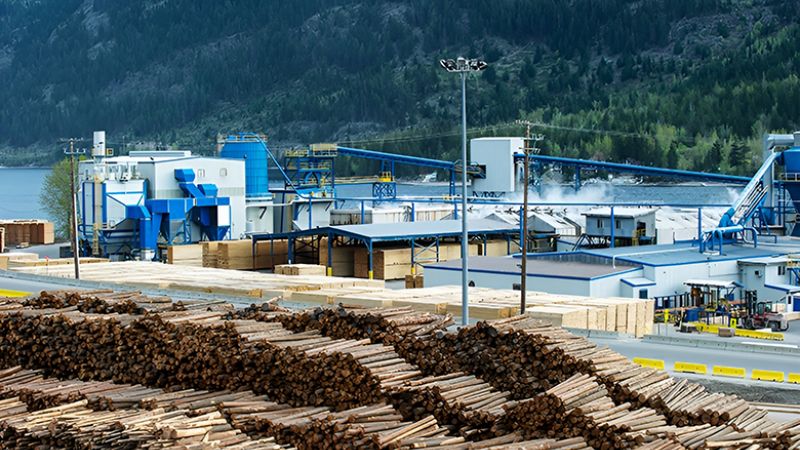


Meet global product demands and quality standards with industry-leading pellet plant design, engineering, equipment, and construction services for pellet processors.

Your Partner Beyond Project Completion
2000+ cases
RICHI is the leading designer, manufacturer and builder of pellet plants in the world, completing over 2000 projects in 140 countries across 6 continents.
Read More
Increase plant productivity, profitability, and safety by integrating high quality equipment into your pellet production line. Over the years, RICHI has become China's top pellet equipment manufacturer. At the same time, RICHI has established valuable partnerships with the world's leading component and raw material manufacturers to bring you the best there is in technology, automation, and efficiency in pelleting plant machinery.

For nearly 30 years, RICHI has been providing best-in-class pellet plant equipment and services to clients across a variety of industries, sizes, and needs. We pride ourselves on the knowledge and skill that each team member possesses – from our technical sales team to our process design engineers. You can count on RICHI Machinery to take your operation to the next level of innovation, quality, and success.
Need help with your pellet manufacturing plant project? Contact us today.
ANIMAL FEED
BIOMASS
WOOD
ORGANIC FERTILIZER
AQUA FEED
CAT LITTER
MUNICIPAL WASTE RECYCLING
SPECIAL PELLET PRODUCTION
RICHI Machinery continues to deliver world class pellet mill equipment, pellet plant engineering and project solutions that add value to our customers in the animal feed, wood waste, agriculture waste, organic fertilizer, cat litter and special pellet products industries. Throughout the years, we RICHI Machinery have built strong brand, becoming industry-leading pellet machine manufacturer. We value integrity, promise quality, and prioritize your success.
Learn MoreWith our expert team, we precisely implement your process engineering requirements in pellet mill and pelletizing plant systems. No matter which industry you’re in – we understand your needs and deliver solutions that meet the highest standards.
At RICHI, quality comes first. Our pellet making machine and related pellet line equipment undergo rigorous quality controls to ensure they meet the highest standards. Rely on products that are durable, safe, and efficient.
With decades of experience in pellet machine and pellet production line production, we have earned a reputation as a trusted partner in various industries. Our expertise allows us to cover a wide range of applications.
Not only do we offer premium pelleting equipment, but we are also experts at designing, building, installing, and maintaining facilities from the ground up. Our expertise is within pellt plant process design, discovering the most efficient, productive, and profitable way to handle your materials in an end-to-end cycle.
○ RICHI MACHINERY
Keeping in touch with us is an effective way to solve all your problems. If you have any needs or questions, please leave your contact information, then RICHI technical consultants will send design, quotation, videos to your mailbox. You can also contact us directly via WhatsApp: +86 13838389622
Copyright©2015-2026 by HENAN RICHI MACHINERY CO., LTD. All rights reserved.