
A chicken manure pelleting equipment in Singapore project was developed for an organic fertilizer producer that needed to add commercial pelletizing capacity without rebuilding its existing processing system. The company was already handling composted poultry manure and had equipment for material conditioning, drying, mixing and finished-product packing. Its main bottleneck was the pelleting stage: the existing small equipment could not provide the output stability or pellet consistency required for commercial fertilizer production.
A chicken manure pelleting equipment in Singapore project was developed for an organic fertilizer producer that needed to add commercial pelletizing capacity without rebuilding its existing processing system. The company was already handling composted poultry manure and had equipment for material conditioning, drying, mixing and finished-product packing. Its main bottleneck was the pelleting stage: the existing small equipment could not provide the output stability or pellet consistency required for commercial fertilizer production.
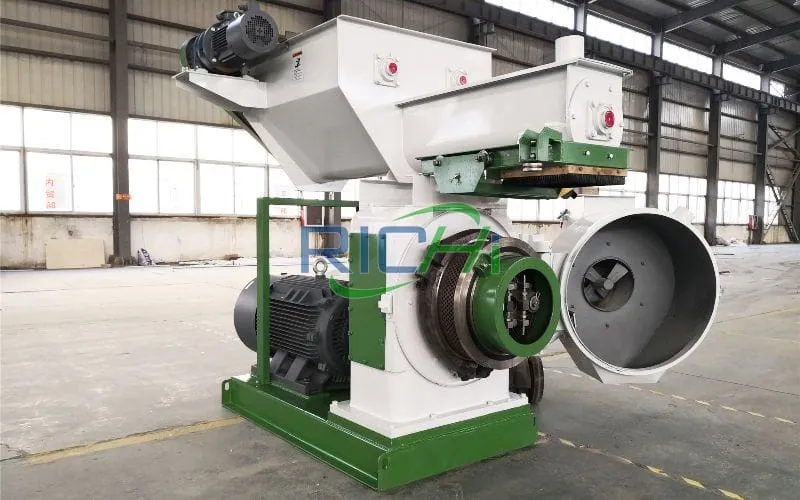
Instead of purchasing another complete fertilizer line, the client selected one RICHI FZLH350 ring-die chicken manure pellet machine and integrated it into the existing plant. For this customer, the investment decision was mainly about three issues: whether the machine could continuously handle composted manure-based formulations, whether the required capacity could be achieved within the available factory space, and whether different fertilizer formulations could be produced without replacing the rest of the line.
The resulting chicken manure pelleting equipment in Singapore project therefore became a retrofit rather than a greenfield installation. This is an important distinction for fertilizer producers that already own composting, crushing, mixing, drying or packing equipment and only need to replace or add the pelletizing section.
Name:
Chicken Manure Pelleting Machine
Country:
Singapore
Date:
2025
Capacity:
3-5T/H
Model:
FZLH350
Main Motor Power:
37 kW
Raw Materials:
chicken manure, rice husk
Pellet diameter:
6 mm
Singapore is not a market where an organic fertilizer project can be planned around abundant land or extremely large local manure volumes. Space, raw-material sourcing, storage and logistics all influence equipment selection. For this reason, the customer did not want to install oversized equipment that would remain underutilized.
The company collected poultry manure through contracted suppliers and combined it with carbon-rich agricultural materials sourced locally and regionally. Before purchasing the new pelletizer, part of the material was sold as compost or loose fertilizer. That business had several limitations: loose material occupied more storage space, generated more dust during handling, and was more difficult to package as a standardized retail or horticultural product.
Pelletizing gave the company another product format without forcing it to abandon its existing compost business. Depending on orders, material could either remain as screened compost or be directed to the FZLH350 for production of granular organic fertilizer.
One of the most important corrections made during project planning concerned moisture. Fresh chicken manure should not be sent directly into a ring-die fertilizer granulator machine. Its moisture can be considerably higher than the level suitable for stable pellet formation, and untreated manure also creates problems involving odor, biological stability and storage.
For this organic fertilizer production project, the chicken manure was first composted and stabilized. After fermentation, the material was crushed, screened and moisture-adjusted before entering the pelletizing section. The customer's working formulation was based on:
The exact percentages were not treated as a fixed machine requirement. This matters because a commercially useful chicken manure fertilizer formula should be determined by nutrient targets, compost characteristics, particle size and pellet strength rather than by an arbitrary manure-to-sawdust ratio.
Before entering the chicken manure pelleting equipment, the mixed material was generally conditioned to approximately 12–18% moisture. The practical target could be adjusted during commissioning because composted manure behaves differently depending on fiber content, ash content and the amount of fine powder in the formulation.
The customer selected the FZLH350 after matching the pelletizer to the existing plant rather than simply choosing the largest available machine. The 37 kW ring-die unit offered sufficient commercial capacity while remaining practical for a facility where floor space and upstream material supply were both important constraints.
| Project Parameter | Configuration |
|---|---|
| Equipment | FZLH350 organic fertilizer pellet machine |
| Main Motor Power | 37 kW |
| Ring Die Diameter | 350 mm |
| Finished Pellet Diameter | 6 mm for the main product |
| Applicable Pellet Range | Approximately 4–12 mm with corresponding ring dies |
| Primary Material | Composted chicken manure-based fertilizer mixture |
| Installation Type | Standalone pelletizer integrated into an existing fertilizer system |
Actual throughput is formulation-dependent. Moisture, bulk density, fiber content, particle size, ring-die specification and required pellet density all affect output, so the nominal capacity of a fertilizer pellet machine should not be interpreted as a guaranteed production rate for every manure formulation. This was particularly relevant to the Singapore customer because it planned to change formulations according to different fertilizer products.
The customer already owned most of the equipment surrounding the pelletizing stage. RICHI therefore focused on the interfaces immediately before and after the FZLH350 rather than recommending unnecessary replacement of usable machinery.
The production route used for pellet products was arranged approximately as follows:
Oversized particles and contaminants had to be removed before pelletizing. Uniform particle size was particularly important because fibrous pieces or foreign matter can interfere with feeding and accelerate wear. The customer also needed a reasonably homogeneous moisture distribution rather than simply achieving the correct average moisture reading.
This integration approach kept the capital requirement concentrated on the actual bottleneck. For an established fertilizer producer, replacing only the pelletizing section can make considerably more sense than purchasing a complete organic fertilizer production line when the existing composting, crushing, mixing and packing systems remain serviceable.
The main product was a 6 mm granular organic fertilizer intended for horticultural distributors, landscaping applications and agricultural customers. The objective was not simply to make manure smaller or denser. The customer wanted a product that could be weighed, bagged and transported consistently.
The required pellets needed enough mechanical strength to survive conveying and bagging without generating excessive fines. At the same time, excessive compression was undesirable because the product still needed to break down after application to soil.
For this reason, ring-die selection was based on more than pellet diameter. Compression ratio, material formulation and operating moisture were evaluated together. This is one of the areas where buyers comparing chicken manure pelleting equipment in Singapore should pay particular attention: two machines producing the same 6 mm diameter can produce very different pellet quality if die configuration and material preparation are not matched correctly.
Composted chicken manure is not as free-flowing as grain. Depending on moisture and fiber content, it can bridge above the pelletizing chamber or feed unevenly. An unstable feed rate then causes fluctuations in motor load, output and pellet density.
The FZLH350 configuration uses controlled feeding to maintain a more consistent material supply to the pelletizing chamber. During commissioning, the feed rate was increased gradually rather than immediately operating at maximum load. Operators monitored motor current, pellet appearance, fines generation and die discharge condition while establishing the appropriate operating point for each formulation.
The customer also learned that material preparation had a greater effect on production stability than repeatedly changing pelletizer settings. When incoming compost contained wet lumps, inconsistent fibers or insufficiently crushed material, pellet quality deteriorated. Once the upstream preparation was controlled, operation became considerably more stable.
Available installation space was an important project constraint. The customer did not have the open land typically available to a large fertilizer factory, so equipment layout had to use the existing building efficiently.
RICHI reviewed the position of the mixer discharge, pelletizer, cooler, screening equipment and conveyors before finalizing the arrangement. Maintenance clearance around the FZLH350 was retained so operators could access the ring die and roller assembly without dismantling adjacent machinery.
This was also one reason a standalone machine upgrade was attractive. The customer could improve its pelleting capacity while retaining most of the existing plant footprint and avoiding major civil construction.
For this Singapore project, operating the pelletizer at its theoretical maximum for every shift was not the objective. The available volume of properly composted raw material and the sales schedule determined actual production hours.
This is especially important for manure projects. A buyer considering a 3–5 t/h class machine needs enough stabilized material to keep it supplied. Running at 3 t/h for one eight-hour shift requires approximately 24 tons of prepared material per day; at 5 t/h, the requirement rises to approximately 40 tons per day. Once composting losses, moisture reduction and added ingredients are considered, the required incoming raw-material volume can be substantially higher.
The customer therefore used batch production rather than keeping the machine running continuously at maximum output. This provided enough capacity for peak orders without creating an oversized upstream composting requirement.
Another issue addressed during the retrofit was what happened after the material left the pelletizer. Fresh pellets are warm and can contain more surface moisture than is desirable for immediate bagging. Sending them directly into sealed bags increases the possibility of condensation, caking and deterioration during storage.
The customer retained downstream cooling and screening before packaging. Screening removed fines generated during handling, while properly cooled pellets provided more stable bagging and storage performance. Recovered fines could be returned to the production process where appropriate instead of being discarded.
For buyers comparing only the price of chicken manure pelleting equipment in Singapore, this downstream requirement is easy to overlook. A pelletizer may be the core machine, but commercial pellet quality depends on what happens both before and after granulation.
The purpose of this FZLH350 was specifically organic fertilizer production. Although ring-die technology is also widely used in other pellet applications, the customer did not purchase this machine to alternate between manure fertilizer and wood fuel production.
Keeping the application focused simplified cleaning, wear-part management and product quality control. It also avoided unnecessary contamination risks between unrelated product categories. The customer could, however, change between different composted organic fertilizer formulations using the same pelletizing system, provided the materials were correctly prepared.
The customer’s operators were trained to monitor several practical indicators rather than judging the machine only by hourly output. These included feeder stability, main motor load, die temperature, percentage of fines, pellet surface condition and changes in raw-material moisture.
Wear-part inspection was also incorporated into the maintenance routine. Ring dies and rollers are consumable components, and their service life depends heavily on the formulation. High mineral content, sand or other abrasive contaminants in manure can shorten wear life significantly, which is why raw-material cleanliness and screening were emphasized during project preparation.
Operators also established a cleaning procedure for shutdown periods. Allowing moist manure-based material to remain compacted around the feeding and pelletizing areas can make the next startup more difficult. Regular cleaning therefore became part of the production schedule rather than an occasional maintenance task.
The most useful result for the customer was greater control over the finished product. Previously, the business depended more heavily on loose compost and lower-value bulk fertilizer. With commercial pelleting capacity available, the company could produce a standardized product for customers that preferred bagged granules.
The upgrade also gave the plant more flexibility. When pellet orders increased, prepared material could be directed through the FZLH350. When the market required bulk compost, the customer could bypass pelletizing. The existing facility therefore supported two product routes instead of being locked into a single finished-product format.
From the customer's perspective, this flexibility reduced the risk of the investment. The company did not need to build an entirely new factory to enter the granular fertilizer market, and the standalone pelletizer could later become part of a larger automated system if production volumes increased.
This project is relevant to fertilizer companies that already have part of the production process but are struggling with the granulation stage. In such cases, the first question should not be, “What complete line should I buy?” It should be, “Which parts of my current system can still meet the required capacity and product specification?”
For this customer, the existing composting, material preparation and downstream equipment made a standalone FZLH350 the more practical investment. The machine added commercial pelletizing capability without forcing the company to replace equipment that was still useful.
If you are evaluating chicken manure pelleting equipment in Singapore or another market with limited plant space, RICHI Machinery can configure the pelletizer around your actual material rather than requiring you to adopt a fixed production scheme. Useful information for equipment selection includes your daily volume of composted manure, moisture after fermentation, other ingredients and their percentages, required pellet diameter, target hourly output, existing equipment and available installation dimensions. With these details, the pelletizer model, ring-die specification, feeding arrangement and necessary upstream or downstream equipment can be determined around the real project rather than a generic fertilizer line.
Having the right mix of reliable, high-quality pellet machine and pelletizing systems and expert support is essential to your success. Watch how our end-to-end feed pellet plant solutions have helped our customers optimize their performance.
Our customized and future-proofed turnkey pellet plant solutions is designed with you at the core. From vision to reality and beyond, our team stays connected with yours. Giving you peace-of-mind with an expert at your side.
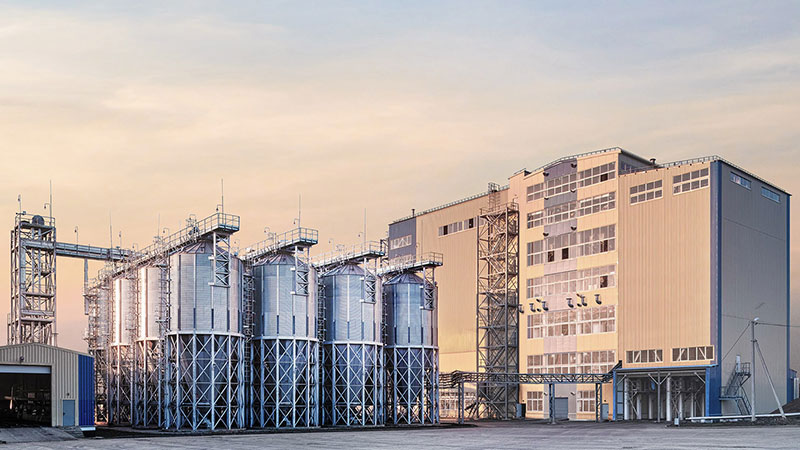
At RICHI, we go beyond project completion. With RICHI Servicee, we’re your dedicated partners in success. Count on us for expert guidance, minimal downtime, and optimized productivity. Choose RICHI for unmatched service and support.
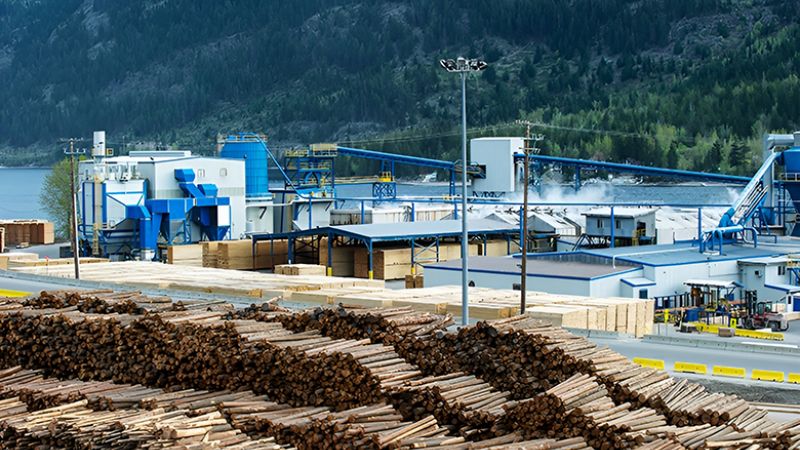


Meet global product demands and quality standards with industry-leading pellet plant design, engineering, equipment, and construction services for pellet processors.


Your Partner Beyond Project Completion
2000+ cases
RICHI is the leading designer, manufacturer and builder of pellet plants in the world, completing over 2000 projects in 140 countries across 6 continents.
Read More
Increase plant productivity, profitability, and safety by integrating high quality equipment into your pellet production line. Over the years, RICHI has become China's top pellet equipment manufacturer. At the same time, RICHI has established valuable partnerships with the world's leading component and raw material manufacturers to bring you the best there is in technology, automation, and efficiency in pelleting plant machinery.

For nearly 30 years, RICHI has been providing best-in-class pellet plant equipment and services to clients across a variety of industries, sizes, and needs. We pride ourselves on the knowledge and skill that each team member possesses – from our technical sales team to our process design engineers. You can count on RICHI Machinery to take your operation to the next level of innovation, quality, and success.
Need help with your pellet manufacturing plant project? Contact us today.
ANIMAL FEED
BIOMASS
WOOD
ORGANIC FERTILIZER
AQUA FEED
CAT LITTER
MUNICIPAL WASTE RECYCLING
SPECIAL PELLET PRODUCTION
RICHI Machinery continues to deliver world class pellet mill equipment, pellet plant engineering and project solutions that add value to our customers in the animal feed, wood waste, agriculture waste, organic fertilizer, cat litter and special pellet products industries. Throughout the years, we RICHI Machinery have built strong brand, becoming industry-leading pellet machine manufacturer. We value integrity, promise quality, and prioritize your success.
Learn MoreWith our expert team, we precisely implement your process engineering requirements in pellet mill and pelletizing plant systems. No matter which industry you’re in – we understand your needs and deliver solutions that meet the highest standards.
At RICHI, quality comes first. Our pellet making machine and related pellet line equipment undergo rigorous quality controls to ensure they meet the highest standards. Rely on products that are durable, safe, and efficient.
With decades of experience in pellet machine and pellet production line production, we have earned a reputation as a trusted partner in various industries. Our expertise allows us to cover a wide range of applications.
Not only do we offer premium pelleting equipment, but we are also experts at designing, building, installing, and maintaining facilities from the ground up. Our expertise is within pellt plant process design, discovering the most efficient, productive, and profitable way to handle your materials in an end-to-end cycle.
○ RICHI MACHINERY
Keeping in touch with us is an effective way to solve all your problems. If you have any needs or questions, please leave your contact information, then RICHI technical consultants will send design, quotation, videos to your mailbox. You can also contact us directly via WhatsApp: +86 13838389622
Copyright©2015-2026 by HENAN RICHI MACHINERY CO., LTD. All rights reserved.