
The Vietnamese customer was not trying to replace corn with cassava simply because cassava was cheaper. The feed mill first had to solve three practical problems: cassava meal contains very little protein compared with maize, poorly processed cassava can retain excessive cyanogenic compounds, and the fine dry meal behaves differently during feeding, conditioning, and ring-die pelleting. Only after those points were addressed did the customer treat cassava as a meaningful local energy ingredient.
The Vietnamese customer was not trying to replace corn with cassava simply because cassava was cheaper. The feed mill first had to solve three practical problems: cassava meal contains very little protein compared with maize, poorly processed cassava can retain excessive cyanogenic compounds, and the fine dry meal behaves differently during feeding, conditioning, and ring-die pelleting. Only after those points were addressed did the customer treat cassava as a meaningful local energy ingredient.
The project is located in Binh Phuoc in southeastern Vietnam, within reach of commercial cassava-growing and starch-processing areas. The customer operates a regional poultry feed mill rather than a 10,000-ton-per-month factory dependent on one small pelletizer.
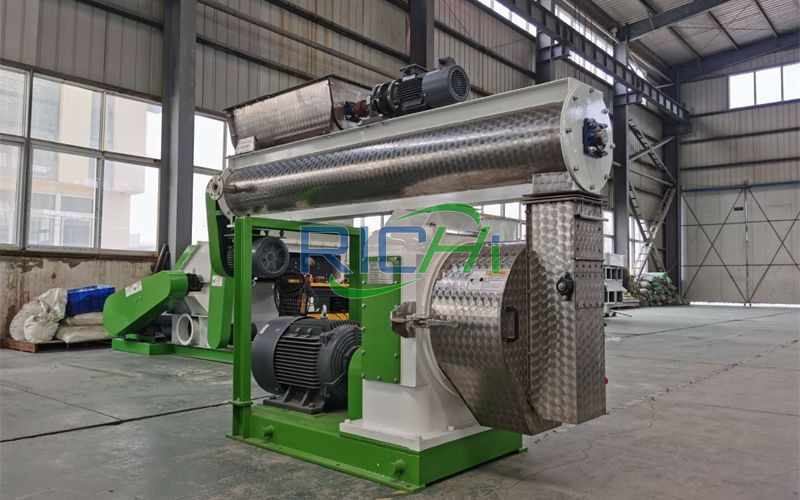
One SZLH350 cassava meal pellet machine in Vietnam was installed to replace an older 3–4 T/H unit in one broiler-feed production section. The existing grinding, batching, mixing, cooling, screening, and packing equipment remained in service.
Name:
Cassava meal pellet mill
Country:
Vietnam
Date:
2026
Capacity:
5–6 T/H
Model:
SZLH350
Main Motor Power:
55 kW
Pellet Diameter:
4 mm
Main Product:
Chicken feed pellets
Vietnam is an established cassava-producing country, and cassava has long been used for both industrial processing and animal feed. Cassava meal offers a starch-rich energy source, but its nutritional profile is not interchangeable with corn.
The feed mill therefore did not formulate broiler feed by simply removing 30 kg of corn and adding 30 kg of cassava meal.
As cassava inclusion increased, the nutritionist recalculated protein, amino acids, fat, minerals, metabolizable energy, and the physical characteristics of the mash.
This was particularly important for starter feed, where young broilers are less tolerant of an imbalanced high-cassava formulation.
The material in this project is dried cassava root meal produced from properly processed cassava roots.
It is not cassava pulp from a starch factory, cassava peel meal, wet cassava residue, or fresh chopped roots.
Those materials have different fibre, starch, moisture, and feeding characteristics and should not be treated as equivalent simply because they all originate from cassava.
The customer specifies the ingredient by composition and quality before it enters feed production.
Good cassava root meal is rich in starch but typically contains only a few percent crude protein.
That is one of the main reasons the mill cannot push inclusion upward without reformulating the rest of the diet.
Soybean meal and other protein sources are adjusted to compensate for the lower protein contribution from cassava. Supplemental oil may also be required where the revised formulation needs additional energy or fat.
Essential amino acids are balanced according to the finished broiler specification rather than assuming higher soybean meal alone solves every nutritional difference.
The customer does not operate one fixed 35–40% cassava formula for every stage of broiler production.
Starter diets use a more conservative cassava level because young birds require high nutrient density and are more sensitive to ingredient quality and feed intake.
Grower and finisher formulations can accommodate more cassava when ingredient quality is good and the complete diet is correctly balanced.
In routine production, the mill typically works within the following practical range:
These are formulation ranges for this project rather than universal maximum inclusion limits.
The price relationship between cassava and imported maize changes with season, crop supply, starch demand, freight, exchange rates, and feed-grain markets.
The customer therefore evaluates cassava on a delivered nutrient-cost basis rather than relying on one permanent percentage discount.
When local cassava meal provides a meaningful energy-cost advantage, its inclusion can reduce dependence on imported grain. When the price gap narrows, the formulation can be adjusted downward.
This flexibility is more valuable than building the entire feed mill around one assumed commodity-price difference.
| Project Parameter | Configuration |
|---|---|
| Equipment | Cassava meal pellet machine |
| Model | SZLH350 |
| Quantity | 1 unit |
| Main Motor Power | 55 kW |
| Feeder Power | 1.5 kW |
| Conditioner Power | 4 kW |
| Ring Die Inner Diameter | 350 mm |
| Reference Capacity | Approximately 5–6 T/H for suitable poultry feed formulations |
| Main Product | Broiler grower and finisher pellets, plus starter feed for crumbling |
The 55 kW SZLH350 replaced an older, lower-output pellet mill in an existing production section.
This scale is much more credible than asking one 5–6 T/H machine to support a feed mill producing 10,000 tonnes every month by itself.
The new machine increases the capacity of that particular pelleting section while leaving the rest of the plant unchanged.
The ingredient normally arrives already dried and milled.
The customer checks particle distribution before deciding whether additional grinding is required.
Excessively fine cassava meal can create more dust, worsen handling, and increase the risk of segregation before pelleting.
The goal is therefore not to pulverize the material as finely as possible.
The mill maintains a particle distribution compatible with the other broiler-feed ingredients and with stable batching and mixing.
Fine cassava meal has low bulk density and can create airborne dust when transferred carelessly.
The customer improved enclosed conveying, hopper extraction, and mixer charging rather than expecting the pellet mill itself to eliminate the dust problem.
Once the mash enters pelleting, densification greatly improves downstream handling because finished pellets contain far less loose powder than the unpelleted mixture.
The SZLH350 uses a 4 kW conditioner ahead of the ring die.
Steam increases mash temperature and moisture, softens the feed, supports microbial control when the complete conditioning regime is adequate, and improves the binding conditions before compression.
Cassava starch can contribute useful natural binding behavior during thermal conditioning and pelleting.
A conditioner operating around 75–80°C does not by itself guarantee 80–90% or “complete” starch gelatinization.
Actual gelatinization depends on temperature, moisture, residence time, starch source, particle characteristics, mechanical shear, and process conditions.
The customer typically operates the conditioner within a practical poultry-feed temperature range and then fine-tunes steam addition from pellet quality, motor load, moisture, and hygiene requirements.
A cassava-rich finisher formula may behave differently from a high-protein starter formula.
One fixed temperature cannot therefore be treated as the perfect setting for every product.
The operator watches the mash leaving the conditioner rather than relying only on the displayed temperature.
The mill does not need an unnecessarily complicated set of 3.5 mm and 4.5 mm products just because two dies are available.
For this project, the main commercial output is approximately 4 mm broiler grower/finisher pellet.
Starter feed is produced as a suitable small pellet and then crumbled to the particle size required for young chicks.
This is more practical than feeding newly hatched broilers intact large pellets.
Ring-die performance depends on hole diameter, effective thickness, compression characteristics, feed formula, fat level, fibre, conditioning, and the durability required from the final product.
The customer therefore does not apply one universal 1:10 compression ratio to every cassava formulation.
Die specification is matched to the actual mash during commissioning.
If cassava content, oil addition, or other ingredients change significantly, the ideal compression conditions can change as well.
This is one of the most important controls in cassava-based poultry feed.
Cassava naturally contains cyanogenic glycosides, and processing methods such as peeling where applicable, chopping, drying, fermentation, and other treatments can substantially reduce cyanogenic potential.
The feed mill therefore buys cassava meal from processors with defined quality procedures and checks incoming material against its feed-safety specification.
The mill does not assume that every sun-dried cassava batch is automatically safe.
Feed safety cannot be reduced to one number copied into every project.
The acceptable specification depends on the ingredient, finished-feed inclusion level, applicable regulation, analytical method, and complete diet.
The customer therefore treats cyanide analysis as part of supplier approval and formulation control.
If a batch does not meet the purchasing specification, increasing conditioning temperature at the pellet mill is not used as a substitute for proper raw-material processing.
The quality-control team reviews moisture, appearance, odor, foreign material, particle characteristics, and relevant chemical specifications.
Mouldy or improperly dried meal is rejected.
Where required by the purchasing program, samples are also checked for cyanogenic potential and mycotoxin risk.
This matters because cassava meal is purchased as an ingredient, not treated as an automatically safe local by-product.
Rice bran is readily available in Vietnam and can be a useful feed ingredient.
But the customer does not simply combine high cassava, high rice bran, and low corn levels without considering fibre and energy density.
Every additional ingredient changes the overall nutrient balance.
Rice bran inclusion is therefore limited according to feed stage and raw-material quality.
Fish meal may be used in some formulations, but it is not a permanent requirement.
Soybean meal, amino-acid supplementation, and other approved protein sources can also achieve the required specification.
The customer formulates according to nutrient targets and ingredient economics rather than adding a country-associated ingredient for narrative effect.
Not every cassava diet requires xylanase.
Enzyme selection depends on the complete feed matrix and the substrates actually present.
Where phytase, carbohydrase, protease, or another enzyme offers a nutritional or economic benefit, the nutritionist evaluates it as part of the formulation.
The cassava feed pellet machine itself does not determine which enzyme should be used.
The immediate operational improvement was not a miraculous reduction in feed cost.
The first benefit was that the customer regained stable pelleting capacity.
The old unit had limited the section during high-demand broiler-feed campaigns. The new SZLH350 provided more headroom while allowing the operators to run cassava-containing mash without constantly reducing feeder rate to avoid unstable motor load.
That made production scheduling easier.
The mill checks fines and pellet durability as part of routine quality control.
Cassava starch can support pellet binding, but durability also depends on conditioning, die specification, fat addition, cooling, formulation, and handling.
Each commercial product has an internal quality specification, and operators adjust the process when results move outside it.
Because cassava contributes less fat than maize, the revised diet may require additional oil.
Too much oil added before pelleting, however, can lubricate the die and reduce pellet durability.
The customer therefore balances nutritional oil requirements with pellet quality.
Where the plant configuration allows, part of the oil can be managed downstream rather than forcing all liquid fat into the mixer before the ring die.
Fresh broiler pellets leave the SZLH350 warm and with elevated moisture after conditioning.
They are transferred into the existing counterflow cooler before screening.
The cooler reduces temperature and allows the pellet structure to stabilize.
Starter product destined for crumbling is then processed to the required size, while grower and finisher pellets continue through screening and packing.
Moisture immediately after the ring die is not the same as moisture of the finished cooled feed.
The final moisture specification is checked after cooling.
This distinction is important because steam added during conditioning temporarily raises mash moisture.
Finished feed must be stable enough for storage under Vietnam’s warm, humid conditions.
Southeastern Vietnam and neighboring cassava-producing areas give the mill access to commercial cassava material without requiring every tonne to come from the immediate district around the feed factory.
The customer buys according to quality specification and delivered cost.
This is more realistic than assuming all cassava meal is produced within a few kilometres of the mill.
The SZLH350 was exported from Qingdao Port and entered southern Vietnam through the Ho Chi Minh City port system before being transported inland to Binh Phuoc.
The supplied configuration included the pellet mill, feeder, conditioner, selected die equipment, documentation, and recommended wear parts.
Transit time, customs clearance and landed costs depend on the actual vessel, customs arrangement, and freight market.
This was not a complete greenfield feed factory.
The customer already had raw-material intake, grain grinding, ingredient bins, batching, mixing, cooling, screening, conveying, and bagging.
Replacing only the pelletizer made sense because the old pelleting section had become the constraint.
If the customer had lacked conditioning, cooling, dust collection, or accurate batching, buying only an SZLH350 would not have solved the complete process problem.
During initial cassava-rich trials, operators noticed that the feeder behaved differently from conventional corn-soy mash.
The cassava-containing mixture had different bulk density and flow characteristics.
Instead of immediately changing the ring die, the team first stabilized feeder rate, steam addition, and mash condition entering the pellet chamber.
Once the supply to the die became consistent, die loading and pellet quality became easier to optimize.
Research on broiler diets shows that well-processed cassava can replace a meaningful portion of conventional cereal energy when the complete diet is formulated correctly, but results differ with cassava form, bird age, processing, and inclusion level.
That is why this project uses staged inclusion rather than advertising “40% cassava for all broilers.”
The mill validates any major formulation change through its nutrition program before commercial rollout.
“The main lesson was that cassava is not just cheaper corn. It changes the formula and it changes how the mash behaves before the die. Once we controlled the cassava quality, reduced the starter inclusion, and adjusted conditioning and feeding for the finisher formula, the SZLH350 gave us a much more stable production section.”
The customer continues to change cassava inclusion as ingredient prices move.
The pellet mill was valuable because it gave the feed mill enough flexibility to process those formulations without building a dedicated cassava-only production line.
This cassava meal pellet machine in Vietnam project is an upgrade inside an existing commercial poultry-feed mill in Binh Phuoc.
The customer installed one SZLH350 with a 55 kW main motor, 1.5 kW feeder, 4 kW conditioner, and 350 mm ring die. Reference pelletizing capacity is approximately 5–6 T/H under suitable poultry-feed conditions.
Good-quality dried cassava root meal is used primarily as an energy ingredient. It does not simply replace corn kilogram for kilogram because its protein, fat, amino-acid contribution, physical properties, and cyanogenic-compound risk are different. Starter diets use a lower cassava inclusion, while grower and finisher formulas can use more when quality and formulation permit.
The process is ingredient inspection, grinding where necessary, accurate batching, mixing, steam conditioning, ring-die pelleting, cooling, crumbling where required, screening, and packaging. Cassava quality control and feed formulation remain just as important as the pellet machine itself.
For another customer considering a cassava meal pellet machine in Vietnam, RICHI Machinery would first review what type of cassava material is actually available, its moisture, starch, protein, fibre and cyanogenic specification, intended inclusion rate, bird stage, existing feed-line capacity, current pelletizer bottleneck, required pellet size, conditioning system, cooling capacity, annual production volume and local cassava-versus-grain economics before confirming the machine model.
The central advantage is not simply “use cassava and save money.” It is having a pelleting system capable of handling a properly formulated cassava-based feed when local ingredient economics make that formulation worthwhile.
Having the right mix of reliable, high-quality pellet machine and pelletizing systems and expert support is essential to your success. Watch how our end-to-end feed pellet plant solutions have helped our customers optimize their performance.
Our customized and future-proofed turnkey pellet plant solutions is designed with you at the core. From vision to reality and beyond, our team stays connected with yours. Giving you peace-of-mind with an expert at your side.
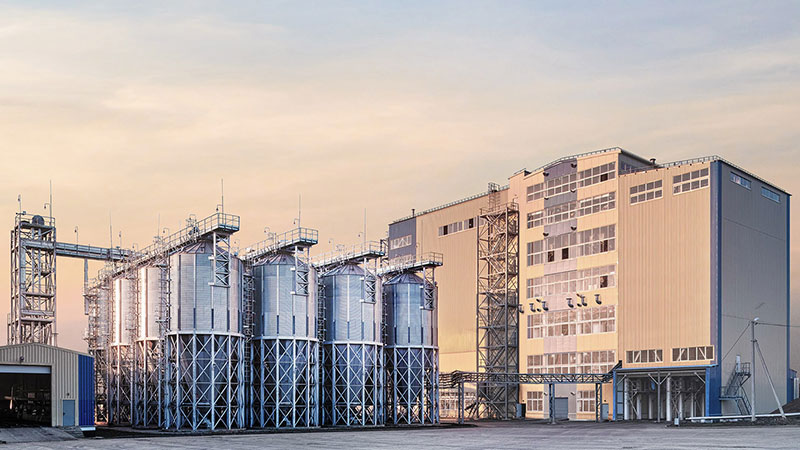
At RICHI, we go beyond project completion. With RICHI Servicee, we’re your dedicated partners in success. Count on us for expert guidance, minimal downtime, and optimized productivity. Choose RICHI for unmatched service and support.
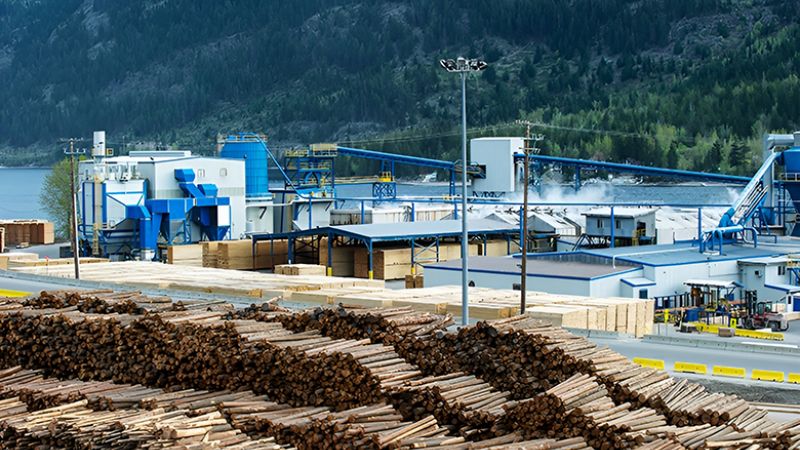


Meet global product demands and quality standards with industry-leading pellet plant design, engineering, equipment, and construction services for pellet processors.


Your Partner Beyond Project Completion
2000+ cases
RICHI is the leading designer, manufacturer and builder of pellet plants in the world, completing over 2000 projects in 140 countries across 6 continents.
Read More
Increase plant productivity, profitability, and safety by integrating high quality equipment into your pellet production line. Over the years, RICHI has become China's top pellet equipment manufacturer. At the same time, RICHI has established valuable partnerships with the world's leading component and raw material manufacturers to bring you the best there is in technology, automation, and efficiency in pelleting plant machinery.

For nearly 30 years, RICHI has been providing best-in-class pellet plant equipment and services to clients across a variety of industries, sizes, and needs. We pride ourselves on the knowledge and skill that each team member possesses – from our technical sales team to our process design engineers. You can count on RICHI Machinery to take your operation to the next level of innovation, quality, and success.
Need help with your pellet manufacturing plant project? Contact us today.
ANIMAL FEED
BIOMASS
WOOD
ORGANIC FERTILIZER
AQUA FEED
CAT LITTER
MUNICIPAL WASTE RECYCLING
SPECIAL PELLET PRODUCTION
RICHI Machinery continues to deliver world class pellet mill equipment, pellet plant engineering and project solutions that add value to our customers in the animal feed, wood waste, agriculture waste, organic fertilizer, cat litter and special pellet products industries. Throughout the years, we RICHI Machinery have built strong brand, becoming industry-leading pellet machine manufacturer. We value integrity, promise quality, and prioritize your success.
Learn MoreWith our expert team, we precisely implement your process engineering requirements in pellet mill and pelletizing plant systems. No matter which industry you’re in – we understand your needs and deliver solutions that meet the highest standards.
At RICHI, quality comes first. Our pellet making machine and related pellet line equipment undergo rigorous quality controls to ensure they meet the highest standards. Rely on products that are durable, safe, and efficient.
With decades of experience in pellet machine and pellet production line production, we have earned a reputation as a trusted partner in various industries. Our expertise allows us to cover a wide range of applications.
Not only do we offer premium pelleting equipment, but we are also experts at designing, building, installing, and maintaining facilities from the ground up. Our expertise is within pellt plant process design, discovering the most efficient, productive, and profitable way to handle your materials in an end-to-end cycle.
○ RICHI MACHINERY
Keeping in touch with us is an effective way to solve all your problems. If you have any needs or questions, please leave your contact information, then RICHI technical consultants will send design, quotation, videos to your mailbox. You can also contact us directly via WhatsApp: +86 13838389622
Copyright©2015-2026 by HENAN RICHI MACHINERY CO., LTD. All rights reserved.