
A livestock bedding supplier in Faisalabad, Pakistan, invested in two RICHI MZLH350 cardboard chip pellet machines to develop a commercial bedding product from locally collected corrugated cardboard.
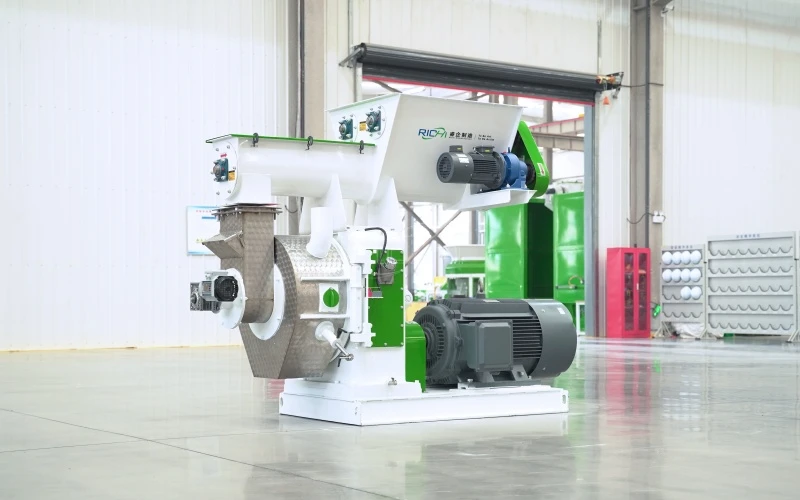
A livestock bedding supplier in Faisalabad, Pakistan, invested in two RICHI MZLH350 cardboard chip pellet machines to develop a commercial bedding product from locally collected corrugated cardboard. The company already had primary shredding, fine grinding, conveying and bagging equipment, so it did not need a complete production line. Its main requirement was a reliable densification section that could convert prepared paper fibre into uniform bedding pellets that were easier to store, transport and distribute than loose shredded cardboard.
The customer selected two MZLH350 biomass pellet mills, each equipped with a 37 kW main motor and rated at approximately 0.3–0.5 T/H for suitable prepared biomass materials. Operating in parallel, the two machines provide a combined reference capacity of approximately 0.6–1.0 T/H, giving the supplier enough flexibility for a small commercial bedding business while keeping the investment focused on the pelletizing stage.
Name:
Cardboard bedding pellet machine
Country:
Pakistan
Date:
2026
Capacity:
0.6–1.0 T/H
Model:
MZLH350
Main Motor Power:
37 kW
Quantity:
2 units
Main Application:
Livestock bedding
Faisalabad has a large textile and manufacturing base, and corrugated packaging is used throughout the supply chain for yarn, garments, accessories, machinery parts and other industrial goods.
For a bedding supplier, this creates an opportunity to source a relatively homogeneous stream of used corrugated cardboard from factories and warehouses rather than depending only on loose wood shavings or agricultural residues.
The important word is homogeneous.
Recovered paper is not automatically suitable for direct-contact animal bedding simply because it can be shredded and pelletized.
The customer therefore focuses on clean, dry corrugated boxes from known commercial sources. Material exposed to chemicals, oils, cleaning agents, pesticides, food contamination or unknown industrial residues is excluded.
Plastic liners, stretch film, strapping, large labels, tape accumulations and metal staples are removed as far as practical before fine processing.
Wax-coated cartons, heavily laminated boxes and moisture-resistant packaging also need separate evaluation because coatings can change grinding, pellet formation, absorbency and end-use suitability.
This source-control approach is much more important than trying to make every category of waste paper enter the same pellet machine.
| Project Parameter | Configuration |
|---|---|
| Equipment | Cardboard bedding pellet machine |
| Model | MZLH350 |
| Quantity | 2 units |
| Main Motor | 37 kW per machine |
| Arch Breaker | 2.2 kW per machine |
| Forced Feeder | 0.75 kW per machine |
| Reference Capacity | 0.3–0.5 T/H per machine |
| Combined Reference Capacity | 0.6–1.0 T/H |
| Main Raw Material | Clean corrugated cardboard fibre |
| Typical Product Diameter | Approximately 8–12 mm depending on customer bedding specification |
| Main Application | Livestock bedding |
| Project Type | Standalone pelletizing-section addition |
The two-machine arrangement gives the customer a useful balance between throughput and operating flexibility.
At a combined reference range of 0.6–1.0 T/H, both pellet mills can operate during higher-demand production periods, while one machine can remain available during maintenance or smaller production runs.
Annual output has to be calculated from the actual machine capacity rather than from the customer’s market target.
If the two machines operate eight actual pelleting hours per day for 300 days per year, theoretical production is approximately 1,440–2,400 tonnes before downtime, maintenance, raw-material changes and other production losses.
Producing 5,000 tonnes per year would therefore require substantially longer operating hours, more pelletizing capacity or both.
This calculation is particularly important for a bedding supplier that plans to grow gradually. The customer can first establish a stable market around roughly one tonne per hour and then decide whether another pellet mill or a larger production section is justified.
Raw-material quality determines whether recycled cardboard is a practical bedding feedstock.
The Faisalabad supplier prioritizes corrugated transport boxes from textile factories, warehouses and other known industrial sources.
This material is easier to control than mixed municipal paper because the company can trace where the packaging was used and separate unsuitable loads before processing.
Ordinary printing on corrugated cartons does not automatically make the material unusable, but heavily printed, coated or chemically treated material should not simply be accepted without evaluating the intended bedding use.
Office paper and magazines are also kept separate from the main product route unless the customer has a clear specification for them.
Glossy papers can contain coatings and fillers that behave differently from kraft-based corrugated fibre during grinding and pelletizing.
Staples and other metal pieces need to be removed.
A magnet can help capture ferrous contamination, but magnetic separation is not a substitute for receiving inspection because plastic, aluminium, tape, string and other foreign materials will not be removed by a magnet.
For a bedding product that will be in direct contact with animals, consistent sourcing is therefore a commercial requirement as much as a machine requirement.
The customer already owned a primary shredder and hammer mill, which is one reason a standalone pellet-mill purchase made sense.
Flattened cardboard boxes are too large and too irregular to feed directly into a ring die pellet mill.
The first size-reduction stage breaks sheets and cartons into manageable pieces. An intermediate size around 15–60 mm can be suitable for conveying and controlled feeding into the fine-grinding stage.
The hammer mill then reduces the material further before pelletizing.
Paper fibre does not need to be ground according to exactly the same specification as sawdust. Excessively fine grinding can increase dust and energy use without necessarily improving the bedding product.
The objective is to create a fibre size that flows reliably through the feeder and forms stable pellets through the selected die.
The customer therefore evaluates the prepared material by feeding behavior rather than setting one permanent 12 mm or 15 mm hammer-mill screen for every cardboard source.
Kraft-heavy corrugated board, recycled corrugated board and paper with different fibre lengths can behave differently in the same screen and ring die.
Cardboard fibre has a much lower bulk density than many conventional pellet feedstocks.
This creates a common handling problem: bridging.
Loose shredded paper can interlock and form a stable arch inside a hopper instead of falling uniformly into the cardboard paper pellet mill.
The MZLH350 therefore uses an arch-breaking and forced-feeding arrangement to help deliver lightweight material more consistently to the ring die.
Stable feeding matters because irregular feed flow creates irregular motor load and unstable pellet formation.
If the hopper empties suddenly after a bridge collapses, a large volume of fibre can reach the forced feeder at once.
The customer therefore considers hopper geometry, material bulk density and upstream feed control as part of the retrofit.
Reducing particle size can sometimes improve flow, but the solution should not be described as “always grind to exactly 12 mm.”
Sometimes the better correction is a combination of particle preparation, hopper design, agitation and feeder-speed control.
This is one reason RICHI asks customers to send representative material information when configuring a cardboard pelletizing project.
Paper fibre needs enough moisture to form a stable pellet, but there is no single moisture value that works for every corrugated-cardboard feedstock.
A low-teens moisture region can be used as an initial trial range, but the actual operating window depends on fibre composition, particle size, recycled-paper content, die specification, compression resistance and ambient conditions.
Material that is extremely dry can become dusty and may form brittle pellets.
Excess moisture can reduce pellet strength, increase deformation and create storage problems after bagging.
The customer therefore checks incoming cardboard condition and adjusts moisture before pelletizing where necessary.
Outdoor storage is avoided because corrugated cardboard can absorb significant atmospheric or rainwater moisture.
Covered storage also helps prevent contamination with soil, insects, oil and other yard debris.
After pelletizing, the product needs cooling before final screening and bagging.
Fresh pellets leave the ring die warm and should be stabilized before they are sealed in bags.
Screening then removes loose fines so the customer can maintain a more consistent bedding product.
The customer evaluated an approximately 8–12 mm bedding-pellet range rather than fixing every product permanently at 10 mm.
Pellet diameter affects bulk density, break-up behavior, handling and the amount of surface area exposed when the material is used in a stall or livestock housing area.
However, diameter alone does not determine absorbency.
Raw-paper structure, pellet density, compression, final moisture and the way the bedding breaks down during use also matter.
The customer therefore does not market one diameter as universally ideal for cattle, horses, goats and poultry.
Different livestock systems use bedding in different ways, and poultry litter in particular has different particle-size and management requirements from a dairy-cow bedding pack.
This project focuses primarily on commercial livestock bedding for dairy customers in Punjab.
Paper-based bedding is not an unknown concept in livestock management. Research has evaluated shredded paper as an alternative dairy-cow bedding material, and extension guidance includes shredded paper among livestock and equine bedding options.
The customer still needs to validate the specific pelletized cardboard product under its own farm conditions, especially for dust, comfort, moisture management and manure handling.
The first commissioning objective is stable pellet formation without excessive fines or unstable motor loading.
RICHI evaluates this through material moisture, feeder rate, die behavior, roller condition, motor current and finished-pellet appearance.
There is no universal rule that wood must use a 2.0 mm roller gap while paper must use exactly 1.0–1.2 mm.
Roller adjustment depends on machine design, die and roller condition and the actual material being processed.
The same applies to die temperature.
Heat generation is normal during pelletizing because the ring die and rollers compress the material under friction.
If temperature or motor load rises abnormally, the operator should first investigate feed rate, moisture, die condition, roller adjustment, raw-material contamination and material flow.
Stopping the machine for a fixed 15-minute cooling period every two hours is not a standard operating requirement.
A properly configured pellet mill should be commissioned to run within its normal operating load rather than depending on arbitrary periodic shutdowns.
Wear-part life is also evaluated by condition.
Corrugated fibre is generally less mineral-abrasive than dirty crop residues, but contaminants such as staples, sand or grit can still accelerate wear.
This Cardboard Chip Pellet Machine in Pakistan project uses two RICHI MZLH350 ring die pellet mills to convert prepared corrugated-cardboard fibre into a densified livestock bedding product.
Each machine uses a 37 kW main motor and provides a reference capacity of approximately 0.3–0.5 T/H. Together, the two units provide approximately 0.6–1.0 T/H of reference pelletizing capacity under suitable operating conditions.
The customer retains its existing shredder, hammer mill, conveyor and bagging equipment.
The resulting process is based on source-controlled cardboard receiving, contamination removal, primary shredding, fine size reduction, moisture adjustment, pelletizing, cooling, screening and packaging.
The project does not assume that all paper waste is suitable for animal bedding.
Clean corrugated boxes from known textile and commercial sources form the main raw-material stream, while chemically contaminated packaging, heavily coated material, mixed municipal waste paper and foreign objects are excluded or evaluated separately.
The two-machine configuration also gives the supplier a realistic growth path.
At eight pelleting hours per day and 300 days per year, theoretical annual output is around 1,440–2,400 tonnes before operating losses. A substantially larger annual bedding target would require longer production hours or additional pelletizing capacity.
For another buyer searching for a Cardboard Chip Pellet Machine in Pakistan, cardboard pellet machine, paper bedding pellet machine, recycled cardboard pelletizer, animal bedding pellet machine or MZLH350 paper pellet mill, RICHI first evaluates the incoming waste-paper stream.
Useful information includes the percentage of corrugated cardboard, coatings and printing, tape and plastic contamination, staples and other metal, incoming moisture, current shred size, hammer-mill output, required bedding form, target tonnes per hour and daily operating schedule.
The customer should also describe the livestock market.
A supplier selling primarily to dairy farms may require a different product structure and bag size from a company targeting horse stables or poultry houses.
Existing equipment also affects the quotation.
A Faisalabad recycler that already owns shredding, fine grinding, conveying, cooling and packaging equipment may need only the two MZLH350 pellet mills and their feeding interfaces. A customer receiving complete flattened cartons with no preprocessing equipment would need a broader system.
RICHI Machinery can use representative cardboard samples or detailed material data during engineering to compare fibre preparation, moisture response, feeder stability and die configuration before finalizing the machine setup.
For a Pakistan cardboard-bedding project, send RICHI your cardboard source, available tonnes per day, contamination condition, current particle size, moisture, target pellet diameter, required hourly output, livestock application and equipment already installed. These details determine whether one MZLH350, two parallel units or a larger integrated paper-bedding production line is the better investment.
Having the right mix of reliable, high-quality pellet machine and pelletizing systems and expert support is essential to your success. Watch how our end-to-end feed pellet plant solutions have helped our customers optimize their performance.
Our customized and future-proofed turnkey pellet plant solutions is designed with you at the core. From vision to reality and beyond, our team stays connected with yours. Giving you peace-of-mind with an expert at your side.
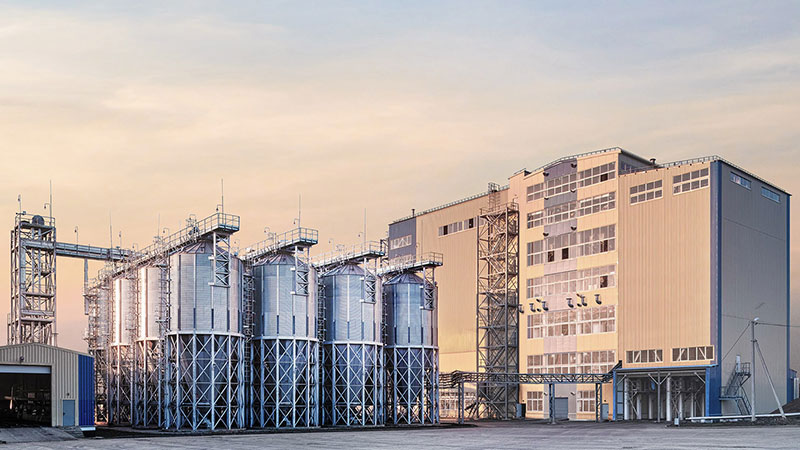
At RICHI, we go beyond project completion. With RICHI Servicee, we’re your dedicated partners in success. Count on us for expert guidance, minimal downtime, and optimized productivity. Choose RICHI for unmatched service and support.
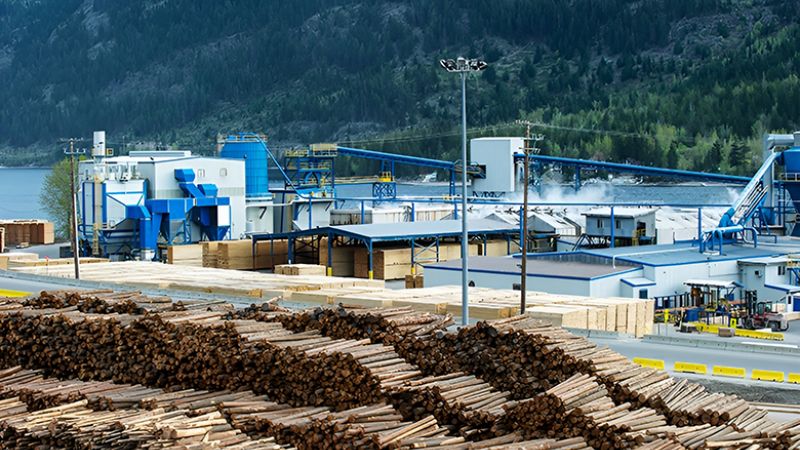


Meet global product demands and quality standards with industry-leading pellet plant design, engineering, equipment, and construction services for pellet processors.

Your Partner Beyond Project Completion
2000+ cases
RICHI is the leading designer, manufacturer and builder of pellet plants in the world, completing over 2000 projects in 140 countries across 6 continents.
Read More
Increase plant productivity, profitability, and safety by integrating high quality equipment into your pellet production line. Over the years, RICHI has become China's top pellet equipment manufacturer. At the same time, RICHI has established valuable partnerships with the world's leading component and raw material manufacturers to bring you the best there is in technology, automation, and efficiency in pelleting plant machinery.

For nearly 30 years, RICHI has been providing best-in-class pellet plant equipment and services to clients across a variety of industries, sizes, and needs. We pride ourselves on the knowledge and skill that each team member possesses – from our technical sales team to our process design engineers. You can count on RICHI Machinery to take your operation to the next level of innovation, quality, and success.
Need help with your pellet manufacturing plant project? Contact us today.
ANIMAL FEED
BIOMASS
WOOD
ORGANIC FERTILIZER
AQUA FEED
CAT LITTER
MUNICIPAL WASTE RECYCLING
SPECIAL PELLET PRODUCTION
RICHI Machinery continues to deliver world class pellet mill equipment, pellet plant engineering and project solutions that add value to our customers in the animal feed, wood waste, agriculture waste, organic fertilizer, cat litter and special pellet products industries. Throughout the years, we RICHI Machinery have built strong brand, becoming industry-leading pellet machine manufacturer. We value integrity, promise quality, and prioritize your success.
Learn MoreWith our expert team, we precisely implement your process engineering requirements in pellet mill and pelletizing plant systems. No matter which industry you’re in – we understand your needs and deliver solutions that meet the highest standards.
At RICHI, quality comes first. Our pellet making machine and related pellet line equipment undergo rigorous quality controls to ensure they meet the highest standards. Rely on products that are durable, safe, and efficient.
With decades of experience in pellet machine and pellet production line production, we have earned a reputation as a trusted partner in various industries. Our expertise allows us to cover a wide range of applications.
Not only do we offer premium pelleting equipment, but we are also experts at designing, building, installing, and maintaining facilities from the ground up. Our expertise is within pellt plant process design, discovering the most efficient, productive, and profitable way to handle your materials in an end-to-end cycle.
○ RICHI MACHINERY
Keeping in touch with us is an effective way to solve all your problems. If you have any needs or questions, please leave your contact information, then RICHI technical consultants will send design, quotation, videos to your mailbox. You can also contact us directly via WhatsApp: +86 13838389622
Copyright©2015-2026 by HENAN RICHI MACHINERY CO., LTD. All rights reserved.