
The Melbourne customer did not buy a cardboard briquette machine in Australia to turn clean corrugated boxes into cushioning blocks. Clean old corrugated cardboard already has an established recycling value, and compressing recyclable boxes into dense packaging pieces would add electricity, handling, and wear without improving the fibre-recycling loop. The project only became commercially sensible after the customer separated a lower-grade cardboard-rich fraction that could no longer enter its normal recovered-paper stream.
The Melbourne customer did not buy a cardboard briquette machine in Australia to turn clean corrugated boxes into cushioning blocks. Clean old corrugated cardboard already has an established recycling value, and compressing recyclable boxes into dense packaging pieces would add electricity, handling, and wear without improving the fibre-recycling loop. The project only became commercially sensible after the customer separated a lower-grade cardboard-rich fraction that could no longer enter its normal recovered-paper stream.
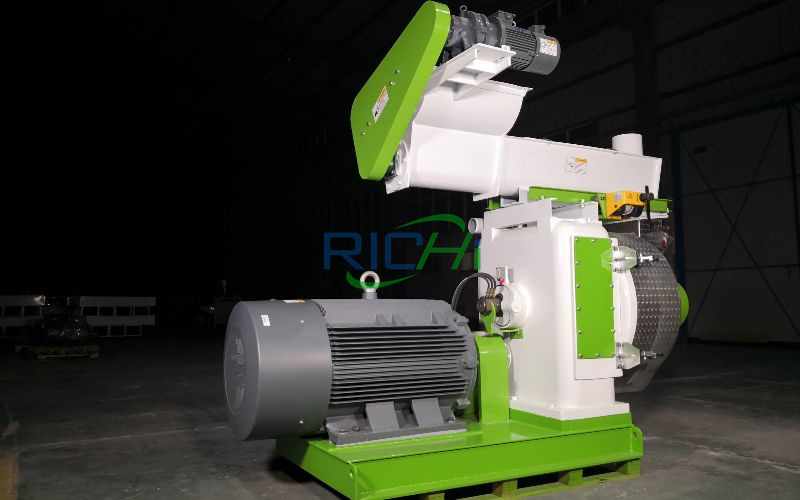
The client is a commercial and industrial waste processor serving warehouses, distribution centres, manufacturers, and retailers around Melbourne. Clean OCC continues to be sorted and baled for paper recycling. The material directed to the new densification section consists mainly of short-fibre corrugated rejects, damaged paperboard, heavily printed cardboard trim, and other approved dry fibre residues that meet the specification of an industrial energy-recovery customer. Two MZLH320 units were installed to convert this prepared fraction into compact 10–12 mm fuel pellets for controlled industrial use.
Name:
Cardboard Pellet Machine
Country:
Australia
Date:
2025
Capacity:
0.4–0.6 T/H
Model:
2* MZLH320
Main Motor Power:
22 kW
Raw Materials:
Recyclable Cardboard
Pellet diameter:
10–12 mm
The first operating rule was simple: material suitable for conventional paper recycling should remain in conventional paper recycling.
Australia already recovers substantial quantities of paper and paperboard packaging, and national packaging policy continues to emphasize keeping material circulating at its highest practical value. The customer therefore did not divert clean warehouse cartons into the pellet machines simply because it owned a large supply of cardboard.
Incoming cardboard is graded before processing.
Clean, dry corrugated cases are flattened and baled. Only the fibre fraction that fails the customer’s normal recovered-paper specification is evaluated for the densification route.
A warehouse generating its own clean boxes would normally have a much simpler solution: compact or bale the cardboard and send it to a paper recycler.
The customer is a licensed commercial resource-recovery operator receiving C&I fibre from multiple sources.
The waste processor already receives enough C&I fibre from multiple customers to justify mechanical sorting, shredding, and densification.
It also has a defined outlet for the final processed fuel, which is essential. Producing dense cardboard material first and looking for a user later would create another stockpiling problem rather than solve one.
The customer originally searched online using terms such as cardboard briquette machine in Australia because “briquetting” is commonly used as a broad description for waste densification.
Technically, the selected MZLH320 is a ring-die densification machine.
It does not produce large hydraulic blocks or 25 mm protective packaging pieces. The standard machine operates within a much smaller pellet-diameter range, so the Australian project was configured for approximately 10–12 mm cylindrical densified fuel.
If a customer genuinely needs 50 mm, 70 mm, or larger cardboard briquettes, a hydraulic or mechanical briquette press would be the more appropriate equipment category.
| Project Parameter | Configuration |
|---|---|
| Equipment | Cardboard briquette / fibre densification machine |
| Model | MZLH320 |
| Quantity | 2 units |
| Main Motor Power | 22 kW per unit |
| Arch-Breaking Feeder | 2.2 kW per unit |
| Forced Feeder | 0.75 kW per unit |
| Ring Die Inner Diameter | 320 mm |
| Available Pellet Diameter | 4–12 mm |
| Project Product Diameter | Approximately 10–12 mm |
| Reference Output | Approximately 0.2–0.3 T/H per unit |
| Combined Reference Output | Approximately 0.4–0.6 T/H under suitable feed conditions |
The two-machine arrangement suits the waste processor better than one larger pelletizer.
The volume of non-recyclable cardboard-rich residue changes from week to week. One machine can operate during ordinary production, while the second is started when enough qualified feedstock and confirmed fuel orders are available.
Maintenance can also be scheduled on one unit without shutting down all densification capacity.
Not every paper-based material entering the recovery facility is accepted.
The principal feedstock consists of dry cardboard and paperboard fibre rejects after recyclable grades have been removed. Material containing food waste, excessive moisture, glass, metals, PVC, hazardous residues, or unknown chemical contamination is excluded.
The company also pays attention to coatings and adhesives.
Australian waste-export and waste-management guidance recognizes that waste paper and cardboard can contain materials such as adhesives, mineral oils, and PFAS, so “it looks like cardboard” is not enough to qualify material for another process.
The fuel specification therefore begins with controlled receiving and sorting.
Cardboard waste and EPS packaging waste require different recycling and processing routes.
The MZLH320 project is not an EPS densification project and does not mix polystyrene foam into the cardboard fibre merely to reduce the amount of material leaving the warehouse.
EPS can be compacted or recycled through dedicated plastic systems where appropriate.
Keeping it separate also gives the customer much better control over the chlorine, plastics content, ash, and combustion characteristics of the final cardboard-rich fuel.
Flattened cartons cannot be placed directly into the cardboard paper pellet machine.
The selected fibre fraction first passes through a shredder that opens the sheets and reduces the cardboard into smaller pieces.
A secondary size-reduction stage is used where necessary because 15–20 mm strips are still too large and irregular for stable ring-die feeding.
The aim is a comparatively uniform fibrous feed that can move through the forced feeder without long strips wrapping around moving components or bridging above the pelletizing chamber.
Indoor commercial cardboard is often relatively dry, but Melbourne warehouse material does not always arrive at one fixed moisture content.
Boxes stored outdoors, damaged during transport, or exposed to wet goods can contain substantially more moisture than clean indoor corrugated board.
The processor therefore checks moisture instead of assuming Australian warehouses are permanently dry.
Wet or mould-affected material is segregated. Acceptable dry fibre can proceed without an energy-intensive dryer, while borderline material is managed according to the plant’s feed specification.
Avoiding unnecessary drying is one of the economic advantages of using suitably dry cardboard fibre.
Cellulose fibre can bond during densification, but the customer does not treat the absence of an added binder as proof that every cardboard mix will pelletize identically.
Paper grade, fibre length, fillers, coating, moisture, and printing all change the way material behaves through the die.
The ring-die specification and feed rate were therefore selected through tests with the customer’s actual processed fibre.
The objective is adequate mechanical durability without creating unnecessary compression resistance.
Dense cylindrical pellets are poorly suited to replacing EPS foam around fragile consumer products.
They are much heavier than foam, substantially less resilient, and can concentrate impact loads rather than cushion them.
Companies that want to turn cardboard into protective packaging generally use shredded paper, crimped paper, honeycomb structures, moulded fibre, or other engineered cushioning formats rather than dense ring-die pellets.
The MZLH320 product instead goes into an approved industrial energy-recovery route where density and controlled feeding are advantages.
Energy recovery from paper and cardboard is not merely theoretical in Australia.
National waste reporting recorded approximately 0.27 million tonnes of paper and cardboard going to energy recovery in 2022–23. Waste-derived fuels in Australia can contain processed paper, cardboard, timber, plastics, textiles, and other suitable combustible fractions when produced to the required specification.
That creates a realistic downstream route for cardboard that is unsuitable for higher-value fibre recycling.
It does not mean any business can manufacture combustible pellets and sell them without regulatory controls.
The Victorian processor worked backward from the thermal user’s specification.
Required particle size, moisture, plastics limit, contaminants, ash, calorific performance, and feeding characteristics were reviewed before the MZLH320 settings were finalized.
This approach matters because Victorian guidance expects refuse-derived or similar engineered fuels to have a viable market and to be made to the technical requirements of an actual energy-recovery facility.
The customer therefore does not produce generic “cardboard fuel” for anonymous buyers.
Paper, cardboard, timber, plastic, RDF, and similar combustible wastes are regulated as combustible recyclable and waste materials in Victoria.
Storage volume, fire prevention, material handling, environmental risk, and the regulatory status of the energy-recovery user all have to be considered.
This is one reason the project uses relatively small modular machines rather than creating a very large stockpile of pellets before contracts are confirmed.
Densification reduces volume, but dense combustible material still requires proper fire-risk management.
The customer’s strategy is consistent with Australia’s broader move toward processing waste domestically and exporting only material that meets defined requirements.
Mixed and unsorted waste paper and cardboard have been regulated under Australia’s waste-export framework since July 2024.
The rules do not mean Australia stopped all exports of cardboard. They do mean the simplistic claim that “China stopped taking cardboard, so Australia must pelletize it” is inaccurate.
Sorted recyclable grades can still have legitimate markets. Mixed waste streams face tighter controls and contamination requirements.
Material leaving the ring die is warm and should not be transferred directly into long-term storage.
The pellets are cooled before final screening.
Loose fines and damaged material are removed, and suitable clean fines can be returned to the preparation section.
Cooling and screening improve bulk handling and reduce dust when the material is moved into covered storage or dispatched to the approved thermal user.
The customer does not publish a fixed density such as 400–450 kg/m³ without testing the actual product.
Bulk density varies with fibre grade, compression, moisture, pellet diameter, length distribution, and fines.
It is measured after stable production has been established.
The economic calculation then compares the amount of material that can be stored and transported per cubic metre against the electricity, labour, wear, and processing costs required to densify it.
Combined reference capacity of 0.4–0.6 T/H does not mean the customer operates both MZLH320 units eight hours a day for every working day of the year.
Production follows the amount of qualified fibre available and the fuel contract.
Clean OCC continues to leave the facility as recyclable baled material, so only a fraction of incoming cardboard enters the ring-die section.
Annual production therefore depends on actual qualified feedstock and operating hours rather than theoretical maximum capacity.
The economics depend on local cardboard gate fees, sorting cost, electricity, labour, shredder consumption, maintenance, transport, fuel value, regulatory compliance, and what the same material would earn or cost through another recovery route.
There is therefore no defensible universal calculation showing that two MZLH320 machines must save AUD 50,000 per year or pay for themselves in less than ten months.
The customer instead compares each outlet on a net-value basis.
Where fibre can be recycled economically, it is recycled. Where it cannot meet recovered-paper specifications but qualifies for engineered energy recovery, densification can provide another route.
The two machines were exported from Qingdao Port in China to Melbourne.
Before shipment, RICHI supplied machine dimensions, motor data, foundation information, electrical requirements, feeder interfaces, discharge elevations, and recommended maintenance clearances.
The customer used those details to modify an existing resource-recovery building rather than constructing a new pellet plant.
The machines were positioned downstream of fibre sorting and shredding and upstream of cooling, screening, and covered fuel storage.
“The pellet machines were not the difficult part once the feed was consistent. The real challenge was deciding what cardboard belonged in recycling and what material genuinely belonged in the fuel stream. Once those specifications were clear, the densification section became much easier to control.”
The customer subsequently tightened incoming-material categories and created separate storage areas for clean OCC and fuel-grade fibre rejects.
This reduced contamination and made the final product more consistent without increasing machine power or changing the ring die.
This cardboard briquette machine in Australia project processes a carefully controlled residual fibre stream within a Melbourne resource-recovery operation.
Clean corrugated cardboard continues to be baled and recycled. A carefully controlled lower-grade cardboard-rich fraction that cannot enter the normal paper-recycling stream is shredded, prepared, and densified into approximately 10–12 mm cylindrical fuel pellets for an approved industrial energy-recovery application.
Two MZLH320 units provide 22 kW of main power each, with 2.2 kW arch-breaking feeders, 0.75 kW forced feeders, and 320 mm ring dies. Reference output is approximately 0.2–0.3 T/H per machine under suitable prepared-cardboard conditions.
For another Australian customer searching for a cardboard briquette machine, RICHI Machinery would first determine whether the material is actually recyclable OCC, mixed paperboard, coated fibre, industrial cardboard trim, or a residual fuel-grade fraction. The next questions are annual tonnage, contamination, moisture, shredding size, desired briquette or pellet dimensions, intended end use, fire-management requirements, available electrical power, downstream cooling, storage, and whether a confirmed recycler or thermal user already exists.
That first decision is more important than machine capacity. If the customer has clean recyclable boxes, a baler may be the better machine. If the customer needs large block briquettes, a dedicated briquette press is more appropriate. A ring-die MZLH320 becomes relevant only when a prepared fibre stream genuinely benefits from small-diameter densification.
Having the right mix of reliable, high-quality pellet machine and pelletizing systems and expert support is essential to your success. Watch how our end-to-end feed pellet plant solutions have helped our customers optimize their performance.
Our customized and future-proofed turnkey pellet plant solutions is designed with you at the core. From vision to reality and beyond, our team stays connected with yours. Giving you peace-of-mind with an expert at your side.
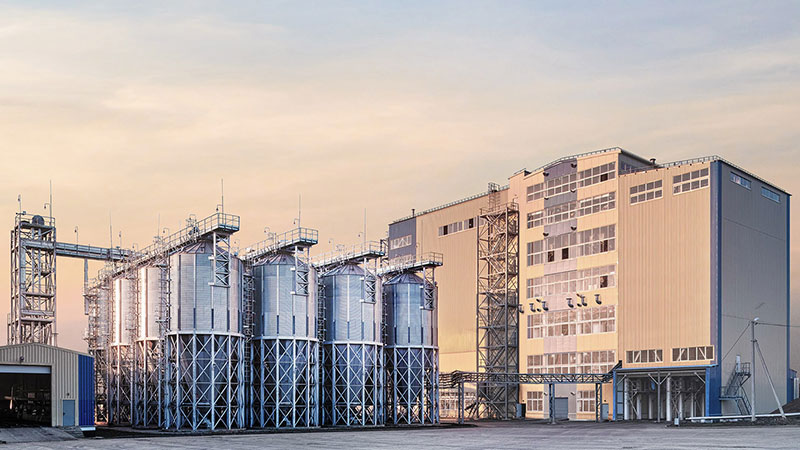
At RICHI, we go beyond project completion. With RICHI Servicee, we’re your dedicated partners in success. Count on us for expert guidance, minimal downtime, and optimized productivity. Choose RICHI for unmatched service and support.
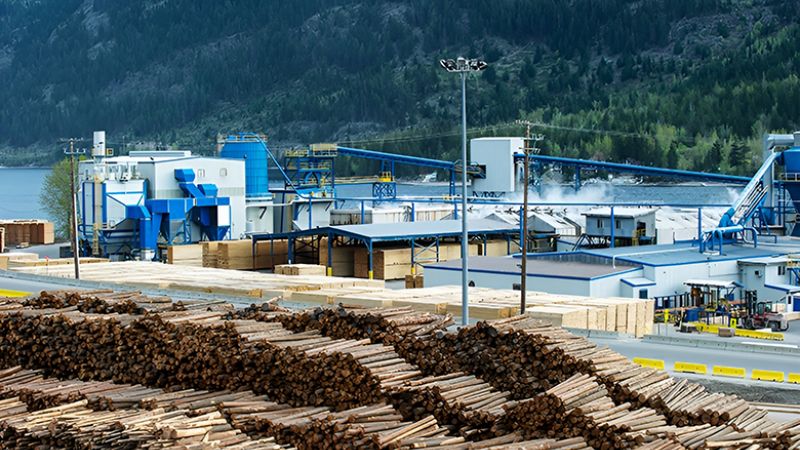


Meet global product demands and quality standards with industry-leading pellet plant design, engineering, equipment, and construction services for pellet processors.

Your Partner Beyond Project Completion
2000+ cases
RICHI is the leading designer, manufacturer and builder of pellet plants in the world, completing over 2000 projects in 140 countries across 6 continents.
Read More
Increase plant productivity, profitability, and safety by integrating high quality equipment into your pellet production line. Over the years, RICHI has become China's top pellet equipment manufacturer. At the same time, RICHI has established valuable partnerships with the world's leading component and raw material manufacturers to bring you the best there is in technology, automation, and efficiency in pelleting plant machinery.

For nearly 30 years, RICHI has been providing best-in-class pellet plant equipment and services to clients across a variety of industries, sizes, and needs. We pride ourselves on the knowledge and skill that each team member possesses – from our technical sales team to our process design engineers. You can count on RICHI Machinery to take your operation to the next level of innovation, quality, and success.
Need help with your pellet manufacturing plant project? Contact us today.
ANIMAL FEED
BIOMASS
WOOD
ORGANIC FERTILIZER
AQUA FEED
CAT LITTER
MUNICIPAL WASTE RECYCLING
SPECIAL PELLET PRODUCTION
RICHI Machinery continues to deliver world class pellet mill equipment, pellet plant engineering and project solutions that add value to our customers in the animal feed, wood waste, agriculture waste, organic fertilizer, cat litter and special pellet products industries. Throughout the years, we RICHI Machinery have built strong brand, becoming industry-leading pellet machine manufacturer. We value integrity, promise quality, and prioritize your success.
Learn MoreWith our expert team, we precisely implement your process engineering requirements in pellet mill and pelletizing plant systems. No matter which industry you’re in – we understand your needs and deliver solutions that meet the highest standards.
At RICHI, quality comes first. Our pellet making machine and related pellet line equipment undergo rigorous quality controls to ensure they meet the highest standards. Rely on products that are durable, safe, and efficient.
With decades of experience in pellet machine and pellet production line production, we have earned a reputation as a trusted partner in various industries. Our expertise allows us to cover a wide range of applications.
Not only do we offer premium pelleting equipment, but we are also experts at designing, building, installing, and maintaining facilities from the ground up. Our expertise is within pellt plant process design, discovering the most efficient, productive, and profitable way to handle your materials in an end-to-end cycle.
○ RICHI MACHINERY
Keeping in touch with us is an effective way to solve all your problems. If you have any needs or questions, please leave your contact information, then RICHI technical consultants will send design, quotation, videos to your mailbox. You can also contact us directly via WhatsApp: +86 13838389622
Copyright©2015-2026 by HENAN RICHI MACHINERY CO., LTD. All rights reserved.