
Biochar pelletizer machine in Philippines for prepared coconut-shell biochar. RICHI MZLH678 provides 2.5–3 t/h for integrated coconut processing.
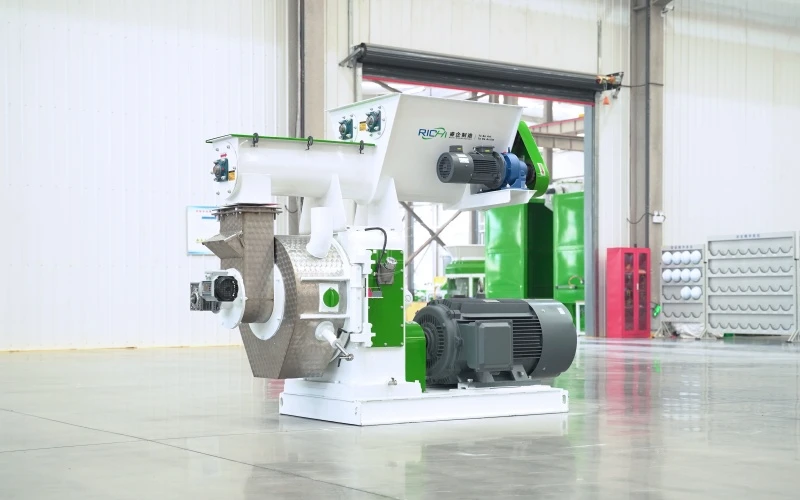
For this Philippine coconut processor, the biochar project began with a simple question: how much of each coconut could become a saleable product? The edible portions already entered established food-processing routes. Coconut water, oil-related products and other fractions had their own uses. Shells, however, opened another possibility. Instead of treating them only as boiler fuel or selling them as a low-processed carbon material, the company planned a dedicated carbonization and pelletizing route.
The biochar pelletizer machine in Philippines project therefore became part of a broader whole-coconut utilization strategy. RICHI Machinery matched the pelletizing stage with one MZLH678, rated at 2.5–3 t/h. The machine would receive prepared coconut-shell biochar after carbonization, cooling and size control—not raw coconut shells directly from the processing floor.
Name:
Biochar Pelletizer Machine
Country:
Philippines
Date:
2026
Capacity:
2.5–3 t/h
Model:
MZLH678
Main Motor Power:
200 kW
Raw Materials:
Coconut shell
Pellet diameter:
6 mm
Coconut processing in the Philippines extends well beyond copra.
The Philippine Coconut Authority identifies several distinct value chains, including coconut oil, desiccated coconut, virgin coconut oil, coir, coconut shell, coconut sap and young coconut products. Government industry planning also records companies that produce charcoal and activated carbon from coconut shells.
That industrial structure made the customer's idea credible.
The company did not need to enter an unfamiliar agricultural supply chain just to obtain biomass. Shells were already generated around its coconut-processing activities.
What changed was the intended conversion depth.
Instead of stopping at shell collection, the project created another route:
coconut processing → shell separation → carbonization → biochar preparation → pelletizing → finished carbon pellets.
Pelletizing was therefore one downstream step inside a larger value chain.
This distinction was established before equipment selection.
Coconut shell is a hard lignocellulosic biomass. Coconut-shell biochar is a thermally converted carbonaceous material. They cannot be treated as the same pelletizing feedstock.
Research on coconut residues confirms that coconut shells can be converted into biochar through thermochemical routes and that production conditions strongly influence the resulting carbon structure and properties.
The customer first carbonizes the prepared shells. The resulting char must then cool before downstream handling.
Only material allocated to pellet production proceeds to further size preparation. Coarse carbonized pieces are reduced where necessary, contaminants are controlled, and the prepared char is brought into a condition suitable for mixing and ring-die forming.
The MZLH678 begins its work after those stages.
This was not a small demonstration project.
The customer already handled coconut materials commercially and expected a regular shell supply from its processing activities. Once the planned carbonization output and the portion assigned to pellets were considered, a 2.5–3 t/h pelletizing section was appropriate.
| ItemPhilippine Project | |
|---|---|
| Equipment | Biochar pelletizer machine |
| Model | MZLH678 |
| Quantity | 1 unit |
| Main Motor | 200 kW |
| Capacity | 2.5–3 t/h |
| Feedstock at Machine Inlet | Prepared coconut-shell biochar |
| Original Biomass | Coconut shell |
| Project Position | Downstream of carbonization |
| Customer Profile | Integrated coconut processor |
RICHI did not calculate this capacity from the number of tonnes of coconuts entering the factory.
Shell represents only one fraction of the whole coconut, carbonization reduces mass further, and not every kilogram of produced char necessarily enters pellet production.
The correct sizing point was the prepared biochar available at the MZLH678 inlet.
The customer had experience handling coconut shell, but that experience did not provide a ready-made pellet recipe for shell biochar.
Thermal conversion changes the material.
The carbonized particles have different binding behavior from untreated biomass, so pressure alone cannot automatically be expected to create a sufficiently durable commercial pellet.
Before production, the customer therefore needed to establish an appropriate particle condition, moisture window and binder strategy.
Binder selection also had to follow the finished product.
A material intended for soil-related use cannot simply adopt an additive because it produces the strongest pellet. Likewise, a carbon product intended for another industrial application may impose different requirements on ash, composition and pellet behavior.
RICHI therefore avoided fixing an unsupported universal binder percentage.
The actual char and target product decide that number.
For this project, quality control did not begin with finished pellets.
It began with the prepared char.
Material entering the MZLH678 needed to meet an acceptable processing condition. If one batch contained unusually coarse particles, uncontrolled moisture or contamination, operators were expected to correct that issue before feeding it into the pelletizer.
This protected production stability.
Once acceptable material entered the machine, controlled feeding kept the pressing chamber supplied. Rollers compressed the prepared mixture through the ring die, and the emerging strands were cut into the required pellet form.
The product then moved through stabilization and screening.
Only after those stages could the customer judge whether pellet integrity was adequate for commercial handling.
Coconut is an agricultural crop, but that did not make this an FZLH fertilizer project.
The feedstock entering the machine was predominantly coconut-shell biochar. The customer was densifying a carbon material rather than granulating a formula dominated by compost, manure or other organic fertilizer ingredients.
RICHI therefore selected the MZLH series.
This distinction leaves room for future product development.
If the same Philippine company later combines its coconut-shell biochar with a substantial proportion of composted poultry manure or another fertilizer base, the material characteristics will change. RICHI would then reassess the process and could move the project toward an FZLH fertilizer pellet machine.
One customer can therefore require different machine families for different biochar-based products.
An integrated processor has another constraint: the biochar section cannot be planned as though nothing else exists around it.
Material routes, vehicle movement, electrical supply, storage and maintenance access already serve other operations.
The MZLH678 installation therefore had to occupy a practical position downstream of char preparation without interfering with the food-processing areas.
Separation was particularly important.
Fine char and carbon dust should not be allowed to migrate unnecessarily toward food-product handling zones. The biochar area required its own appropriate material containment, housekeeping and dust-control arrangements.
That factory-level separation was more relevant to this customer than it would be to a stand-alone carbon plant.
The company did not need every shell to follow the same route.
Some shell material could continue serving existing outlets. Another share could enter carbonization. Within the carbonized output, only the quantity intended for the pellet product needed to reach the MZLH678.
This gave management flexibility when market demand changed.
The pellet machine was not designed to consume shell simply because shell existed. It was there to manufacture a defined product when orders justified that additional processing.
The customer described the strategy in straightforward terms:
"We already process different parts of the coconut into different products. Biochar pellets give the shell another route. The important point is that we can decide how much material enters that route instead of changing the whole factory around one new product."
That was also why the project remained a single-machine-centered retrofit rather than becoming a new complete factory.
After manufacturing and inspection in China, the MZLH678 was prepared for sea transport from Qingdao Port to the Manila port area in the Philippines.
Before shipment arrived, the customer could work from RICHI's technical information to prepare the installation position, foundation, electrical connection and material interfaces.
Commissioning focused on the real coconut-shell biochar rather than treating factory testing as the final operating recipe.
RICHI also provided guidance covering feeding, machine-load observation, ring-die and roller inspection, lubrication, wear parts and troubleshooting when char condition changed.
For a 2.5–3 t/h unit, keeping the upstream preparation section synchronized with the pelletizer was an important part of stable operation.
The Philippine Coconut Authority's industry planning reflects how many different downstream products can come from a coconut. That same principle applies inside this project.
Pelletization is one option for one prepared carbon stream.
It is not automatically the best destination for every coconut shell, every type of char or every customer.
RICHI Machinery therefore evaluates a Philippine biochar project from the final product backward. The original coconut residue must be identified. The carbonization route has to be known. Prepared-char quantity, particle condition, moisture and binder requirements need to be established. The required pellet form and end use then determine how the machine should be configured.
For this integrated coconut processor, those conditions supported one MZLH678 at 2.5–3 t/h.
The value of the machine was not simply that it could press coconut-shell biochar. It allowed an existing coconut company to add another downstream product while keeping the rest of its established coconut value chain intact.
Having the right mix of reliable, high-quality pellet machine and pelletizing systems and expert support is essential to your success. Watch how our end-to-end feed pellet plant solutions have helped our customers optimize their performance.
Our customized and future-proofed turnkey pellet plant solutions is designed with you at the core. From vision to reality and beyond, our team stays connected with yours. Giving you peace-of-mind with an expert at your side.
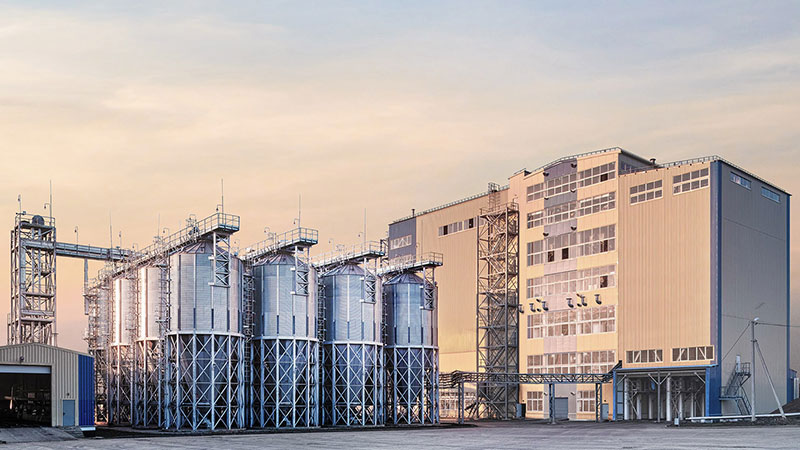
At RICHI, we go beyond project completion. With RICHI Servicee, we’re your dedicated partners in success. Count on us for expert guidance, minimal downtime, and optimized productivity. Choose RICHI for unmatched service and support.
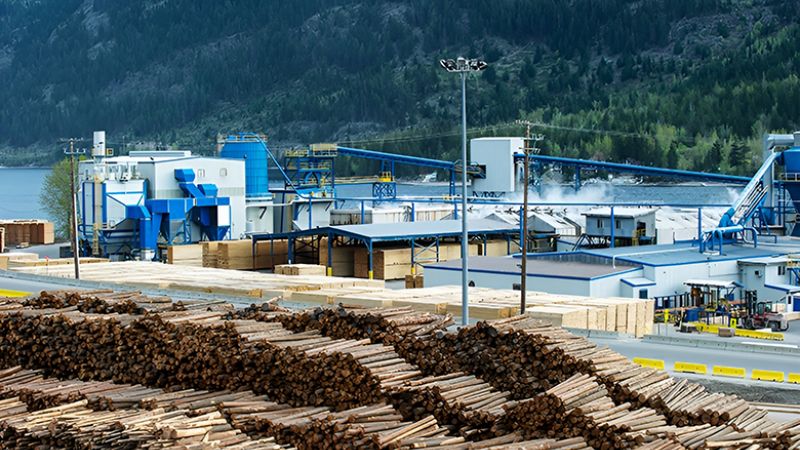


Meet global product demands and quality standards with industry-leading pellet plant design, engineering, equipment, and construction services for pellet processors.

Your Partner Beyond Project Completion
2000+ cases
RICHI is the leading designer, manufacturer and builder of pellet plants in the world, completing over 2000 projects in 140 countries across 6 continents.
Read More
Increase plant productivity, profitability, and safety by integrating high quality equipment into your pellet production line. Over the years, RICHI has become China's top pellet equipment manufacturer. At the same time, RICHI has established valuable partnerships with the world's leading component and raw material manufacturers to bring you the best there is in technology, automation, and efficiency in pelleting plant machinery.

For nearly 30 years, RICHI has been providing best-in-class pellet plant equipment and services to clients across a variety of industries, sizes, and needs. We pride ourselves on the knowledge and skill that each team member possesses – from our technical sales team to our process design engineers. You can count on RICHI Machinery to take your operation to the next level of innovation, quality, and success.
Need help with your pellet manufacturing plant project? Contact us today.
ANIMAL FEED
BIOMASS
WOOD
ORGANIC FERTILIZER
AQUA FEED
CAT LITTER
MUNICIPAL WASTE RECYCLING
SPECIAL PELLET PRODUCTION
RICHI Machinery continues to deliver world class pellet mill equipment, pellet plant engineering and project solutions that add value to our customers in the animal feed, wood waste, agriculture waste, organic fertilizer, cat litter and special pellet products industries. Throughout the years, we RICHI Machinery have built strong brand, becoming industry-leading pellet machine manufacturer. We value integrity, promise quality, and prioritize your success.
Learn MoreWith our expert team, we precisely implement your process engineering requirements in pellet mill and pelletizing plant systems. No matter which industry you’re in – we understand your needs and deliver solutions that meet the highest standards.
At RICHI, quality comes first. Our pellet making machine and related pellet line equipment undergo rigorous quality controls to ensure they meet the highest standards. Rely on products that are durable, safe, and efficient.
With decades of experience in pellet machine and pellet production line production, we have earned a reputation as a trusted partner in various industries. Our expertise allows us to cover a wide range of applications.
Not only do we offer premium pelleting equipment, but we are also experts at designing, building, installing, and maintaining facilities from the ground up. Our expertise is within pellt plant process design, discovering the most efficient, productive, and profitable way to handle your materials in an end-to-end cycle.
○ RICHI MACHINERY
Keeping in touch with us is an effective way to solve all your problems. If you have any needs or questions, please leave your contact information, then RICHI technical consultants will send design, quotation, videos to your mailbox. You can also contact us directly via WhatsApp: +86 13838389622
Copyright©2015-2026 by HENAN RICHI MACHINERY CO., LTD. All rights reserved.