
Biochar pellet press machine in Colombia for coffee-parchment biochar. RICHI MZLH420 provides 1–1.2 t/h for centralized pellet production.
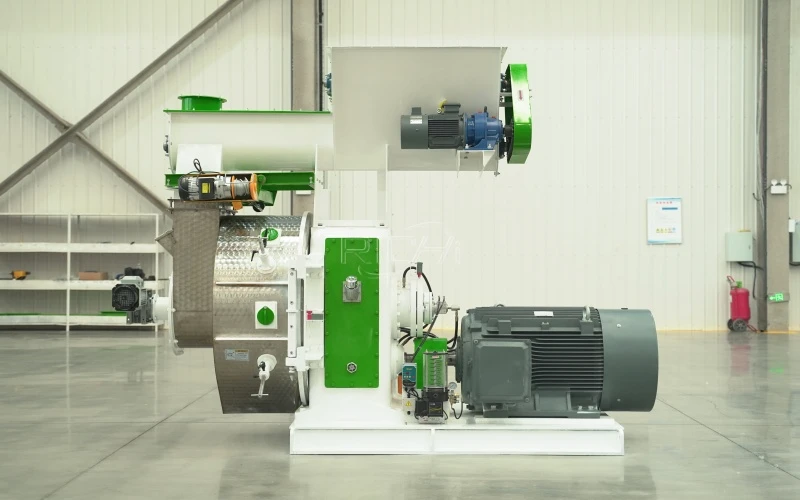
The coffee farms were scattered. The pellet machine did not need to be.
That distinction defined the biochar pellet press machine in Colombia project. A regional coffee cooperative was looking for a practical way to develop a carbon product from coffee-processing residues collected through several member operations. Instead of duplicating pelletizing equipment at every location, the cooperative planned one centralized section where qualified coffee-parchment biochar could be prepared and densified.
RICHI Machinery matched that operating model with one MZLH420 ring die pellet machine. Its 1–1.2 t/h capacity was sufficient for a regional processing hub while remaining realistic for a project supplied by multiple smaller residue sources.
Name:
Biochar Pellet Press
Country:
Colombia
Date:
2026
Capacity:
1–1.2 t/h
Model:
MZLH420
Main Motor Power:
90 kW
Raw Materials:
coffee-processing residues
Pellet diameter:
6 mm
Coffee produces more than beans.
Pulp, mucilage, husk, parchment and other by-products appear at different stages of processing, and those terms should not be used interchangeably. Coffee parchment is the protective endocarp surrounding the bean and becomes a distinct residue during coffee processing.
Research carried out by the University of Antioquia describes coffee parchment as one of the abundant wastes from coffee processing in Colombia and specifically characterized parchment from Colombian Coffea arabica Castillo®.
That made it a logical feedstock for this case.
The cooperative's plan was to collect suitable parchment, convert it through a controlled thermal process and use part of the resulting biochar for pellet production.
The MZLH420 never received untreated parchment.
A single large coffee estate can organize residues around one processing location.
A cooperative has another problem.
Material may arrive from several members, collection volumes may differ, and residue availability follows coffee-processing activity. Installing a pellet mill at each source would create unnecessary equipment duplication and leave individual machines underused for much of the year.
Centralization changed the calculation.
Biochar intended for pelletizing could be accumulated and transferred to one processing hub. The cooperative could then schedule pellet production according to available prepared material rather than trying to operate continuously at every source.
This was why the project did not need a 3–4 t/h MZLH768 simply because the combined cooperative handled substantial quantities of coffee.
The relevant number was much smaller: how much qualified coffee-parchment biochar could consistently reach one pelletizing location?
The answer supported a medium-small commercial unit.
| Project Item |
|
||
|---|---|---|---|
| Core Equipment | Biochar pellet press machine | ||
| Model | MZLH420 | ||
| Quantity | 1 | ||
| Main Motor | 90 kW | ||
| Capacity | 1–1.2 t/h | ||
| Original Residue | Coffee parchment | ||
| Pelletizer Feed | Prepared coffee-parchment biochar | ||
| Customer | Regional coffee cooperative | ||
| Operating Concept | Centralized pelletizing hub |
The MZLH420 provided more capacity than a pilot machine while avoiding a scale that would demand an unrealistically large char flow every operating hour.
It also allowed the cooperative to run planned production campaigns.
Pelletizing could begin after sufficient prepared biochar had been accumulated. When supply was low, the machine did not have to run simply to satisfy a theoretical daily schedule.
Collecting from several sources creates a new risk: variation can be transferred from the farms directly into the factory.
The cooperative therefore needed an acceptance point.
Biochar arriving for pellet production could not be approved solely because its original feedstock had been coffee parchment. The plant still had to look at moisture, particle condition, visible contamination and general consistency.
Material outside the acceptable processing range could be isolated for further preparation.
Approved material moved forward.
This simple separation protected the pelletizing stage from becoming the place where every upstream problem was expected to disappear.
Centralization does not mean indiscriminate mixing.
If different char batches arrive with noticeably different conditions, immediately blending everything into one large pile can make troubleshooting harder.
The Colombian project therefore favored traceable batches.
Material could be received, identified and prepared before controlled blending or pellet production. If one production run later showed unusual feeding behavior or excessive pellet breakage, operators had a better chance of tracing the problem back to the incoming material.
That was particularly useful during the first months of operation.
The cooperative was building production knowledge at the same time it was building a product.
Coffee-parchment biochar is already a thermally altered material.
The natural binding behavior of the original plant tissue cannot simply be assumed to remain after pyrolysis.
Before entering the MZLH420, the char therefore required appropriate size preparation and mixing. Moisture could be adjusted, and a suitable binder could be introduced when the product specification required it.
RICHI did not lock the cooperative into a universal binder percentage.
Different pyrolysis conditions can produce different chars, while the intended pellet strength also affects formulation decisions. The appropriate operating window had to be established with the actual material.
Once prepared char entered the machine, controlled feeding and ring-die compression produced the cylindrical pellet form.
The product was then stabilized and screened before final evaluation.
A centralized facility also has an organizational advantage.
Instead of each member deciding independently what "good biochar" means, the cooperative can establish one set of basic receiving and processing criteria.
Those criteria do not need to become laboratory procedures for every truckload.
They do need to be clear enough for operators to identify material that is too wet, excessively coarse, contaminated or otherwise unsuitable for immediate pellet production.
Finished pellets can be treated in the same way.
Appearance alone is insufficient. The cooperative also needs to observe how well pellets remain intact through screening, bagging and normal transport.
That gives both the supplying members and the central plant a common production language.
The cooperative intended the carbon product for agricultural channels, but the formulation remained predominantly coffee-parchment biochar.
For that reason, RICHI retained the MZLH route.
A different cooperative might want to combine coffee-derived biochar with composted coffee pulp, animal manure or other nutrient-bearing organic ingredients. If those materials became a major part of the finished formula, the project would no longer be equivalent to this one.
An FZLH fertilizer pellet machine could then become the better platform.
The distinction is especially important in coffee regions because one enterprise may have access to several organic residues but choose very different finished products.
Agricultural destination alone does not define the machine.
The investment also changed how the cooperative could think about equipment ownership.
Every member did not need its own pellet press.
Instead, the central facility provided the densification function as shared infrastructure.
Members could concentrate on residue collection and the upstream activities assigned to their operations. The central plant could concentrate on char acceptance, preparation, pelletizing and finished-product control.
The equipment was therefore utilized according to aggregated demand rather than the production rhythm of one farm.
For a cooperative structure, that was more important than maximizing the nameplate capacity of the machine.
The first production run could not prove the project.
A second and third batch mattered more.
RICHI's commissioning work therefore paid attention to how the MZLH420 responded when prepared char from different deliveries entered production.
Operators learned what to check before changing machine settings. They watched feeding stability, motor load, pellet formation and downstream breakage.
When behavior changed, the incoming material was examined alongside the machine.
The cooperative's project manager summarized the benefit this way:
"One machine is easier for us to manage than asking every member to build the same process. The important part is having rules for what comes into the central plant, so the pellet section receives material it can actually process."
The MZLH420 was manufactured and inspected in China before shipment from Qingdao Port to Cartagena, Colombia.
From the seaport, inland transport connected the equipment with the customer's coffee-producing region.
That inland leg mattered during project planning. Delivery to a Colombian port is not the same as delivery to a coffee-processing site in the country's interior.
Before the machine arrived, RICHI supplied information for foundation preparation, electrical connection, inlet and outlet coordination and maintenance clearance. Installation guidance and commissioning support followed, together with training on normal operation, lubrication, ring die and roller inspection and wear-part replacement.
Colombia's coffee industry generates several residue streams at substantial scale. Recent reviews of Colombian coffee by-products describe pulp, mucilage, husk, spent coffee grounds and pruning biomass among the available materials, while separate research confirms the relevance of parchment as a Colombian processing residue.
That does not mean all of those materials belong in this MZLH420.
The strength of the project comes from narrowing the first product rather than widening it indefinitely.
Coffee parchment is identified. It is thermally converted. The resulting biochar is checked. Qualified material reaches one central pelletizing hub. The MZLH420 converts it at 1–1.2 t/h into the required pellet form.
If the cooperative later wants to qualify coffee-husk biochar, pruning-derived biochar or another carbon material, RICHI Machinery can test that feedstock separately.
One shared machine can support future flexibility, but only after each new material earns its place in the process.
Having the right mix of reliable, high-quality pellet machine and pelletizing systems and expert support is essential to your success. Watch how our end-to-end feed pellet plant solutions have helped our customers optimize their performance.
Our customized and future-proofed turnkey pellet plant solutions is designed with you at the core. From vision to reality and beyond, our team stays connected with yours. Giving you peace-of-mind with an expert at your side.
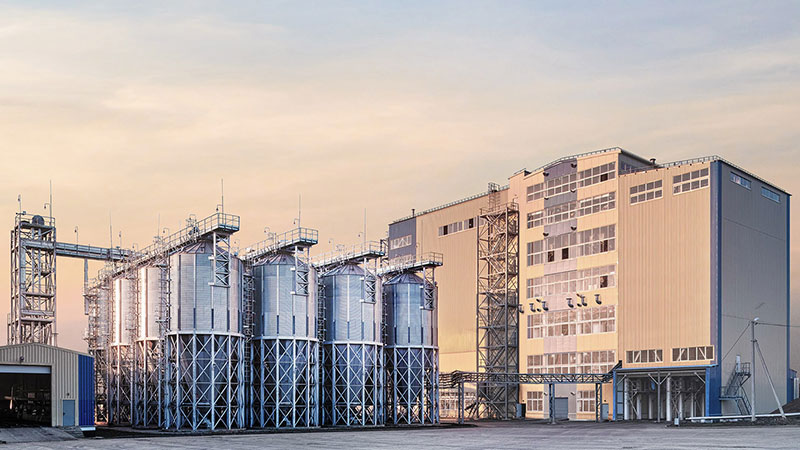
At RICHI, we go beyond project completion. With RICHI Servicee, we’re your dedicated partners in success. Count on us for expert guidance, minimal downtime, and optimized productivity. Choose RICHI for unmatched service and support.
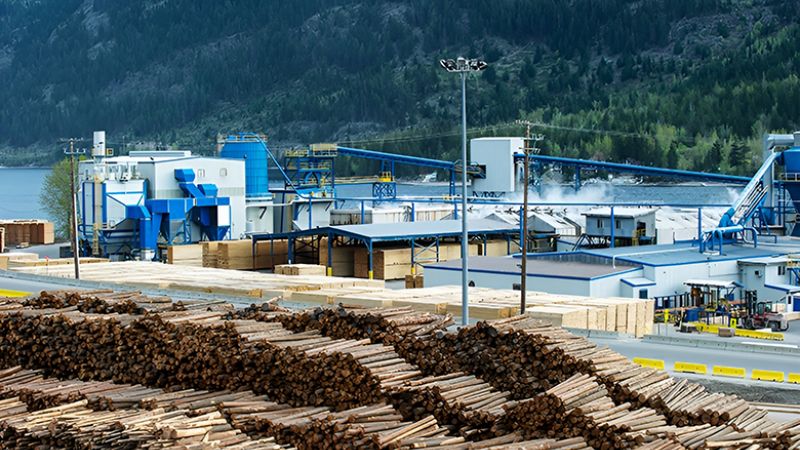


Meet global product demands and quality standards with industry-leading pellet plant design, engineering, equipment, and construction services for pellet processors.

Your Partner Beyond Project Completion
2000+ cases
RICHI is the leading designer, manufacturer and builder of pellet plants in the world, completing over 2000 projects in 140 countries across 6 continents.
Read More
Increase plant productivity, profitability, and safety by integrating high quality equipment into your pellet production line. Over the years, RICHI has become China's top pellet equipment manufacturer. At the same time, RICHI has established valuable partnerships with the world's leading component and raw material manufacturers to bring you the best there is in technology, automation, and efficiency in pelleting plant machinery.

For nearly 30 years, RICHI has been providing best-in-class pellet plant equipment and services to clients across a variety of industries, sizes, and needs. We pride ourselves on the knowledge and skill that each team member possesses – from our technical sales team to our process design engineers. You can count on RICHI Machinery to take your operation to the next level of innovation, quality, and success.
Need help with your pellet manufacturing plant project? Contact us today.
ANIMAL FEED
BIOMASS
WOOD
ORGANIC FERTILIZER
AQUA FEED
CAT LITTER
MUNICIPAL WASTE RECYCLING
SPECIAL PELLET PRODUCTION
RICHI Machinery continues to deliver world class pellet mill equipment, pellet plant engineering and project solutions that add value to our customers in the animal feed, wood waste, agriculture waste, organic fertilizer, cat litter and special pellet products industries. Throughout the years, we RICHI Machinery have built strong brand, becoming industry-leading pellet machine manufacturer. We value integrity, promise quality, and prioritize your success.
Learn MoreWith our expert team, we precisely implement your process engineering requirements in pellet mill and pelletizing plant systems. No matter which industry you’re in – we understand your needs and deliver solutions that meet the highest standards.
At RICHI, quality comes first. Our pellet making machine and related pellet line equipment undergo rigorous quality controls to ensure they meet the highest standards. Rely on products that are durable, safe, and efficient.
With decades of experience in pellet machine and pellet production line production, we have earned a reputation as a trusted partner in various industries. Our expertise allows us to cover a wide range of applications.
Not only do we offer premium pelleting equipment, but we are also experts at designing, building, installing, and maintaining facilities from the ground up. Our expertise is within pellt plant process design, discovering the most efficient, productive, and profitable way to handle your materials in an end-to-end cycle.
○ RICHI MACHINERY
Keeping in touch with us is an effective way to solve all your problems. If you have any needs or questions, please leave your contact information, then RICHI technical consultants will send design, quotation, videos to your mailbox. You can also contact us directly via WhatsApp: +86 13838389622
Copyright©2015-2026 by HENAN RICHI MACHINERY CO., LTD. All rights reserved.