
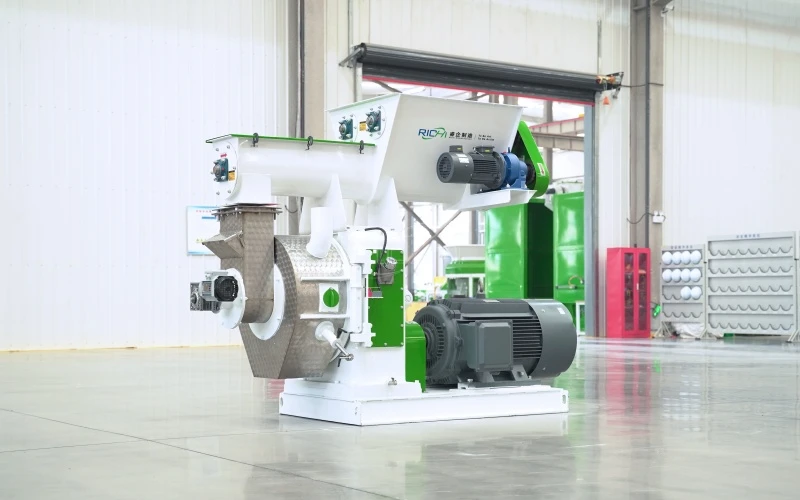
Biochar pellet press in South Africa for macadamia-shell char fines. The project uses one MZLH420 with 1–1.2 t/h capacity and a 90 kW main motor.
Several containers of fine black material were the starting point for this project. A South African macadamia processor had been sending shells into a thermal conversion route, but the carbonized product did not all leave the plant in the same form. After crushing and grading, a fine fraction remained. It was usable carbon material, yet awkward to package and noticeably dustier than the coarser product.
The company did not want another carbonizer. Nor did it want a large new production line. What it needed was one biochar pellet press capable of taking a controlled stream of prepared macadamia-shell char and turning it into a denser product. RICHI Machinery eventually matched the job with one MZLH420, providing 1–1.2 t/h from a 90 kW main motor.
Name:
Biochar Pellet Machine
Country:
South Africa
Date:
2025
Capacity:
1–1.2 T/H
Model:
MZLH420
Main Motor Power:
90kW
Raw Materials:
Macadamia nutshell
Pellet diameter:
6 mm
Nothing was wrong with the carbonization stage.
The problem appeared later.
Coarser char could follow the customer's established route, while fine material was less convenient to move through storage and packing. Repeated transfer created additional dust, and its low bulk density meant that a relatively small mass occupied considerable space.
Pelletizing offered another option: keep the carbon material, change its physical form.
This also meant there was no reason to grind all of the customer's macadamia-shell char into powder. Only the fraction assigned to pellet production was collected and prepared. Saleable coarse carbon products remained untouched.
That decision kept the retrofit small and prevented the new machine from interfering with the company's existing business.
Macadamia nutshell is a hard biomass residue with useful carbon characteristics after thermal conversion. Research has reported low ash in raw macadamia shell compared with many other biomass materials and has demonstrated that pyrolyzed macadamia shell can produce a carbon-rich char.
Those characteristics make it an interesting carbon feedstock, but they do not guarantee successful pellet formation.
A hard shell before pyrolysis and a durable pellet after pyrolysis are two different things.
Once the shell has been thermally converted and crushed, the fine char has lost much of the original biomass structure that would otherwise contribute to natural binding. The customer's carbon powder therefore required preparation before it could be compressed reliably.
That preparation—not simply motor power—became the key to the project.
The proposed installation point sat between equipment the customer intended to keep.
Upstream, the plant already had carbonization, cooling, crushing and grading functions. Downstream, it could use existing handling and packing resources after suitable product stabilization.
RICHI consequently concentrated on the interface around the new machine.
The questions were practical:
Answering those questions was more useful than redesigning parts of the factory that were already doing their jobs.
The customer had more total carbonized material than the pellet machine would process. That did not justify choosing a larger model.
Only a selected fine-char stream was allocated to pellets.
For this reason, the 1–1.2 t/h MZLH420 fitted the actual material balance better than sizing equipment from total shell intake or total char production.
| Item | Info |
|---|---|
| Core Equipment | Biochar pellet press |
| Model | MZLH420 |
| Quantity | 1 |
| Main Motor | 90 kW |
| Capacity | 1–1.2 t/h |
| Carbon Source | Macadamia nutshell |
| Feed to Pelletizer | Prepared macadamia-shell char fines |
| Installation | Retrofit into existing operation |
The choice also avoided unnecessary installed power.
A bigger pellet mill sitting half-fed for much of the shift would not increase useful production. In a residue-recovery project, upstream availability has to control machine sizing.
Before stable pellet production could begin, the fine char needed a reasonably uniform particle condition.
Large fragments were removed or reduced. The prepared fraction then entered mixing, where moisture could be adjusted and binder introduced when required.
RICHI did not prescribe a fixed binder percentage for every batch.
The appropriate amount depends on how the shell was carbonized, the fineness of the resulting char and the mechanical strength expected from the finished pellet. Increasing binder simply to make an exceptionally hard pellet would add cost and could alter the characteristics of the carbon product.
The trial objective was narrower: produce enough cohesion for the pellets to survive normal conveying, screening, storage and transport.
Stable preparation also helped the MZLH420 receive material more evenly. Very light powder arriving in surges would make machine loading less predictable.
The word biochar can easily lead to the wrong equipment assumption.
Some biochar ends up in agricultural products. Other biochar is used as a carbon material. Still other projects combine char with compost, manure or nutrient ingredients.
The South African customer was densifying predominantly macadamia-shell char.
There was no major compost or manure fraction that would turn the product into a conventional biochar-based organic fertilizer. RICHI therefore used the MZLH series rather than selecting an FZLH fertilizer pellet machine merely because biochar can have agricultural applications.
If the customer's formulation changes substantially in the future, the machine route should be reviewed again.
Application alone does not decide the pelletizer. Composition does.
The first visual check was easy: were continuous pellets being formed?
The more useful test came later.
Pellets were allowed to stabilize and then passed through normal downstream handling. Screening showed how much material remained intact and how much returned to fines.
That result guided subsequent adjustments.
If breakage was high, operators checked material preparation, moisture, binder distribution, feed stability and compression conditions instead of immediately blaming the die. If motor load became unstable, upstream feeding and raw-material consistency were investigated.
The aim was to give operators a troubleshooting sequence they could use after RICHI technicians were no longer standing beside the machine.
Once the carbon is properly pelletized, normal handling becomes easier. Before the die, however, the plant is still dealing with fine char.
That part of the process deserved attention.
The retrofit therefore favored controlled transfer rather than unnecessary open drops. Dust collection and housekeeping around fine-char preparation, mixing and feeding had to be considered according to the customer's plant conditions.
Site-specific fire and combustible-dust risks also need appropriate assessment.
RICHI did not treat pelletization as a substitute for those controls. The machine changes the physical form of the finished material; it does not make upstream carbon dust irrelevant.
After commissioning, the production team was less interested in headline capacity than in whether the new section could run without disturbing its established carbon products.
That was the test the retrofit needed to pass.
The customer's feedback reflected it:
"We wanted to use the fine material without changing the rest of our operation. The new section gives us that option. We can decide how much char goes to pelletizing according to the product we need."
That flexibility was one reason a single MZLH420 worked better than building a dedicated high-capacity line.
The machine was inspected and prepared for sea freight at Qingdao Port before shipment to Durban, South Africa.
Since the destination factory was already operating, site preparation could proceed while the equipment was in transit. Machine dimensions, foundation information, electrical requirements and interface details allowed the customer to prepare the installation area in advance.
RICHI's work continued through installation guidance, commissioning support and operator training. Wear-part planning was also discussed because a carbon-processing plant needs to consider the condition and mineral content of the actual char when establishing maintenance intervals.
Macadamia-shell biochar has been investigated for applications well beyond simple densification, including adsorption and other carbon-material uses. That variety is precisely why a machine should not be selected from the feedstock name alone.
One producer may want robust carbon pellets for transport. Another may need a product that later breaks down in soil. A third may blend biochar heavily with compost and require an FZLH fertilizer route instead. An industrial carbon product may impose completely different requirements on binder, ash and pellet durability.
For the South African customer, the requirement was simpler: recover a useful macadamia-shell char fraction already present in the factory and give it a more manageable form.
That requirement led to one MZLH420—not a new carbonization plant, not an oversized pellet line, and not fertilizer equipment.
For another project, RICHI Machinery would start again with the char itself: source biomass, pyrolysis condition, particle size, moisture, available fine-char tonnage, desired pellet form and final application. Those details determine what the machine needs to do.
Having the right mix of reliable, high-quality pellet machine and pelletizing systems and expert support is essential to your success. Watch how our end-to-end feed pellet plant solutions have helped our customers optimize their performance.
Our customized and future-proofed turnkey pellet plant solutions is designed with you at the core. From vision to reality and beyond, our team stays connected with yours. Giving you peace-of-mind with an expert at your side.
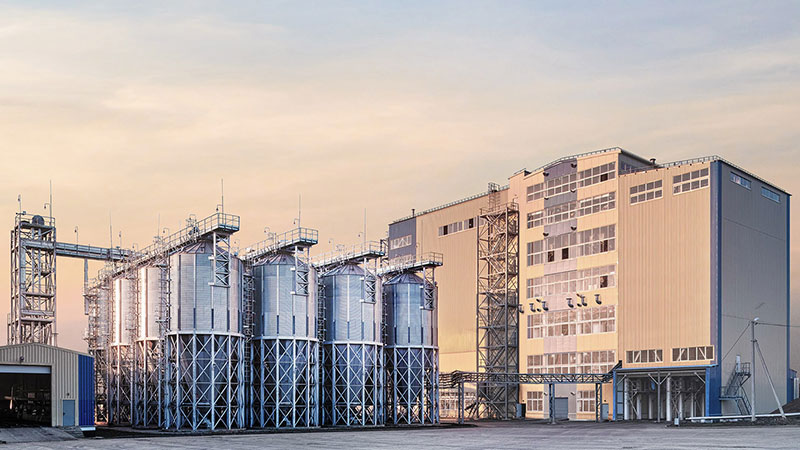
At RICHI, we go beyond project completion. With RICHI Servicee, we’re your dedicated partners in success. Count on us for expert guidance, minimal downtime, and optimized productivity. Choose RICHI for unmatched service and support.
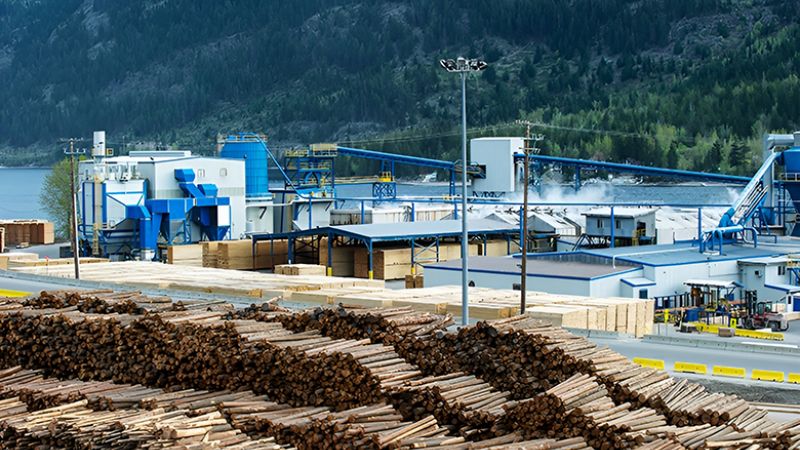


Meet global product demands and quality standards with industry-leading pellet plant design, engineering, equipment, and construction services for pellet processors.

Your Partner Beyond Project Completion
2000+ cases
RICHI is the leading designer, manufacturer and builder of pellet plants in the world, completing over 2000 projects in 140 countries across 6 continents.
Read More
Increase plant productivity, profitability, and safety by integrating high quality equipment into your pellet production line. Over the years, RICHI has become China's top pellet equipment manufacturer. At the same time, RICHI has established valuable partnerships with the world's leading component and raw material manufacturers to bring you the best there is in technology, automation, and efficiency in pelleting plant machinery.

For nearly 30 years, RICHI has been providing best-in-class pellet plant equipment and services to clients across a variety of industries, sizes, and needs. We pride ourselves on the knowledge and skill that each team member possesses – from our technical sales team to our process design engineers. You can count on RICHI Machinery to take your operation to the next level of innovation, quality, and success.
Need help with your pellet manufacturing plant project? Contact us today.
ANIMAL FEED
BIOMASS
WOOD
ORGANIC FERTILIZER
AQUA FEED
CAT LITTER
MUNICIPAL WASTE RECYCLING
SPECIAL PELLET PRODUCTION
RICHI Machinery continues to deliver world class pellet mill equipment, pellet plant engineering and project solutions that add value to our customers in the animal feed, wood waste, agriculture waste, organic fertilizer, cat litter and special pellet products industries. Throughout the years, we RICHI Machinery have built strong brand, becoming industry-leading pellet machine manufacturer. We value integrity, promise quality, and prioritize your success.
Learn MoreWith our expert team, we precisely implement your process engineering requirements in pellet mill and pelletizing plant systems. No matter which industry you’re in – we understand your needs and deliver solutions that meet the highest standards.
At RICHI, quality comes first. Our pellet making machine and related pellet line equipment undergo rigorous quality controls to ensure they meet the highest standards. Rely on products that are durable, safe, and efficient.
With decades of experience in pellet machine and pellet production line production, we have earned a reputation as a trusted partner in various industries. Our expertise allows us to cover a wide range of applications.
Not only do we offer premium pelleting equipment, but we are also experts at designing, building, installing, and maintaining facilities from the ground up. Our expertise is within pellt plant process design, discovering the most efficient, productive, and profitable way to handle your materials in an end-to-end cycle.
○ RICHI MACHINERY
Keeping in touch with us is an effective way to solve all your problems. If you have any needs or questions, please leave your contact information, then RICHI technical consultants will send design, quotation, videos to your mailbox. You can also contact us directly via WhatsApp: +86 13838389622
Copyright©2015-2026 by HENAN RICHI MACHINERY CO., LTD. All rights reserved.