
Biochar pellet mill machine in Kenya for coffee-husk and wood-residue biochar. One MZLH350 provides 0.3–0.5 t/h for separate commercial production campaigns.
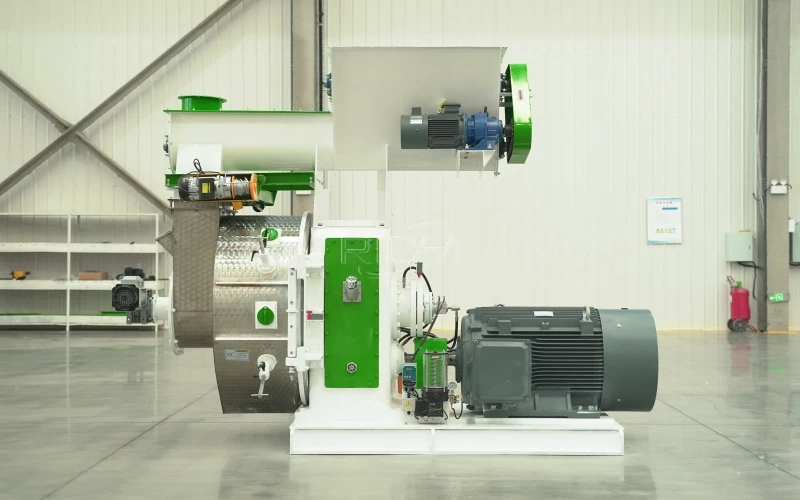
Coffee harvests did not provide this Kenyan processor with the same carbon feedstock every month of the year. Nor did the company want a pellet machine that could earn its keep only when coffee husk biochar was available. Its purchasing brief was therefore unusual: select a biochar pellet mill machine in Kenya that could run separate campaigns of coffee-husk biochar and locally sourced wood-residue biochar without pretending that the two materials were identical.
The answer was one MZLH350. With a 37 kW main motor and 0.3–0.5 t/h capacity, the machine suited the company's decentralized raw-material model better than a large continuous-production unit. Production could be scheduled in batches, settings could be adjusted when the char source changed, and the customer did not need several pelletizers for several agricultural residues.
Name:
Biochar Pellet Mill
Country:
Kenya
Date:
2025
Capacity:
0.3–0.5 t/h
Model:
MZLH350
Main Motor Power:
37 kW
Raw Materials:
Coffee husk biochar
Pellet diameter:
6 mm
There was one rule from the beginning: coffee-husk char and sawdust-derived char would not be dumped together simply to create a convenient "mixed biochar."
Each material had its own production batch.
Coffee-husk biochar was received, checked, prepared and pelletized according to its condition. When the factory changed to wood-residue biochar, the operating parameters were reviewed again.
That separation mattered because feedstock has a strong influence on biochar properties.
Recent research in western Kenya produced biochar from coffee husk, sugarcane bagasse and wood sawdust under the same pyrolysis conditions and still found clear differences between the resulting chars, including differences in bulk density and porosity.
The customer therefore bought flexibility, not a universal recipe.
Kenya has diverse biomass resources, but those resources are not distributed evenly.
A 2026 assessment found substantial potentially available crop and forest residues across the country while also showing strong geographical variation in residue type, quantity, density and supply uncertainty. Maize stalks were widespread, whereas other resources were more regionally concentrated.
For a smaller processor, that creates a practical decision.
One option is to build the entire business around a single residue and accept periods when supply becomes less convenient. Another is to qualify several suitable feedstocks and switch production campaigns when required.
This customer chose the second route.
The pellet machine therefore had to be small enough for controlled batch production but industrial enough to move beyond laboratory-scale product development.
An MZLH320 would have provided only 0.2–0.3 t/h. The MZLH350 increased the working range to 0.3–0.5 t/h without moving the project into a multi-ton-per-hour material requirement that the customer could not guarantee throughout the year.
| Project ParameterKenya Configuration | |
|---|---|
| Core Equipment | Biochar pellet mill machine |
| Model | MZLH350 |
| Main Motor | 37 kW |
| Capacity | 0.3–0.5 t/h |
| Quantity | 1 unit |
| Primary Char | Coffee husk biochar |
| Alternative Char | Wood-residue / sawdust biochar |
| Production Method | Separate material campaigns |
| Project Scale | Small commercial production |
This was not a compromise between two machine models. It was a deliberate match to the way the customer sourced material.
The machine could be supplied consistently during a production campaign without requiring the business to accumulate enough char for a 2–4 t/h plant.
Switching biochar did not mean emptying one bag and opening another.
Before a new campaign, operators checked the incoming material.
Particle condition came first. Coarse carbonized fragments could not be allowed to create irregular feeding simply because the previous char had been finer. Moisture was checked again rather than inherited from the previous production record.
Binder demand also had to be reassessed.
Coffee-husk char can differ physically from wood-derived char even when both are produced under controlled conditions. A binder and moisture combination that gives acceptable pellet integrity with one material may therefore require adjustment with the other.
RICHI's operating guidance centered on these observations rather than issuing a single setting sheet labelled "biochar."
Once an acceptable batch reached the MZLH350, the mechanical sequence remained familiar.
Prepared material entered through controlled feeding. The rollers forced it through the ring die. Formed strands were cut and transferred for stabilization and screening.
What changed was the operating window.
Feeder rate could require correction. Moisture adjustment could move. Pellet breakage could respond differently. Motor load provided another clue to how the current material was behaving under compression.
Operators recorded those differences by material.
Over time, the customer could build separate operating references for coffee-husk biochar and wood-derived biochar rather than averaging both into settings that were ideal for neither.
Another decision reduced unnecessary production problems: not every batch of char had to be pelletized.
Material with unsuitable contamination, uncontrolled moisture or excessively inconsistent particle condition was held back for correction or another appropriate use.
This prevented the pellet machine from becoming a device expected to repair upstream quality problems.
It also gave the customer a clearer quality-control point.
The inlet specification determined whether the char was ready. The pelletizer then performed densification.
That separation is particularly useful when raw material comes from more than one residue stream.
Both coffee-husk and wood-derived biochars can be considered for soil-related applications. Kenyan field research has already evaluated locally produced biochars from feedstocks including coffee husks, maize residues and coconut shells in smallholder farming contexts.
But the Kenyan customer's pellets remained predominantly biochar.
There was no substantial composted-manure base or compound organic fertilizer formulation. The MZLH series therefore remained the appropriate route for this case.
If the business later decides to blend biochar heavily with compost, manure or other fertilizer ingredients, RICHI would evaluate that product separately and consider the FZLH fertilizer pellet machine series.
The machine family follows the material formulation, not the fact that a product may eventually be used on farmland.
Multi-feedstock production introduces a practical issue that does not matter as much in a single-material plant: changeover.
The customer needed to avoid leaving unnecessary quantities of the previous char throughout feeding and preparation equipment when switching products.
Production planning therefore included running down the previous batch, clearing relevant material-contact areas and preparing the next char before restarting.
This was not pharmaceutical-grade cross-contamination control. The products were carbon materials.
Still, controlled changeover helped the customer keep batch identity clear and made operating records more meaningful.
If a pellet-quality problem appeared, the team could relate it to the correct raw material instead of an uncontrolled mixture remaining inside the system.
The first lesson was simple: a machine capable of processing both materials did not make them behave the same way.
The production team became more confident once it stopped searching for one perfect setting.
Their feedback was:
"We expected to adjust the machine when we changed material, but the useful part was learning what to check before making those adjustments. Now we keep separate production records for each char instead of treating everything as one black powder."
That operating discipline became more valuable than forcing identical output from every batch.
The MZLH350 was shipped by sea from Qingdao Port to Mombasa Port, Kenya.
Before arrival, the customer received the information needed to prepare the machine position, electrical connection and surrounding access. Because production involved material changeovers, the layout also needed practical access to feeding and material-contact areas rather than placing the pelletizer tightly between structures that would make cleaning difficult.
RICHI provided installation guidance, commissioning support and operator training, followed by assistance with normal maintenance, die and roller inspection, lubrication and process troubleshooting.
A recent national assessment estimated that Kenya has diverse crop and forest residue resources with potential for biochar production, but it also warned that plant siting involves trade-offs between residue quantity, density and supply uncertainty.
That makes a flexible project attractive in the right circumstances, but it does not mean every available residue should be fed into one pellet machine.
Each new char still needs evaluation.
Maize-stalk char would not automatically inherit the coffee-husk settings. Sugarcane-bagasse char would require its own assessment. A high-ash material could introduce another set of wear and product-quality considerations.
For this project, RICHI Machinery deliberately limited the initial production plan to two qualified carbonized feedstocks and one appropriately sized MZLH350.
The result was not a "machine for anything." It was a small commercial biochar pellet mill machine that allowed a Kenyan processor to change raw-material campaigns without building its business around one residue source or pretending that different biochars could share one recipe.
Having the right mix of reliable, high-quality pellet machine and pelletizing systems and expert support is essential to your success. Watch how our end-to-end feed pellet plant solutions have helped our customers optimize their performance.
Our customized and future-proofed turnkey pellet plant solutions is designed with you at the core. From vision to reality and beyond, our team stays connected with yours. Giving you peace-of-mind with an expert at your side.
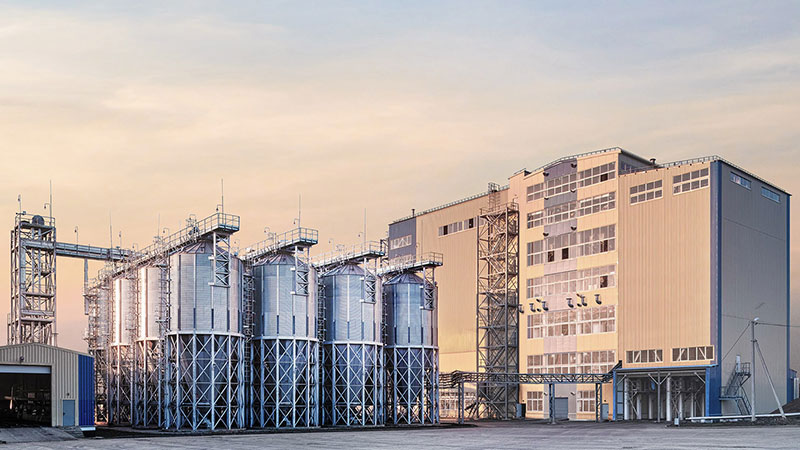
At RICHI, we go beyond project completion. With RICHI Servicee, we’re your dedicated partners in success. Count on us for expert guidance, minimal downtime, and optimized productivity. Choose RICHI for unmatched service and support.
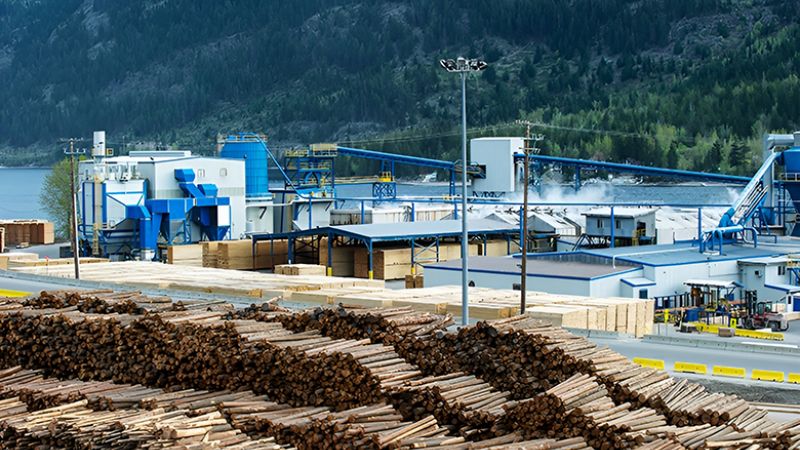


Meet global product demands and quality standards with industry-leading pellet plant design, engineering, equipment, and construction services for pellet processors.

Your Partner Beyond Project Completion
2000+ cases
RICHI is the leading designer, manufacturer and builder of pellet plants in the world, completing over 2000 projects in 140 countries across 6 continents.
Read More
Increase plant productivity, profitability, and safety by integrating high quality equipment into your pellet production line. Over the years, RICHI has become China's top pellet equipment manufacturer. At the same time, RICHI has established valuable partnerships with the world's leading component and raw material manufacturers to bring you the best there is in technology, automation, and efficiency in pelleting plant machinery.

For nearly 30 years, RICHI has been providing best-in-class pellet plant equipment and services to clients across a variety of industries, sizes, and needs. We pride ourselves on the knowledge and skill that each team member possesses – from our technical sales team to our process design engineers. You can count on RICHI Machinery to take your operation to the next level of innovation, quality, and success.
Need help with your pellet manufacturing plant project? Contact us today.
ANIMAL FEED
BIOMASS
WOOD
ORGANIC FERTILIZER
AQUA FEED
CAT LITTER
MUNICIPAL WASTE RECYCLING
SPECIAL PELLET PRODUCTION
RICHI Machinery continues to deliver world class pellet mill equipment, pellet plant engineering and project solutions that add value to our customers in the animal feed, wood waste, agriculture waste, organic fertilizer, cat litter and special pellet products industries. Throughout the years, we RICHI Machinery have built strong brand, becoming industry-leading pellet machine manufacturer. We value integrity, promise quality, and prioritize your success.
Learn MoreWith our expert team, we precisely implement your process engineering requirements in pellet mill and pelletizing plant systems. No matter which industry you’re in – we understand your needs and deliver solutions that meet the highest standards.
At RICHI, quality comes first. Our pellet making machine and related pellet line equipment undergo rigorous quality controls to ensure they meet the highest standards. Rely on products that are durable, safe, and efficient.
With decades of experience in pellet machine and pellet production line production, we have earned a reputation as a trusted partner in various industries. Our expertise allows us to cover a wide range of applications.
Not only do we offer premium pelleting equipment, but we are also experts at designing, building, installing, and maintaining facilities from the ground up. Our expertise is within pellt plant process design, discovering the most efficient, productive, and profitable way to handle your materials in an end-to-end cycle.
○ RICHI MACHINERY
Keeping in touch with us is an effective way to solve all your problems. If you have any needs or questions, please leave your contact information, then RICHI technical consultants will send design, quotation, videos to your mailbox. You can also contact us directly via WhatsApp: +86 13838389622
Copyright©2015-2026 by HENAN RICHI MACHINERY CO., LTD. All rights reserved.