
A 1–1.2 T/H MZLH420 biochar pellet mill in Australia densifies woody-residue biochar for easier storage, blending, transport and agricultural application.
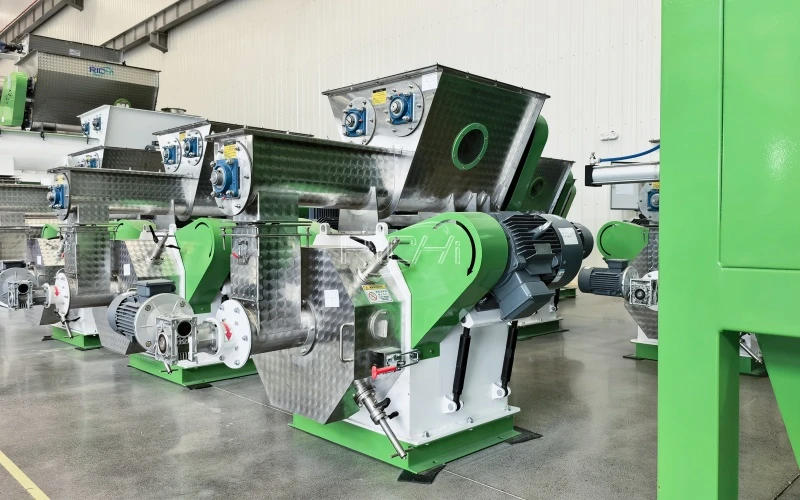
The biochar pellet mill in Australia was supplied to an agricultural soil-input producer developing a pelletized biochar product for easier storage, controlled blending and mechanical field application. Unlike loose biochar powder, the customer's target product needed enough physical integrity to pass through normal handling and application equipment without generating excessive fines before reaching the farm.
The company already sourced woody-residue biochar from a regional pyrolysis partner and had its own blending, screening and bagging facilities. It did not need another carbonization system or a complete pellet production line. After evaluating the available quantity of prepared biochar, existing equipment and intended agricultural application, RICHI Machinery supplied one MZLH420 biochar pellet mill with a rated capacity of 1–1.2 t/h.
Name:
Biochar Pellet Mill
Country:
Australia
Date:
2025
Capacity:
1–1.2 T/H
Model:
MZLH420
Main Motor Power:
90 kW
Raw Materials:
Woody-residue biochar
Pellet diameter:
6 mm
The project began with an application problem rather than a biochar production problem.
The Australian customer could already obtain biochar made from suitable woody and forestry residues. The loose material was usable as a soil amendment, but its low bulk density and dusty physical form made storage, blending, transport and controlled field distribution less convenient.
The company therefore wanted to manufacture a densified product that agricultural distributors and larger farms could handle more predictably.
Pelletization was not intended to prove that pelletized biochar is agronomically superior to powder. The purpose was physical handling.
This distinction determined the machine configuration. The pellet needed enough strength for conveying, bagging and distribution but did not need to become an extremely hard fuel pellet that would resist breakdown indefinitely after soil application.
Australia has a wide range of biomass streams that can be converted to biochar, and research in the country has evaluated chars derived from forestry residues, green waste, wood waste, crop residues and other organic feedstocks.
For this project, the customer's principal material was woody-residue biochar produced from clean forestry and land-management biomass.
The material arrived already carbonized and cooled.
That point matters because a biochar pellet mill does not replace a pyrolysis plant. RICHI's equipment began with the prepared char, not with raw branches or wood chips.
Before pelletizing, coarse char fragments were reduced and screened. The customer wanted a reasonably consistent fine fraction because irregular chunks can disturb feeding and produce uneven compression through the ring die.
The prepared material was then mixed with controlled moisture and a small amount of application-compatible binder.
Although the original feedstock was woody biomass, the material entering the pellet mill was no longer wood.
Pyrolysis changes the physical and chemical structure of biomass. The carbonized material becomes more brittle and loses much of the natural binding behavior associated with untreated lignocellulosic feedstock.
For that reason, RICHI did not apply ordinary wood-pellet settings to this project.
The customer needed to coordinate three variables: char particle condition, moisture and binder.
Too little binding can produce pellets that look acceptable at the die but break during screening or transport. Excessive binder may improve mechanical strength but unnecessarily change the composition and cost of an agricultural biochar product.
The objective was therefore a practical handling strength rather than maximum hardness.
The customer's available prepared-biochar stream was approximately aligned with a 1 t/h class pelletizing section. This made the MZLH420 a more appropriate choice than installing a much larger machine that the upstream preparation system could not continuously feed.
| Project ItemConfiguration | |
|---|---|
| Equipment | Biochar pellet mill |
| Model | MZLH420 |
| Quantity | 1 unit |
| Main Motor Power | 90 kW |
| Rated Capacity | 1–1.2 t/h |
| Main Material | Woody-residue biochar |
| Product Route | Agricultural biochar pellets |
| Project Type | Addition to existing processing facility |
The MZLH420 also differentiated this project from a fertilizer-granulation application.
The finished product remained predominantly densified biochar. The customer was not combining the char with composted manure or another organic fertilizer base, so an FZLH fertilizer pellet machine was not selected.
If the formulation later changes into a biochar-compost or biochar-manure fertilizer product, RICHI would reassess the granulation route instead of assuming the same machine remains optimal.
The customer did not need very small pellets.
A medium-sized cylindrical pellet was preferred because the product would be bagged, transported and subsequently distributed or blended for agricultural use. The exact die specification was therefore considered together with pellet durability and the customer's application equipment.
Making the pellet unnecessarily small would increase forming resistance without providing a clear advantage for this use.
Making it excessively large could reduce dosing uniformity.
RICHI therefore treated pellet diameter as an agricultural handling decision rather than copying a standard biomass-fuel pellet specification.
One reason the customer chose a single biochar pelletizing machine was that much of the surrounding process was already available.
The facility had material storage, screening, blending and bagging functions. RICHI reviewed how the new pellet mill would connect with those systems rather than proposing that usable equipment be discarded.
The main retrofit questions concerned continuous feed availability, electrical load, machine foundation, inlet and discharge height, downstream stabilization and maintenance access.
Cooling and screening after pelletization were also important. Newly formed pellets have to stabilize before normal packaging, while broken material and loose fines should be separated instead of being packed with the saleable product.
Suitable screened fines can be returned to the preparation stage, reducing unnecessary material loss.
Loose biochar requires careful handling because fine carbonaceous particles can become airborne during transfer.
Pelletization can substantially change that handling condition, but it does not eliminate the need for dust management inside the factory.
The customer therefore needed controlled transfer around char preparation, mixing and feeding, where the material was still predominantly powder.
Enclosed conveying, appropriate local extraction and good housekeeping are particularly relevant before the biochar becomes a stable pellet.
RICHI also advised that site-specific fire and dust-risk measures should be based on the actual char characteristics and applicable Australian requirements rather than assuming all biochars behave identically.
This distinction was important during equipment selection.
The pellets were intended for agricultural soil application, but agricultural use alone does not automatically make a product an organic fertilizer pellet.
The customer's product was principally biochar.
No manure, compost or digestate base was included simply to justify using fertilizer equipment. This is why the MZLH ring die route remained appropriate for the project.
A different Australian customer producing, for example, a mixture of poultry-manure compost and biochar could require an FZLH fertilizer pellet machine instead.
RICHI therefore matches the equipment to the formulation rather than choosing a machine based only on the words "soil amendment."
During trial operation, technicians checked feeding stability, motor load, die discharge and the amount of breakage after the pellets had passed through downstream handling.
The target was not the hardest pellet the machine could possibly produce.
For an agricultural biochar product, excessive mechanical strength may offer little benefit if the pellet ultimately needs to interact with soil and moisture after application.
The customer instead needed enough integrity to survive normal commercial logistics.
Adjustment therefore focused on balancing moisture, binder addition, feed rate and compression rather than simply increasing one parameter whenever fines appeared.
Operators were also trained to recognize changes in incoming biochar. A different particle-size distribution or moisture condition can require operating adjustments even when the original biomass source remains the same.
The customer's main concern before installation was whether densification could be added without rebuilding the existing facility.
After commissioning, the production team found that the MZLH420 could be integrated with the material-preparation and packing functions already in use.
The customer commented:
"The reason for adding pelletizing was practical handling. We already had the biochar, but we wanted a product that was easier to meter, pack and move through the agricultural supply chain. Keeping the equipment we already had was also important."
The feedback reflects the real purpose of this project: changing product form rather than building another pyrolysis operation.
The MZLH420 was manufactured and inspected before being packed for ocean shipment from Qingdao Port, China, to Melbourne, Australia.
Because the machine was being installed inside an existing facility, technical communication began before delivery. RICHI reviewed installation dimensions, feeding and discharge connections, electrical requirements and maintenance space so the customer could prepare the site in advance.
Installation guidance, commissioning support, operator training and subsequent troubleshooting assistance formed part of the equipment service.
The biochar pellet mill in Australia was configured specifically for woody-residue biochar and an agricultural densification application.
It should not be copied automatically for every Australian project.
Biochar can also be produced from green waste, crop residues, nut shells, manure-derived materials and other suitable feedstocks. Their ash content, density, particle structure and forming behavior can differ substantially.
The final formulation matters just as much.
A predominantly pure biochar pellet may suit an MZLH ring die pelletizing route. A carbon-enriched organic fertilizer containing substantial composted manure may instead fit an FZLH configuration.
For this reason, RICHI Machinery evaluates the original biomass, pyrolysis condition, char particle size, moisture, available hourly quantity, binder requirements and intended finished product before selecting a biochar pellet machine.
In this Australian project, those factors pointed to one MZLH420 at 1–1.2 t/h: large enough for the customer's prepared biochar stream, small enough to remain balanced with the existing plant, and suited to the actual objective of turning loose woody biochar into a more manageable agricultural pellet.
Having the right mix of reliable, high-quality pellet machine and pelletizing systems and expert support is essential to your success. Watch how our end-to-end feed pellet plant solutions have helped our customers optimize their performance.
Our customized and future-proofed turnkey pellet plant solutions is designed with you at the core. From vision to reality and beyond, our team stays connected with yours. Giving you peace-of-mind with an expert at your side.
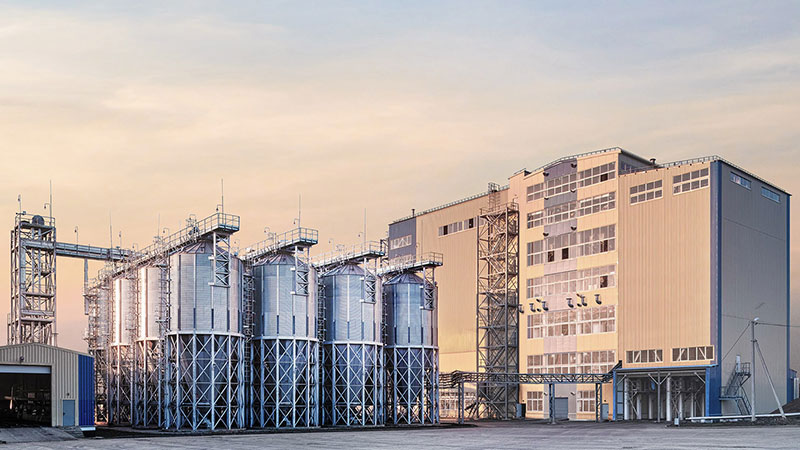
At RICHI, we go beyond project completion. With RICHI Servicee, we’re your dedicated partners in success. Count on us for expert guidance, minimal downtime, and optimized productivity. Choose RICHI for unmatched service and support.
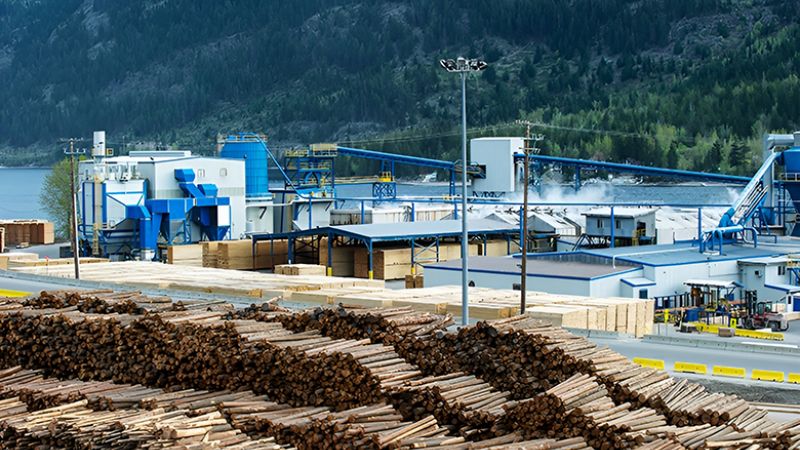


Meet global product demands and quality standards with industry-leading pellet plant design, engineering, equipment, and construction services for pellet processors.

Your Partner Beyond Project Completion
2000+ cases
RICHI is the leading designer, manufacturer and builder of pellet plants in the world, completing over 2000 projects in 140 countries across 6 continents.
Read More
Increase plant productivity, profitability, and safety by integrating high quality equipment into your pellet production line. Over the years, RICHI has become China's top pellet equipment manufacturer. At the same time, RICHI has established valuable partnerships with the world's leading component and raw material manufacturers to bring you the best there is in technology, automation, and efficiency in pelleting plant machinery.

For nearly 30 years, RICHI has been providing best-in-class pellet plant equipment and services to clients across a variety of industries, sizes, and needs. We pride ourselves on the knowledge and skill that each team member possesses – from our technical sales team to our process design engineers. You can count on RICHI Machinery to take your operation to the next level of innovation, quality, and success.
Need help with your pellet manufacturing plant project? Contact us today.
ANIMAL FEED
BIOMASS
WOOD
ORGANIC FERTILIZER
AQUA FEED
CAT LITTER
MUNICIPAL WASTE RECYCLING
SPECIAL PELLET PRODUCTION
RICHI Machinery continues to deliver world class pellet mill equipment, pellet plant engineering and project solutions that add value to our customers in the animal feed, wood waste, agriculture waste, organic fertilizer, cat litter and special pellet products industries. Throughout the years, we RICHI Machinery have built strong brand, becoming industry-leading pellet machine manufacturer. We value integrity, promise quality, and prioritize your success.
Learn MoreWith our expert team, we precisely implement your process engineering requirements in pellet mill and pelletizing plant systems. No matter which industry you’re in – we understand your needs and deliver solutions that meet the highest standards.
At RICHI, quality comes first. Our pellet making machine and related pellet line equipment undergo rigorous quality controls to ensure they meet the highest standards. Rely on products that are durable, safe, and efficient.
With decades of experience in pellet machine and pellet production line production, we have earned a reputation as a trusted partner in various industries. Our expertise allows us to cover a wide range of applications.
Not only do we offer premium pelleting equipment, but we are also experts at designing, building, installing, and maintaining facilities from the ground up. Our expertise is within pellt plant process design, discovering the most efficient, productive, and profitable way to handle your materials in an end-to-end cycle.
○ RICHI MACHINERY
Keeping in touch with us is an effective way to solve all your problems. If you have any needs or questions, please leave your contact information, then RICHI technical consultants will send design, quotation, videos to your mailbox. You can also contact us directly via WhatsApp: +86 13838389622
Copyright©2015-2026 by HENAN RICHI MACHINERY CO., LTD. All rights reserved.