
Biochar pellet manufacturing machine in Greece for olive-pruning-derived biochar. RICHI MZLH320 provides 0.2–0.3 t/h for seasonal pellet production.
The material for this project did not come out of an olive mill. It was cut from the trees.
Every pruning cycle left the Greek customer's partner olive groves with branches that had to be collected, mulched, burned, removed or directed into another use. The company saw an opportunity to place pyrolysis between orchard management and product manufacturing: convert selected olive-tree pruning biomass into biochar near the residue source, then bring the carbonized material to a central site for densification.
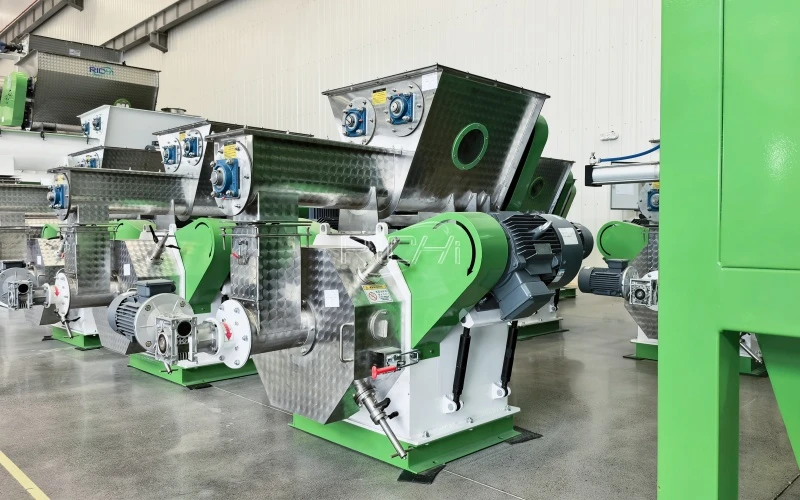
That operating model led to the biochar pellet manufacturing machine in Greece project. RICHI Machinery configured one MZLH320 pellet machine with a 22 kW main motor and 0.2–0.3 t/h capacity. It was intentionally small. The customer needed a machine that could follow periodic batches of prepared pruning biochar rather than a large pelletizer waiting for a continuous industrial char stream.
Name:
Biochar pellet machine
Country:
Greece
Date:
2026
Capacity:
0.2–0.3 t/h
Model:
MZLH320
Main Motor Power:
22 kW
Raw Materials:
Olive-tree pruning
Pellet diameter:
6 mm
Olive trees are pruned according to orchard-management requirements, not according to the hourly appetite of a pellet mill.
That fact determined the scale of the project.
Residues appeared across different groves and at particular times. They first had to be gathered and prepared. Only material selected for the biochar route proceeded to thermal conversion.
Greek research confirms the practicality of this feedstock. A 2024 study collected olive-tree pruning locally in Chania, Crete and converted it to biochar through flame-curtain pyrolysis. More recent Greek work has likewise prepared olive-pruning biochar from material collected in Crete.
For the customer, however, research feasibility was only the beginning.
A commercial process also needed to cope with irregular supply.
Transporting every fresh branch directly to a distant central factory was not the customer's preferred arrangement.
Pruning biomass is relatively bulky, and the collection points were distributed between orchards. The project therefore separated the operation geographically.
Pruning was collected and prepared close to the agricultural source. Suitable biomass entered the customer's thermal-conversion route. After the material became char and had cooled safely, selected batches could be moved toward the central preparation and pelletizing site.
The MZLH320 was installed there.
This meant the pellet machine did not dictate where pruning had to occur, and individual olive farms did not each need their own pelletizer.
For this project, a small machine was not a sign of an incomplete design.
It was the correct scale.
The customer was not operating a large continuous olive-pomace carbonization plant. Its feedstock originated from periodically collected orchard residues, and only the resulting prepared biochar—not the original pruning tonnage—determined pelletizer demand.
| Project FactorGreece Solution | |
|---|---|
| Equipment | Biochar pellet manufacturing machine |
| Model | MZLH320 |
| Quantity | 1 unit |
| Main Motor | 22 kW |
| Capacity | 0.2–0.3 t/h |
| Biomass Origin | Olive-tree pruning |
| Machine Feed | Prepared pruning-derived biochar |
| Operating Mode | Campaign production |
| Customer Type | Agricultural residue utilization company |
Choosing an MZLH520 or MZLH678 would have increased installed power without solving the underlying supply pattern.
The MZLH320 could instead operate when enough qualified char had accumulated.
When no pellet-production campaign was scheduled, it did not need artificial feedstock demand to justify its size.
Olive pruning is not perfectly uniform.
A collection can contain branches of different diameters, leaves, soil contamination and other material introduced during field handling. Greek harvesting studies have specifically examined the collection and comminution of olive-tree pruning biomass, illustrating that pruning recovery itself is an engineering step rather than a free supply of uniform particles.
The customer therefore placed control before pyrolysis as well as before pelletizing.
Obvious contaminants were excluded. Oversized woody material was prepared according to the thermal-conversion requirement. Moisture condition had to be suitable for the selected carbonization process.
After pyrolysis, another assessment began.
Now the relevant properties were those of the char.
Seasonality created an advantage as well as a constraint.
Pellet production did not have to start immediately after every pyrolysis batch.
Once appropriately cooled and stored under suitable conditions, prepared biochar could act as an intermediate inventory. The customer could accumulate material from several collection periods and schedule pellet manufacturing when a practical quantity was available.
That decoupled two very different operations.
Orchard work could follow agricultural timing.
Pellet production could follow factory timing.
The buffer between them was carbonized material rather than fresh pruning.
Before the accumulated biochar reached the MZLH320, the central site checked particle condition and moisture.
Coarse char required appropriate size reduction. Excessive variation had to be controlled. Mixing provided the point for moisture adjustment and, where required, introduction of a suitable binder.
There was no fixed binder percentage copied from another project.
The behavior of olive-pruning char depends partly on the feedstock and the way it was thermally converted. The intended pellet application also matters.
The customer's objective was therefore to establish a workable forming condition with its actual char.
The MZLH320 supplied compression.
It did not replace raw-material preparation.
The customer intended the pellets primarily for agricultural distribution.
That created an interesting balance.
The pellets had to withstand normal screening, bagging, storage and delivery. At the same time, there was little reason to pursue extreme hardness if it offered no benefit when the product ultimately entered an agricultural application.
Finished-product assessment therefore extended beyond appearance at the die outlet.
The team watched whether pellets remained intact through subsequent movement and how much fine material appeared during screening.
If breakage became excessive, operators could work backward through material preparation, binder distribution, moisture, feed stability and die condition.
The mechanical specification was tied to the product journey.
This point separates the Greek project from another common Mediterranean route.
Olive pomace is generated during olive-oil processing.
Olive-tree pruning comes from orchard maintenance.
Both can be considered for thermochemical conversion, but they begin with different physical materials, arise at different locations and follow different collection systems.
For this customer, the feedstock was pruning-derived biochar.
The machine configuration therefore should not be copied automatically from an olive-pomace project simply because both products can be described as olive-derived biochar.
The source material still matters after carbonization.
The intended agricultural application did not turn the pellets into compound organic fertilizer.
Prepared olive-pruning biochar remained the dominant material entering the machine. There was no formulation built primarily around composted manure or another organic fertilizer base.
RICHI therefore used the MZLH320.
Interestingly, Greece also has an active circular-economy project focused on turning olive-growing and olive-mill residues into both compost and biochar for return to olive groves. That illustrates exactly why equipment selection has to follow the finished formulation.
Biochar alone and a compost-rich biochar fertilizer are not mechanically identical products.
A future Greek customer manufacturing the latter could require evaluation with the FZLH fertilizer series instead.
Because the pelletizer was compact, installation was not the most difficult part of the project.
Operating discipline mattered more.
The customer needed personnel who could recognize when accumulated biochar had changed between campaigns. A machine left idle between production periods also required appropriate inspection before restarting.
RICHI's guidance therefore covered start-up after downtime, feeding checks, lubrication, ring die and roller inspection, material-change observation and normal wear-part planning.
Production records were organized by batch rather than assuming every campaign would begin under exactly the same conditions.
That approach fitted intermittent manufacturing better than procedures designed around a 24-hour continuous line.
The MZLH320 was prepared in China and shipped from Qingdao Port to Piraeus, Greece.
Its compact scale simplified the equipment shipment compared with the larger machines used in several other biochar projects. The customer still received the dimensional, electrical and installation information needed to prepare the central processing site before arrival.
After positioning and connection, commissioning used the customer's prepared olive-pruning biochar.
RICHI Machinery then helped operators establish the initial forming conditions and understand which variables should be checked when a later batch behaved differently.
That was the defining feature of the Greek project.
The customer did not try to transform seasonal orchard residues into an imaginary year-round continuous raw-material stream. Instead, collection, pyrolysis, biochar storage and pellet production were allowed to operate on different schedules.
Olive pruning followed the grove.
Thermal conversion followed available prepared biomass.
Biochar inventory connected the seasonal operation to the factory.
The MZLH320 then ran in campaigns at 0.2–0.3 t/h when enough qualified material was ready.
For another Greek project, the correct answer could be completely different. A large olive mill producing a continuous olive-pomace-derived char stream would present another material balance and could justify a larger machine. A compost-rich biochar fertilizer would move the equipment decision toward FZLH.
This customer needed neither.
It needed one small biochar pellet manufacturing machine that could sit at the end of a seasonal, geographically distributed olive-pruning recovery system without forcing the agricultural supply chain to behave like a continuous factory.
Having the right mix of reliable, high-quality pellet machine and pelletizing systems and expert support is essential to your success. Watch how our end-to-end feed pellet plant solutions have helped our customers optimize their performance.
Our customized and future-proofed turnkey pellet plant solutions is designed with you at the core. From vision to reality and beyond, our team stays connected with yours. Giving you peace-of-mind with an expert at your side.
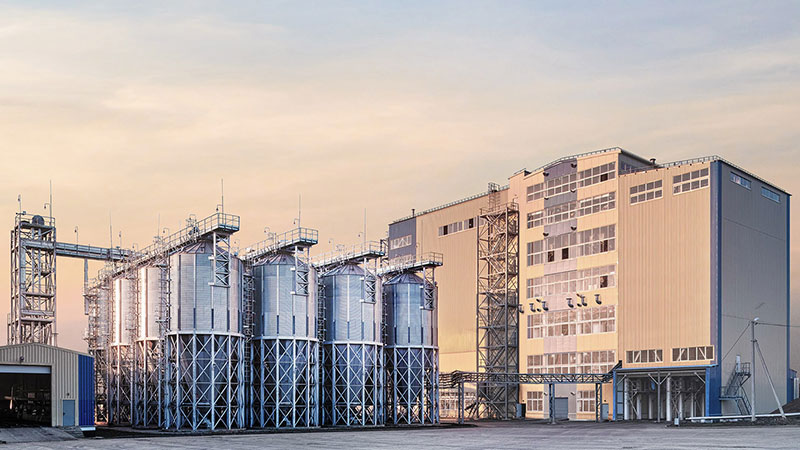
At RICHI, we go beyond project completion. With RICHI Servicee, we’re your dedicated partners in success. Count on us for expert guidance, minimal downtime, and optimized productivity. Choose RICHI for unmatched service and support.
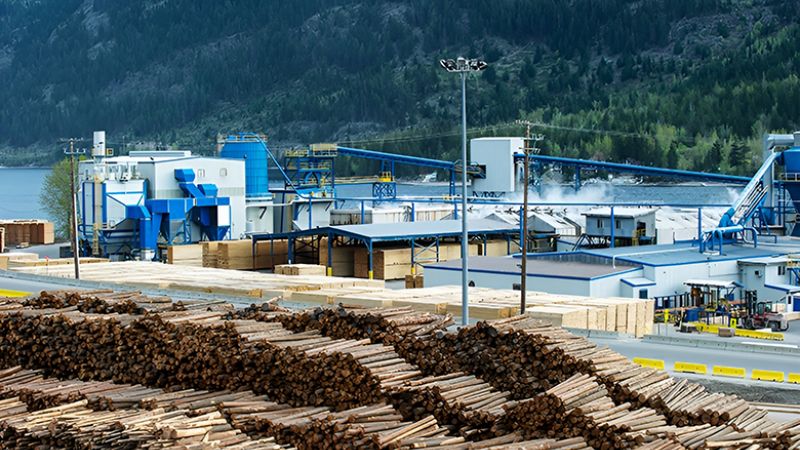


Meet global product demands and quality standards with industry-leading pellet plant design, engineering, equipment, and construction services for pellet processors.


Your Partner Beyond Project Completion
2000+ cases
RICHI is the leading designer, manufacturer and builder of pellet plants in the world, completing over 2000 projects in 140 countries across 6 continents.
Read More
Increase plant productivity, profitability, and safety by integrating high quality equipment into your pellet production line. Over the years, RICHI has become China's top pellet equipment manufacturer. At the same time, RICHI has established valuable partnerships with the world's leading component and raw material manufacturers to bring you the best there is in technology, automation, and efficiency in pelleting plant machinery.

For nearly 30 years, RICHI has been providing best-in-class pellet plant equipment and services to clients across a variety of industries, sizes, and needs. We pride ourselves on the knowledge and skill that each team member possesses – from our technical sales team to our process design engineers. You can count on RICHI Machinery to take your operation to the next level of innovation, quality, and success.
Need help with your pellet manufacturing plant project? Contact us today.
ANIMAL FEED
BIOMASS
WOOD
ORGANIC FERTILIZER
AQUA FEED
CAT LITTER
MUNICIPAL WASTE RECYCLING
SPECIAL PELLET PRODUCTION
RICHI Machinery continues to deliver world class pellet mill equipment, pellet plant engineering and project solutions that add value to our customers in the animal feed, wood waste, agriculture waste, organic fertilizer, cat litter and special pellet products industries. Throughout the years, we RICHI Machinery have built strong brand, becoming industry-leading pellet machine manufacturer. We value integrity, promise quality, and prioritize your success.
Learn MoreWith our expert team, we precisely implement your process engineering requirements in pellet mill and pelletizing plant systems. No matter which industry you’re in – we understand your needs and deliver solutions that meet the highest standards.
At RICHI, quality comes first. Our pellet making machine and related pellet line equipment undergo rigorous quality controls to ensure they meet the highest standards. Rely on products that are durable, safe, and efficient.
With decades of experience in pellet machine and pellet production line production, we have earned a reputation as a trusted partner in various industries. Our expertise allows us to cover a wide range of applications.
Not only do we offer premium pelleting equipment, but we are also experts at designing, building, installing, and maintaining facilities from the ground up. Our expertise is within pellt plant process design, discovering the most efficient, productive, and profitable way to handle your materials in an end-to-end cycle.
○ RICHI MACHINERY
Keeping in touch with us is an effective way to solve all your problems. If you have any needs or questions, please leave your contact information, then RICHI technical consultants will send design, quotation, videos to your mailbox. You can also contact us directly via WhatsApp: +86 13838389622
Copyright©2015-2026 by HENAN RICHI MACHINERY CO., LTD. All rights reserved.