
A Brazilian forestry-residue company adds an MZLH520 to densify eucalyptus biochar fines from an existing carbonization operation.
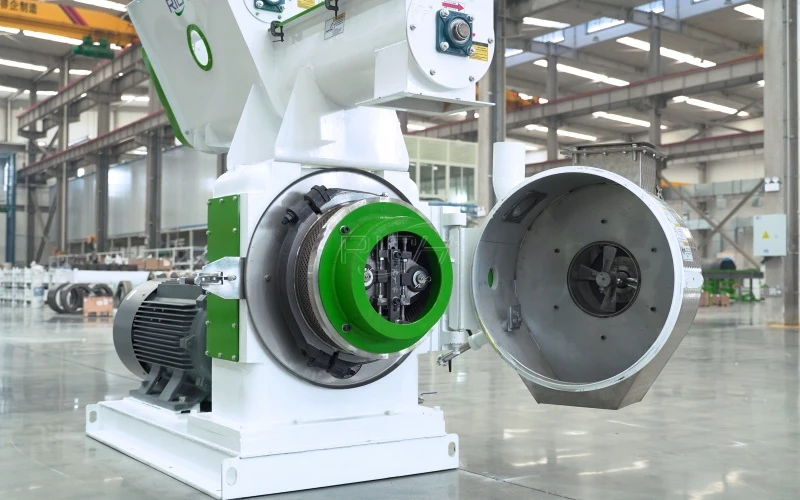
The biochar pellet machine in Brazil was supplied to a Brazilian forestry-residue processing company that already operated a carbonization section for eucalyptus-derived materials. The customer was producing marketable lump carbon products, but screening and handling continuously generated a finer carbon-rich fraction that was much more difficult to store, meter and transport. Instead of treating these fines as a low-value residue, the company decided to add a dedicated pelletizing section and convert them into densified biochar pellets.
This was a single-machine purchase rather than a complete biochar production line. The customer already had carbonization, char cooling, screening, crushing, material storage and finished-product handling facilities. RICHI Machinery's task was to select a ring die pellet machine that could work with the prepared eucalyptus biochar fines and fit the throughput of the existing plant. After reviewing the available char volume, particle condition, intended pellet specification and surrounding equipment, one MZLH520 biochar pellet machine with a rated capacity of 1.5–2 t/h was selected.
Name:
Eucalyptus Biochar Pellet Machine
Country:
Brazil
Date:
2025
Capacity:
1.5–2 t/h
Model:
MZLH520
Main Motor Power:
132 kW
Raw Materials:
Eucalyptus-derived biochar fines
Pellet diameter:
6 mm
The customer was not a startup planning to build a biochar factory from an empty site.
Its existing operation was connected to Brazil's forestry and wood-processing sector, with eucalyptus-derived woody residues entering an established thermal conversion system. Larger carbonized fractions could already be handled as saleable products, while smaller particles accumulated after cooling, conveying and screening.
Those fines created a different commercial problem from the larger carbonized pieces.
Loose biochar powder occupies considerable storage volume relative to its mass, produces dust during transfer and can be inconvenient to meter into bags or bulk applications. Every additional handling point can also create more fine material.
The customer therefore wanted to densify the usable fines rather than install another carbonization unit.
That distinction determined the scope of the project. RICHI did not need to redesign the customer's pyrolysis process. The new equipment had to begin where the existing carbonization and char-preparation system ended.
Eucalyptus is an important part of Brazil's planted-forest and wood-processing economy. For a company already working with forestry residues, branches, suitable woody processing residues and other eucalyptus-derived biomass can enter thermal conversion routes rather than being treated only as loose waste.
After pyrolysis or carbonization, however, the material no longer behaves like the original wood.
That difference is critical when selecting a pellet machine.
Raw eucalyptus residues still contain the natural lignocellulosic structure associated with woody biomass. Properly prepared sawdust can respond to pressure and temperature during conventional biomass pelletizing in a way that helps particles bind together.
Eucalyptus biochar has already undergone thermal decomposition.
Its structure is more brittle, much of the original volatile material has been removed, and the carbonized particles do not retain the same natural binding behavior as untreated eucalyptus sawdust.
The customer therefore could not simply copy the operating settings of a wood pellet plant and expect the biochar fines to produce durable pellets.
Material selection began at the customer's screening section.
The objective was not to crush every piece of saleable carbonized material into powder just so it could be pelletized. Larger fractions that already met the customer's product requirements remained in their existing product stream.
The biochar pelletizing section was intended primarily for recoverable fines and undersized material.
This gave the project a clearer economic and process logic. Material that was inconvenient to handle in loose form could be upgraded without unnecessarily processing higher-value fractions that already had a market.
Before pelletizing, oversized fragments mixed with the fines were reduced so that the feed entering the mixing and conditioning stage had a more controlled particle distribution.
Very irregular pieces were avoided because a ring die biochar pellet mill works more consistently when material can be metered evenly into the pressing chamber.
Metal and other unwanted contaminants also had to be removed before the prepared char reached the pelletizer. This protects the die and roller system and is especially important in a retrofit plant where the raw material may have passed through several existing conveyors and storage points.
One of the first technical discussions with the Brazilian customer concerned binder.
The customer initially wanted to understand whether pressure alone would be sufficient to form stable pellets.
For some biomass materials, natural components can contribute significantly to pellet formation. Biochar is different. Once the material has been pyrolyzed, the original biomass structure has changed enough that strong binder-free pelletization cannot simply be assumed.
The practical approach was therefore to evaluate the actual char fines before fixing the formulation.
Particle size, carbonization severity, residual volatile matter, ash, moisture and the physical structure of the char all affect how it responds to pressure.
A suitable binder system can then be introduced when required.
For this project, the working route used a small controlled binder addition together with moisture adjustment rather than attempting to force completely dry eucalyptus biochar powder through the ring die.
The purpose of the binder was not to turn the finished pellet into a fertilizer formulation. It was there to improve particle-to-particle bonding so the densified product could withstand subsequent cooling, screening, bagging and transport.
RICHI Machinery has different pelletizing platforms for different applications, and the distinction matters in a biochar project.
The Brazilian customer was producing a predominantly carbonaceous densified product from eucalyptus biochar fines. It was not mixing the biochar with compost, manure or other nutrient-bearing organic materials to manufacture an organic fertilizer pellet.
For that reason, the project was treated as a densification application and matched with the MZLH series.
If the customer's target product had instead been a biochar-based organic fertilizer containing substantial composted manure, digestate solids or other fertilizer ingredients, the equipment selection and process route would have been reconsidered around that formulation.
The name "biochar pellet" alone is therefore not enough to determine the machine.
RICHI first looks at what is actually inside the pellet and what the finished product is expected to do.
The customer's available quantity of prepared fines did not justify a very large pelletizing unit.
At the same time, the project required more than a small demonstration machine because the pelletizer had to operate as part of an established industrial carbonization business.
One MZLH520 was selected.
| Project ItemConfiguration | |
|---|---|
| Equipment | Biochar pellet machine |
| Model | MZLH520 |
| Number of Machines | 1 unit |
| Main Motor Power | 132 kW |
| Rated Capacity | 1.5–2 t/h |
| Main Raw Material | Eucalyptus-derived biochar fines |
| Raw-Material Condition | Prepared carbonized fines |
| Project Type | Retrofit / residue recovery |
| Pelletizing Route | Ring die densification |
| Main Purpose | Densification of loose biochar fines |
The 1.5–2 t/h capacity was selected around the actual amount of suitable fines available to the pelletizing section rather than the total tonnage entering the customer's carbonization operation.
This is an important capacity distinction.
If a carbonization plant processes several tons of woody biomass per hour, that does not mean the same tonnage of recoverable biochar fines will be available for pelletizing. Mass is lost during thermal conversion, and the resulting char is also separated into different size fractions and product streams.
Sizing the pellet mill according to the original biomass input would therefore have produced a misleading equipment selection.
A common mistake in residue-utilization projects is to size the new equipment around an optimistic future raw-material quantity.
RICHI instead reviewed how much fine char the customer could realistically collect and prepare continuously.
The MZLH420, rated at approximately 1–1.2 t/h in the supplied model range, left less capacity margin for the customer's expected fine-char recovery. The MZLH520 provided 1.5–2 t/h and better matched the intended production window.
Moving immediately to an MZLH678 or MZLH768 would have been unnecessary.
A pelletizer cannot maintain useful production if the existing char-screening and preparation system cannot feed it continuously. Oversizing would have increased installed power and investment without creating more raw material.
The selected MZLH520 therefore reflected the capacity of the recoverable stream rather than the size of the overall forestry business.
The material does not move directly from the carbonization chamber into the pellet mill.
First, the carbonized material has to cool to a safe and stable condition. Hot char should not be transferred blindly into enclosed downstream processing equipment, particularly where fine carbonaceous dust may be generated.
Screening then separates the fractions already suitable for the customer's existing products from the undersized material intended for pelletizing.
The recoverable fines are further prepared where necessary.
Oversized particles are reduced, and the material is brought into a particle-size range that can be mixed and fed more uniformly. The binder and controlled water addition are then distributed through the char rather than being added unevenly immediately before the die.
Uniform mixing is important because localized wet spots and dry pockets behave very differently under compression.
An excessively dry section can fail to bond adequately, while excessive liquid can cause feeding problems and produce soft or unstable pellets.
The correct condition therefore has to be established from the actual eucalyptus char.
The customer asked for a target moisture figure during technical discussions, but RICHI did not treat one number as universally correct for every carbonized feedstock.
Biochar can differ substantially according to pyrolysis temperature, residence time, original biomass and subsequent storage.
A highly porous char may take up added liquid differently from a denser carbonized material. Finer powder also presents much more surface area than coarse particles.
For that reason, moisture adjustment has to be evaluated together with binder concentration and particle size.
The useful operating condition is the one that allows consistent feeding and compression while producing pellets strong enough for the customer's downstream handling requirements.
Adding more water is not automatically beneficial.
Once the mixture becomes too wet, pellet formation can become unstable and downstream drying or cooling requirements increase. Too little moisture, however, can leave the carbon particles poorly bonded.
The Brazilian project therefore used controlled adjustment rather than treating water as a simple fixed recipe ingredient.
A binder that makes a mechanically strong pellet is not automatically appropriate for every market.
That was particularly relevant because the customer wanted to retain flexibility in how the densified biochar could be sold.
If pellets are intended for agricultural or horticultural soil applications, the binder has to be compatible with that intended use. If the product is designed for thermal or industrial carbon applications, the binder may instead be evaluated for its effect on ash, heating characteristics, carbon content and combustion behavior.
RICHI therefore treats binder selection as part of product development rather than simply as a pellet-mill setting.
For this project, the customer favored a formulation route that did not fundamentally change the identity of the product as eucalyptus-derived biochar.
The binder proportion was kept controlled and was adjusted during trials according to pellet integrity.
This also meant that RICHI did not describe the finished material as organic fertilizer simply because it was intended to have potential agricultural applications.
Biochar and fertilizer are not interchangeable product definitions.
Once the prepared biochar mixture reaches the pelletizing section, stable feeding becomes critical.
Loose char has a relatively low bulk density compared with a compact pellet. If the feeder delivers material irregularly, the pelletizing chamber alternates between underloading and sudden higher loads.
That affects both output and pellet consistency.
The prepared mixture is therefore supplied at a controlled rate before entering the ring die pressing zone.
Inside the machine, rollers force the material through the ring die openings under high mechanical pressure. The prepared char particles, moisture and binder interact during compression to create continuous densified strands.
The strands are cut to the required length as they leave the die.
At this point, the product has acquired its basic pellet form, but it is not yet ready to be treated as stable finished material.
The Brazilian customer was not producing a fine household pet product where visual uniformity was the main purchasing factor.
The pellets needed to be practical for bulk handling, bagging, storage and subsequent dosing.
For that reason, the finished specification was developed around a relatively robust industrial/agricultural pellet rather than an unnecessarily small diameter.
The selected die configuration produced pellets within the practical range required by the customer while maintaining enough cross-sectional strength for repeated transfer.
Diameter cannot be considered independently of char condition and binder.
A smaller die opening increases the relationship between particle preparation, friction and required compression, while a larger pellet changes cooling, strength and breakdown behavior.
RICHI therefore matched the die to the intended biochar product rather than copying a standard wood-pellet specification.
The ring die pellet mill is the central forming machine, but the product does not simply fall from the die into a final retail bag.
Freshly formed pellets need to stabilize before they are subjected to normal storage and transport.
Cooling helps bring the material toward a more suitable handling condition. Screening removes loose particles and broken material that would otherwise increase the fines content of the finished product.
Those separated fines do not necessarily have to become waste again.
When their condition remains suitable, they can be returned to the preparation stage and reintroduced at a controlled rate.
This recycle logic was important to the Brazilian customer because the entire purpose of the project was to recover a fine carbon fraction in the first place.
Allowing the pelletizing section to create another uncontrolled fine-waste stream would have defeated part of that objective.
Biochar powder deserves specific attention in plant layout.
Carbonized fines can be light and dusty, and the customer already knew this from the screening and storage areas of its existing operation.
The pelletizing section therefore had to minimize uncontrolled drop points and unnecessary open transfer.
Enclosed conveying and local dust collection can be considered around fine-char transfer, mixing, pelletizing and screening according to the final site layout.
Housekeeping is equally important.
Allowing fine carbonaceous material to accumulate around motors, electrical equipment, bearings or hot surfaces is poor operating practice. Appropriate grounding, electrical design and fire/explosion risk assessment also need to follow the characteristics of the actual char and the applicable site requirements.
RICHI's role in a biochar project is therefore not limited to confirming whether the ring die can form a pellet.
The surrounding material-handling environment has to be considered as well.
This is why the Brazilian project remained a single-machine case.
The customer already had the thermal conversion system required to produce biochar. It had char cooling and separation equipment. It also had storage and part of the downstream material-handling infrastructure.
Purchasing another carbonization system would not have solved the actual bottleneck.
The missing function was densification.
RICHI reviewed the proposed feeding arrangement, the available installation position, motor and electrical requirements, discharge connection and maintenance access before the final machine layout was confirmed.
The MZLH520 then became an additional processing module inside an operating facility rather than the center of a completely new factory.
For buyers with existing pyrolysis or charcoal operations, this type of retrofit can be substantially different from purchasing a complete biochar pellet plant.
The answer depends on the customer's market.
Powder is useful in many applications and pelletization should not be presented as automatically superior.
Some customers deliberately want finely divided biochar because it will be blended immediately into another product. In that case, densification may add an unnecessary processing step.
The Brazilian customer faced a different situation.
Part of the material needed to be stored, transported and handled as a separate product. Loose fine char was less convenient for those operations.
Pelletization increased bulk density and transformed the dusty fine fraction into a more manageable physical form.
The pellets could be weighed and conveyed more predictably, and their lower tendency to become airborne during normal handling was valuable compared with the original loose powder.
The decision to pelletize was therefore driven by logistics and product form, not by a claim that powder biochar has no value.
The customer did not want the new machine tied permanently to one finished-product route.
The same eucalyptus-derived char may eventually be directed toward different markets, provided the formulation and product specifications are adjusted accordingly.
These products should not be presented as identical simply because they are made on the same pelletizing platform.
The MZLH520 provides the mechanical densification stage. The customer still has to define the raw-material specification, binder and finished-product quality according to the market being served.
The Brazilian project also illustrates where equipment selection can change.
Suppose another customer has eucalyptus biochar but intends to mix it with composted poultry manure, cattle manure, digestate solids or another organic fertilizer base.
In that situation, biochar may represent only one functional component of the formulation.
The final product is no longer simply densified char.
It becomes a biochar-based fertilizer or soil amendment pellet with different moisture, organic matter, nutrient and forming characteristics.
For such a project, RICHI would evaluate the FZLH fertilizer pellet machine series rather than automatically copying the MZLH520 used in this case.
The choice between MZLH and FZLH therefore follows the product formulation and process requirement.
This is particularly important for buyers searching broadly for a biochar pellet machine because two factories using the same word "biochar" may actually need very different equipment.
The commissioning objective was not to achieve a short peak-output figure and stop the test.
RICHI needed to see how the prepared eucalyptus char behaved over a sustained operating period.
Technicians observed feeding stability, main-motor load, extrusion behavior, die discharge and the condition of the pellets after downstream handling.
The amount of material breaking back into fines was particularly important.
If the pellets looked acceptable immediately at the die but broke extensively during cooling and screening, the formulation or forming parameters still needed adjustment.
Binder addition could not simply be increased indefinitely to solve the problem.
Too much binder changes product composition and adds operating cost. The better approach is to find a workable combination of particle preparation, moisture, binder proportion and compression condition.
That operating window became more useful to the customer than a single maximum-capacity number.
The customer's personnel already had experience handling carbonized material, but ring die densification introduced another set of operating relationships.
RICHI's technical guidance covered feeder adjustment, die and roller inspection, lubrication, normal motor-load observation, cutter setting and wear-part checks.
More importantly, operators were shown how changes in raw material could appear in the machine.
If the incoming char suddenly contained a larger proportion of coarse particles, extrusion behavior could change.
If stored biochar had absorbed additional moisture, the same binder and water addition used on a previous batch might no longer be appropriate.
If pellet strength declined while machine load remained normal, the production team needed to check raw-material condition and formulation before assuming that a mechanical component had failed.
This troubleshooting approach helped the plant treat pelletizing as a controllable process rather than a machine with one permanent setting.
After commissioning, the customer's comments centered on the fact that the pelletizer gave the plant a practical route for material that had previously been awkward to handle.
The company did not need another machine for producing char. It needed a way to change the physical form of the char fines already being generated.
The production team also valued the ability to adjust the preparation recipe when fine-char characteristics changed between production batches.
The customer summarized the result as:
"The important point for us was using the fine material we already had. The pellet machine gave us another way to handle that fraction instead of treating it like the larger charcoal pieces or leaving it as loose powder."
This distinction is central to the project.
The MZLH520 was purchased because the customer had a specific downstream problem after carbonization, not because it wanted to build an entirely new biomass business.
After manufacturing, inspection and preparation for shipment, the MZLH520 was packed for ocean transport from Qingdao Port, China.
The destination port was Santos Port, Brazil.
The shipment included the machine and the associated components required under the agreed supply scope. Parts were secured according to their size and transportation characteristics, and technical documentation was prepared for the customer's receiving and installation work.
Because this was a retrofit, installation preparation began before the machine reached Brazil.
The customer provided information about the intended machine position and existing connections so that feeding, discharge and maintenance access could be reviewed in advance.
RICHI also supplied installation and commissioning guidance, operator instruction and subsequent technical support for the pelletizing equipment.
The configuration used in this project should not be copied automatically into every biochar plant.
Brazilian eucalyptus char is one possible feedstock.
In another country, the available carbonized material may come from rice husks, coconut shells, palm kernel shells, coffee husks, olive residues, nut shells, bamboo, crop stalks or mixed woody residues.
Each produces a different char.
Rice-husk biochar can contain much more mineral ash and silica than clean woody char. Coconut-shell char can be considerably denser and harder. Crop-residue char can vary strongly according to soil contamination and harvesting method. High-ash agricultural char may also create different wear and finished-product considerations.
Even two wood biochars can behave differently when they are produced at different pyrolysis temperatures.
For that reason, RICHI does not select a biochar pellet mill from the raw-material name alone.
Some inquiries begin with a customer sending only a photograph of black powder and asking which pellet machine is suitable.
That is not enough information for reliable selection.
RICHI normally needs to understand the original biomass, carbonization method, approximate particle size, moisture, ash condition, available quantity, desired pellet size and intended use of the finished product.
The formulation is equally important.
A product containing almost entirely biochar behaves differently from a blend containing biochar and compost. A biochar-fertilizer pellet behaves differently from a densified carbon pellet intended for thermal use.
Binder requirements may also change with the intended application.
Once those details are known, RICHI can determine whether an MZLH biomass-type ring die pelletizer, an FZLH fertilizer pellet machine or another granulation route is more appropriate.
This avoids forcing fundamentally different carbon products through the same equipment concept.
RICHI's MZLH range provides several capacity levels for densification projects.
Those figures make it possible to select equipment according to the actual prepared material stream instead of forcing every customer into one standard model.
For a biochar project, that point is especially important.
The amount of char available after pyrolysis is not the same as the incoming biomass tonnage, and only part of that char may need pelletization.
A correct capacity calculation therefore starts after carbonization and product separation.
A company with clean, dry, finely prepared wood biochar may need relatively little preprocessing around the pellet mill.
A rice-husk-char project may need greater attention to ash and abrasive mineral content.
A coconut-shell-char producer may be trying to recover hard carbon fines from an activated-carbon or charcoal operation.
A farm-based project may not want pure biochar pellets at all. It may want to combine char with composted manure and produce a soil amendment pellet.
Another customer may receive wet digestate, produce biochar separately and then combine the two into a carbon-enriched fertilizer.
All of these can appear in search results under phrases related to "biochar pellet machine," but their engineering routes are not interchangeable.
This is why RICHI's project assessment begins with the final product and works backward through the material condition.
The biochar pellet machine in Brazil solved one defined problem inside an existing eucalyptus-residue business: converting prepared carbonized fines into a denser and easier-to-handle pellet.
The customer did not need RICHI to sell another carbonizer, replace its existing char-handling system or build an unnecessary complete plant.
It needed one correctly sized densification machine.
The MZLH520 was selected because its 1.5–2 t/h range matched the quantity of fines the existing operation could realistically prepare and supply. The process around it was then considered according to the characteristics of carbonized eucalyptus rather than untreated wood.
That difference is fundamental.
Biochar has already been thermally transformed. Successful pelletization therefore depends on particle preparation, controlled moisture, appropriate binder selection where required, compression conditions and the intended final application.
Companies planning a similar retrofit can provide RICHI Machinery with the original biomass type, carbonization process, char particle size, moisture, approximate ash condition, hourly quantity and required pellet specification.
For customers that have not yet built the surrounding process, RICHI can also evaluate the preparation, mixing, feeding, pelletizing, cooling, screening and handling stages as a coordinated system.
The objective is not simply to put black powder through a pellet mill. It is to select and configure a biochar pellet machine that matches the carbon material, the available production stream and the product the customer actually intends to sell.
Having the right mix of reliable, high-quality pellet machine and pelletizing systems and expert support is essential to your success. Watch how our end-to-end feed pellet plant solutions have helped our customers optimize their performance.
Our customized and future-proofed turnkey pellet plant solutions is designed with you at the core. From vision to reality and beyond, our team stays connected with yours. Giving you peace-of-mind with an expert at your side.
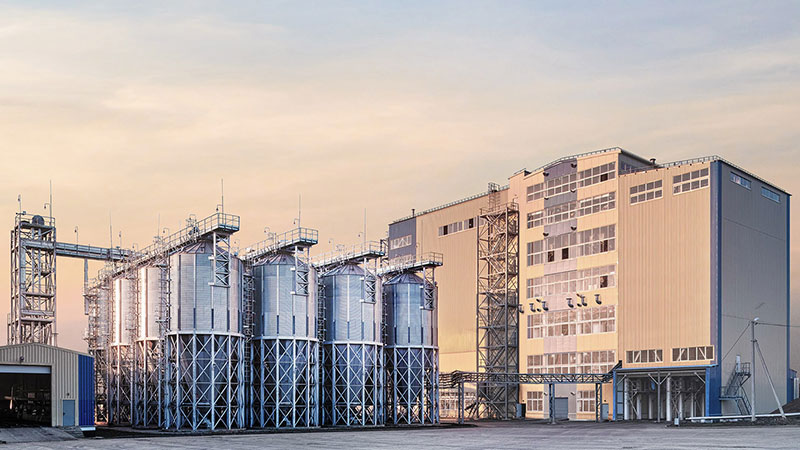
At RICHI, we go beyond project completion. With RICHI Servicee, we’re your dedicated partners in success. Count on us for expert guidance, minimal downtime, and optimized productivity. Choose RICHI for unmatched service and support.
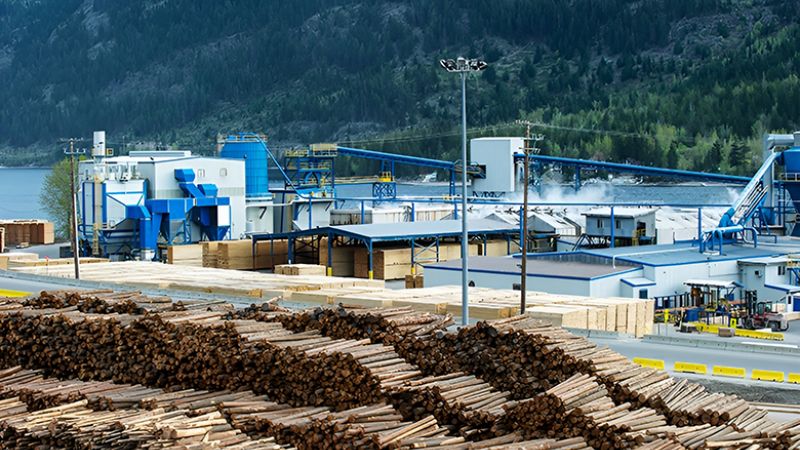


Meet global product demands and quality standards with industry-leading pellet plant design, engineering, equipment, and construction services for pellet processors.

Your Partner Beyond Project Completion
2000+ cases
RICHI is the leading designer, manufacturer and builder of pellet plants in the world, completing over 2000 projects in 140 countries across 6 continents.
Read More
Increase plant productivity, profitability, and safety by integrating high quality equipment into your pellet production line. Over the years, RICHI has become China's top pellet equipment manufacturer. At the same time, RICHI has established valuable partnerships with the world's leading component and raw material manufacturers to bring you the best there is in technology, automation, and efficiency in pelleting plant machinery.

For nearly 30 years, RICHI has been providing best-in-class pellet plant equipment and services to clients across a variety of industries, sizes, and needs. We pride ourselves on the knowledge and skill that each team member possesses – from our technical sales team to our process design engineers. You can count on RICHI Machinery to take your operation to the next level of innovation, quality, and success.
Need help with your pellet manufacturing plant project? Contact us today.
ANIMAL FEED
BIOMASS
WOOD
ORGANIC FERTILIZER
AQUA FEED
CAT LITTER
MUNICIPAL WASTE RECYCLING
SPECIAL PELLET PRODUCTION
RICHI Machinery continues to deliver world class pellet mill equipment, pellet plant engineering and project solutions that add value to our customers in the animal feed, wood waste, agriculture waste, organic fertilizer, cat litter and special pellet products industries. Throughout the years, we RICHI Machinery have built strong brand, becoming industry-leading pellet machine manufacturer. We value integrity, promise quality, and prioritize your success.
Learn MoreWith our expert team, we precisely implement your process engineering requirements in pellet mill and pelletizing plant systems. No matter which industry you’re in – we understand your needs and deliver solutions that meet the highest standards.
At RICHI, quality comes first. Our pellet making machine and related pellet line equipment undergo rigorous quality controls to ensure they meet the highest standards. Rely on products that are durable, safe, and efficient.
With decades of experience in pellet machine and pellet production line production, we have earned a reputation as a trusted partner in various industries. Our expertise allows us to cover a wide range of applications.
Not only do we offer premium pelleting equipment, but we are also experts at designing, building, installing, and maintaining facilities from the ground up. Our expertise is within pellt plant process design, discovering the most efficient, productive, and profitable way to handle your materials in an end-to-end cycle.
○ RICHI MACHINERY
Keeping in touch with us is an effective way to solve all your problems. If you have any needs or questions, please leave your contact information, then RICHI technical consultants will send design, quotation, videos to your mailbox. You can also contact us directly via WhatsApp: +86 13838389622
Copyright©2015-2026 by HENAN RICHI MACHINERY CO., LTD. All rights reserved.