
Looking for the best price rice husk hammer mill machine in Côte d'Ivoire? Explore RICHI SFSP water-drop hammer mill specifications, rice husk grinding, biomass processing applications and customized equipment solutions.
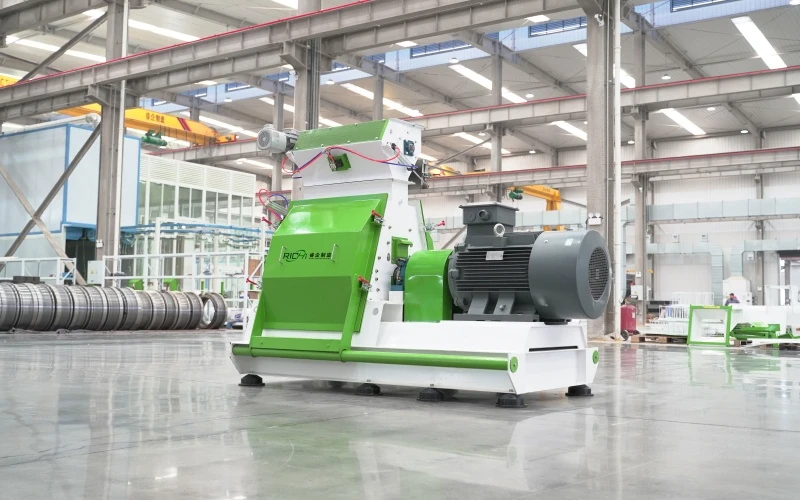
Best price rice husk hammer mill machine in Côte d'Ivoire is the equipment solution considered for a rice-processing business looking to make better use of the husks collected during milling. The proposed buyer is a small biomass fuel processor sourcing rice husks from nearby rice mills.
Rather than invest immediately in a complete new production line, the business intends to purchase one RICHI SFSP water-drop hammer mill to improve raw material preparation before the next stage of processing. The main requirement is straightforward: reduce cleaned rice husks to a more consistent particle size for trials in biomass fuel pellet or briquette production.
The project is planned around the SFSP56×40 model, which has a 560 mm rotor, a 400 mm-wide grinding chamber and a 37 kW main motor. The machine is designed to crush incoming materials measuring no more than 50 mm, with the finished particle size adjustable through screen selection within a stated range of 0.5–20 mm.
Name:
Rice Husk Hammer Mill
Country:
Côte d'Ivoire
Date:
2026
Capacity:
0.5-0.6T/H
Model:
SFSP56×40
Main Motor Power:
37 kW
Rotating speed:
2,980 rpm
Final product size:
0.5–20 mm
For this application, an initial target of approximately 1–2 mm will be evaluated. Rice husk is not equivalent to grain or wood chips, however, so its actual processing capacity must be established through material testing rather than inferred from the machine's published capacity for other materials.
Rice husk is produced when the outer covering of paddy rice is removed during milling. For a rice processor, the husks are a regular by-product that must be stored, handled and directed toward a suitable use. For a biomass business, the same material represents a potential raw material, provided that its quality, moisture and processing requirements can be managed.
Côte d'Ivoire has an established rice-growing and rice-processing sector, making locally sourced rice husks a plausible material for this project. The proposed customer obtains husks from commercial milling operations rather than purchasing paddy rice solely to generate processing residues. This arrangement allows the business to concentrate on material preparation and downstream product development while relying on established suppliers for its raw material.
However, not every batch of rice husk is equally suitable. Material from a milling plant may contain stones, soil, metal fragments, broken rice or other foreign matter. These contaminants need to be removed before the husks enter the hammer mill. The customer should also assess whether the husks have been exposed to rain or stored in conditions that could raise their moisture content.
The reason for purchasing a dedicated rice husk hammer mill machine is the need for more consistent size reduction. Whole rice husks are relatively light and fibrous, and their shape can make downstream feeding and mixing less predictable. Grinding changes their particle size and texture, helping the customer prepare a more uniform material for subsequent trials.
The buyer is not starting from zero. The proposed operation already has access to rice husks, a suitable storage area and basic material handling arrangements. Its immediate requirement is the grinding stage, not a complete facility covering every process from raw material reception to finished product packing.
Purchasing one SFSP56×40 hammer mill allows the business to test the processing route without committing to a full production line before the raw material and final product specifications have been established. This is particularly relevant when the intended fuel product may use rice husk alone or a blend of rice husk and another compatible biomass material.
The decision also gives the customer a clearer basis for planning future investment. Once the grinding performance and downstream product quality have been assessed, the business can determine whether it needs a larger hammer mill, additional conveying equipment, a mixer, a pellet mill or a briquetting machine.
A single machine does not eliminate the need for other processing stages. It addresses the size-reduction requirement within a larger process. The incoming material must be clean and appropriately sized, and the ground husks must be transferred to equipment suitable for the selected end product.
The SFSP56×40 is selected as a candidate for this relatively small, single-machine project. Its specifications provide a starting point for technical evaluation, while the final model should be confirmed against the buyer's expected operating hours, raw material supply and required output particle size.
| Technical item | Specification |
|---|---|
| Model | SFSP56×40 |
| Machine type | Water-drop hammer mill |
| Purchase quantity | 1 unit |
| Rotor diameter | 560 mm |
| Grinding chamber width | 400 mm |
| Rotating speed | 2,980 rpm |
| Hammer tip linear speed | 88 m/s |
| Main motor power | 37 kW |
| Maximum stated incoming material size | 50 mm |
| Available finished particle-size range | 0.5–20 mm, depending on screen configuration |
| Initial project target | Approximately 1–2 mm |
| Rice husk processing capacity | To be confirmed through material testing |
Rice husks should be inspected and cleaned before entering the grinding chamber. Removing stones, metal and other foreign objects protects the hammer assembly and reduces the risk of damage. If the incoming husks contain large clumps or foreign pieces exceeding the stated feed size, preliminary screening or size reduction may be necessary.
For the proposed project, the initial grinding target is 1–2 mm. This range provides a practical starting point for evaluating the ground husks as a component in biomass fuel pellet or briquette production. It is not a universal specification for all rice husk applications. A downstream pellet mill may require a different particle-size distribution, while a briquetting process may tolerate a different mixture of fine and coarse particles.
The screen is one of the main variables affecting the final product. A smaller screen opening generally requires the material to undergo more size reduction before discharge, which can affect throughput and power consumption. A larger opening may increase output but allow more coarse particles to pass through. The appropriate screen should be selected according to the actual product requirements, not simply the smallest size the machine can produce.
Moisture management is equally important. Wet husks can behave differently from dry material during feeding and grinding. If the material has a moisture content above 20%, the process plan should include a suitable drying stage before grinding. Even below that threshold, the buyer should test whether the material's moisture level is appropriate for the chosen screen and downstream process.
Because rice husk contains silica, wear should also be considered during equipment selection and maintenance planning. The customer should discuss hammer and screen inspection intervals with the supplier and monitor wear during the initial production period. Actual wear rates depend on the husk characteristics, operating conditions and equipment configuration.
The RICHI water-drop rice husk crusher machine uses a specially shaped grinding chamber to support material movement through the working area. The hammer assembly reduces particle size through impact, while the screen controls the size of the material discharged from the chamber. Material that has not passed through the screen continues to be processed until it meets the required opening size.
The grinding system incorporates a secondary grinding structure intended to improve crushing performance. An adjustable screen-pressing plate and material-retaining arrangement help manage material circulation inside the chamber. These features are relevant when the buyer needs a controlled output for downstream processing rather than simple size reduction of mixed waste.
The machine also uses a shaft-end air-intake arrangement designed to improve airflow through the grinding system. Airflow can influence the movement and discharge of fine particles, although the resulting performance depends on the material, screen configuration and operating conditions. No fixed output improvement should be assumed for rice husks without testing.
The rotor is dynamically balanced to help control vibration during operation. The design also allows reversible rotor operation according to the applicable operating instructions and configuration. Reversing the rotor can help distribute hammer wear more evenly, potentially improving hammer service life when the machine is operated and maintained correctly.
For routine maintenance, the machine incorporates a movable access door and a linked screen-pressing mechanism intended to make inspection and screen replacement more convenient. A safety interlock is also provided. Operators must follow the equipment manual, isolate the power supply before maintenance and never bypass protective devices.
The main purpose of the proposed installation is to prepare rice husks for downstream biomass fuel processing. After grinding, the material can be evaluated for pelletizing or briquetting, depending on the customer's product requirements and available equipment. The hammer mill itself does not form finished pellets or briquettes; it prepares the raw material for the next stage.
Rice husk has a relatively high ash and silica content compared with many clean wood residues. This affects its suitability for different combustion systems and can influence the quality requirements of the finished fuel. The customer should therefore assess ash content, calorific value, durability and the intended combustion equipment before deciding on a commercial fuel specification.
One option is to test rice husk as the main ingredient in a dedicated fuel product. Another is to evaluate a blend with suitable wood sawdust or other compatible biomass residues. For example, a trial could compare rice husk alone with a blend containing 70% rice husk and 30% clean sawdust by mass. This is a proposed trial ratio, not a confirmed formulation or a guaranteed optimum; the actual proportions should be adjusted based on pellet or briquette quality tests.
Ground rice husks may also be evaluated for selected non-fuel applications, including certain agricultural bedding or absorbent-material uses. Suitability depends on the final particle size, cleanliness, dust level and requirements of the intended application. The buyer should not assume that one screen setting or one processing route will be suitable for every product.
For a buyer searching for the best price rice husk hammer mill machine, the lowest initial equipment price is only one part of the decision. A machine that is incorrectly sized or supplied with an unsuitable screen can create problems after installation, even if its purchase price is attractive.
The quotation should match the machine to the intended application. The SFSP56×40 may be appropriate for a smaller processing operation, while a buyer with a larger and more continuous raw material supply may need to consider another model. The decision should be based on verified rice husk throughput rather than capacity figures published for grain or wood chips.
Several factors affect the final equipment price and configuration:
RICHI can provide an equipment quotation based on the buyer's raw material, target particle size, expected working hours and available site utilities. Supplying these details in advance makes it easier to compare quotations on a like-for-like basis and avoid purchasing unnecessary equipment.
Before the SFSP56×40 is ordered, the customer should confirm the raw material specification, electrical supply, installation space and downstream equipment requirements. The grinding system should be arranged so that operators can feed the machine steadily, collect the finished material safely and access the screen and hammer assembly for inspection.
RICHI Machinery supplies standalone hammer mills as well as complete grinding and pellet production lines. For this project, the initial requirement is one hammer mill, but the processing route can be expanded if the customer's production volume increases. Additional equipment may include a cleaner or screen, dryer, conveyor, storage bin, mixer, pellet mill or briquetting machine, depending on the final product.
Technical support can cover model selection, screen configuration, material preparation and integration with existing machinery. For a rice husk project, it is particularly useful to establish a practical grinding target and verify the machine's performance using representative material before finalizing downstream equipment requirements.
Feedback during the technical review should focus on the points that matter to the buyer: whether the machine can handle the available husks, whether the required particle size is achievable at a workable rate, how frequently wear parts need attention and whether the equipment can fit into the existing layout. These are more useful measures of project suitability than a general claim that a machine will work with every material.
The proposed sea-freight route for the rice husk hammer mill machine is from Qingdao Port in China to the Port of Abidjan in Côte d'Ivoire. The actual sailing schedule, freight charges, packing requirements and shipping documents should be confirmed with the logistics provider before dispatch.
Before the machine arrives, the customer should prepare the installation area, verify the electrical supply and confirm the material handling arrangement. Rice husks should be stored in a dry location, protected from rain and contamination. If the incoming material requires drying, that requirement should be addressed before commissioning the grinding process.
Initial operation should be carried out using representative rice husks. The operator can record moisture content, screen configuration, feed rate and the resulting particle-size distribution. These records help establish an operating baseline and provide a practical basis for evaluating future production improvements.
The proposed best price rice husk hammer mill machine in Côte d'Ivoire project centers on one SFSP56×40 water-drop hammer mill with a 37 kW main motor. The intended application is the grinding of cleaned rice husks to an initial target of approximately 1–2 mm for evaluation in downstream biomass fuel pellet or briquette production.
The final model and configuration should be confirmed against the buyer's actual raw material, moisture level, target particle size and required throughput. Rice husk processing capacity should be established through material testing rather than inferred from the machine's grain or wood-chip capacity.
Buyers can contact RICHI with details of their rice husk supply, current moisture content, desired finished particle size and expected daily operating hours. This information allows the technical team to assess the appropriate hammer mill model and determine whether a standalone machine or a customized production line would better suit the project.
Having the right mix of reliable, high-quality pellet machine and pelletizing systems and expert support is essential to your success. Watch how our end-to-end feed pellet plant solutions have helped our customers optimize their performance.
Our customized and future-proofed turnkey pellet plant solutions is designed with you at the core. From vision to reality and beyond, our team stays connected with yours. Giving you peace-of-mind with an expert at your side.

At RICHI, we go beyond project completion. With RICHI Servicee, we’re your dedicated partners in success. Count on us for expert guidance, minimal downtime, and optimized productivity. Choose RICHI for unmatched service and support.



Meet global product demands and quality standards with industry-leading pellet plant design, engineering, equipment, and construction services for pellet processors.


Your Partner Beyond Project Completion
2000+ cases
RICHI is the leading designer, manufacturer and builder of pellet plants in the world, completing over 2000 projects in 140 countries across 6 continents.
Read More
Increase plant productivity, profitability, and safety by integrating high quality equipment into your pellet production line. Over the years, RICHI has become China's top pellet equipment manufacturer. At the same time, RICHI has established valuable partnerships with the world's leading component and raw material manufacturers to bring you the best there is in technology, automation, and efficiency in pelleting plant machinery.

For nearly 30 years, RICHI has been providing best-in-class pellet plant equipment and services to clients across a variety of industries, sizes, and needs. We pride ourselves on the knowledge and skill that each team member possesses – from our technical sales team to our process design engineers. You can count on RICHI Machinery to take your operation to the next level of innovation, quality, and success.
Need help with your pellet manufacturing plant project? Contact us today.
ANIMAL FEED
BIOMASS
WOOD
ORGANIC FERTILIZER
AQUA FEED
CAT LITTER
MUNICIPAL WASTE RECYCLING
SPECIAL PELLET PRODUCTION
RICHI Machinery continues to deliver world class pellet mill equipment, pellet plant engineering and project solutions that add value to our customers in the animal feed, wood waste, agriculture waste, organic fertilizer, cat litter and special pellet products industries. Throughout the years, we RICHI Machinery have built strong brand, becoming industry-leading pellet machine manufacturer. We value integrity, promise quality, and prioritize your success.
Learn MoreWith our expert team, we precisely implement your process engineering requirements in pellet mill and pelletizing plant systems. No matter which industry you’re in – we understand your needs and deliver solutions that meet the highest standards.
At RICHI, quality comes first. Our pellet making machine and related pellet line equipment undergo rigorous quality controls to ensure they meet the highest standards. Rely on products that are durable, safe, and efficient.
With decades of experience in pellet machine and pellet production line production, we have earned a reputation as a trusted partner in various industries. Our expertise allows us to cover a wide range of applications.
Not only do we offer premium pelleting equipment, but we are also experts at designing, building, installing, and maintaining facilities from the ground up. Our expertise is within pellt plant process design, discovering the most efficient, productive, and profitable way to handle your materials in an end-to-end cycle.
○ RICHI MACHINERY
Keeping in touch with us is an effective way to solve all your problems. If you have any needs or questions, please leave your contact information, then RICHI technical consultants will send design, quotation, videos to your mailbox. You can also contact us directly via WhatsApp: +86 13838389622
Copyright©2015-2026 by HENAN RICHI MACHINERY CO., LTD. All rights reserved.