
For this cooperative in the western highlands of Guatemala, bean straw was not treated as a high-protein replacement for concentrate feed. It was a seasonal roughage resource that farmers were already producing after black bean harvests but were struggling to use efficiently. Sheep and goats readily selected the leaves and softer pod residues while leaving a noticeable proportion of the coarse stems, so the cooperative wanted to improve physical utilization rather than claim that grinding alone would improve the nutritional value of the straw.
For this cooperative in the western highlands of Guatemala, bean straw was not treated as a high-protein replacement for concentrate feed. It was a seasonal roughage resource that farmers were already producing after black bean harvests but were struggling to use efficiently. Sheep and goats readily selected the leaves and softer pod residues while leaving a noticeable proportion of the coarse stems, so the cooperative wanted to improve physical utilization rather than claim that grinding alone would improve the nutritional value of the straw.
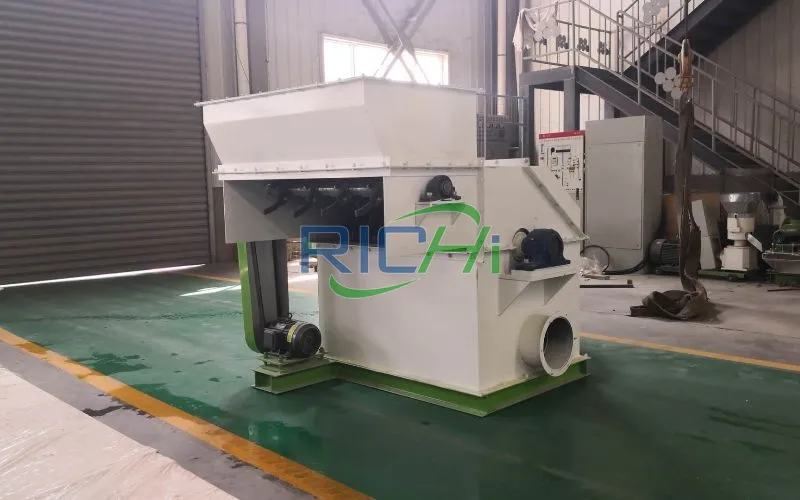
The customer therefore installed one SFSP66×60 bean straw hammer mill grinder in Guatemala as a standalone forage-processing machine. The cooperative already owned grain grinding and batch mixing equipment, so it did not need another complete feed line. Its requirement was more specific: reduce dry bean haulms to a controlled particle size that could be incorporated into balanced sheep and goat rations with much less selective feeding and easier mechanical mixing.
Name:
Straw Hammer Mill
Country:
Guatemala
Date:
2025
Capacity:
1.0–1.3 T/H
Model:
SFSP66×60
Main Motor Power:
55 kW
Raw Materials:
Dry black bean haulms after threshing
Final product size:
5 mm
The location was not chosen simply because “Guatemala grows beans.” Huehuetenango itself is an important bean-producing department.
Black bean is the most important bean type in Guatemala, and official agricultural statistics show substantial bean-growing area in Huehuetenango. That gives a local cooperative a realistic seasonal supply of stems, leaves, pods and other haulm remaining after grain harvesting and threshing.
For the cooperative, however, bean straw supply is scattered among many member farms rather than arriving from one industrial plantation.
After harvest, participating growers keep the grain for sale or household use and deliver selected dry haulm to the cooperative. Material heavily contaminated with soil, stones, plastic twine or excessive mould is rejected before entering storage.
This collection model gives the hammer mill a more realistic feedstock base than expecting several hundred sheep and goats on one farm to generate enough demand to justify a 55 kW grinder by themselves.
Before grinding, the bean residue was fed in long form.
The animals typically consumed leaves, fine branches and some pod material first. Tougher stems accumulated in the troughs and bedding area. The problem became especially noticeable when the haulm had been harvested late and the stems were more mature.
The cooperative could not solve this simply by offering less roughage. Restricting the amount encouraged animals to clean up more of the material, but it also made ration management less predictable.
Grinding offered another option.
By reducing the difference between leafy and stem fractions, the cooperative could incorporate the residue more uniformly into a mixed ration. Animals could no longer sort the ration as easily, while the paddle mixer could distribute maize, protein supplement and minerals through the fibrous material more consistently.
The cooperative does not market ground bean straw as “12–15% protein feed.”
Legume haulms vary considerably in nutritional value according to species, variety, maturity at harvest, proportion of leaves remaining, threshing method, soil contamination and storage conditions. Published feeding studies show this variation clearly: some legume haulms can contain useful protein, while mature bean straws can be much more fibrous and substantially lower in crude protein.
That is why the customer treats the material as a roughage ingredient rather than a complete ration.
Representative batches are evaluated before formulation, especially when the cooperative changes sourcing areas or harvest periods. If the bean straw is stem-heavy and low in nutritional quality, its inclusion is reduced and the ration is corrected with appropriate energy and protein ingredients.
| Project Parameter | Configuration |
|---|---|
| Equipment | Bean straw hammer mill grinder |
| Model | SFSP66×60 |
| Main Motor | 55 kW |
| Primary Material | Dry black bean haulms after threshing |
| Available Trial Screens | 4 mm, 5 mm and 6 mm |
| Normal Production Screen | Approximately 5 mm for the cooperative’s mixed ration |
| Reference Throughput | Approximately 1.0–1.3 T/H depending on screen, moisture and stem content |
| Main Application | Prepared roughage ingredient for sheep and goat rations |
The cooperative selected the SFSP66×60 straw hammer mill because its requirement was higher than that of a small farm grinder but far below a large commercial forage-processing factory.
Production is seasonal and campaign-based. During periods when bean haulm is abundant, the mill operates for several hours to prepare material for subsequent ration production and storage. It does not need to run eight hours every day throughout the year.
The cooperative initially compared three screen sizes.
The 6 mm screen provided the easiest material flow and the highest practical throughput, but more recognizable stem pieces remained in the ground material. For some adult-goat and maintenance rations this was acceptable.
Moving to approximately 5 mm produced a more homogeneous ground roughage that mixed better with the other ingredients. Throughput declined somewhat, but the cooperative considered the trade-off worthwhile for its principal mixed ration.
The 4 mm screen created a still finer material but increased the proportion of fines and dust while reducing capacity further.
The customer therefore standardized most production around the 5 mm screen without claiming that 5 mm is automatically ideal for every sheep, goat or bean straw project.
A cattle operation, pelleted-feed plant or customer with a different ration structure could reasonably choose another screen.
The SFSP66×60 does not receive tightly compressed whole bales directly.
Member farms deliver bean haulms in loose bundles or lightly compacted bales. The material is opened before grinding and checked for foreign objects. Long tangled sections are broken apart sufficiently to allow controlled conveyor feeding.
A magnetic protection device is installed ahead of the mill because baling and collection can introduce pieces of wire or other ferrous contamination.
This is particularly important for a high-speed hammer mill. Removing metal before it reaches the rotor protects the hammers, screen and crushing chamber and reduces the chance of unplanned shutdown.
Bean haulm normally reaches the cooperative after field drying, but actual moisture varies with harvest weather and storage.
The customer does not use an absolute rule that every batch must be exactly 8–10% moisture.
Very dry material is easy to fracture but can generate large quantities of airborne fines. Material that has absorbed too much moisture behaves differently: stems become tougher, screen passage deteriorates and the risk of material buildup increases.
The cooperative therefore stores haulm under cover and avoids grinding material that is wet from rainfall or poor storage.
Moisture is considered together with screen size and stem maturity when operators adjust the feed rate.
Grinding dry bean residue creates a considerable quantity of fines, particularly when leafy material and dry pod fragments enter the mill.
The customer therefore does not rely on a simple open cyclone discharging dusty air into the building.
The ground material passes through the conveying and separation system, while fine airborne particles are handled through filtration appropriate to the facility. Transfer points are enclosed where practical and the operating area is cleaned regularly to prevent accumulated organic dust.
This improves product recovery as well as working conditions.
Reducing the screen opening from 6 mm toward 4 mm increases the fine fraction, which was another reason the cooperative did not automatically select the smallest possible screen.
The cooperative uses the processed haulm primarily as a fibrous component in sheep and goat feeding.
Maize or other available energy ingredients can be incorporated according to the feeding program, while protein supplements and mineral-vitamin sources are adjusted from the actual nutrient analysis of the roughage and the animals being fed.
Lactating goats, growing lambs and mature maintenance animals do not receive an identical formula.
This is a more realistic use of bean straw than assigning a permanent recipe such as 50% bean straw + 25% maize + 15% soybean meal + 10% minerals to every group.
A mineral inclusion of 10–15% would also be inappropriate for many ordinary complete rations unless that percentage represented a specifically formulated concentrate or other mixed supplement rather than pure mineral material.
The customer noticed less visible stem sorting after introducing ground bean residue into mixed rations.
That does not mean the hammer mill increased the protein content or digestibility of the straw itself.
The principal improvement is physical.
Reducing particle size makes the different parts of the plant harder to separate, improves blending with other ration ingredients and allows more predictable mechanical handling.
If the starting material is poor-quality, over-mature straw, grinding still produces poor-quality roughage—only in smaller pieces.
For that reason, the cooperative pays increasing attention to harvest condition and leaf retention rather than judging raw material solely by the number of bales collected.
The animal numbers and seasonal raw-material supply were important during machine selection.
At approximately 1.1–1.2 T/H on a representative 5 mm grinding duty, three operating hours can prepare more than three tonnes of material.
For a cooperative feeding roughly a thousand small ruminants and also supplying selected member farms, that already represents a meaningful daily quantity of processed roughage.
A larger machine could grind the seasonal stockpile more quickly but would spend more time idle and require greater installed power.
The SFSP66×60 therefore provides enough capacity for concentrated production campaigns without turning the grinding section into an oversized investment.
As production increased, operators discovered that manually opening loose bundles became slower than the grinding process itself.
The next improvement under consideration was therefore not a second hammer mill.
The cooperative began evaluating a simple bale-opening or forage-feeding arrangement that could regulate material delivery to the existing SFSP66×60 crusher machine.
This is an important capacity lesson. When the grinder becomes faster than material preparation, buying another grinder does not solve the actual bottleneck.
Bean straw is less dense than maize grain and creates a different wear environment.
The cooperative monitors hammers, screen condition, rotor balance, bearings and feed components according to actual operating hours and the cleanliness of incoming residue.
There is no fixed promise that hammers must last exactly 400, 500 or 800 hours.
Soil and grit collected with low-cut stems can accelerate wear substantially. Cleaner haulm stored off the ground causes much less abrasion.
For this reason, raw-material handling is also part of maintenance cost control.
The SFSP66×60 was shipped from Qingdao Port in China to Puerto Quetzal on Guatemala’s Pacific coast.
From there, the machine was transported inland to the cooperative’s operating area in Huehuetenango.
RICHI supplied the installation dimensions, electrical requirements, machine documentation and operating guidance before shipment so that the cooperative could prepare the installation position and supporting connections in advance.
Because international sailing schedules and inland delivery conditions can change, the customer planned logistics from the confirmed vessel schedule rather than using one permanent “28 days at sea” figure.
“We originally thought the smallest screen would give us the best feed, but the 4 mm material was finer than we needed and produced much more dust. With the 5 mm screen we get a better balance. More important than the exact mill setting is the quality of the straw we collect. When the haulm still has leaves and is stored dry, the mixed ration is much better than when we start with old stemmy material.”
The cooperative also changed how it purchased residues from member farms.
Cleaner, leafier material stored off the soil receives preference over bales that contain excessive dirt or have been exposed to rain. This has improved processing consistency without changing anything mechanically on the hammer mill.
Availability alone is not enough.
The first question is whether the residue has useful feeding value after grain harvest. Excessively weathered stems with few leaves may have limited value even when they are cheap.
The second is whether the operation has enough material to justify mechanical processing. A household with a few goats would not need a 55 kW SFSP machine; a cooperative aggregating haulm and preparing feed for many animals is a much stronger fit.
The third is whether the customer has a plan for the ground material. A hammer mill creates a prepared feed ingredient, not a nutritionally complete finished feed.
This bean straw hammer mill grinder in Guatemala project uses locally available bean haulm as a prepared roughage ingredient for cooperative sheep and goat feeding.
Huehuetenango is an established bean-producing department, making black bean haulm a realistic seasonal feedstock. The cooperative uses one SFSP66×60 with a 55 kW motor to reduce properly dried and cleaned residue, normally using a 5 mm screen for its principal sheep-and-goat mixed ration.
The mill improves particle-size control and reduces selective feeding of coarse stems, but it does not turn low-quality straw into high-protein feed. Ration formulation still depends on actual nutrient analysis, livestock category and the other energy, protein, mineral and vitamin ingredients available to the cooperative.
For another Guatemalan customer, RICHI Machinery would first examine the bean species, annual haulm quantity, leaf-to-stem ratio, moisture, contamination, storage method, desired particle size, animals being fed, operating hours, existing mixer, dust-control arrangement and feeding method before confirming the hammer mill and screen configuration.
That is the point at which a forage hammer mill becomes commercially useful: when the residue supply, animal demand and downstream feeding system are large enough to benefit from controlled grinding rather than simply because bean straw happens to be available after harvest.
Having the right mix of reliable, high-quality pellet machine and pelletizing systems and expert support is essential to your success. Watch how our end-to-end feed pellet plant solutions have helped our customers optimize their performance.
Our customized and future-proofed turnkey pellet plant solutions is designed with you at the core. From vision to reality and beyond, our team stays connected with yours. Giving you peace-of-mind with an expert at your side.
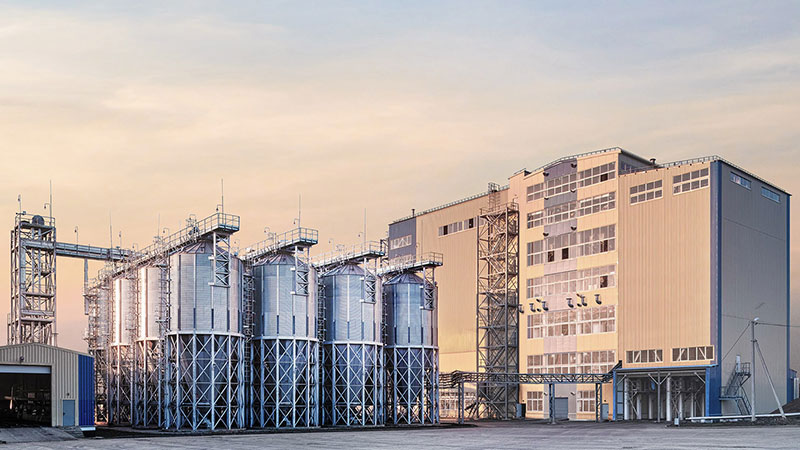
At RICHI, we go beyond project completion. With RICHI Servicee, we’re your dedicated partners in success. Count on us for expert guidance, minimal downtime, and optimized productivity. Choose RICHI for unmatched service and support.
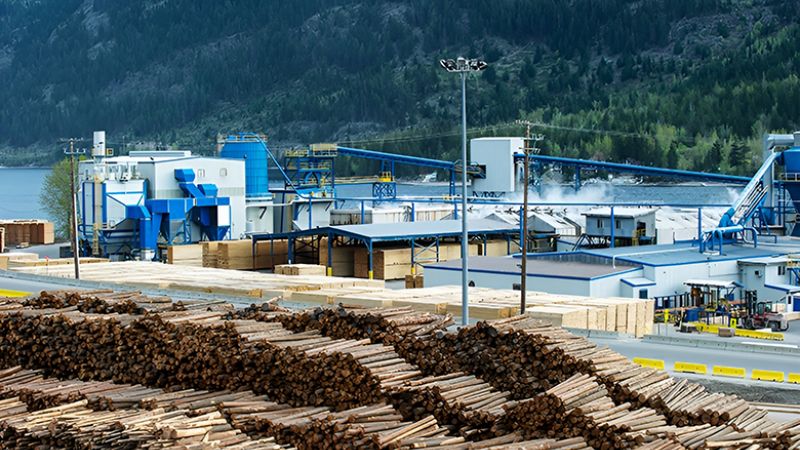


Meet global product demands and quality standards with industry-leading pellet plant design, engineering, equipment, and construction services for pellet processors.


Your Partner Beyond Project Completion
2000+ cases
RICHI is the leading designer, manufacturer and builder of pellet plants in the world, completing over 2000 projects in 140 countries across 6 continents.
Read More
Increase plant productivity, profitability, and safety by integrating high quality equipment into your pellet production line. Over the years, RICHI has become China's top pellet equipment manufacturer. At the same time, RICHI has established valuable partnerships with the world's leading component and raw material manufacturers to bring you the best there is in technology, automation, and efficiency in pelleting plant machinery.

For nearly 30 years, RICHI has been providing best-in-class pellet plant equipment and services to clients across a variety of industries, sizes, and needs. We pride ourselves on the knowledge and skill that each team member possesses – from our technical sales team to our process design engineers. You can count on RICHI Machinery to take your operation to the next level of innovation, quality, and success.
Need help with your pellet manufacturing plant project? Contact us today.
ANIMAL FEED
BIOMASS
WOOD
ORGANIC FERTILIZER
AQUA FEED
CAT LITTER
MUNICIPAL WASTE RECYCLING
SPECIAL PELLET PRODUCTION
RICHI Machinery continues to deliver world class pellet mill equipment, pellet plant engineering and project solutions that add value to our customers in the animal feed, wood waste, agriculture waste, organic fertilizer, cat litter and special pellet products industries. Throughout the years, we RICHI Machinery have built strong brand, becoming industry-leading pellet machine manufacturer. We value integrity, promise quality, and prioritize your success.
Learn MoreWith our expert team, we precisely implement your process engineering requirements in pellet mill and pelletizing plant systems. No matter which industry you’re in – we understand your needs and deliver solutions that meet the highest standards.
At RICHI, quality comes first. Our pellet making machine and related pellet line equipment undergo rigorous quality controls to ensure they meet the highest standards. Rely on products that are durable, safe, and efficient.
With decades of experience in pellet machine and pellet production line production, we have earned a reputation as a trusted partner in various industries. Our expertise allows us to cover a wide range of applications.
Not only do we offer premium pelleting equipment, but we are also experts at designing, building, installing, and maintaining facilities from the ground up. Our expertise is within pellt plant process design, discovering the most efficient, productive, and profitable way to handle your materials in an end-to-end cycle.
○ RICHI MACHINERY
Keeping in touch with us is an effective way to solve all your problems. If you have any needs or questions, please leave your contact information, then RICHI technical consultants will send design, quotation, videos to your mailbox. You can also contact us directly via WhatsApp: +86 13838389622
Copyright©2015-2026 by HENAN RICHI MACHINERY CO., LTD. All rights reserved.