
The Vietnamese customer did not purchase two pellet machines because crop straw suddenly becomes a complete livestock feed after compression. The commercial problem was more practical. Rice straw and maize stover were available seasonally in large volumes, but loose material occupied too much storage space, was difficult to transport between collection areas and cattle farms, and could not be metered as consistently as a densified roughage product.
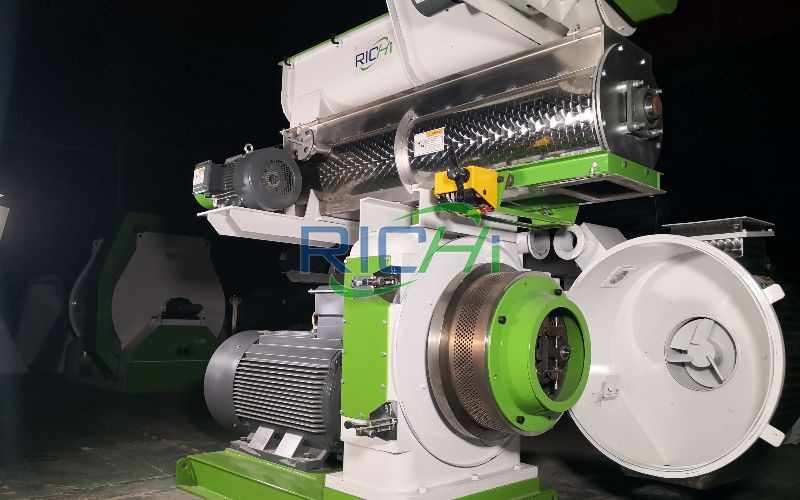
The Vietnamese customer did not purchase two pellet machines because crop straw suddenly becomes a complete livestock feed after compression. The commercial problem was more practical. Rice straw and maize stover were available seasonally in large volumes, but loose material occupied too much storage space, was difficult to transport between collection areas and cattle farms, and could not be metered as consistently as a densified roughage product.
A regional ruminant-feed processor therefore purchased two CZLH350 units as the first commercial module of a larger crop-residue feed project. The animal food crop straw pellet machines for sale in Vietnam were installed alongside the customer’s existing straw chopping, drying, grinding and mixing equipment.
Rather than immediately constructing one large automated line, the company chose two parallel pelletizers so it could run different straw formulations, maintain production during one-machine maintenance and validate local raw-material performance before expanding the surrounding storage, cooling and packing sections.
Name:
Crop Straw Pellet Mill
Country:
Vietnam
Date:
2026
Capacity:
2.0–2.4 T/H
Model:
CZLH350
Main Motor Power:
37 kW
Pellet Diameter:
4–12 mm
Main Application:
Rice straw and crop-residue pellets
The finished pellets are intended for cattle and buffalo.
That distinction is important.
Rice straw and maize stalk fibre can be useful components of ruminant feeding systems because cattle and buffalo can utilize fibrous materials through rumen fermentation. The same raw materials should not simply be converted into pellets and promoted as suitable poultry, pig or aquaculture feed.
The customer therefore positions the product as a straw-based ruminant feed pellet rather than a universal animal feed pellet.
Vietnam’s extensive rice cultivation creates a large seasonal stream of rice straw.
For cattle producers, rice straw is already a familiar roughage resource, particularly when fresh forage becomes limited.
But untreated rice straw has important nutritional limitations.
It is typically low in crude protein and relatively high in fibre and silica, which limit voluntary intake and digestibility. Pelletizing changes its physical form, but does not remove those nutritional constraints.
For this reason, the Vietnamese customer does not market pure rice-straw pellets as a high-performance complete feed.
The first product is a simple densified roughage pellet made primarily from properly prepared rice straw for customers that already balance the rest of the cattle ration themselves.
The second is a formulated straw-based supplemental pellet in which the crop fibre is combined with selected energy, protein, mineral or palatability ingredients according to the target cattle group.
This distinction gives the processor access to both feed traders seeking compact roughage and farms wanting a more formulated product.
Corn stalks and leaves can also be used in the project, but they are not assumed to behave exactly like rice straw.
Maize stover differs in stem thickness, leaf proportion, fibre composition, moisture and grinding behavior.
The plant therefore tests maize stover as a separate raw-material family and only blends it with rice straw after checking particle size, moisture and the required feed formulation.
This is more reliable than applying one fixed 50:50 crop-residue recipe to every harvest season.
Sugarcane bagasse is not treated as an interchangeable crop residue in this cattle-feed project.
Raw factory bagasse is highly fibrous and generally has poor digestibility and low nutrient density. It can be used in specialized ruminant feeding systems, particularly after appropriate physical, chemical or steam treatment and supplementation, but it should not automatically enter the same pellet formula as rice straw.
The Vietnamese plant therefore evaluates bagasse separately rather than feeding untreated factory residue into routine straw-pellet production.
Two units gave the project more flexibility than one larger pelletizer during the market-development stage.
One machine can run a rice-straw-rich product while the other is prepared for a maize-stover or formulated roughage campaign.
The plant can also continue partial production during die inspection or scheduled maintenance on one unit.
Most importantly, the customer can expand upstream and downstream equipment around a proven 2-machine module instead of committing to a much larger line before establishing stable raw-material contracts and regular pellet sales.
| Project Parameter | Specification |
|---|---|
| Equipment | Crop straw feed pellet machine |
| Model | CZLH350 |
| Quantity | 2 units |
| Main Motor Power | 37 kW per machine |
| Arch-Breaking Feeder | 2.2 kW |
| Forced Feeder | 0.75 kW |
| Ring Die Diameter | 350 mm |
| Available Pellet Diameter | 4–12 mm |
| Reference Capacity | Approximately 1.0–1.2 T/H per machine |
| Combined Reference Output | Approximately 2.0–2.4 T/H under suitable material conditions |
| Main Application | Rice straw and crop-residue pellets for cattle and buffalo feeding |
The combined nameplate range is approximately 2.0–2.4 T/H, but actual output depends strongly on straw composition.
A fine, well-prepared rice-straw formulation and a coarse, high-fibre maize-stover formulation can impose different loads on the ring die.
Moisture, particle size, formulation, pellet diameter and die compression all influence real throughput.
The customer therefore records capacity by product rather than presenting 2.4 T/H as a fixed result.
Field-collected crop residue first passes through preparation.
Whole rice straw and maize stalks are too long and inconsistent for controlled ring-die feeding.
They may also contain soil, stones, twine or other foreign material from collection.
The receiving stage therefore includes inspection and removal of unsuitable contaminants before size reduction.
Long straw is first reduced into a manageable short fibre.
This is a primary size-reduction step, not the final pelletizing particle size.
The chopped material can then be dried if required and passed through suitable grinding equipment so the fibre distribution matches the CZLH350 feeding and die system.
This two-stage approach is more realistic than claiming that simply cutting rice straw to 5–8 mm always makes it ready for pelletizing.
Very long fibres can bridge in bins and feeders.
Extremely fine grinding, however, consumes unnecessary electricity and can increase dust.
The plant therefore aims for a controlled fibre distribution that feeds consistently and forms a durable pellet without pulverizing the straw more than necessary.
The exact screen selection is established from material testing rather than one universal millimeter value.
Rice straw stored after harvest can range from relatively dry material to bales that have absorbed substantial environmental moisture.
The CZLH350 cannot compensate for large moisture fluctuations indefinitely.
Wet material can cause unstable feeding and poor pellet formation, while excessively dry fibre may require moisture adjustment before compression.
The customer therefore measures moisture before mixing and conditioning.
The client already owns drying equipment, but that does not mean every tonne of rice straw must pass through a dryer.
Sun-dried or well-stored straw may already be close to the required process condition.
Using thermal drying unnecessarily would increase operating cost.
The dryer is therefore activated according to measured incoming moisture.
The CZLH350 conditioning section is useful because controlled moisture and thermal input can soften the prepared material and help stabilize ring-die pellet formation.
Conditioning can also improve the physical consistency of a mixed formula before compression.
However, it does not increase crude protein or remove the lignin and silica responsible for much of rice straw’s low nutritive value.
Conditioning is therefore used to support physical pellet formation rather than as a substitute for nutritional formulation.
One of the most important buyer distinctions is between physical densification and nutritional upgrading.
The machine reduces bulk volume and converts loose fibre into a transportable pellet.
If a customer wants to improve the actual nutritive value of rice straw, the project may require supplementation, ensiling, urea treatment or another validated nutritional strategy in addition to mechanical processing.
Rice straw alone is deficient in several nutrients required for productive cattle growth or milk production.
The processor therefore advises customers to use pure straw pellets primarily as a roughage component.
For higher-performance animals, the total ration still needs adequate protein, fermentable energy, minerals and other nutrients.
This can come from the farm’s existing concentrate program or from a formulated pellet product.
If the customer produces an enriched cattle-feed pellet, ingredients cannot be added by rough volume.
Rice bran, molasses, protein meals, mineral premix and other components must be dosed according to a feed formulation.
Accurate batching also ensures that both CZLH350 machines receive essentially the same mash when they are running the same product.
Where the nutritionist includes it, molasses can provide fermentable carbohydrate and improve palatability while also helping physical pellet formation.
But excessive liquid addition changes die behavior and finished pellet moisture.
The plant therefore treats molasses as a formulation ingredient rather than an unlimited natural binder.
Rice straw commonly contains only a few percent crude protein.
For productive cattle, the total feeding program requires additional nitrogen or true protein sources.
Depending on local economics, the Vietnamese processor can formulate with suitable oilseed meals, bran, forage protein sources or other approved ingredients.
The exact combination is determined nutritionally rather than by the pellet machine.
Both cattle and buffalo can utilize fibrous crop residues much more effectively than monogastric livestock.
Vietnamese farms already use rice straw and other crop residues as roughage resources, particularly when green forage availability is limited.
Densification therefore improves an existing feeding resource instead of trying to create a completely unfamiliar feed market.
Loose straw is normally harvested during a relatively concentrated period but must often be used many months later.
Pelletizing can reduce the storage volume required per tonne of prepared dry material and simplify transport from agricultural collection areas to feed distributors or farms.
This gives the feed processor a way to convert a seasonal residue into a more standardized year-round inventory item.
Pelletizing wet straw does not make it shelf-stable.
If raw material moisture is excessive or finished pellets are packed before stabilization, the product can still deteriorate.
The process therefore includes appropriate moisture control and cooling before storage.
Fresh pellets leaving the ring die carry compression heat.
At the pilot-commercial stage, the customer can manage the initial production with appropriately sized downstream handling.
As both CZLH350 crop pellet machines move toward continuous parallel production, a dedicated cooler becomes increasingly important for stable bagging and storage.
This is one of the modules planned for the future integrated line.
The CZLH350 can work with different die-hole diameters within its available range.
For adult cattle and buffalo, the project focuses on a relatively large roughage pellet rather than very small poultry-style feed pellets.
The exact diameter depends on formulation, feeding method and customer preference.
Different ruminant-feed products may therefore use different pellet diameters according to their formulation and feeding method.
Pellet output is affected by die compression, raw-material friction and fibre behavior as well as hole diameter.
Changing from one pellet size to another may therefore require a different die specification and operating setup.
The customer evaluates both capacity and pellet durability when selecting the final production die.
The two-machine arrangement allows the processor to avoid unnecessary cross-product interruptions.
For example, one unit can remain on a rice-straw-rich commercial product while the second is used for a different crop-residue test campaign.
This is especially valuable during the early market-development phase when raw-material availability and customer preferences are still being mapped.
At approximately 2.0–2.4 T/H combined reference output, the installation is not designed for a household livestock keeper with a few cattle.
It is better matched to a regional feed processor, agricultural cooperative, feed dealer or commercial livestock supply operation aggregating straw from multiple farms.
This makes the raw-material supply volume more realistic.
Two CZLH350 units running together can consume tens of tonnes of prepared material over a multi-shift production week.
The client therefore works with farms and agricultural cooperatives rather than depending on one small rice grower.
Baling, transport, covered storage and seasonal inventory planning become part of the project economics.
A crop residue may appear almost free in the field but become much more expensive after baling, collection, transport, drying, grinding and storage.
The customer therefore compares delivered prepared-straw cost rather than assuming agricultural residue has zero raw-material value.
This is particularly important when deciding how far the plant can economically collect rice straw.
Rice straw may be produced across concentrated paddy-growing areas, while maize residues come from different farms and harvest schedules.
The processor therefore treats maize stover as a supplementary seasonal stream rather than assuming identical annual availability.
Field residues can contain stones, soil, pieces of plastic twine and occasional metal.
These contaminants increase wear and can damage downstream machinery.
Inspection, magnetic protection and appropriate cleaning are therefore incorporated before final pelletizing.
Even when a small stone does not break the pellet machine, excessive soil increases ash and introduces material that provides no nutritional value.
The customer therefore pays attention to harvesting and collection practices rather than treating cleaning only as machine protection.
Pellet shape alone does not determine cattle growth performance.
Pelletizing may reduce sorting and improve handling, but animal performance still depends on nutrient balance, forage quality, feeding level, health and management.
The customer therefore evaluates the pellet machine as part of a complete feed-preparation system rather than as an independent driver of livestock performance.
A pellet can be mechanically strong but nutritionally poor.
Likewise, a well-formulated feed can fail commercially if the pellets generate excessive fines.
The processor therefore evaluates both physical properties and feed formulation instead of using “high-quality pellet” as a vague single claim.
Rice straw is one of the most abundant fibrous crop residues across Southeast Asian rice-producing systems and has long been used as ruminant roughage.
Its limitations are equally well known: low protein, high fibre and relatively low digestibility.
That combination makes Vietnam an appropriate location for physical handling technologies such as chopping, densification and pelleting, provided the feed processor does not confuse densification with nutritional upgrading.
The Vietnamese client expects its strongest immediate benefit from storage and distribution.
Loose straw has low bulk density and is expensive to move relative to the amount of dry matter delivered.
Pellets are denser, easier to bag or convey and easier for commercial feed dealers to inventory.
This provides a practical commercial benefit through easier storage, handling and distribution of prepared crop residues.
The two CZLH350 pelletizers were exported from Qingdao and delivered through the Ho Chi Minh City port system before inland transport to the customer’s feed-processing site.
The shipment included the main machines, feeding components, selected die equipment, electrical documentation and recommended commissioning parts.
Transit and customs-clearance time are confirmed according to the actual vessel schedule and import arrangements.
The client already had straw chopping, drying and mixing equipment.
RICHI therefore focused on machine interfaces, material flow, supporting steel, electrical connections and space for future cooling and packaging equipment.
This prevented the project from becoming an unnecessarily expensive turnkey line during the market-test phase.
The customer first tested a stable rice-straw-based formulation.
This allowed the operators to establish feeder behavior, conditioning, motor load and die performance using one known fibre source.
Only after those settings were stable did the plant introduce maize stover or additional formula ingredients.
Starting with several variable crop residues at the same time would have made troubleshooting much harder.
Crop fibres have low and variable bulk density.
They can bridge above conventional gravity-fed equipment and create fluctuations in ring-die load.
The arch-breaking and forced-feeding system therefore plays an important role in maintaining a more consistent feed rate into the CZLH350.
A crop straw feed pelletizer has to cope with much more fibrous material than a conventional maize-soy poultry formulation.
Feeding behavior, die compression and fibre preparation therefore receive greater attention.
Customers comparing equipment should not select a machine solely because another pellet mill has the same motor power.
For a buyer searching for a rice straw feed pellet machine in Vietnam, the most important question is whether the required product is pure densified roughage or a formulated cattle feed pellet.
Those two products may use the same ring-die equipment but require very different batching and nutritional control.
A cattle feed straw pellet machine can compact rice straw, maize stover and other suitable fibrous ingredients after proper preparation.
The pelletizer changes the physical form of the feed; protein and energy supplementation still have to come from the complete ration design.
The term crop residue feed pellet machine covers several agricultural materials, but not every residue is nutritionally equivalent.
Rice straw, maize stover, peanut vines, cassava foliage and sugarcane bagasse all require different evaluation before being placed in a ruminant formula.
Buyers using the term forage straw pellet machine are often trying to reduce storage volume or stabilize seasonal roughage supply.
For those projects, raw-material moisture, fibre length and annual collection volume often determine the equipment configuration before nutritional formulation becomes the next step.
A livestock roughage pellet machine is particularly relevant to commercial cattle and buffalo operations that want a denser way to transport and meter fibrous material.
It should not be confused with a complete compound-feed plant unless the process also includes accurate batching of all required nutrients.
Rice straw pelletizing can be one part of a strategy for using crop residues during seasonal forage shortages.
Its main strengths are densification, easier handling and reduced segregation of formulated ingredients, not automatic improvement of the straw’s crude protein.
This Animal Food Crop Straw Pellet Machine for Sale in Vietnam project uses two CZLH350 ring-die pelletizers as a parallel commercial module for a regional ruminant-feed processor.
The customer sources rice straw primarily from farming cooperatives and agricultural collection networks, with maize stover used as a secondary crop-residue stream. Untreated sugarcane bagasse is not automatically included in the standard formula because its high fibre and low digestibility require separate nutritional and processing evaluation.
Each CZLH350 uses a 37 kW main motor, 2.2 kW arch-breaking feeder and 0.75 kW forced feeder, with a 350 mm ring die and approximately 1.0–1.2 T/H reference production capacity. Two units provide roughly 2.0–2.4 T/H combined reference output under suitable material conditions while also giving the processor flexibility to run different formulations or maintain one machine without completely stopping production.
The complete production logic is crop-residue inspection, primary chopping, moisture control, secondary size reduction where required, formulation and mixing, conditioning, ring-die pelletizing, cooling, screening and packing. Crop straw cannot move directly from the field into the pellet mill, and conditioning does not transform low-protein straw into complete high-performance cattle feed.
The most realistic commercial value comes from turning seasonal, low-density roughage into a compact and standardized feed material that is easier to store, transport, dose and sell. Where greater nutritional performance is required, the straw must be combined with appropriate protein, energy, mineral and other feed ingredients rather than relying on pelletizing alone.
For another customer comparing an animal food crop straw pellet machine for sale in Vietnam, rice straw feed pellet machine, cattle feed straw pellet machine, crop residue feed pellet machine, forage straw pellet machine, livestock roughage pelletizer or rice straw pelletizer for cattle feed, RICHI Machinery would first review the actual crop residue, annual available tonnage, collection radius, incoming moisture, fibre size, desired pellet diameter, intended inclusion in the cattle ration, existing chopping and drying equipment, required hourly output and whether the finished product will be sold as roughage pellets or formulated feed.
The correct machine selection starts with the role the straw will play in the ration, not simply with the amount of straw available after harvest.
Having the right mix of reliable, high-quality pellet machine and pelletizing systems and expert support is essential to your success. Watch how our end-to-end feed pellet plant solutions have helped our customers optimize their performance.
Our customized and future-proofed turnkey pellet plant solutions is designed with you at the core. From vision to reality and beyond, our team stays connected with yours. Giving you peace-of-mind with an expert at your side.
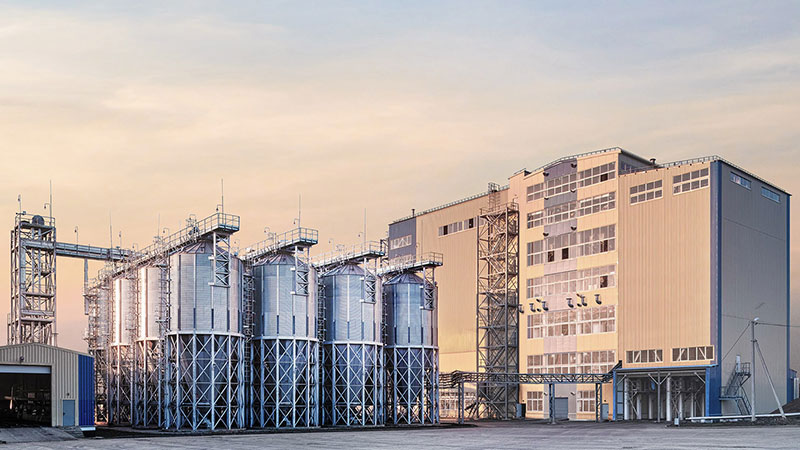
At RICHI, we go beyond project completion. With RICHI Servicee, we’re your dedicated partners in success. Count on us for expert guidance, minimal downtime, and optimized productivity. Choose RICHI for unmatched service and support.
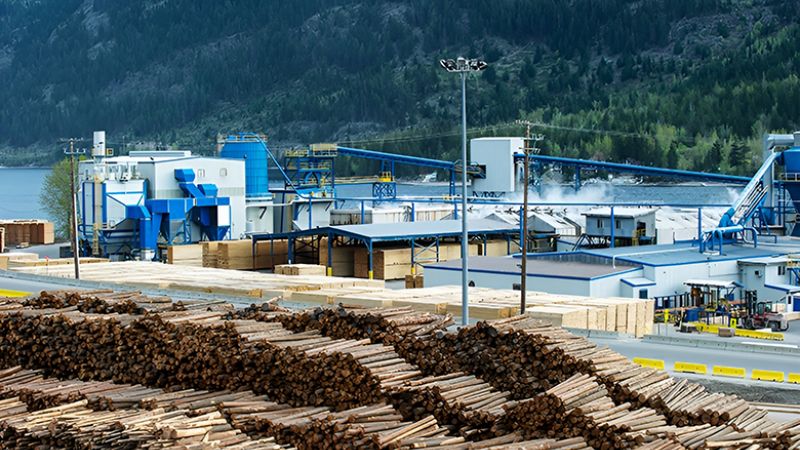


Meet global product demands and quality standards with industry-leading pellet plant design, engineering, equipment, and construction services for pellet processors.


Your Partner Beyond Project Completion
2000+ cases
RICHI is the leading designer, manufacturer and builder of pellet plants in the world, completing over 2000 projects in 140 countries across 6 continents.
Read More
Increase plant productivity, profitability, and safety by integrating high quality equipment into your pellet production line. Over the years, RICHI has become China's top pellet equipment manufacturer. At the same time, RICHI has established valuable partnerships with the world's leading component and raw material manufacturers to bring you the best there is in technology, automation, and efficiency in pelleting plant machinery.

For nearly 30 years, RICHI has been providing best-in-class pellet plant equipment and services to clients across a variety of industries, sizes, and needs. We pride ourselves on the knowledge and skill that each team member possesses – from our technical sales team to our process design engineers. You can count on RICHI Machinery to take your operation to the next level of innovation, quality, and success.
Need help with your pellet manufacturing plant project? Contact us today.
ANIMAL FEED
BIOMASS
WOOD
ORGANIC FERTILIZER
AQUA FEED
CAT LITTER
MUNICIPAL WASTE RECYCLING
SPECIAL PELLET PRODUCTION
RICHI Machinery continues to deliver world class pellet mill equipment, pellet plant engineering and project solutions that add value to our customers in the animal feed, wood waste, agriculture waste, organic fertilizer, cat litter and special pellet products industries. Throughout the years, we RICHI Machinery have built strong brand, becoming industry-leading pellet machine manufacturer. We value integrity, promise quality, and prioritize your success.
Learn MoreWith our expert team, we precisely implement your process engineering requirements in pellet mill and pelletizing plant systems. No matter which industry you’re in – we understand your needs and deliver solutions that meet the highest standards.
At RICHI, quality comes first. Our pellet making machine and related pellet line equipment undergo rigorous quality controls to ensure they meet the highest standards. Rely on products that are durable, safe, and efficient.
With decades of experience in pellet machine and pellet production line production, we have earned a reputation as a trusted partner in various industries. Our expertise allows us to cover a wide range of applications.
Not only do we offer premium pelleting equipment, but we are also experts at designing, building, installing, and maintaining facilities from the ground up. Our expertise is within pellt plant process design, discovering the most efficient, productive, and profitable way to handle your materials in an end-to-end cycle.
○ RICHI MACHINERY
Keeping in touch with us is an effective way to solve all your problems. If you have any needs or questions, please leave your contact information, then RICHI technical consultants will send design, quotation, videos to your mailbox. You can also contact us directly via WhatsApp: +86 13838389622
Copyright©2015-2026 by HENAN RICHI MACHINERY CO., LTD. All rights reserved.