
Two alfalfa pellet mills in Kansas were selected by a livestock and forage operation in western Kansas that wanted to convert part of its own alfalfa hay into dense, uniform feed pellets. The farm already handled large volumes of baled forage and had grinding, ingredient handling and storage equipment in place, so the project focused on adding pelletizing capacity rather than building a completely new feed plant.
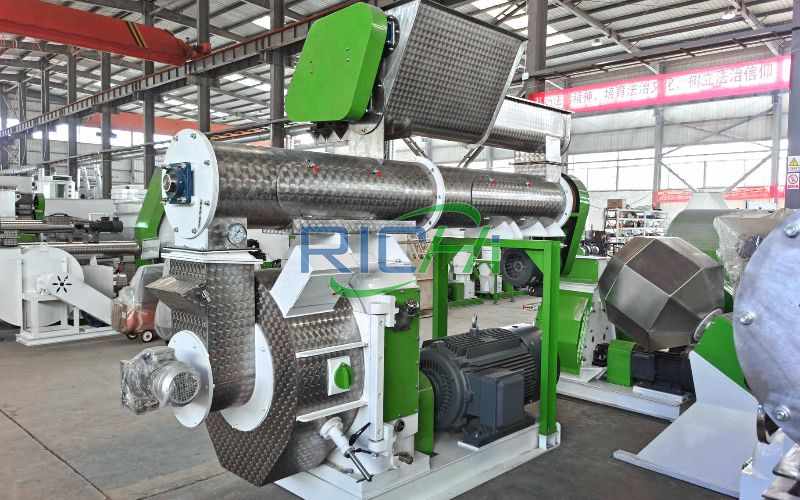
Two alfalfa pellet mills in Kansas were selected by a livestock and forage operation in western Kansas that wanted to convert part of its own alfalfa hay into dense, uniform feed pellets. The farm already handled large volumes of baled forage and had grinding, ingredient handling and storage equipment in place, so the project focused on adding pelletizing capacity rather than building a completely new feed plant.
The customer purchased two CZLH520 alfalfa pellet mills, each rated at approximately 2.8–3.0 T/H under suitable material conditions. The machines are mainly used for alfalfa-based cattle and sheep feed, giving the farm another way to use its forage while improving handling, storage and control over finished feed specifications.
Name:
alfalfa hay pellet mill
Country:
USA
Date:
2025
Capacity:
2.8–3.0 T/H
Model:
CZLH520
Main Motor Power:
132 kW
Raw Materials:
Ground alfalfa hay
Pellet diameter:
6–8 mm
Alfalfa was not a new raw material for this customer. The farm had been growing, baling and storing hay for years, using part of the crop internally and marketing part of it in conventional bale form.
The reason for adding alfalfa pellet mills in Kansas was not that baled hay had suddenly become unsuitable. The customer wanted another processing option for selected forage lots and for smaller hay fractions generated during bale handling.
Baled forage occupies considerable storage space, and loose material produced during handling can be inconvenient to meter and move. Once alfalfa is properly ground and pelletized, the material becomes much more uniform in physical form.
This was particularly useful for the farm's planned cattle and sheep feeding programs. Instead of depending entirely on purchased pelleted forage when a pellet form was required, the customer could process its own alfalfa and control what entered the product.
The investment also gave the operation greater flexibility during the year. High-quality hay could still be stored or marketed in bale form, while appropriate alfalfa lots could be directed to the pelletizing section according to feed demand and raw material availability.
The customer was not starting from bare land.
Its existing forage processing area already included equipment for handling hay bales, reducing forage size and moving prepared material between processing stages. Storage and basic ingredient handling infrastructure were also available.
Replacing all of that equipment with a new turnkey line would have increased investment without solving an additional problem.
The missing stage was commercial pelletizing.
RICHI therefore configured the project around two CZLH520 alfalfa pellet making machines. The machines could be connected to the customer's existing preparation system while downstream cooling and pellet handling were arranged around the new pelletizing section.
Using two machines also gave the customer more production flexibility than concentrating the required capacity in one unit. Both pellet mills can operate during scheduled high-output production, while one machine can remain available when the other is stopped for inspection, ring die work or routine maintenance.
For an operation producing feed according to seasonal requirements rather than running a commodity pellet factory at one constant output every day, that flexibility was important.
The primary material processed in this Alfalfa Pellet Mills in Kansas project is cured alfalfa hay produced by the customer's own farming operation.
The farm stores the hay in bale form after harvest. Before a bale is assigned to pellet production, the material is checked for general condition and moisture. Hay with obvious spoilage or unsuitable contamination is not made acceptable simply by passing it through an alfalfa grass pellet machine.
The customer also has access to wheat straw and dry grain ingredients. These can be used in selected feed formulations where required, but the project remains centered on alfalfa rather than trying to make one machine serve unrelated raw-material businesses.
The two principal product routes are straight or predominantly alfalfa forage pellets and formulated alfalfa-based feed pellets containing suitable dry ingredients.
The exact formulation depends on how the finished feed will be used. RICHI therefore did not impose one fixed percentage of alfalfa, straw and grain for every batch.
This is an important point for farms considering alfalfa pellet equipment.
The CZLH520 is the pelletizing machine, not a bale breaker or primary forage crusher. Whole rectangular or round bales cannot simply be placed at the pellet mill inlet.
The customer's existing equipment first opens the bales and reduces the forage to a more suitable size. Ground material must be sufficiently uniform to feed continuously and distribute properly before compression through the ring die.
Excessively long fibers can cause unstable feeding and reduce useful output. At the other extreme, unnecessary over-grinding adds power consumption and can create more fine material than the process requires.
Moisture is checked at the same stage.
Alfalfa that is too dry can become more difficult to form into durable pellets and may generate excessive fines. Material carrying too much moisture can create problems during pellet formation, cooling and subsequent storage.
For this reason, RICHI evaluated the customer's actual forage condition rather than selecting the alfalfa pellet mills in Kansas solely from an hourly capacity requirement.
The customer selected two CZLH520 units after the required output was compared with the capacity of the existing forage preparation equipment and the amount of alfalfa the farm actually intended to pellet.
| Project Item | Specification |
|---|---|
| Equipment | Alfalfa pellet mill |
| Model | CZLH520 |
| Quantity | 2 units |
| Main Motor Power | 132 kW per unit |
| Ring Die Diameter | 520 mm |
| Primary Raw Material | Ground alfalfa hay |
| Other Applicable Feed Materials | Selected dry forage and grain ingredients |
| Project Pellet Diameter | 6–8 mm |
| Rated Capacity | Approximately 2.8–3.0 T/H per unit under suitable conditions |
| Combined Pelletizing Capacity | Approximately 5.6–6.0 T/H under suitable conditions |
The customer did not calculate the project simply as “two machines equal 6 tons every hour.” Actual output changes with forage condition, moisture, particle size, formulation and ring die configuration.
This distinction matters when comparing alfalfa pellet machine suppliers. A catalog capacity without corresponding raw-material information tells a buyer very little about the output that can actually be achieved on a particular farm.
The principal finished specification for this project is 6–8 mm alfalfa-based pellets.
The customer mainly uses the pelletized material within cattle and sheep feeding programs, so there was no commercial reason to manufacture numerous pellet diameters simply because the machine could accept different ring dies.
Product specification is evaluated together with formulation, pellet durability, fines and the way the finished pellets will be incorporated into the feeding program.
This is also why the customer does not treat pelletized alfalfa as a universal replacement for long-stem forage.
Ruminant feeding still requires a properly designed ration. The value of the pellet mills is that they provide an additional processed forage form with more consistent physical characteristics, not that pelletizing somehow eliminates normal nutritional considerations.
One of the most noticeable differences was material handling.
Ground alfalfa is relatively bulky and can generate fines during repeated transfer. Compressing prepared forage into pellets creates a denser and more standardized product that is easier to meter through suitable feed handling equipment.
The farm also gained a practical use for appropriate smaller hay fractions collected during bale handling and preparation. Material that meets feed-quality requirements can be incorporated into the pellet production process instead of becoming an inconvenient loose fraction.
Storage planning became more flexible as well. The farm can maintain conventional hay inventory while producing pellets according to feeding requirements rather than converting the entire alfalfa harvest into one product form.
For the customer, this flexibility was more valuable than simply claiming that pelletizing was always cheaper than feeding hay.
Because this was a standalone-machine purchase, equipment interfaces received considerable attention before shipment.
After bale opening and grinding, prepared alfalfa is transferred toward the pelletizing section. Depending on the product being made, additional dry feed ingredients can be incorporated before the material reaches the two CZLH520 machines.
The pellet mills then perform the main densification step.
Material is compressed through the ring die and cut into the required pellet form. Pellets leaving the machine are still warm and need appropriate downstream cooling before they are ready for storage.
Screening can separate excessive fines from acceptable finished pellets, particularly when the customer requires a consistent commercial specification.
RICHI reviewed feeding capacity, inlet and outlet positions, electrical load, maintenance access and downstream pellet handling before finalizing the installation arrangement.
These details are particularly important in a retrofit project. A pellet mill can have the correct capacity on paper and still become a poor investment if the customer's existing grinder cannot supply enough material or the workshop layout makes feeding and maintenance difficult.
The customer installed the two CZLH520 units in a fixed forage processing area rather than attempting to operate industrial pellet mills as movable field machinery.
Each pellet mill uses a 132 kW main motor, and that figure represents only part of the electrical demand. Feeders, conveyors, cooling equipment and other auxiliary machines also have to be included when calculating the connected load.
RICHI therefore reviewed the power requirements together with the customer before installation.
For another farm considering alfalfa pellet mills in Kansas, available voltage and electrical infrastructure should be confirmed early. Selecting the pelletizer first and discovering later that the site cannot support the required load can add unnecessary cost and delay.
A pellet mill cannot manufacture material that the equipment before it fails to supply.
If the bale handling and grinding section prepares only 2 T/H, installing 6 T/H of pelletizing capacity does not create a 6 T/H alfalfa pellet production line system.
RICHI therefore discussed the customer's bale-breaking rate, grinding capacity, material storage between processes and expected operating schedule before confirming the equipment.
The farm also considered how much of its annual alfalfa production would realistically be pelletized.
Some hay would continue to be used or sold in bale form. The objective was not to force the entire forage harvest through the two pellet mills simply to maximize machine operating hours.
This production balance helped justify two CZLH520 machines: enough capacity for commercial forage pellet production without purchasing equipment substantially beyond the farm's planned use.
The two CZLH520 pellet mills were shipped by sea from Qingdao Port in China to the United States.
Before shipment, RICHI prepared the machines for long-distance ocean transportation and supplied the technical drawings and installation information required for site preparation.
Because Kansas is an inland state, ocean freight is only one part of the equipment logistics. The U.S. arrival port can be selected according to the actual shipping route, freight cost and inland transportation arrangement rather than assuming that one seaport is automatically the best choice for every Kansas project.
Foundation preparation, electrical connections and the position of surrounding equipment were discussed before delivery so that installation would not begin with avoidable workshop modifications.
The startup period reinforced one point that had already been discussed during equipment selection: raw material preparation directly affects pelletizing performance.
When the alfalfa was ground consistently and moisture remained within the established operating range, feeding and pellet formation were stable. When forage condition varied substantially, operators obtained better results by correcting the upstream preparation rather than repeatedly changing pellet mill settings.
The customer also found the two-machine arrangement useful in day-to-day production.
Both CZLH520 units can operate when a larger batch is scheduled. During lower-demand periods, production does not always require both machines. Routine maintenance can therefore be planned without making the entire pelletizing section dependent on a single unit.
Another positive point was that the farm retained most of its existing equipment. The investment upgraded a specific processing stage rather than forcing the customer to discard machinery that was still doing its job.
Kansas combines an established livestock industry with significant forage production, which creates a practical base for alfalfa processing projects. However, access to alfalfa alone does not automatically justify investing in commercial pellet equipment.
The economics depend on what the farm currently does with its hay, how much material is available, whether grinding equipment already exists, how many hours the pellet mills will operate and what value the pelletized product provides compared with the existing use of the forage.
A farm producing only a limited amount of hay may not need two CZLH520 machines. A larger forage processor supplying multiple livestock customers may require substantially more capacity.
This is why RICHI treats Alfalfa Pellet Mills in Kansas as a project-selection question rather than simply a machine-sales question.
This project provides a useful reference for livestock farms, forage businesses and feed producers that already control a substantial alfalfa supply and want to add pellet production to an existing operation.
Before recommending a model, RICHI Machinery needs to understand how the alfalfa arrives at the processing area: large round bales, rectangular bales, chopped forage or already-ground meal. Moisture, required pellet output and target pellet diameter also affect equipment selection.
Existing machinery is equally important.
A customer that already owns suitable bale breaking, grinding and material handling equipment may only need pelletizing, cooling and screening. Another project beginning with whole bales and no processing equipment will require a very different scope even if both customers search for the same alfalfa pellet mill.
For an accurate proposal, customers considering alfalfa pellet mills in Kansas can provide RICHI with their annual or daily alfalfa volume, raw material form and moisture, required T/H, target pellet size, intended feed application, available power supply and a list of equipment already installed.
RICHI Machinery can then determine whether two CZLH520 units like those used in this Kansas project are appropriate, whether one machine would be sufficient, or whether another model would provide better utilization. The purpose is not to sell the largest possible pellet mill, but to build the pelletizing section around the forage the customer actually has, the equipment already paid for and the amount of finished product the operation genuinely needs.
Having the right mix of reliable, high-quality pellet machine and pelletizing systems and expert support is essential to your success. Watch how our end-to-end feed pellet plant solutions have helped our customers optimize their performance.
Our customized and future-proofed turnkey pellet plant solutions is designed with you at the core. From vision to reality and beyond, our team stays connected with yours. Giving you peace-of-mind with an expert at your side.
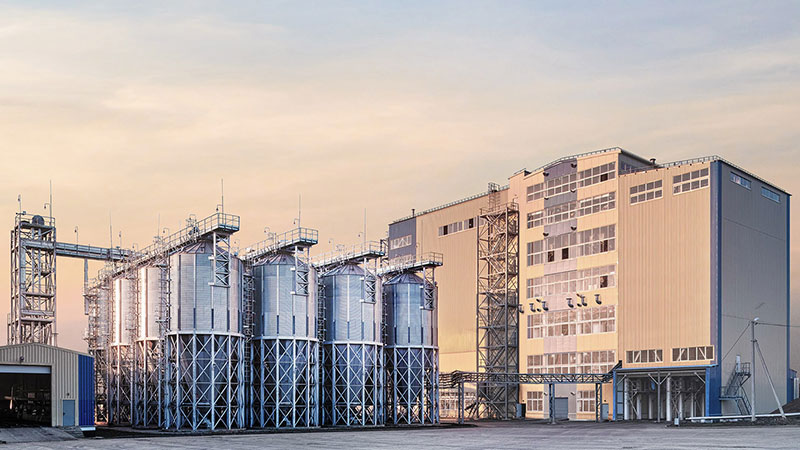
At RICHI, we go beyond project completion. With RICHI Servicee, we’re your dedicated partners in success. Count on us for expert guidance, minimal downtime, and optimized productivity. Choose RICHI for unmatched service and support.
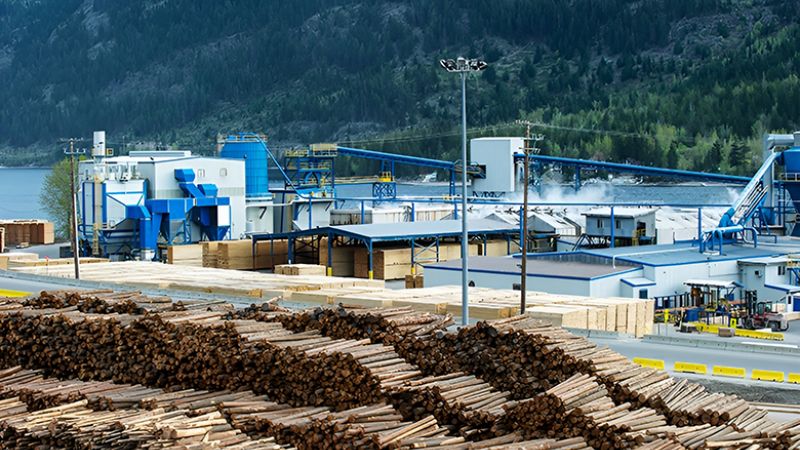


Meet global product demands and quality standards with industry-leading pellet plant design, engineering, equipment, and construction services for pellet processors.

Your Partner Beyond Project Completion
2000+ cases
RICHI is the leading designer, manufacturer and builder of pellet plants in the world, completing over 2000 projects in 140 countries across 6 continents.
Read More
Increase plant productivity, profitability, and safety by integrating high quality equipment into your pellet production line. Over the years, RICHI has become China's top pellet equipment manufacturer. At the same time, RICHI has established valuable partnerships with the world's leading component and raw material manufacturers to bring you the best there is in technology, automation, and efficiency in pelleting plant machinery.

For nearly 30 years, RICHI has been providing best-in-class pellet plant equipment and services to clients across a variety of industries, sizes, and needs. We pride ourselves on the knowledge and skill that each team member possesses – from our technical sales team to our process design engineers. You can count on RICHI Machinery to take your operation to the next level of innovation, quality, and success.
Need help with your pellet manufacturing plant project? Contact us today.
ANIMAL FEED
BIOMASS
WOOD
ORGANIC FERTILIZER
AQUA FEED
CAT LITTER
MUNICIPAL WASTE RECYCLING
SPECIAL PELLET PRODUCTION
RICHI Machinery continues to deliver world class pellet mill equipment, pellet plant engineering and project solutions that add value to our customers in the animal feed, wood waste, agriculture waste, organic fertilizer, cat litter and special pellet products industries. Throughout the years, we RICHI Machinery have built strong brand, becoming industry-leading pellet machine manufacturer. We value integrity, promise quality, and prioritize your success.
Learn MoreWith our expert team, we precisely implement your process engineering requirements in pellet mill and pelletizing plant systems. No matter which industry you’re in – we understand your needs and deliver solutions that meet the highest standards.
At RICHI, quality comes first. Our pellet making machine and related pellet line equipment undergo rigorous quality controls to ensure they meet the highest standards. Rely on products that are durable, safe, and efficient.
With decades of experience in pellet machine and pellet production line production, we have earned a reputation as a trusted partner in various industries. Our expertise allows us to cover a wide range of applications.
Not only do we offer premium pelleting equipment, but we are also experts at designing, building, installing, and maintaining facilities from the ground up. Our expertise is within pellt plant process design, discovering the most efficient, productive, and profitable way to handle your materials in an end-to-end cycle.
○ RICHI MACHINERY
Keeping in touch with us is an effective way to solve all your problems. If you have any needs or questions, please leave your contact information, then RICHI technical consultants will send design, quotation, videos to your mailbox. You can also contact us directly via WhatsApp: +86 13838389622
Copyright©2015-2026 by HENAN RICHI MACHINERY CO., LTD. All rights reserved.