
Alfalfa granulating machine for sale in Mexico, sized for 5 t/h of finished 8 mm pellets. See dry hay preparation, press sizing and retrofit requirements.
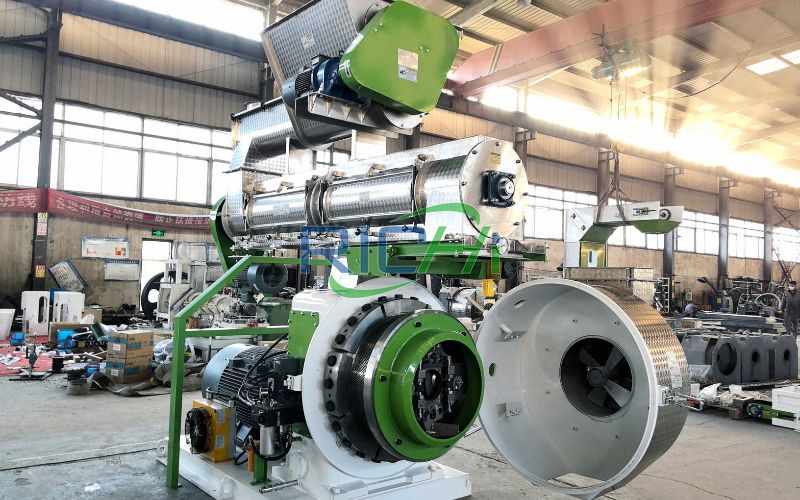
The production target for this alfalfa granulating machine for sale in Mexico is five tonnes of cooled, screened pellets per hour. The customer is a mid-sized forage processor with drying and mixing equipment in place. The project centres on one press for dehydrated alfalfa used in dairy cattle, sheep and goat rations.
RICHI sized the pressing package around one CZLH768. The facility retains the preparation stages of its existing alfalfa pellet production line. Ground alfalfa also has a route to market as forage meal for buyers who formulate and mix their own feed.
Name:
Alfalfa pellet press retrofit
Country:
Mexico
Date:
2025
Capacity:
5T/H
Model:
CZLH768
Main Motor Power:
250 kW
Raw materials:
Dehydrated alfalfa; optional sorghum or maize blend
Pellet Diameter:
8mm
Dehydrated alfalfa, also called lucerne, is the starting material. When it comes in bales, remove twine, break up the bale and check for stones and metal before milling. Start with a 3.2 mm hammer mill screen for the fibre trial and inspect the grind. The screen opening describes the milling setup; the die bore sets pellet diameter.
A load of ready-ground alfalfa meal can bypass milling if its particle distribution meets the press specification. Dry material that passes the receiving checks can also bypass dehydration. Use 10–12% moisture on a wet basis as an initial window for assessing the prepared hay, and isolate any lot that shows heating or spoilage.
An alfalfa hay pellet press in Mexico may receive leafy meal one week and a stemmier grind the next. A feeder calibrated on the first lot can deliver fewer kilograms at the same speed on the second. Weigh a timed sample when the crop lot changes and use that result to set the feed rate.
The selected CZLH768 grass pellet machine uses an anti-bridging feeder to keep light fibre moving at the hopper outlet. A forced feeder supplies the compression chamber. This arrangement gives the operator a way to control the flow of meal as the die takes load.
| Specification | Press package |
|---|---|
| Model and quantity | One CZLH768 ring die press |
| Finished alfalfa pellet target | 5 t/h after cooling and screening |
| Pellet diameter | 8 mm nominal design |
| Dry forage press reference | 6–8 t/h, depending on material and die |
| Ring die inner diameter | 762 mm |
| Main motor | 250 kW |
| Hopper anti-bridging drive | 4 kW |
| Force feed drive | 1.5 kW |
RICHI sizes the alfalfa pellet making machine for the flow through the die, including the portion that returns from the screen. Die compression and feed settings are selected against a representative hay sample. The dry forage reference gives a basis for selection; the sustained rate is verified on the specified recipe and die.
The sizing balance for this alfalfa granulating machine for sale in Mexico starts at the bagger: 5,000 kg/h at 11% moisture. In the example, 2% of the cooled stream is screened out and returned to the same formula. To deliver five tonnes of accepted pellets, the screen has to receive about 5,102 kg/h.
At a warm discharge moisture of 12%, the press must deliver about 5,160 kg/h. Cooling removes about 58 kg/h of water to reach the 11% example. The calculation uses wet-basis moisture, assumes that dry solids are retained and accounts for the screen return within the circuit.
| Measurement point | Sizing example |
|---|---|
| Warm discharge at 12% moisture | About 5,160 kg/h |
| Cooled pellets to the screen at 11% | About 5,102 kg/h |
| Screened material returned to the press | About 102 kg/h |
| Accepted pellets at packing | 5,000 kg/h |
When comparing alfalfa pellet press capacity in Mexico, agree on where the tonnes are weighed. A press discharge reading includes material that has yet to cool and pass the screen. Test the packed sample for remaining fines and breakage separately; the 2% in this calculation is a return allowance.
At the design moisture of 11%, the example needs 5 t/h of fresh prepared meal plus about 102 kg/h of return. About 58 kg/h of net moisture addition would close that balance at the press outlet. Actual conditioning depends on the moisture and temperature of the meal and the result of the die trial.
At five tonnes of accepted pellets an hour, seven productive hours give 35 tonnes. A second run of the same length adds another 35 tonnes at the same hourly rate. Reserve time for start-up, die inspection and clearing the product route between recipes when planning the actual shift.
Run the acceptance trial through packing with the intended pellet size. Record fresh meal use, warm discharge, screen return and packed weight over the same interval. If the bagger waits while warm pellets accumulate ahead of the cooler, the finishing stage has to be checked before increasing the press feed.
In the Comarca Lagunera dairy region of Coahuila and Durango, irrigated alfalfa is grown alongside other forage crops such as maize and sorghum. For a processor buying hay by the lot, differences in cut and leaf content can matter more to the feed buyer than the appearance of the finished pellet.
Buyers assessing alfalfa pellet equipment for dairy feed in Mexico can start with an 8 mm sample. The diameter is a practical commercial format for this design. Check pellet length at the cutter and run the sample through the buyer's handling equipment, especially where it passes from a bin into a mixer.
A supplier can deliver a more useful ingredient specification by reporting moisture, crude protein, fibre and ash by lot. State the basis of each analysis. Two bags with the same weight can supply different amounts of dry forage, and a high proportion of stems or soil can affect the result.
Dairy farms can use the pellets as a weighed ingredient in a mixed ration. The nutritionist still accounts for the long forage needed in that ration. Sheep and goat buyers may request a smaller pellet for their feeding setup; a 4 mm option can be assessed separately with its own die and output trial.
Check moisture at the cooler outlet and use no more than 5 °C above ambient as an initial discharge temperature limit for the trial. Inspect the pellets again after a representative transfer. A hard drop or an unsuitable conveyor can create fines between the screen and the bag.
The main product is pure dehydrated alfalfa. The processor can also make alfalfa and sorghum feed pellets in Mexico as a separate item. A trial batch of one tonne can use 850 kg of prepared alfalfa and 150 kg of ground sorghum, weighed as received into the mixer before conditioning.
The 85:15 example sits within a 10–20% grain inclusion range for product trials. Ground maize can be assessed as a separate grain option. Use the analyses of both ingredients to set the final formula, and check how the blend changes feeder behaviour, die load and pellet durability.
At a fresh feed rate of 5 t/h, the 85:15 blend would draw 4.25 t/h of prepared alfalfa and 750 kg/h of ground grain on that weight basis. Check the batch weighers and mixer against that demand, including filling and discharge time. Screen return stays with the same recipe.
The operator can schedule a pure alfalfa run ahead of a grain blend and clear the conveying and return routes between batches. Use a separate product name and lot record for the blend. The buyer then knows which ingredient is in the bag even if both products have the same diameter.
Other feed runs can use properly prepared grass hay or a forage mixture formulated for a named buyer. Assess the grind, moisture and die choice for each material. A capacity check on pure alfalfa does not establish how quickly the same press can run a stem-rich grass batch.
For an industrial forage pelletizer in Mexico, the layout review starts at the discharge. The cooler must accept about 5.16 t/h of warm pellets in the design example, and the screen must take about 5.10 t/h of cooled material. Confirm the available height and conveying capacity at those connections.
For a 20 kg bag order, a five-tonne hour means weighing and closing 250 bags. Over seven productive hours that is 1,750 bags. Check bag supply, takeaway and pallet loading against that rate so the mill can keep the bagger clear between pallet changes.
Retain the dryers and mixers that meet the required prepared-feed rate. Check any existing cooler, screen, return route and bagger against their own loads before reusing them. A press, its feeders and its connections make up the single-machine package; required changes to other stages are scoped separately.
The 250 kW main drive and the two feed drives total 255.5 kW of motor ratings. The preparation and finishing stages have their own electrical loads. For Mexico's 60 Hz supply, confirm plant voltage, phase, available starting capacity and control requirements before finalising the drive package.
Allow access to remove the die and rollers and check the support and lifting arrangement against the equipment drawing. Review dust extraction at milling, transfers and screening. Base the operating energy comparison on metered consumption per tonne packed under the same recipe and moisture conditions.
For a shipment from Qingdao, Manzanillo in Colima is a Pacific port option for onward road delivery to the mill. Confirm the packed dimensions and heaviest lift before setting the freight and unloading plan. The quote can then separate the press package from delivery, rigging and site connections.
An alfalfa pellet mill retrofit in Mexico is easier to price when the product is defined first. The equipment brief for this mill starts with a pure alfalfa pellet, an 8 mm die and a five-tonne hourly target at packing. The grain blend gets its own trial and can be quoted with its own production assumptions.
Send those details to RICHI Machinery for a quote on an alfalfa granulating machine for sale in Mexico. We can match the press and die to the sample, specify the capacity test at the packing point and identify which existing machines can stay in service.
Having the right mix of reliable, high-quality pellet machine and pelletizing systems and expert support is essential to your success. Watch how our end-to-end feed pellet plant solutions have helped our customers optimize their performance.
Our customized and future-proofed turnkey pellet plant solutions is designed with you at the core. From vision to reality and beyond, our team stays connected with yours. Giving you peace-of-mind with an expert at your side.
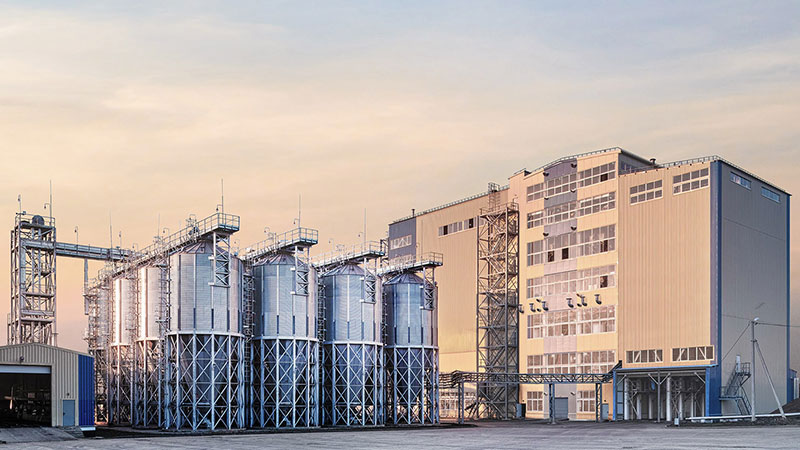
At RICHI, we go beyond project completion. With RICHI Servicee, we’re your dedicated partners in success. Count on us for expert guidance, minimal downtime, and optimized productivity. Choose RICHI for unmatched service and support.
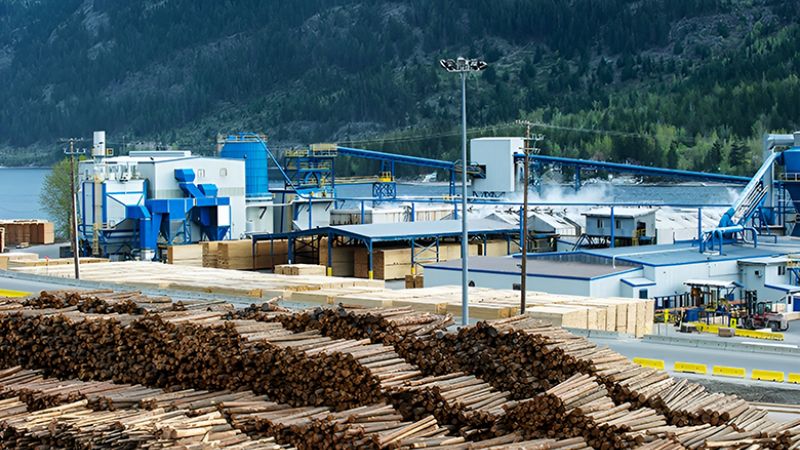


Meet global product demands and quality standards with industry-leading pellet plant design, engineering, equipment, and construction services for pellet processors.


Your Partner Beyond Project Completion
2000+ cases
RICHI is the leading designer, manufacturer and builder of pellet plants in the world, completing over 2000 projects in 140 countries across 6 continents.
Read More
Increase plant productivity, profitability, and safety by integrating high quality equipment into your pellet production line. Over the years, RICHI has become China's top pellet equipment manufacturer. At the same time, RICHI has established valuable partnerships with the world's leading component and raw material manufacturers to bring you the best there is in technology, automation, and efficiency in pelleting plant machinery.

For nearly 30 years, RICHI has been providing best-in-class pellet plant equipment and services to clients across a variety of industries, sizes, and needs. We pride ourselves on the knowledge and skill that each team member possesses – from our technical sales team to our process design engineers. You can count on RICHI Machinery to take your operation to the next level of innovation, quality, and success.
Need help with your pellet manufacturing plant project? Contact us today.
ANIMAL FEED
BIOMASS
WOOD
ORGANIC FERTILIZER
AQUA FEED
CAT LITTER
MUNICIPAL WASTE RECYCLING
SPECIAL PELLET PRODUCTION
RICHI Machinery continues to deliver world class pellet mill equipment, pellet plant engineering and project solutions that add value to our customers in the animal feed, wood waste, agriculture waste, organic fertilizer, cat litter and special pellet products industries. Throughout the years, we RICHI Machinery have built strong brand, becoming industry-leading pellet machine manufacturer. We value integrity, promise quality, and prioritize your success.
Learn MoreWith our expert team, we precisely implement your process engineering requirements in pellet mill and pelletizing plant systems. No matter which industry you’re in – we understand your needs and deliver solutions that meet the highest standards.
At RICHI, quality comes first. Our pellet making machine and related pellet line equipment undergo rigorous quality controls to ensure they meet the highest standards. Rely on products that are durable, safe, and efficient.
With decades of experience in pellet machine and pellet production line production, we have earned a reputation as a trusted partner in various industries. Our expertise allows us to cover a wide range of applications.
Not only do we offer premium pelleting equipment, but we are also experts at designing, building, installing, and maintaining facilities from the ground up. Our expertise is within pellt plant process design, discovering the most efficient, productive, and profitable way to handle your materials in an end-to-end cycle.
○ RICHI MACHINERY
Keeping in touch with us is an effective way to solve all your problems. If you have any needs or questions, please leave your contact information, then RICHI technical consultants will send design, quotation, videos to your mailbox. You can also contact us directly via WhatsApp: +86 13838389622
Copyright©2015-2026 by HENAN RICHI MACHINERY CO., LTD. All rights reserved.