
The Sri Lankan customer was not a mixed dairy-and-poultry farm trying to feed the same straw-and-lucerne pellets to both species. The project belongs to a forage-processing business near Kandy that supplies dairy farms in the Central Province. Its product is a ruminant forage pellet based mainly on rice straw, with imported dried lucerne used as a higher-protein component. Poultry feed remains outside the scope of this machine.
The Sri Lankan customer was not a mixed dairy-and-poultry farm trying to feed the same straw-and-lucerne pellets to both species. The project belongs to a forage-processing business near Kandy that supplies dairy farms in the Central Province. Its product is a ruminant forage pellet based mainly on rice straw, with imported dried lucerne used as a higher-protein component. Poultry feed remains outside the scope of this machine.
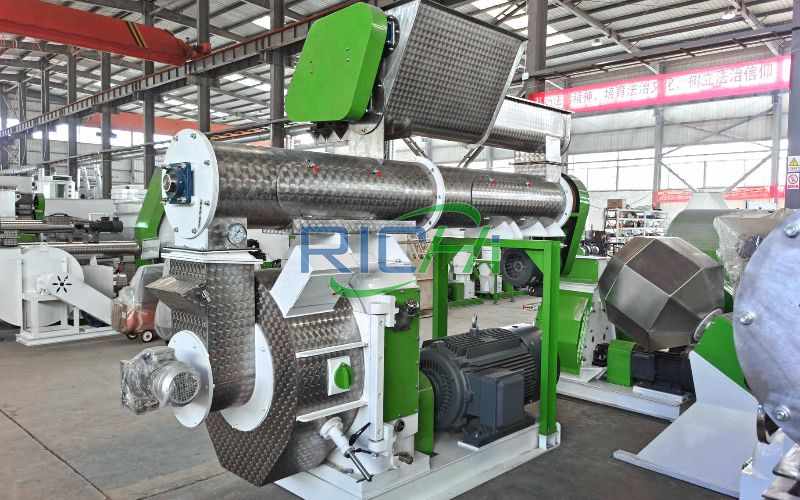
The processor already owned a straw chopper, forage hammer mill, mixer, cooling equipment and bagging section. What it lacked was the densification stage. One CZLH420 agri straw pellet machine for pellet straw and lucerne in Sri Lanka was therefore installed as a standalone machine to convert prepared fibrous material into 8 mm forage pellets for dairy cattle. The project was sized around an existing regional feed business rather than an individual farm consuming nearly two tonnes of pellets every hour.
Name:
Straw Feed Pellet Machine
Country:
Sri Lanka
Date:
2026
Capacity:
1.8–2.0 T/H
Model:
CZLH420
Main Motor Power:
90 kW
Pellet Diameter :
8 mm
Finished Product:
Forage pellets for dairy cattle
Rice straw is the logical Sri Lankan raw material in this project.
Sri Lanka generates large quantities of rice straw after paddy harvesting, and agricultural literature has long identified it as an important seasonal roughage resource for cattle, particularly when better-quality forage becomes scarce. At the same time, rice straw is relatively low in crude protein, palatability and digestibility compared with good-quality forage, so simply compressing 100% untreated straw does not turn it into a nutritionally complete dairy feed.
That is why the customer does not sell the product as “pure rice straw dairy feed.”
Rice straw provides the fibrous base. Dried lucerne is incorporated as one of the higher-quality forage ingredients, together with other formulation components where required.
Large-scale lucerne production is not a strong enough feature of Sri Lankan agriculture to build the project around a farm growing all of its own alfalfa.
Sri Lanka’s current livestock-development work places much greater emphasis on locally suitable fodders such as hybrid Napier, Brachiaria, fodder maize and sorghum. Government livestock programs actively promote high-yielding tropical forage varieties, while official plant-quarantine information specifically lists dried hay and alfalfa among animal-feed materials that may be imported.
For this customer, lucerne is therefore purchased in dried form through commercial feed channels and blended strategically rather than assumed to be a plentiful local crop.
An CZLH420 straw pellet machine with approximately 1.8–2.0 T/H reference capacity would be excessive for a normal individual dairy farm producing feed only for its own herd.
The customer instead supplies several dairy operations around the Central Province.
This business model fits Sri Lanka’s feed situation more closely. HARTI research indicates that many dairy farmers still depend heavily on natural grasslands and purchased feed resources rather than maintaining large dedicated forage areas of their own. A regional processor can collect straw from multiple paddy-producing areas, combine it with purchased higher-quality forage ingredients and supply a more manageable conserved feed product.
| Project Parameter | Configuration |
|---|---|
| Equipment | Agri straw pellet machine for pellet straw and lucerne |
| Model | CZLH420 |
| Quantity | 1 unit |
| Main Motor Power | 90 kW |
| Arch-Breaking Feeder | 3 kW |
| Forced Feeder | 1.5 kW |
| Ring Die Inner Diameter | 420 mm |
| Available Pellet Diameter | 4–12 mm |
| Project Pellet Diameter | 8 mm |
| Reference Capacity | Approximately 1.8–2.0 T/H |
| Finished Product | Forage pellets for dairy cattle |
The customer standardized the main product as an 8 mm forage pellet for cattle.
Rice straw and lucerne are roughage materials. Their nutritional role fits ruminant feeding far better than poultry production.
Broilers and layers require carefully formulated compound feeds with much higher nutrient density and different physical specifications. Putting substantial quantities of fibrous rice straw into an 8 mm “poultry pellet” would not be an appropriate way to use this machine.
The Sri Lankan project therefore keeps one clear end use: ruminant forage pellets.
The processor does not market the product as a complete dairy feed containing everything a high-producing cow requires.
It is a conserved forage product that can be incorporated into the farm’s feeding program alongside fresh forage, silage and concentrate feed.
This is consistent with the broader Sri Lankan dairy context. A recent national audit report estimated that a milking cow may require around 15 kg of forage dry matter per day and emphasized the need for stronger pasture conservation, hay, silage and TMR preparation systems.
Pelletizing provides another form of forage conservation and handling, but ration formulation still determines how much of the product should be fed.
Rice mills generate rice husk and milling by-products.
Rice straw is generated in the field after paddy harvesting.
The customer therefore purchases baled straw through farmers and local aggregators rather than describing nearby rice mills as the direct source of straw.
This distinction matters because the collection system determines moisture, soil contamination, bale density and storage quality before the material ever reaches the pellet plant.
Not every bale is suitable.
The processor rejects visibly mouldy material and heavily soil-contaminated straw.
Field residues can carry sand, stones, wire and other foreign matter during collection, so the preparation section includes screening and magnetic protection where appropriate.
Cleaner feedstock reduces hammer and die wear and produces a more predictable final pellet.
Long rice straw cannot be fed directly into the CZLH420.
Bales are opened and the straw is cut into shorter sections first.
The purpose of this stage is not to create finished pellet-mill powder. It is to make the bulky straw manageable enough for controlled feeding into the forage hammer mill.
Without bale opening and coarse cutting, long fibres can bridge in hoppers and produce unstable flow throughout the downstream process.
Prepared straw and dried lucerne are then reduced to a particle size suitable for ring-die pelletizing.
The customer generally controls the majority of the material within a few millimetres rather than allowing long stems to enter the die.
A reference target around 3–5 mm can be appropriate for this pelletizing stage, but it is not treated as a nutritional requirement for direct cattle feeding.
It is an equipment-preparation requirement: shorter, more uniform fibre feeds more smoothly and forms more consistent pellets.
Lucerne hay has different leaf-to-stem structure and bulk density from rice straw.
The customer therefore prepares the two materials separately before final blending.
This reduces the chance that brittle lucerne leaves become excessively fine while tougher rice straw remains too coarse.
After grinding, the two streams can be dosed according to the required forage formulation.
The processor does not use a permanent 50:50 or 70:30 recipe.
The formulation depends on the nutritional specification and cost of imported lucerne.
Rice straw is the lower-cost fibrous base, while lucerne contributes higher-quality protein and forage value. Other approved local feed ingredients may be incorporated if the customer is producing a formulated forage supplement rather than a simple two-material pellet.
The blend is therefore established from feed analysis rather than from one fixed percentage.
Pelletizing performance depends strongly on moisture.
Rice straw collected after harvest can already be comparatively dry, but moisture can increase during poor storage or wet weather. Imported lucerne hay can also arrive with different moisture depending on supplier and storage conditions.
The processor checks each material before mixing.
The final blended feedstock is adjusted to a workable pelletizing condition rather than automatically assuming “below 15%” is correct for every batch.
If material is too wet, die resistance and pellet deformation can increase. If it is excessively dry, fines and poor binding can become more difficult to control.
Ground straw and lucerne are light compared with grain.
They can bridge above an ordinary gravity feeder, especially when fibre length or moisture changes.
The CZLH420 therefore uses a 3 kW arch-breaking feeder and a 1.5 kW forced feeder.
The first keeps the low-density fibrous material moving inside the feeding zone; the second delivers it steadily into the ring-die chamber.
For this project, stable feeding is just as important as main-motor power.
The customer considered handling characteristics, cattle application and production efficiency before standardizing at 8 mm.
A larger forage pellet is appropriate for the adult dairy-cattle market and provides a robust product for bagging and transport.
The machine can use other dies within its 4–12 mm range, but changing diameter without a clear market requirement would add unnecessary die inventory and production changeover time.
The customer needs enough mechanical strength for cooling, screening, bagging and delivery.
However, maximum density is not the target.
Forage pellets still need to soften and break down appropriately after feeding.
Ring-die compression is therefore selected around forage-product handling rather than the much harder durability targets that may be used for industrial fuel pellets.
Pelletizing cannot convert poor-quality rice straw into lucerne.
FAO literature on Sri Lanka specifically notes the relatively low nutritional quality, palatability and digestibility of rice straw compared with better roughages.
The reason for combining straw with lucerne or other higher-quality ingredients is precisely to avoid presenting densification as a nutritional treatment.
The pellet mill changes physical form; formulation changes nutritional value.
Grinding and pelletizing can reduce selective feeding, make bulky forage easier to handle and create more consistent intake of a blended product.
That does not justify a fixed claim that digestibility or milk yield increases by a certain percentage.
Animal response still depends on the entire diet, forage quality, concentrate intake, herd genetics, health and management.
The project therefore evaluates pellet quality separately from dairy performance.
The hot pellets leaving the CZLH420 go into the customer’s existing cooling system.
Cooling reduces product temperature and allows the pellet structure to stabilize.
The material is then screened so loose fines can be separated from saleable pellets.
Only after cooling and classification are the 8 mm forage pellets moved to bags or bulk storage.
Screened fines are not automatically discarded.
When clean and within the feed specification, they can return to the mixing or pelletizing section.
This reduces raw-material loss and helps the customer maintain a cleaner finished product.
However, recycling is controlled so excessive fines do not circulate indefinitely through the system.
The plant cannot assume that a cooled pellet will remain stable indefinitely in an open shed.
Finished forage pellets readily take up moisture if exposed to humid air or water ingress.
The processor therefore uses covered dry storage and manages inventory so material is not held unnecessarily long.
Moisture control after pelletizing is just as important as controlling moisture before the ring die.
The project remains focused on rice straw and lucerne.
MZLH ring-die pellet machines can be configured for other fibrous materials, but different materials have different particle size, moisture, ash and compression characteristics and should be tested before being introduced into the same production program.
The customer deliberately selected one CZLH420.
At approximately 1.0–1.2 T/H reference output, one machine can already produce a meaningful volume of forage pellets during a normal shift.
Installing a second unit before the regional market and lucerne supply were established would have increased capital cost without solving an immediate production constraint.
Future expansion will depend on sustained orders rather than on the desire to advertise a larger installed capacity.
One biomass pellet machine does not transform bales into bagged feed by itself.
The processor already has bale opening, coarse cutting, forage grinding, mixing, cooling and packaging capabilities.
The CZLH420 fills the missing densification step.
That is why purchasing only one standalone agri straw pellet machine is technically credible.
The CZLH420 straw biomass pellet mill was exported from Qingdao Port in China to Colombo Port and then transported inland to the customer’s facility near Kandy.
Before shipment, RICHI supplied the required equipment dimensions, electrical information, installation interfaces, foundation requirements and maintenance-clearance data.
The customer could therefore prepare the pelletizing position while the machine was in transit.
Shipping and customs-clearance periods depend on the actual vessel schedule and import arrangement.
During initial operation, the customer found that the CZLH420 motor load fluctuated more than expected.
The pellet mill itself was not the first problem.
Some rice straw leaving the forage grinder still contained longer fibres because the bale-opening and coarse-cutting stages had been inconsistent.
After the upstream cutting and grinding settings were stabilized, feeding into the CZLH420 became more uniform.
Lucerne-rich batches and straw-rich batches do not have identical bulk density or compression behavior.
The customer therefore learned not to use one feeder speed for every formulation.
Arch-breaking speed, forced-feed rate and main-motor loading are adjusted according to the actual blend.
This is particularly important when imported lucerne quality changes from one supplier to another.
“Rice straw and lucerne cannot be treated as the same fibre. Straw gives us the local bulk material, while lucerne raises the quality of the forage blend. Once we started preparing them separately and controlling the blend before the pellet mill, the 8 mm pellets became much more consistent.”
The customer also stopped evaluating the machine only by tonnes per hour.
Finished-pellet fines, feed consistency, feeder stability, power load and storage condition are now checked together.
Sri Lankan dairy development continues to face forage-supply and conservation constraints.
A recent national review emphasized the need for better forage cultivation, hay and silage conservation, TMR equipment and several months of stored feed for larger dairy operations.
Pelletized rice-straw/lucerne forage does not replace those measures.
It offers one additional option for a commercial processor to convert seasonal crop residue and purchased quality forage into a denser, storable product that can be distributed to farms when fresh forage is less dependable.
This agri straw pellet machine for pellet straw and lucerne in Sri Lanka project is a regional dairy-forage application, not a mixed dairy-and-poultry farm project.
The customer operates near Kandy and purchases rice straw from farmers and aggregators while sourcing dried lucerne commercially, including imported material where required. Rice straw provides the locally available fibrous base; lucerne improves the quality of the forage blend.
One CZLH420 is installed with a 90 kW main motor, 3 kW arch-breaking feeder, 1.5 kW forced feeder and 420 mm ring die. The principal finished product is an 8 mm forage pellet, with approximately 1.0–1.2 T/H reference capacity under suitable prepared-material conditions.
The production logic is bale opening and coarse cutting, separate forage grinding, moisture control, formulation and mixing, forced feeding, ring-die pelletizing, cooling, screening and packaging. The pelletizer does not receive whole straw bales and does not convert low-quality straw into nutritionally complete feed by compression alone.
For another customer considering an agri straw pellet machine for pellet straw and lucerne in Sri Lanka, RICHI Machinery would first determine annual rice-straw supply, straw collection radius, actual availability and cost of lucerne, target cattle category, formulation, bale moisture, existing chopper and grinder, target pellet diameter, daily sales volume, cooling capacity, electrical supply and finished-feed storage conditions before recommending the model.
Those factors are particularly important in Sri Lanka because rice straw is abundant but nutritionally limited, while high-quality lucerne is not a raw material that should simply be assumed to grow locally at industrial scale. The project works when the two materials are given different roles in the formulation rather than described as interchangeable forage.
Having the right mix of reliable, high-quality pellet machine and pelletizing systems and expert support is essential to your success. Watch how our end-to-end feed pellet plant solutions have helped our customers optimize their performance.
Our customized and future-proofed turnkey pellet plant solutions is designed with you at the core. From vision to reality and beyond, our team stays connected with yours. Giving you peace-of-mind with an expert at your side.
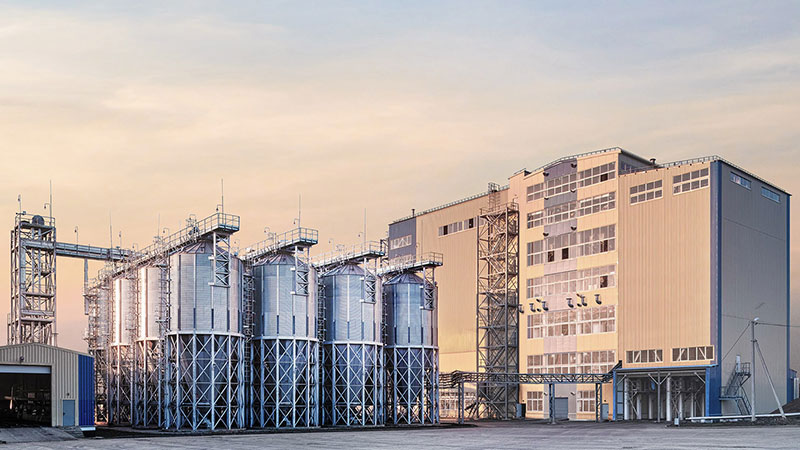
At RICHI, we go beyond project completion. With RICHI Servicee, we’re your dedicated partners in success. Count on us for expert guidance, minimal downtime, and optimized productivity. Choose RICHI for unmatched service and support.
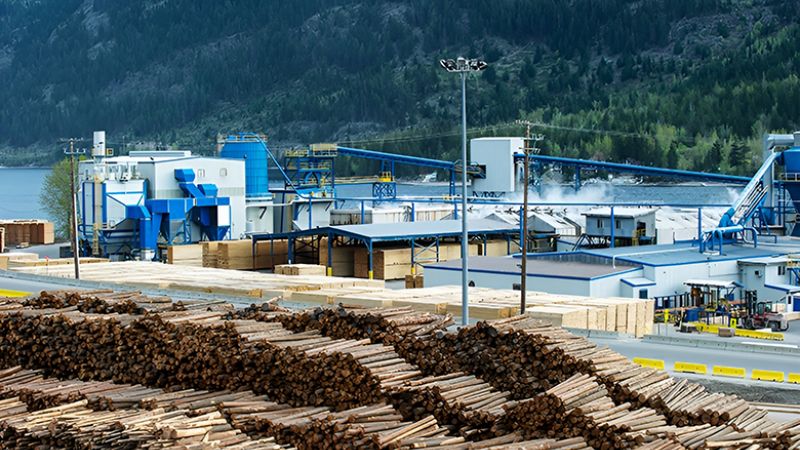


Meet global product demands and quality standards with industry-leading pellet plant design, engineering, equipment, and construction services for pellet processors.


Your Partner Beyond Project Completion
2000+ cases
RICHI is the leading designer, manufacturer and builder of pellet plants in the world, completing over 2000 projects in 140 countries across 6 continents.
Read More
Increase plant productivity, profitability, and safety by integrating high quality equipment into your pellet production line. Over the years, RICHI has become China's top pellet equipment manufacturer. At the same time, RICHI has established valuable partnerships with the world's leading component and raw material manufacturers to bring you the best there is in technology, automation, and efficiency in pelleting plant machinery.

For nearly 30 years, RICHI has been providing best-in-class pellet plant equipment and services to clients across a variety of industries, sizes, and needs. We pride ourselves on the knowledge and skill that each team member possesses – from our technical sales team to our process design engineers. You can count on RICHI Machinery to take your operation to the next level of innovation, quality, and success.
Need help with your pellet manufacturing plant project? Contact us today.
ANIMAL FEED
BIOMASS
WOOD
ORGANIC FERTILIZER
AQUA FEED
CAT LITTER
MUNICIPAL WASTE RECYCLING
SPECIAL PELLET PRODUCTION
RICHI Machinery continues to deliver world class pellet mill equipment, pellet plant engineering and project solutions that add value to our customers in the animal feed, wood waste, agriculture waste, organic fertilizer, cat litter and special pellet products industries. Throughout the years, we RICHI Machinery have built strong brand, becoming industry-leading pellet machine manufacturer. We value integrity, promise quality, and prioritize your success.
Learn MoreWith our expert team, we precisely implement your process engineering requirements in pellet mill and pelletizing plant systems. No matter which industry you’re in – we understand your needs and deliver solutions that meet the highest standards.
At RICHI, quality comes first. Our pellet making machine and related pellet line equipment undergo rigorous quality controls to ensure they meet the highest standards. Rely on products that are durable, safe, and efficient.
With decades of experience in pellet machine and pellet production line production, we have earned a reputation as a trusted partner in various industries. Our expertise allows us to cover a wide range of applications.
Not only do we offer premium pelleting equipment, but we are also experts at designing, building, installing, and maintaining facilities from the ground up. Our expertise is within pellt plant process design, discovering the most efficient, productive, and profitable way to handle your materials in an end-to-end cycle.
○ RICHI MACHINERY
Keeping in touch with us is an effective way to solve all your problems. If you have any needs or questions, please leave your contact information, then RICHI technical consultants will send design, quotation, videos to your mailbox. You can also contact us directly via WhatsApp: +86 13838389622
Copyright©2015-2026 by HENAN RICHI MACHINERY CO., LTD. All rights reserved.