
A broiler feed producer near Haifa uses one SZLH320 chicken feed pellet machine to produce about 15 tonnes per day through scheduled 3–4 T/H pelletizing campaigns.
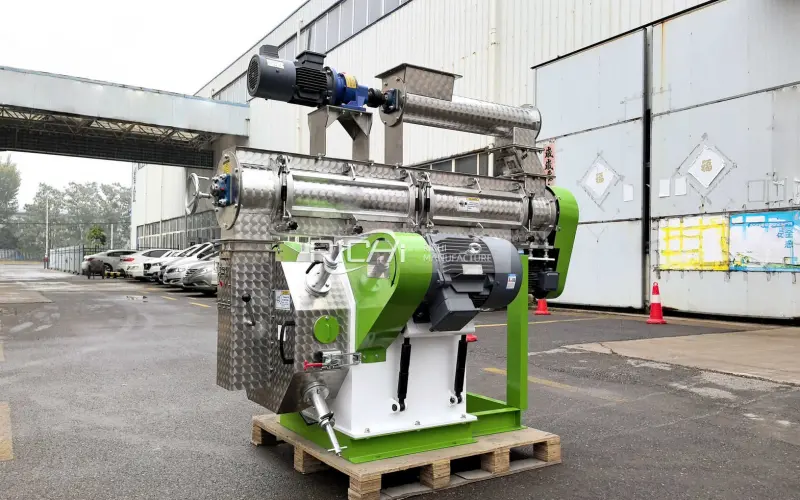
A broiler feed producer in northern Israel selected one SZLH320 15T Per Day Chicken Feed Pellet Machine in Israel to increase the usable capacity of its pelletizing section without rebuilding the complete feed mill. The facility already had grain grinding, batching, mixing, finished-feed cooling and bagging equipment, so the investment concentrated on converting prepared broiler mash into pellets more efficiently.
The project target is approximately 15 tonnes of chicken feed per production day rather than 15 tonnes per hour. A 3–4 T/H SZLH320 gives the customer enough hourly capacity to complete the required pellet volume in a scheduled production window while leaving time for formula transitions, cleaning, maintenance and starter-feed crumbling. This provides a more realistic match than installing a 10–12 T/H pellet mill that the surrounding equipment and daily sales volume would rarely use fully.
Name:
Broiler feed ring-die pellet machine
Country:
Israel
Date:
2026
Capacity:
3–4 T/H
Model:
SZLH320
Power:
37 kW
Application:
broiler compound feed
Pellet Diameter:
3–4 mm
The most important sizing question was how many tonnes of finished broiler feed the customer actually needed each day.
A daily target of approximately 15 tonnes does not require a machine capable of producing 10 tonnes every hour.
At a reference pelletizing rate of 3–4 T/H, the SZLH320 feed pellet machine can theoretically process about 15 tonnes in approximately four to five hours of steady production. In practical operation, the customer allows additional time for startup, feed-stage transitions, routine inspection and differences between formulas.
This creates capacity reserve without moving the project into an industrial-scale pelletizing configuration that would require much larger mixers, coolers, steam supply and finished-feed handling equipment.
| Project Parameter | Configuration |
|---|---|
| Equipment | Broiler feed ring-die pellet machine |
| Model | SZLH320 |
| Quantity | 1 unit |
| Main Motor Power | 37 kW |
| Feeder Power | 1.5 kW |
| Conditioner Power | 4 kW |
| Ring Die Inner Diameter | 320 mm |
| Reference Capacity | Approximately 3–4 T/H depending on formulation |
| Main Pellet Size | Approximately 3–4 mm for grower and finisher feeds |
| Starter Feed | Pellet followed by crumbling and screening where required |
| Daily Production Target | Approximately 15 tonnes/day |
| Main Application | Commercial broiler compound feed production |
| Installation Type | Standalone pelletizing-machine upgrade |
The 3–4 T/H figure is a machine reference range. Practical throughput depends on pellet diameter, mash moisture, cereal composition, fibre, free oil, conditioning quality, die configuration and the physical specification required for the finished feed.
The SZLH420 poultry feed pellet machine provides approximately 10–12 T/H of reference capacity and is suitable for a very different production scale.
At that rate, a 15-tonne daily target could theoretically be completed in little more than one hour. The surrounding grinder, mixer, conditioner steam system, cooler and conveying equipment would then need to deliver material at a much higher instantaneous rate simply to keep the machine properly loaded.
That would create unnecessary installed power and poor machine utilization for this customer.
The SZLH320 gives the plant enough reserve while keeping hourly flow closer to what a small commercial broiler-feed operation can realistically prepare and handle.
Choosing a smaller pellet mill does not remove the need to check the rest of the process.
The batching and mixing section must prepare enough mash during the production campaign. The conditioner requires a suitable steam supply, and the cooler must be able to receive hot pellets at the real discharge rate.
If one of those stages can handle only 2 T/H, the SZLH320 cannot deliver a useful 4 T/H simply because its nameplate range allows it.
The customer therefore evaluates the complete short-term flow through mixing, conditioning, pelleting, cooling and screening rather than sizing the pelletizer in isolation.
The customer's broiler formulas are not built around the assumption of abundant locally produced feed corn.
Israel depends heavily on imported grain for its feed industry. Corn can be used as an energy ingredient, while wheat, barley and other suitable cereals may enter formulations according to price, availability and nutritional requirements.
Soybean meal and other commercial protein ingredients are also purchased through established international supply channels.
This makes formulation flexibility particularly important. The pellet machine has to cope with realistic changes in cereal composition rather than being optimized for one permanent corn-soy recipe.
Changing the cereal portion of a broiler formula changes more than the nutrient calculation.
Corn, wheat and barley have different starch, fibre and physical characteristics. These differences can affect grinding, steam conditioning, die resistance and pellet durability.
A wheat-rich formulation may pellet differently from a corn-dominant feed even when both are produced through the same 3 mm ring die.
The operator therefore adjusts feeder rate and conditioning according to the actual mash rather than storing one machine setting and applying it to every commercial broiler formula.
Broiler feed changes with bird age, ingredient analysis, commodity prices and the nutritionist's formulation targets.
The customer may work with combinations of:
Not every ingredient appears in every batch, and the pellet machine does not determine their inclusion rates.
Nutritional formulation is completed before the mixed mash reaches the pelletizing section.
Whole cereals normally require grinding before batching and mixing.
Premix, minerals, amino acids and other already-fine ingredients do not need to pass unnecessarily through the hammer mill.
The feed mill therefore separates raw-material preparation according to physical condition.
This reduces unnecessary grinding energy and avoids sending small-value micro-ingredients through equipment that is intended mainly for cereal size reduction.
The 15T Per Day Chicken Feed Pellet Machine in Israel begins its function only after ingredients have been weighed and mixed.
A representative process is:
The pellet machine does not replace grinding, formulation, mixing, cooling or crumbling.
The SZLH320 includes a conditioner ahead of the ring die.
The plant therefore needs an appropriate steam system rather than feeding dry mash directly into the pellet chamber and expecting stable commercial output.
Conditioning adds controlled heat and moisture and changes the way starch, protein and fibre respond during compression.
The operating point depends on:
One fixed conditioning temperature or moisture figure should not be applied to every broiler formula.
Conventional dry broiler-feed production normally relies on grinding, batching, mixing and steam conditioning rather than a rotary drying step between mixing and pelletizing.
If an ingredient arrives with abnormal moisture, that problem should be addressed through ingredient quality control and appropriate storage or preparation.
The customer therefore does not use a dryer simply to force ordinary compound-feed mash into the SZLH320.
After pelleting, the important downstream thermal step is cooling.
The project mainly uses approximately 3–4 mm pellets for later broiler growth stages.
The exact diameter is selected from bird age, formula and customer specification.
A 3 mm or 4 mm ring die determines nominal pellet diameter but does not guarantee one pellet durability level or one biological performance result.
Grinding, conditioning, formulation, die condition and cooling all influence the physical quality of the final feed.
Very young chicks normally need a smaller physical feed form than grower and finisher birds.
Rather than forcing the ring-die machine to produce extremely small direct pellets at poor throughput, the plant can form a stable intermediate pellet and then reduce it through a crumbler.
The crumbled material is screened so excessive fines and oversized pieces can be controlled.
This gives the same pelletizing machine a practical route for starter products without requiring a separate very-small-hole ring die for every campaign.
A 3 mm finished pellet does not mean all ingredients must be ground to exactly 3 mm.
Hammer milling produces a distribution of particles.
The plant controls that distribution so coarse grain fragments do not interfere with ring-die compression while avoiding unnecessary ultrafine grinding that increases energy demand and dust.
The pellet diameter is determined later by the ring die.
Broiler feeds often use added vegetable oil to meet energy requirements.
From a mechanical perspective, oil can lubricate the mash and reduce friction in the ring die.
If too much liquid is introduced before pelleting, pellet formation and durability can become more difficult even though the nutrition formula requires the oil.
The customer therefore coordinates liquid addition with the required pellet quality instead of using the same pre-pellet oil level for every feed.
Where formulation and plant equipment justify it, part of the liquid addition can be evaluated downstream of pellet formation.
Pellets leave the ring die hot and relatively soft.
They need controlled cooling before they enter storage or bags.
The customer's cooler therefore has to accept the short-term 3–4 T/H pellet flow even though total daily production is only about 15 tonnes.
This is an important distinction between daily output and instantaneous equipment capacity.
A cooler sized only from average tonnes per day could become the real bottleneck during the pelletizing campaign.
The cooler removes heat and part of the moisture associated with conditioning, allowing pellets to approach a stable storage condition.
It should not be expected to correct excessively wet mash entering the pellet machine.
If the product remains too wet after normal cooling, the plant should investigate ingredient moisture, steam addition and process settings rather than simply increasing cooling time.
Screening after cooling removes loose fines and broken pellets.
An increasing fines level can indicate poor conditioning, unsuitable mash particle distribution, excessive oil, die wear, poor roller adjustment or rough downstream conveying.
The customer therefore uses fines as process feedback rather than treating screening only as a cleanup stage.
Recovered material can return through an appropriate controlled route where feed-safety procedures permit.
The project does not use a claimed increase from 82% to 93% PDI as a guaranteed machine result.
Pellet durability depends on formula, cereal starch characteristics, fibre, oil, particle size, conditioning, ring-die design, roller condition and cooling.
Two broiler feeds made on the same SZLH320 can therefore produce different PDI values.
The correct target is established from the feed manufacturer's commercial quality specification and measured using a consistent test method.
Pellet physical quality can influence feed handling and bird feeding behavior, but feed conversion is affected by much more than the pellet mill.
Broiler genetics, nutrient balance, amino-acid supply, housing conditions, ventilation, temperature, health management, water quality and flock management all contribute to biological performance.
The SZLH320 controls feed forming. It should not be presented as independently creating a guaranteed FCR improvement.
The mixer works in batches, while the pellet-machine feeder performs best with a more continuous supply of mash.
A buffer between the two sections allows several mixing cycles to support a steady pelletizing campaign.
Without sufficient buffer capacity, the SZLH320 may repeatedly stop while another batch is being prepared.
The appropriate bin size depends on mixer batch weight, mixing cycle, pellet-machine operating rate and available installation height.
The SZLH320 uses a 37 kW main motor, together with its 1.5 kW feeder and 4 kW conditioner.
This provides a much more proportionate electrical load for a 15-tonne-per-day plant than installing a 110 kW main pellet-machine motor designed for 10–12 T/H production.
The factory still checks transformer capacity, cable sizing, protection, motor starting and the simultaneous load from grinding, mixing, cooling, conveying and steam-generation auxiliaries.
Machine selection should reduce unnecessary connected load rather than simply maximize reserve capacity.
A smaller pellet-machine motor does not mean steam can be treated as an afterthought.
The boiler or steam source has to provide stable conditioning during the hours when the SZLH320 is running.
Pressure regulation, condensate management and insulation all influence steam quality at the conditioner.
Irregular steam supply can create greater variation in pellets than small changes in main-motor power.
Warm ambient conditions can reduce the temperature difference available for cooling during parts of the year.
The cooler therefore needs adequate airflow and should not be evaluated only by nominal tonnes per hour.
Finished feed also requires dry, protected storage so that cooled pellets do not absorb moisture before delivery.
The plant monitors product temperature and condition rather than assuming a fixed cooler residence time works equally well in every season.
A standalone pellet-machine project depends heavily on interface dimensions.
The site review covers:
A correctly sized machine can still create installation problems if those interfaces are ignored.
Ring dies and roller shells are working components and their service interval depends on actual production conditions.
Formulas containing more abrasive mineral contamination, unsuitable particle sizes or poor die adjustment can increase wear.
The operator therefore checks roller-die clearance, lubrication, bearings, feeder condition and die-hole condition according to actual machine behavior.
No fixed wear life is assigned because tonnes processed and formula characteristics vary.
When demand increases, the first reaction should not be to run the feeder at its maximum setting.
The operator monitors motor load, pellet appearance and discharge rate together.
If current rises while output falls, the problem can come from moisture, formula, die condition, steam quality or feed distribution.
Increasing feed rate without identifying the cause can make the machine less stable rather than more productive.
The SZLH320 is prepared for sea transport from Qingdao to Haifa before inland delivery to the northern Israel feed facility.
For a customer located near Haifa, this route avoids unnecessary inland movement from a more distant port.
Before shipment, the customer can prepare the machine position, electrical connection, steam interface and surrounding conveyors using confirmed installation dimensions.
Ocean schedules, terminal handling and inland delivery are coordinated from the actual shipment arrangement rather than one fixed transport period.
The commercial logic of this project is based on scheduled pelletizing.
At approximately 3–4 T/H, the customer can manufacture the required daily pellet quantity during part of a normal production day.
The remaining time can be used for ingredient preparation, formula transitions, starter crumbling, maintenance or another feed campaign.
This is more appropriate than selecting a huge pellet mill simply to minimize the number of operating hours.
If demand rises beyond 15 tonnes per day, the customer should first determine how many additional operating hours remain available on the SZLH320.
A machine running only five hours per day still has significant scheduling reserve before another pelletizer is required.
The plant should also check mixer, steam, cooler, crumbler, finished-feed bins and packaging capacity.
The next investment should go to whichever stage actually limits saleable feed output.
Adding another SZLH320 would provide approximately 6–8 T/H of combined reference pelletizing capacity, but that would be far beyond the current 15-tonne daily requirement unless the customer substantially expands sales or reduces the available operating window.
Increasing daily operating hours on the installed machine may be more economical before parallel pelletizing is considered.
Only when prepared mash regularly accumulates ahead of the SZLH320 and downstream equipment has available capacity does another pellet machine become a logical option.
The 15T Per Day Chicken Feed Pellet Machine in Israel is therefore not selected by searching for a machine whose catalogue capacity says 15 tonnes.
Daily production has to be converted into the required hourly rate using real operating hours, formula changes, maintenance allowance and the capacity of the surrounding process.
For this customer, a 3–4 T/H SZLH320 provides a practical balance between daily demand and installed capacity while keeping the electrical, steam and cooling requirements within a reasonable commercial scale.
A 15T Per Day Chicken Feed Pellet Machine in Israel should be selected from daily finished-feed demand and the number of pelletizing hours available. A customer producing 15 tonnes in five hours needs a different machine from another customer expecting the same volume from a two-hour production window.
For another Israeli broiler-feed project, RICHI Machinery would first review daily tonnes, operating hours, starter/grower/finisher proportions, pellet and crumble sizes, cereal and protein ingredients, mixer batch size, mash-bin volume, steam supply, cooler capacity, electrical conditions, bagging method and expected future feed demand.
Those details determine whether an SZLH250, SZLH320 or another ring-die pellet machine provides the most practical capacity without forcing the customer to install unnecessary power and oversized auxiliary equipment.
Having the right mix of reliable, high-quality pellet machine and pelletizing systems and expert support is essential to your success. Watch how our end-to-end feed pellet plant solutions have helped our customers optimize their performance.
Our customized and future-proofed turnkey pellet plant solutions is designed with you at the core. From vision to reality and beyond, our team stays connected with yours. Giving you peace-of-mind with an expert at your side.
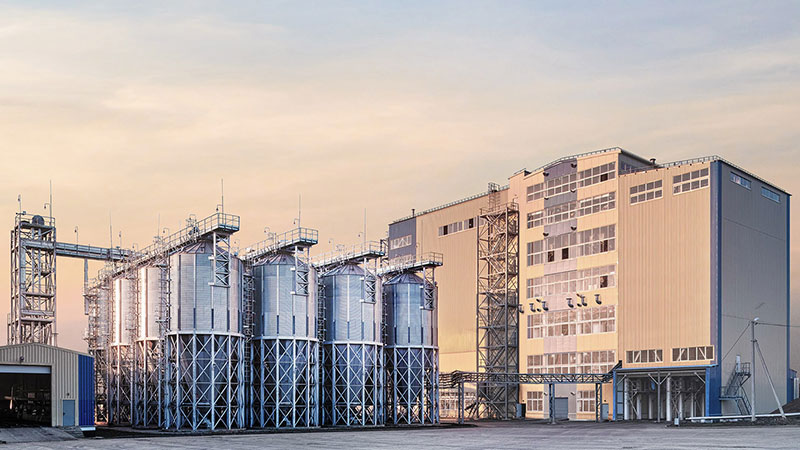
At RICHI, we go beyond project completion. With RICHI Servicee, we’re your dedicated partners in success. Count on us for expert guidance, minimal downtime, and optimized productivity. Choose RICHI for unmatched service and support.
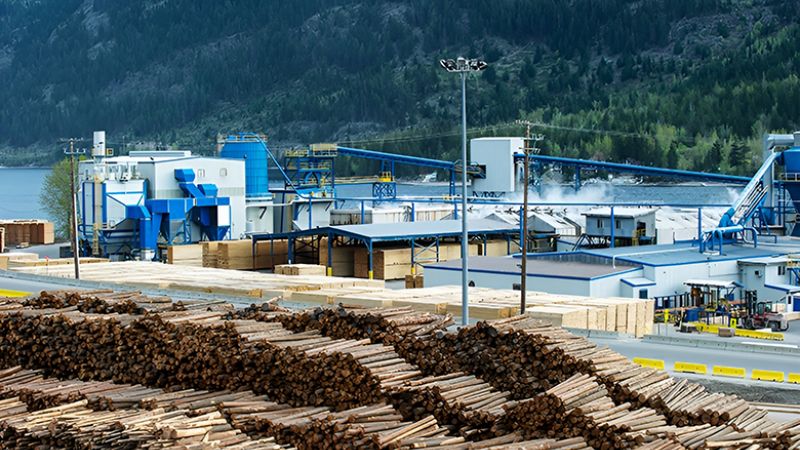


Meet global product demands and quality standards with industry-leading pellet plant design, engineering, equipment, and construction services for pellet processors.


Your Partner Beyond Project Completion
2000+ cases
RICHI is the leading designer, manufacturer and builder of pellet plants in the world, completing over 2000 projects in 140 countries across 6 continents.
Read More
Increase plant productivity, profitability, and safety by integrating high quality equipment into your pellet production line. Over the years, RICHI has become China's top pellet equipment manufacturer. At the same time, RICHI has established valuable partnerships with the world's leading component and raw material manufacturers to bring you the best there is in technology, automation, and efficiency in pelleting plant machinery.

For nearly 30 years, RICHI has been providing best-in-class pellet plant equipment and services to clients across a variety of industries, sizes, and needs. We pride ourselves on the knowledge and skill that each team member possesses – from our technical sales team to our process design engineers. You can count on RICHI Machinery to take your operation to the next level of innovation, quality, and success.
Need help with your pellet manufacturing plant project? Contact us today.
ANIMAL FEED
BIOMASS
WOOD
ORGANIC FERTILIZER
AQUA FEED
CAT LITTER
MUNICIPAL WASTE RECYCLING
SPECIAL PELLET PRODUCTION
RICHI Machinery continues to deliver world class pellet mill equipment, pellet plant engineering and project solutions that add value to our customers in the animal feed, wood waste, agriculture waste, organic fertilizer, cat litter and special pellet products industries. Throughout the years, we RICHI Machinery have built strong brand, becoming industry-leading pellet machine manufacturer. We value integrity, promise quality, and prioritize your success.
Learn MoreWith our expert team, we precisely implement your process engineering requirements in pellet mill and pelletizing plant systems. No matter which industry you’re in – we understand your needs and deliver solutions that meet the highest standards.
At RICHI, quality comes first. Our pellet making machine and related pellet line equipment undergo rigorous quality controls to ensure they meet the highest standards. Rely on products that are durable, safe, and efficient.
With decades of experience in pellet machine and pellet production line production, we have earned a reputation as a trusted partner in various industries. Our expertise allows us to cover a wide range of applications.
Not only do we offer premium pelleting equipment, but we are also experts at designing, building, installing, and maintaining facilities from the ground up. Our expertise is within pellt plant process design, discovering the most efficient, productive, and profitable way to handle your materials in an end-to-end cycle.
○ RICHI MACHINERY
Keeping in touch with us is an effective way to solve all your problems. If you have any needs or questions, please leave your contact information, then RICHI technical consultants will send design, quotation, videos to your mailbox. You can also contact us directly via WhatsApp: +86 13838389622
Copyright©2015-2026 by HENAN RICHI MACHINERY CO., LTD. All rights reserved.