
The 7–8 t/h urea compound fertilizer granule manufacturing plant in Morocco now produces 20,000 tons per year of compound fertilizer using a dry extrusion granulation method. The entire setup fits inside an existing 4,000 m² workshop, which helped keep the initial investment under control.
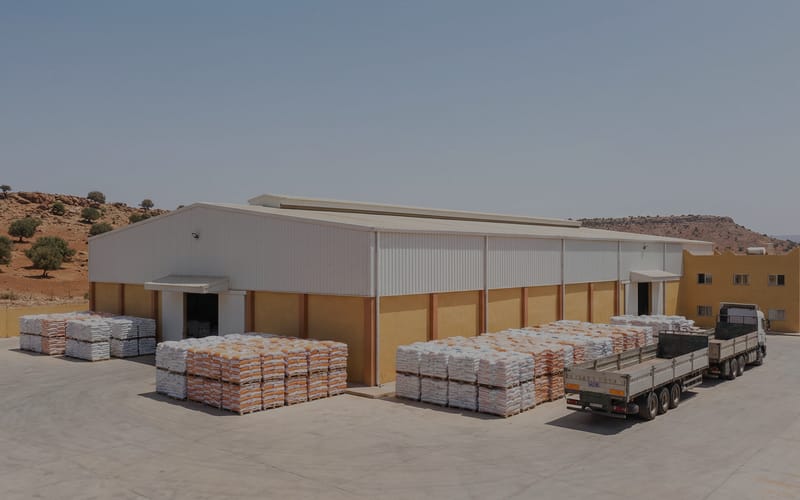
The 7–8 t/h urea compound fertilizer granule manufacturing plant in Morocco didn’t start as a big industrial ambition. It actually came from a fairly practical question the client asked early on: “Can we turn imported urea and local fertilizer materials into stable granules without going into high-temperature processing?”
This line now produces 20,000 tons per year of compound fertilizer using a dry extrusion granulation method. The entire setup fits inside an existing 4,000 m² workshop, which helped keep the initial investment under control.
The 7–8 t/h urea compound fertilizer granule manufacturing plant in Morocco is designed around simplicity and stability rather than complexity. No drying section, no large boiler system—just controlled mixing, pressing, shaping, and screening. For regions where energy cost fluctuates, this approach makes a lot of sense.
Name:
urea compound fertilizer plant
Country:
Morocco
Date:
2025
Capacity:
7–8 t/h
Product Type:
urea compound fertilizer
Fertilizer Form:
granule
Raw Materials:
Urea, DAP, KCl
Annual Output:
20,000 t
The 7–8 t/h urea compound fertilizer granule manufacturing plant in Morocco runs on a single-shift schedule, about 8 hours per day, 330 days per year. With this rhythm, the plant maintains a steady output without overloading equipment.
Another thing worth mentioning: the plant doesn’t rely on complicated automation. It’s semi-automatic, but operators can quickly adjust feed ratios and moisture levels. During commissioning, the first batches were slightly uneven—some granules too soft, some too brittle. After a few parameter tweaks, it stabilized.
The 7–8 t/h urea compound fertilizer granule manufacturing plant in Morocco is a compact extrusion granulation system built for medium-scale fertilizer blending and shaping.
It processes nitrogen, phosphorus, and potassium-based raw materials into uniform granules mainly used for:
The client didn’t want a drying system. That was clear from day one.
Extrusion granulation works at low temperature, which means:
And honestly, for 20,000 t/year, going with a full rotary drum system would’ve been overkill.
The client operates in central Morocco, where agriculture is shifting toward higher-efficiency fertilization. Imported fertilizers dominate the market, but there’s growing demand for custom-formulated blends.
What they had:
What they needed:
That’s how the 7–8 t/h urea compound fertilizer granule manufacturing plant in Morocco came into the picture.
In Morocco, fertilizer raw materials are a mix of imports and regional supply. Storage and humidity control became an early design consideration—especially for urea.
Before listing them, one detail: the client initially underestimated how hygroscopic urea can be. During early trials, it absorbed moisture faster than expected. We added tighter storage control after that.
| Material | Annual Usage (t/year) | Notes | Max Storage (t) |
|---|---|---|---|
| Urea | 1000 | Bagged, imported | 120 |
| Diammonium Phosphate (DAP) | 3000 | Bagged | 300 |
| Potassium Chloride (KCl) | 2000 | Imported bulk | 200 |
| Ammonium Chloride | 12000 | Main nitrogen source | 1800 |
| Ammonium Sulfate | 20 | Minor additive | 5 |
The plant avoids heavy thermal systems, so energy use stays relatively low.
| Utility | Consumption | Source |
|---|---|---|
| Electricity | 500,000 kWh/year | Local grid |
| Water | 1709.73 t/year | Municipal supply |
Most water is used in moisture conditioning, not washing or cooling.
One thing we adjusted during design: instead of fewer large machines, we used multiple smaller granulators. This gives flexibility—if one unit needs maintenance, the line doesn’t stop completely.
| Equipment | Quantity | Function |
|---|---|---|
| Raw Material Bins | 5 | Storage and feeding |
| Belt Weighing Scales | 5 | Accurate dosing |
| Fertilizer Granulator Machines | 28 | Core granulation |
| Distribution Bins | 14 | Material splitting |
| Polishing Machine | 1 | Surface finishing |
| Coating Drum | 1 | Anti-caking coating |
| Primary Screening Drum | 1 | First separation |
| Secondary Screening Drum | 1 | Final classification |
| Belt Conveyors | 12 | Closed transport |
| Humidifying Mixer | 1 | Moisture adjustment |
| Finished Product Bin | 1 | Storage |
| Packaging Machine | 1 | 50kg bagging |
Instead of overcomplicating things, the flow is straightforward. But small details matter.
Dust was the main concern here—not wastewater.
No process wastewater is generated. That simplified things quite a bit.
The layout wasn’t just about fitting machines.
We arranged the plant like this:
One thing learned on-site: Operators prefer shorter walking distances between control points. We adjusted control panel locations after installation.
The client didn’t want a high upfront cost. We kept things practical.
Labor costs in Morocco helped balance the budget, so automation didn’t need to be extreme.
All equipment was shipped from Qingdao Port (China) to:
From there, inland transport to the project site.
Demand for compound fertilizer in Morocco is quietly growing.
Farmers are shifting from single-nutrient fertilizers to balanced formulations. This opens opportunities for plants like this one.
The 7–8 t/h urea compound fertilizer granule manufacturing plant in Morocco fits right into this transition:
Projects like this aren’t about building the biggest system. They’re about building the right-sized system.
The 7–8 t/h urea compound fertilizer granule manufacturing plant in Morocco shows that:
For anyone considering a similar setup, the first thing we usually ask is simple: “What raw materials do you actually have access to?”
That answer shapes everything else.
Having the right mix of reliable, high-quality pellet machine and pelletizing systems and expert support is essential to your success. Watch how our end-to-end feed pellet plant solutions have helped our customers optimize their performance.
Our customized and future-proofed turnkey pellet plant solutions is designed with you at the core. From vision to reality and beyond, our team stays connected with yours. Giving you peace-of-mind with an expert at your side.
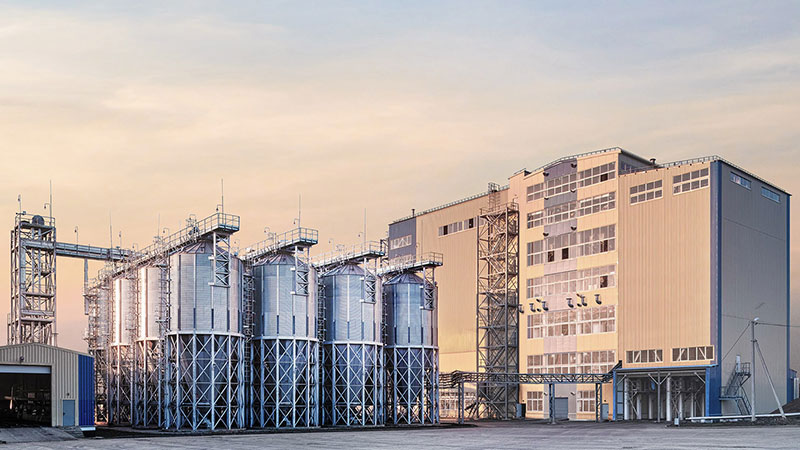
At RICHI, we go beyond project completion. With RICHI Servicee, we’re your dedicated partners in success. Count on us for expert guidance, minimal downtime, and optimized productivity. Choose RICHI for unmatched service and support.
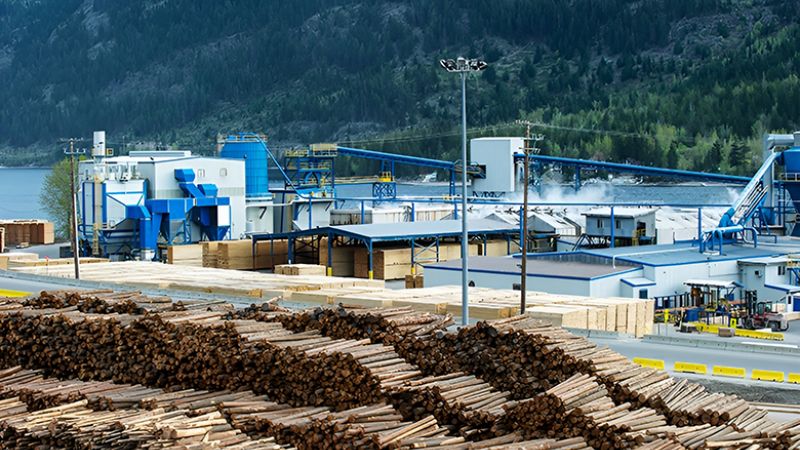


Meet global product demands and quality standards with industry-leading pellet plant design, engineering, equipment, and construction services for pellet processors.

Your Partner Beyond Project Completion
2000+ cases
RICHI is the leading designer, manufacturer and builder of pellet plants in the world, completing over 2000 projects in 140 countries across 6 continents.
Read More
Increase plant productivity, profitability, and safety by integrating high quality equipment into your pellet production line. Over the years, RICHI has become China's top pellet equipment manufacturer. At the same time, RICHI has established valuable partnerships with the world's leading component and raw material manufacturers to bring you the best there is in technology, automation, and efficiency in pelleting plant machinery.

For nearly 30 years, RICHI has been providing best-in-class pellet plant equipment and services to clients across a variety of industries, sizes, and needs. We pride ourselves on the knowledge and skill that each team member possesses – from our technical sales team to our process design engineers. You can count on RICHI Machinery to take your operation to the next level of innovation, quality, and success.
Need help with your pellet manufacturing plant project? Contact us today.
ANIMAL FEED
BIOMASS
WOOD
ORGANIC FERTILIZER
AQUA FEED
CAT LITTER
MUNICIPAL WASTE RECYCLING
SPECIAL PELLET PRODUCTION
RICHI Machinery continues to deliver world class pellet mill equipment, pellet plant engineering and project solutions that add value to our customers in the animal feed, wood waste, agriculture waste, organic fertilizer, cat litter and special pellet products industries. Throughout the years, we RICHI Machinery have built strong brand, becoming industry-leading pellet machine manufacturer. We value integrity, promise quality, and prioritize your success.
Learn MoreWith our expert team, we precisely implement your process engineering requirements in pellet mill and pelletizing plant systems. No matter which industry you’re in – we understand your needs and deliver solutions that meet the highest standards.
At RICHI, quality comes first. Our pellet making machine and related pellet line equipment undergo rigorous quality controls to ensure they meet the highest standards. Rely on products that are durable, safe, and efficient.
With decades of experience in pellet machine and pellet production line production, we have earned a reputation as a trusted partner in various industries. Our expertise allows us to cover a wide range of applications.
Not only do we offer premium pelleting equipment, but we are also experts at designing, building, installing, and maintaining facilities from the ground up. Our expertise is within pellt plant process design, discovering the most efficient, productive, and profitable way to handle your materials in an end-to-end cycle.
○ RICHI MACHINERY
Keeping in touch with us is an effective way to solve all your problems. If you have any needs or questions, please leave your contact information, then RICHI technical consultants will send design, quotation, videos to your mailbox. You can also contact us directly via WhatsApp: +86 13838389622
Copyright©2015-2026 by HENAN RICHI MACHINERY CO., LTD. All rights reserved.