
This is a project about the Pig Manure Compost Powder Production Line in Russia. The project we delivered processes around 18,000 tons of fresh pig manure annually, combined with 7,000 tons of sawdust, 4,000 tons of peat, and 3,000 tons of sunflower husks sourced within the region.
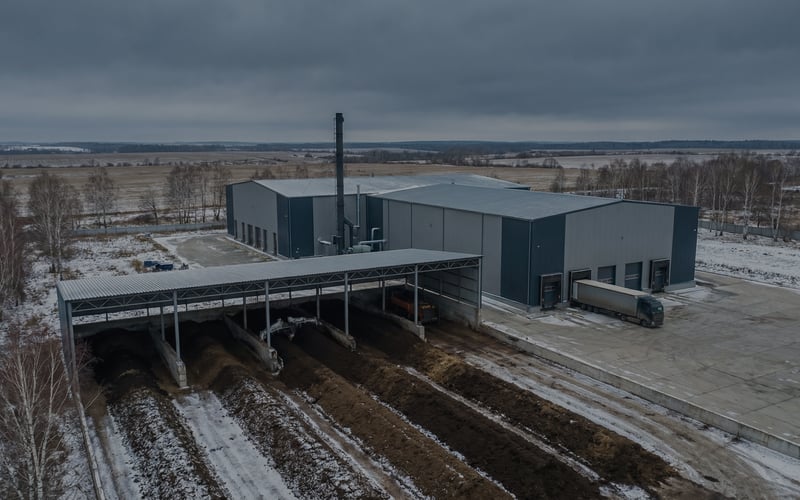
This is a project about the Pig Manure Compost Powder Production Line in Russia. The project we delivered processes around 18,000 tons of fresh pig manure annually, combined with 7,000 tons of sawdust, 4,000 tons of peat, and 3,000 tons of sunflower husks sourced within the region. The facility includes a 10-trough fermentation area with chain plate turners, a 1,000-square-meter curing zone, and a processing building housing crushing, screening, mixing, and automatic bagging equipment.
Total equipment investment came to $280,000 USD, with the full project budget reaching $585,000 USD including buildings and site preparation. The plant operates 300 days per year with a 15-person crew and produces roughly 30,000 tons of finished fertilizer annually—split between powder organic fertilizer and higher-value organic-inorganic compound blends.
Within the first six months of operation, Alexander had already sold through more than half his expected annual production volume, with customers ranging from large grain operations to greenhouse vegetable growers within a 300-kilometer radius.
Name:
manure compost powder fertilizer line
Country:
Russia
Date:
2025
Capacity:
10 T/H
Product Type:
powder fertilizer
Raw material:
Pig Manure, Sawdust
Control Mode:
Automatic
Guiding Price:
$280,000 USD
It was November 2023 when the inquiry came through our website. The line was simple: "Organic fertilizer line for pig farm – Russia." No fancy presentation, no lengthy introduction. Just a farmer who had a problem.
Alexander owned a large pig farming operation outside Voronezh, about 500 kilometers south of Moscow. His farm housed around 50,000 pigs, and like every large-scale operation in Russia, manure disposal was becoming a regulatory nightmare. The old method of simply spreading raw manure on surrounding fields wasn't cutting it anymore.
Environmental inspectors were asking questions. Neighbors were complaining about the smell. And honestly, Alexander told me during our first video call, "I'm sitting on a mountain of waste that costs me money to manage. I want it to make me money instead."
He had done some research. He knew organic fertilizer had value. But he wasn't sure where to start, what equipment he needed, or whether the whole idea even made financial sense in the Russian context. That's where we came in.
Before quoting any equipment, I needed to understand what we were dealing with. Russia isn't Germany. It isn't China. The conditions here are different, and any organic fertilizer production line we designed had to work with what was actually available, not what looked good on paper.
The raw material situation: Alexander's farm generated about 18,000 tons of fresh pig manure annually, with moisture content around 70-75%. That's a lot of material, but it wasn't enough on its own. Good organic fertilizer needs the right carbon-to-nitrogen ratio, and pig manure alone is too high in nitrogen. We needed carbon-rich bulking agents.
Here's where things got interesting. Russia has plenty of sawdust and wood chips—forestry is a major industry. But the quality varies wildly. Some sawmills produce clean softwood sawdust. Others mix in bark, dirt, and whatever else was on the ground. Alexander had already talked to a few local sawmills and could secure about 7,000 tons of sawdust annually at reasonable prices. He also had access to sunflower husks from a processing plant about 80 kilometers away—another 3,000 tons per year.
We also discussed peat. Russia has enormous peat reserves, especially in the western regions. Peat is excellent for organic fertilizer because it adds organic matter, improves structure, and has natural water-holding capacity. Alexander could source peat locally for about 1,500 rubles per ton delivered.
| Raw Material | Annual Quantity (tons) | Moisture Content | Source | Cost per Ton (RUB) |
|---|---|---|---|---|
| Pig Manure | 18,000 | 70-75% | On-farm | Transport cost only |
| Sawdust / Wood Chips | 7,000 | 30-40% | Local sawmills | 800-1,200 |
| Sunflower Husks | 3,000 | 12-15% | Processing plant | 1,500 |
| Peat | 4,000 | 50-60% | Local peat extraction | 1,500 |
| EM Bacterial Culture | 3.5 | Powder form | Imported | 250,000/year |
| Urea (for C/N adjustment) | 180 | Granular | Agricultural supplier | 35,000/ton |
| Packaging Bags | 500,000 units | 50kg capacity | Local manufacturer | 12/bag |
The climate factor: This was a big one. Voronezh winters get cold. Really cold. Average January temperatures hover around -10°C, but it can drop to -25°C for weeks at a time. Fermentation produces heat, sure, but if the outside temperature is minus twenty, you lose that heat fast. We couldn't just put fermentation troughs in an open shed and hope for the best.
Alexander had land—about 2.5 hectares adjacent to his pig operation. But he didn't have existing buildings suitable for year-round fertilizer production. We would need to design everything from scratch, keeping winter operation in mind.
The market reality: Who was going to buy this fertilizer? Alexander had already done some homework. Within a 200-kilometer radius, there were grain farms, vegetable operations, and several large greenhouse complexes. All of them used synthetic fertilizers almost exclusively. But with fertilizer prices fluctuating wildly and increasing pressure to reduce chemical inputs, organic options were starting to look attractive.
The local agricultural university had done some trials showing that properly composted organic fertilizer could replace 30-40% of synthetic fertilizer applications on grain crops without yield loss. That was a compelling number.
After two weeks of back-and-forth calls, we had a clear picture of what the project required:
Production capacity: Alexander wanted to process all his pig manure—about 60 tons per day—into finished fertilizer. Based on typical mass reduction during composting (manure loses about 50% of its weight through moisture evaporation and decomposition), the finished product output would be around 15-20 tons per hour when operating at full capacity. This would give him roughly 30,000 tons of finished fertilizer annually.
Product types: Two main products:
Working schedule: The farm already had staff. Alexander planned to run the fertilizer operation with 15 employees, working 300 days per year, 10 hours per day. This fit with the pig farm's existing staffing structure.
Budget: This was the tricky part. Alexander had capital available but needed to be smart about it. Total project investment came to about $985,000 USD. Of that, equipment was the largest single expense at around $580,000. The rest went to buildings, site preparation, electrical work, and working capital for raw materials.
This is where our engineering team earned their pay. We had to design a system that would work reliably in Russian conditions, process challenging raw materials, and produce consistent, saleable fertilizer.
The fermentation system: We went with a trough fermentation system with chain plate turners. Why? Because it's robust, handles high-moisture materials well, and can be enclosed to retain heat during winter months.
The fermentation area measured 66 meters long by 32 meters wide, divided into 10 individual fermentation troughs. Each trough had its own chain plate turner mounted on a bridge that moved along rails. This configuration gave us excellent control over the composting process.
The turners moved material about 3.8 meters with each pass. Alexander's team would load fresh material at one end, and over 15-18 days, the turners would gradually move it toward the discharge end. By the time material reached the end, it had been turned at least once daily, had gone through the high-temperature phase (60-70°C) that killed pathogens, and had lost about half its original moisture.
For winter operation, we added insulation to the building envelope and designed the ventilation system to recirculate warm air from the composting material back into the space rather than exhausting it directly. This kept interior temperatures workable even when outside temperatures dropped.
The curing phase: After 18 days in the active fermentation troughs, the material was stable but still needed time to fully mature. We designated a 1,000-square-meter curing area where material would sit in static piles for another 20-25 days. The curing area had a simple turner for occasional mixing and moisture adjustment.
The processing line: Once material was fully cured, it moved to the processing building. This was where the real engineering challenge came in.
Cured compost can be lumpy. It can contain small stones, wood chunks that didn't fully decompose, or clumps that formed during curing. Before anything else, it had to be crushed and screened.
We installed a chain crusher machine first—heavy-duty, designed to break down tough organic materials. The crushed material then went through a rotary screener with 4mm and 8mm screens. Material that passed through the 4mm screen became powder product. Material between 4mm and 8mm could be either re-crushed or used in the granular product, depending on quality.
For the organic-inorganic compound fertilizer, we added a mixing system. Powdered organic base material would go into a twin-shaft mixer where we added urea, potassium sulfate, and monoammonium phosphate based on the target analysis. The mixer had load cells for precise batching—critical for maintaining consistent product quality.
The final step was packaging. We installed a fully automatic bagging system that could handle both powder and granular products at rates of 15-20 tons per hour. The system filled 50kg bags, sealed them, and sent them to a waiting palletizer.
| Equipment | Quantity | Power (kW) | Function |
|---|---|---|---|
| Chain Plate Turners (bridge-mounted) | 1 set | 45 | Fermentation trough aeration and material movement |
| Bridge Turners (each trough) | 10 | 40 each | Individual trough turning |
| Raw Material Mixer Machine | 1 | 22 | Pre-mixing manure and bulking agents |
| Chain Crusher | 1 | 55 | Breaking cured compost lumps |
| Rotary Screener | 1 | 11 | Product classification |
| Twin-Shaft Mixer (with load cells) | 1 | 30 | Adding mineral nutrients |
| Automatic Bagging System | 1 | 15 | 50kg bag filling and sealing |
| Conveyors | 8 | Various | Material transport |
| Front-end Loader | 2 | 70 each | Material handling |
| Bio-filter System | 1 | 22 | Odor control |
I'm not going to sugarcoat this. Processing pig manure smells. Even when you do everything right, there's going to be odor. And in Russia, like everywhere else, neighbors complain.
Alexander was smart about this. He knew that a successful operation needed to be a good neighbor. So we spent significant time on odor control.
The fermentation building had a negative air pressure system—fans pulling air from the building and pushing it through a bio-filter. The bio-filter was a 200-square-meter bed of wood chips and peat inoculated with odor-eating bacteria. Air passed through this bed before being released. During summer, when doors were open for loading and unloading, we installed misting nozzles that sprayed a diluted EM solution to knock down odors at the source.
The fresh manure storage area was the biggest potential odor source. Alexander built a covered receiving pit that could hold about two days' worth of material. This pit had its own separate air handling system and was treated daily with EM culture spray. Fresh manure went from the pit directly into the mixer with sawdust and peat, never sitting exposed longer than absolutely necessary.
The result? Alexander told me six months after startup that he'd had one complaint from a neighbor about odor—on a hot, still day in July when the wind wasn't moving. The local agricultural inspector came out, walked around the site, and said it was better than most similar operations he'd seen.
Every organic fertilizer production project teaches you something. This one taught us a lot about working in Russia.
I've had other potential customers ask me: does organic fertilizer really make sense in Russia? The answer is yes, and here's why.
First, Russia has an enormous amount of agricultural land—over 200 million hectares of cropland. Most of it has been farmed conventionally for decades, with heavy reliance on synthetic fertilizers. Soil organic matter levels are declining. Crop yields are plateauing. There's a growing recognition that organic matter needs to be put back into these soils.
Second, fertilizer prices have been unstable. When synthetic fertilizer prices spiked in 2021-2022, many Russian farmers were caught short. Those who had access to organic alternatives fared better. Alexander's customers aren't just buying his product because it's environmentally friendly—they're buying it because it makes economic sense.
Third, there's a regulatory push. Not as aggressive as in the EU, but the Russian government has been gradually tightening rules around manure management. Large livestock operations can no longer simply spread raw manure on fields year after year without limits. The regulations are driving investment in treatment capacity.
Fourth—and this is specific to the organic fertilizer market—the quality of Russian-produced fertilizers has improved dramatically in recent years. Ten years ago, most organic fertilizer was just composted manure of variable quality. Now, producers like Alexander are making standardized products with guaranteed analyses. That's what farmers want to buy.
For readers who are considering similar projects, here's how the equipment got to Russia.
We shipped from our manufacturing facility in Qingdao, China. The port is about 80 kilometers from our factory, and we've done enough shipments to have the loading and documentation process down to a science.
The equipment went to the Port of St. Petersburg. This is the primary entry point for industrial equipment into western Russia. Transit time by sea is about 35-40 days, depending on routing and weather.
We used standard 20-foot and 40-foot containers for the smaller equipment and components. The larger items—the bridge turners, the mixers, the crusher—went as breakbulk cargo. Alexander had arranged for a logistics company in St. Petersburg to handle customs clearance and arrange the final truck transport to Voronezh. This added about two weeks to the timeline but saved money compared to door-to-door container service.
Customs clearance was straightforward. Alexander had worked with a customs broker who specialized in agricultural equipment, and all our documentation was in order. The key was having proper technical specifications and CE certification documentation available.
I talked to Alexander last month. The plant had been running for eight months at that point. Here's what he told me.
The first month was chaotic. The turners needed adjustment for the actual moisture levels of the incoming material. The mixing ratios we'd calculated on paper needed fine-tuning in practice. The first few batches of finished product were either too wet or too dry. But by week three, the operators had figured out the rhythm.
The winter operation worked. Alexander was worried about the bio-filter freezing, but the combination of warm air from the building and the insulating properties of the filter media kept it functioning. The misting system was winterized—we'd drained the lines and stored the nozzles—but he said he barely needed it during the cold months anyway.
Sales have been the biggest surprise. Alexander thought he'd need to spend heavily on marketing, but word spread quickly. A large grain operation about 150 kilometers away bought 500 tons of powder fertilizer for spring application. A greenhouse complex wanted the organic-inorganic blend for their tomato crop. By month four, Alexander had sold more than half his expected annual volume.
He's already thinking about expansion. The current setup is processing all his pig manure, but he's getting calls from neighboring farms that want to send their manure to his facility for processing. He's considering adding a second fermentation building and another packaging line.
If you're reading this and thinking about doing something similar, here's my advice.
What I like about this project is that it solves real problems. Alexander's pig farm no longer has a waste disposal headache. His fertilizer customers have an alternative to expensive synthetic inputs. The soil on those farms is getting organic matter returned to it. It's a small example of a circular economy working in practice.
And from our perspective at RICHI Machinery, it shows what's possible when you adapt equipment to local conditions rather than trying to force a standard solution into every market.
We've done projects in hot climates, cold climates, wet climates, dry climates. Each one teaches us something. This one taught us about making fermentation work in Russian winters, about sourcing locally appropriate bulking agents, and about the importance of good documentation for certification.
If you're looking at organic fertilizer production and wondering whether it makes sense for your situation, I'm happy to talk. We've done the engineering, we've worked through the problems, we've seen what works and what doesn't. Every project is different, but the fundamentals are the same: good raw material, sound process design, reliable equipment, and a clear understanding of your market.
Project Snapshot:
Location: Voronezh Region, Russia
Capacity: 15-20 tons/hour finished product
Annual Output: 30,000 tons (22,000 tons powder + 8,000 tons organic-inorganic)
Raw Material: Pig manure (18,000 tons/year) + sawdust, peat, sunflower husks
Equipment Cost: $280,000 USD
Total Investment: $585,000 USD
Construction Timeline: 8 months from order to commissioning
Payback Period: Estimated 12-14 months
Shipping Ports: Qingdao, China → St. Petersburg, Russia
Alexander's plant in Voronezh is up and running. The pigs still produce manure. The turners still turn. The bags still fill. It's not glamorous work, but it's honest work, and it's making money.
The fertilizer is going onto fields within 300 kilometers of the plant. Spring wheat, winter wheat, sunflowers, corn. Russian farmers are seeing results—better soil structure, more consistent yields, lower fertilizer costs.
One of Alexander's customers told him last harvest: "I used to think organic fertilizer was just expensive compost. Now I know it's real fertilizer."
That's the shift that's happening. Not fast, but steady.
For our part, we're proud to have been part of it. And we're ready to help with the next organic fertilizer production project, wherever it is.
Having the right mix of reliable, high-quality pellet machine and pelletizing systems and expert support is essential to your success. Watch how our end-to-end feed pellet plant solutions have helped our customers optimize their performance.
Our customized and future-proofed turnkey pellet plant solutions is designed with you at the core. From vision to reality and beyond, our team stays connected with yours. Giving you peace-of-mind with an expert at your side.
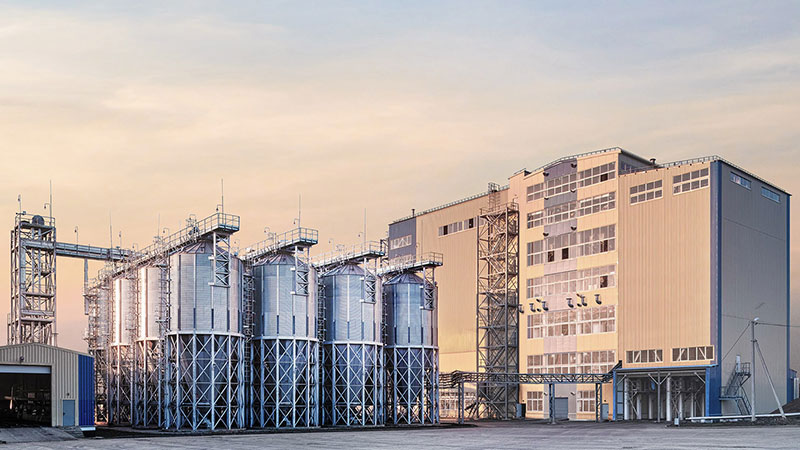
At RICHI, we go beyond project completion. With RICHI Servicee, we’re your dedicated partners in success. Count on us for expert guidance, minimal downtime, and optimized productivity. Choose RICHI for unmatched service and support.
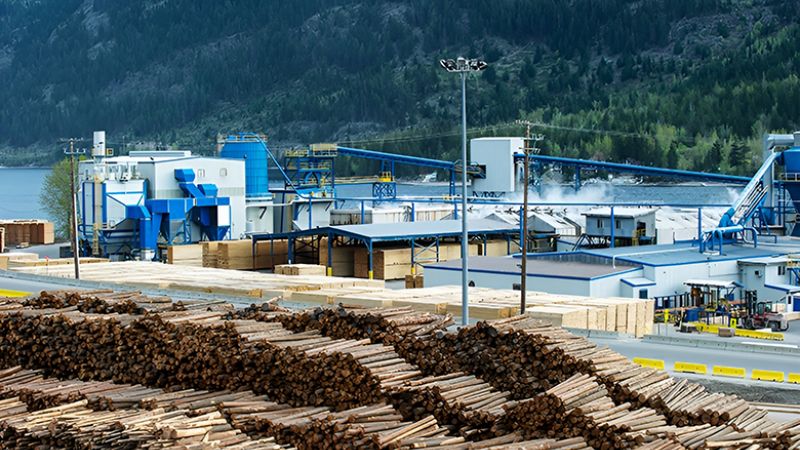


Meet global product demands and quality standards with industry-leading pellet plant design, engineering, equipment, and construction services for pellet processors.


Your Partner Beyond Project Completion
2000+ cases
RICHI is the leading designer, manufacturer and builder of pellet plants in the world, completing over 2000 projects in 140 countries across 6 continents.
Read More
Increase plant productivity, profitability, and safety by integrating high quality equipment into your pellet production line. Over the years, RICHI has become China's top pellet equipment manufacturer. At the same time, RICHI has established valuable partnerships with the world's leading component and raw material manufacturers to bring you the best there is in technology, automation, and efficiency in pelleting plant machinery.

For nearly 30 years, RICHI has been providing best-in-class pellet plant equipment and services to clients across a variety of industries, sizes, and needs. We pride ourselves on the knowledge and skill that each team member possesses – from our technical sales team to our process design engineers. You can count on RICHI Machinery to take your operation to the next level of innovation, quality, and success.
Need help with your pellet manufacturing plant project? Contact us today.
ANIMAL FEED
BIOMASS
WOOD
ORGANIC FERTILIZER
AQUA FEED
CAT LITTER
MUNICIPAL WASTE RECYCLING
SPECIAL PELLET PRODUCTION
RICHI Machinery continues to deliver world class pellet mill equipment, pellet plant engineering and project solutions that add value to our customers in the animal feed, wood waste, agriculture waste, organic fertilizer, cat litter and special pellet products industries. Throughout the years, we RICHI Machinery have built strong brand, becoming industry-leading pellet machine manufacturer. We value integrity, promise quality, and prioritize your success.
Learn MoreWith our expert team, we precisely implement your process engineering requirements in pellet mill and pelletizing plant systems. No matter which industry you’re in – we understand your needs and deliver solutions that meet the highest standards.
At RICHI, quality comes first. Our pellet making machine and related pellet line equipment undergo rigorous quality controls to ensure they meet the highest standards. Rely on products that are durable, safe, and efficient.
With decades of experience in pellet machine and pellet production line production, we have earned a reputation as a trusted partner in various industries. Our expertise allows us to cover a wide range of applications.
Not only do we offer premium pelleting equipment, but we are also experts at designing, building, installing, and maintaining facilities from the ground up. Our expertise is within pellt plant process design, discovering the most efficient, productive, and profitable way to handle your materials in an end-to-end cycle.
○ RICHI MACHINERY
Keeping in touch with us is an effective way to solve all your problems. If you have any needs or questions, please leave your contact information, then RICHI technical consultants will send design, quotation, videos to your mailbox. You can also contact us directly via WhatsApp: +86 13838389622
Copyright©2015-2026 by HENAN RICHI MACHINERY CO., LTD. All rights reserved.