
The core of the project was this 50-ton-per-hour industrial sludge powder organic fertilizer production line. A potential client from Malaysia had been looking at the growing volume of industrial sludge—from wastewater treatment plants, palm oil mills, and some of the newer manufacturing zones—and saw it less as a disposal problem and more as an underutilized resource.
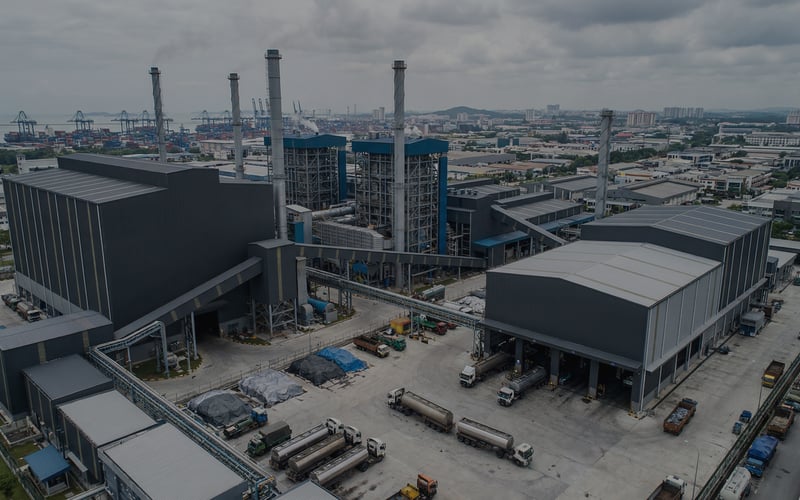
This industrial sludge powder organic fertilizer production line in Malaysia started with a phone call last year. A potential client from Malaysia had been looking at the growing volume of industrial sludge—from wastewater treatment plants, palm oil mills, and some of the newer manufacturing zones—and saw it less as a disposal problem and more as an underutilized resource.
Their idea was simple on the surface: process it into a high-value organic fertilizer. The scale, however, was ambitious. They were talking about handling up to 50 tons per hour, which immediately put this project into a different category than the typical small-scale composting operations we usually discuss.
This wasn’t just about buying a few machines. It was about designing a fully integrated industrial system that could take in a high-moisture, often unstable feedstock and reliably turn it into a safe, standardized product for the agricultural and land reclamation sectors.
The client, a growing environmental technology firm in the state of Selangor, was already managing a smaller 45,000-ton-per-year organic fertilizer line. But this new project—what we began calling the “50 t/h Sludge-to-Fertilizer Initiative”—was their leap into industrial-scale resource recovery.
They had the land, the permits were being lined up, and they had a clear vision: create a circular economy model where urban and industrial waste streams became the foundation for soil restoration and commercial agriculture.
Name:
Sludge fertilizer system
Country:
Malaysia
Date:
2024.06.19
Capacity:
50T/H
Raw Material:
Sludge, Wood Waste
Control Mode:
Automatic
final product:
powder
Guiding Price:
$2.5 million USD
The core of the project was this 50-ton-per-hour industrial sludge powder organic fertilizer production line. The name itself defines the scale: it’s not a batch process, it’s a continuous flow designed for high throughput.
We spent the first few weeks just getting on the same page about what "50 t/h" meant in real-world terms—the incoming material’s moisture content, the space required for storage and processing, and the sheer logistics of moving that much material through the facility every day.
They weren’t just looking for equipment; they were looking for a process that could handle the variability of their incoming feedstock and produce a consistent, high-quality end product.
For a project of this scale, the raw material list isn’t just a list—it’s the project's foundation. The client’s strategy was to use a variety of waste streams to create a balanced, nutrient-rich product.
Their approach was to source a steady supply of municipal and industrial sludge as the primary material, then use a carefully chosen mix of carbon-rich and mineral-based additives to manage moisture, porosity, and nutrient profile during the composting process. This approach makes sense; relying on a single waste stream can be risky if supply fluctuates.
We worked with them to classify and quantify all their available materials. The main component, as planned, was the industrial sludge from various sources around the Klang Valley and surrounding industrial parks. This wasn't just one type of sludge; it came from municipal wastewater plants, palm oil mill effluent (POME) treatment facilities, and some from paper and textile processing.
The challenge here was the variability in moisture content, which could swing from 60% to as high as 80%, and the potential for contaminants. We had to build the process with enough flexibility to handle this.
The role of the other materials was critical for the process to work. The wood waste and agricultural residues weren’t just fillers; they were the structural bulking agents that would create air pockets in the compost pile, essential for the aerobic microbes to thrive.
The client had secured contracts with local timber mills and furniture factories for the wood waste, and with rice mills and oil palm estates for the agricultural residues like empty fruit bunches (EFB) and rice straw. The mineral additives like fly ash and industrial dust were a smart move—they could help adjust the pH and add trace elements to the final product.
Here’s a breakdown of the planned annual feedstock for the 50 t/h industrial sludge powder organic fertilizer production line in Malaysia. These are the dry or semi-dry inputs that would be mixed with the high-moisture sludge to achieve the right processing conditions:
| Raw Material | Annual Consumption (tons/year) | Role in Process |
|---|---|---|
| Industrial Sludge (Municipal, POME, Paper, Textile) | 200,000 | Primary nutrient source; high in organic matter and moisture |
| Wood Waste (Sawdust, wood chips) | 150,000 | Bulking agent; provides carbon, absorbs moisture, creates porosity |
| Agricultural Residues (EFB, rice straw) | 50,000 | Secondary carbon source and bulking agent |
| Plant Residues | 30,000 | Source of additional nutrients and structural diversity |
| Animal Manure | 50,000 | High in nitrogen and beneficial microbes |
| Animal Processing Waste | 10,000 | Protein source; requires careful handling to avoid odors |
| Food Processing Waste | 20,000 | Easily degradable organic matter; can accelerate the initial heating phase |
| Fly Ash & Industrial Dust | 30,000 | pH buffer, adds micro-nutrients, improves soil structure |
| River Silt & Lagoon Dredgings | 50,000 | Provides mineral content and trace elements |
| Biological Inoculants (Bacteria) | 10 | Custom blend to kickstart and optimize the fermentation process |
This mix gave them a lot of control. If a load of sludge came in too wet, they could increase the proportion of wood waste. If it was lacking in nitrogen, they’d adjust the manure or food waste input. This ability to fine-tune the blend was something we emphasized heavily in our process design discussions.
One of the first things we did was a virtual site visit. The client had an existing facility on a 18,400 m² plot, but the new industrial sludge powder organic fertilizer production line in Malaysia required a complete reconfiguration of the space. They had the area, but it wasn’t being used efficiently for a 50 t/h continuous process.
Our team in Qingdao spent a good amount of time with their project engineers, going over their existing layout and the new process flow we were proposing. We use 3D modeling for these discussions, which helps a lot—it’s easier to visualize a 68-meter-long fermentation zone when you can see it rendered on their actual site map.
The new layout we designed consolidated everything. Instead of scattered storage and processing areas, we created a logical flow from the receiving area to the final product storage. The incoming trucks would dump materials into designated bays.
We set up two dedicated raw material warehouses: one for the drier, carbon-rich materials like wood waste and agricultural residues, and another for the more sensitive, higher-moisture inputs. This separation was key for controlling odors and managing the logistics of pre-mixing.
The heart of the operation became the new, 4,500 m² processing building. It was divided into distinct zones:
Adjacent to this main building, we repurposed an existing structure into a 2,330 m² finished product warehouse and built a 2,183 m² and a 1,176 m² store for the raw, drier materials.
The existing office and lab space—around 1,000 m²—was left untouched but integrated into the new operational plan. The whole reconfiguration was about creating a smooth, efficient flow that could handle the 50 tons per hour without creating congestion points.
The client had a good handle on composting basics, but scaling it to 50 tons per hour required a more engineered approach. We walked them through the process step-by-step, explaining not just what the machines did, but why each step was critical for an organic fertilizer production project of this size.
Throughout this process, we installed a comprehensive odor control system. The air from fermentation and curing zones is collected and treated via a multi-stage system: a chemical scrubber using plant-based deodorant, a high-energy microwave UV stage, and finally a large bio-filter.
All treated air is released through a single 15-meter stack. The client was very conscious of their neighbors, and this was a non-negotiable part of the design.
For a 50 t/h industrial sludge powder organic fertilizer production line in Malaysia, the equipment can't be standard agricultural or light industrial grade. We had to spec machines that could run 24 hours a day, 300 days a year, with minimal downtime for maintenance. This meant focusing on structural integrity, ease of access for service, and automation where it made sense. Here’s the list of key equipment we supplied for this project:
| Equipment | Quantity | Primary Function |
|---|---|---|
| Windrow Fermentation Channels | 4 sets | Housing for primary and secondary composting zones; includes aeration piping |
| Tracked Windrow Turner | 1 unit | Moves through channels to mix, aerate, and turn the compost |
| Roots Blowers (Aeration Fans) | 4 units | Forced aeration system; supplies oxygen to the compost piles |
| Crusher / Shredder | 1 unit | Breaks down cured compost lumps for final processing |
| Rotary Screener | 1 unit | Separates fine product from oversize material |
| Packaging Machine | 1 unit | Automatically fills and seals bags of finished fertilizer |
| Front-End Loader | 1 unit | General material handling; moving raw materials, feeding the line |
| Conveyor Systems | Multiple | Belt conveyors for moving material between processing stages |
The client already had some supporting equipment from their original 45,000-ton industrial sludge powder organic fertilizer production line in Malaysia—like the lab equipment for testing N-P-K and moisture content—which we integrated into the new plan. Their lab setup was solid, so we didn't need to supply a new one.
This industrial sludge powder organic fertilizer production line in Malaysia project wasn't just about shipping equipment; it was about adapting a process to a specific regulatory and environmental context. For a Malaysian operation, the standards aren't the same as in China. We had to shift our thinking and work with the client to ensure the final product would meet local requirements.
For their agricultural products, the key reference became the Malaysian Standard for MS 1517:2017 - Organic Fertilizer. This standard sets limits for heavy metals like arsenic, cadmium, lead, and mercury, as well as requirements for organic matter content, pH, and moisture.
The client would need to test their output against this. For products intended for land reclamation or soil conditioning, we looked at the Environmental Quality (Scheduled Wastes) Regulations 2005, which governs the treatment and disposal of industrial waste.
By processing the sludge into a value-added product, they were effectively removing it from the "scheduled waste" category, provided the final product met the criteria for a non-hazardous material. This was a huge economic incentive for them.
We also had to consider the tropical climate. Malaysia’s high ambient temperatures and humidity meant we needed to pay extra attention to moisture management. The aeration system we designed had to be robust enough to maintain oxygen levels even when the incoming air was hot and saturated.
The building's roof, using transparent panels, wasn’t just for light; it was to leverage solar radiation to aid in drying the piles, especially during the rainy season. We also had to ensure all electrical components were properly sealed against the humidity and frequent tropical rainstorms.
The conversation around cost was always grounded in the scale of the organic fertilizer production line project. This wasn't a half-a-million-dollar investment; it was a serious industrial undertaking. The client’s total investment was planned at around $2.5 million USD for the new 50 t/h line and the facility modifications.
The equipment package we supplied, including the windrow turner, aeration system, crusher, screener, and packaging line, came to roughly $1.1 million USD.
The real value proposition for them wasn't just the equipment cost. It was the operating cost per ton. By using a mix of waste streams, their raw material cost was significantly lower than if they were buying agricultural inputs like peat or compost.
The biggest ongoing costs would be electricity for the blowers and the turner, labor for the 70-person operation (running 24/7), and the biological inoculants. We estimated their total production cost to be around $25-30 per ton of finished product.
The market for the final product in Malaysia is strong. The country’s large palm oil and rubber plantations are always looking for cost-effective soil amendments. Government programs promoting sustainable agriculture and the use of organic matter to improve soil health are also creating demand.
For land reclamation, there's a constant need to rehabilitate ex-mining land and other degraded areas. The client had already begun pre-selling their output to a few large plantations, which helped de-risk the investment. The profit margin per ton, based on market prices for quality organic fertilizers, was looking very attractive.
What we saw in this project is a microcosm of a larger trend. Malaysia is industrializing rapidly, and with that comes a growing waste problem. The traditional approach of sending sludge to landfills is becoming increasingly expensive and environmentally unacceptable. At the same time, the agricultural sector is under pressure to move away from heavy chemical fertilizer use and adopt more sustainable practices.
A project like this 50 t/h industrial sludge powder organic fertilizer production line in Malaysia sits right at the intersection of these two challenges. It turns a costly waste stream into a valuable agricultural input. The closed-loop system—taking waste from the city and industry and returning it to the land as a soil builder—is exactly the kind of circular economy model that makes sense for a resource-conscious nation.
For the client, the benefits go beyond just the bottom line. They are positioning themselves as a leader in environmental solutions. They are creating a reliable source of high-quality soil inputs for their country’s agriculture sector, reducing the reliance on imported fertilizers. And they are offering a tangible solution to their local municipalities and industries struggling with sludge disposal.
We’ve seen similar models work elsewhere, but the conditions in Malaysia—the volume of waste, the agricultural demand, and the supportive policy environment—make it particularly promising. This project was a big step for them, and it’s the kind of project we’re always excited to be part of. It required careful planning, a willingness to adapt to local conditions, and a focus on the real-world challenges of moving, processing, and stabilizing 50 tons of material every hour.
If you’re looking at a similar opportunity, whether it’s with sludge, agricultural waste, or any other organic material, the conversation should always start with the feedstock. What do you have? How stable is its supply? What’s its moisture and nutrient profile? Once you have those answers, you can start to design a process.
We handle all the engineering, from the initial layout to the final commissioning, and our equipment is built for the long haul. Everything is shipped from our facility in Qingdao, with the nearest major port for Malaysian projects being Port Klang. It’s a straightforward route we’ve done many times.
Having the right mix of reliable, high-quality pellet machine and pelletizing systems and expert support is essential to your success. Watch how our end-to-end feed pellet plant solutions have helped our customers optimize their performance.
Our customized and future-proofed turnkey pellet plant solutions is designed with you at the core. From vision to reality and beyond, our team stays connected with yours. Giving you peace-of-mind with an expert at your side.
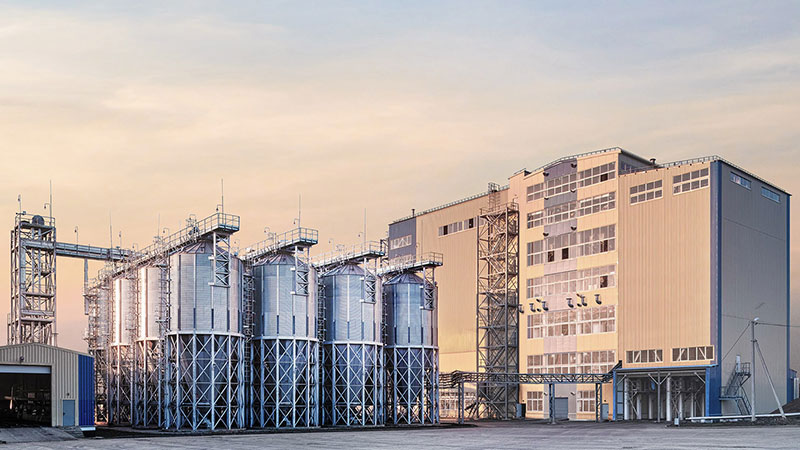
At RICHI, we go beyond project completion. With RICHI Servicee, we’re your dedicated partners in success. Count on us for expert guidance, minimal downtime, and optimized productivity. Choose RICHI for unmatched service and support.
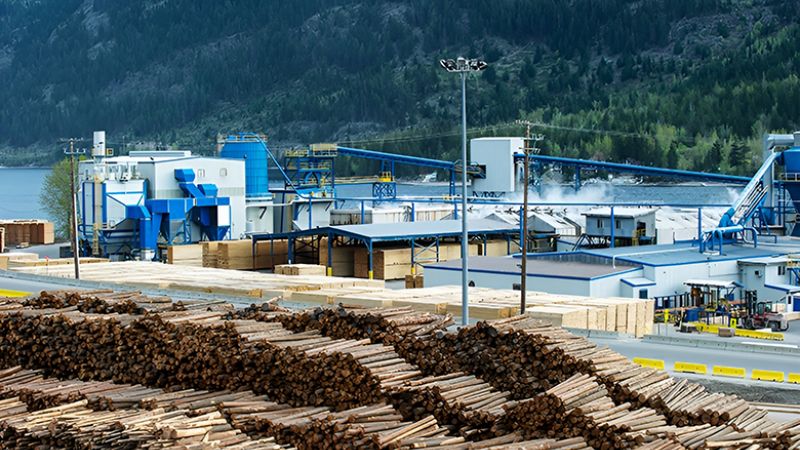

Meet global product demands and quality standards with industry-leading pellet plant design, engineering, equipment, and construction services for pellet processors.

Your Partner Beyond Project Completion
2000+ cases
RICHI is the leading designer, manufacturer and builder of pellet plants in the world, completing over 2000 projects in 140 countries across 6 continents.
Read More
Increase plant productivity, profitability, and safety by integrating high quality equipment into your pellet production line. Over the years, RICHI has become China's top pellet equipment manufacturer. At the same time, RICHI has established valuable partnerships with the world's leading component and raw material manufacturers to bring you the best there is in technology, automation, and efficiency in pelleting plant machinery.

For nearly 30 years, RICHI has been providing best-in-class pellet plant equipment and services to clients across a variety of industries, sizes, and needs. We pride ourselves on the knowledge and skill that each team member possesses – from our technical sales team to our process design engineers. You can count on RICHI Machinery to take your operation to the next level of innovation, quality, and success.
Need help with your pellet manufacturing plant project? Contact us today.
ANIMAL FEED
BIOMASS
WOOD
ORGANIC FERTILIZER
AQUA FEED
CAT LITTER
MUNICIPAL WASTE RECYCLING
SPECIAL PELLET PRODUCTION
RICHI Machinery continues to deliver world class pellet mill equipment, pellet plant engineering and project solutions that add value to our customers in the animal feed, wood waste, agriculture waste, organic fertilizer, cat litter and special pellet products industries. Throughout the years, we RICHI Machinery have built strong brand, becoming industry-leading pellet machine manufacturer. We value integrity, promise quality, and prioritize your success.
Learn MoreWith our expert team, we precisely implement your process engineering requirements in pellet mill and pelletizing plant systems. No matter which industry you’re in – we understand your needs and deliver solutions that meet the highest standards.
At RICHI, quality comes first. Our pellet making machine and related pellet line equipment undergo rigorous quality controls to ensure they meet the highest standards. Rely on products that are durable, safe, and efficient.
With decades of experience in pellet machine and pellet production line production, we have earned a reputation as a trusted partner in various industries. Our expertise allows us to cover a wide range of applications.
Not only do we offer premium pelleting equipment, but we are also experts at designing, building, installing, and maintaining facilities from the ground up. Our expertise is within pellt plant process design, discovering the most efficient, productive, and profitable way to handle your materials in an end-to-end cycle.
○ RICHI MACHINERY
Keeping in touch with us is an effective way to solve all your problems. If you have any needs or questions, please leave your contact information, then RICHI technical consultants will send design, quotation, videos to your mailbox. You can also contact us directly via WhatsApp: +86 13838389622
Copyright©2015-2026 by HENAN RICHI MACHINERY CO., LTD. All rights reserved.