
The 1-1.5t/h digestate and chicken manure compost powder production line in Spain installed for a family-owned livestock operation in Lleida represents a practical response to tightening European environmental regulations. Designed to process 3,200 tons of chicken manure and 100 tons of digestate annually—along with 1,010 tons of carbon-rich bulking agents—this facility transforms on-farm waste into 3,000 tons of certified organic fertilizer powder each year.
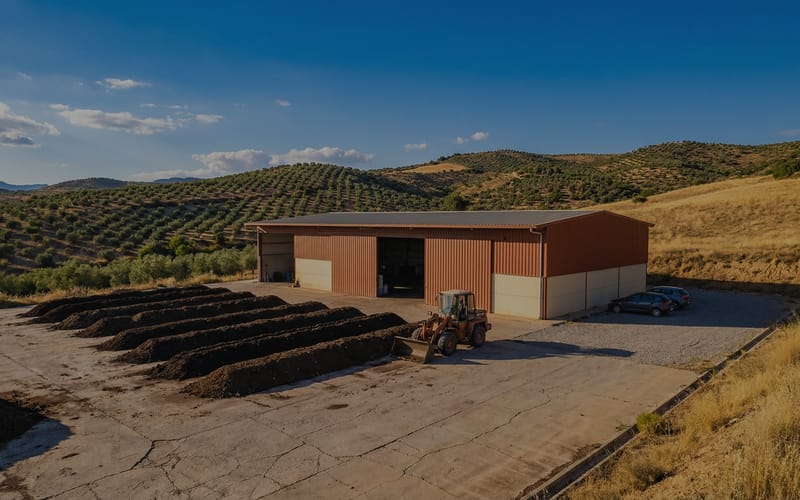
The 1-1.5t/h digestate and chicken manure compost powder production line in Spain installed for a family-owned livestock operation in Lleida represents a practical response to tightening European environmental regulations.
Designed to process 3,200 tons of chicken manure and 100 tons of digestate annually—along with 1,010 tons of carbon-rich bulking agents—this facility transforms on-farm waste into 3,000 tons of certified organic fertilizer powder each year.
The client's total investment of approximately $85,000 covers the complete processing system, including an aerobic fermentation tank, material handling conveyors, a vertical crusher, a closed-circuit screening station, and automated bagging equipment, all configured within a 2,500-square-meter footprint adjacent to their existing poultry barns.
Name:
chicken manure fertilizer powder plant
Country:
Spain
Date:
2025
Capacity:
1-1.5T/H
Raw material:
Chicken manure, Digestate, Rice hulls
final product:
powder fertilizer
Control Mode:
Automatic
Guiding Price:
$825,000
What makes this 1-1.5t/h digestate and chicken manure compost powder production line in Spain particularly strategic is how it addresses the nitrate vulnerability zones designated under the Nitrates Directive. Lleida province has some of Catalonia's highest livestock densities, and farmers face strict limits on manure spreading.
By installing this organic fertilizer production line, the client converts a waste liability into a marketable product that can be sold outside the vulnerable zone, effectively breaking the link between livestock numbers and local land availability.
The equipment package, shipped from Qingdao to the port of Barcelona, includes an aerobic fermentation unit, two ground turners for secondary composting, a complete conveyor network, a vertical crusher, a fully enclosed rotary screen, and a bagging station, all designed for low-maintenance operation by existing farm staff.
The client first contacted us in early 2025. A third-generation farmer from Lleida, he ran an integrated operation with 50,000 laying hens and a biogas plant processing manure from his own and neighboring farms. The biogas generated electricity for the farm and the grid. But the digestate coming out of the system—about 100 tons per year—was becoming a headache.
During our initial video call, he laid out the problem clearly:
"I've got 5,000 tons of chicken manure coming out of my barns every year. About 3,200 tons of it goes into this new fertilizer line. The rest? I'm supposed to spread it, but my land isn't big enough, and the regulations keep getting tighter.
The biogas digestate is even harder to place—it's wet, it's heavy, and transport costs kill you. I need something that turns this stuff into a product I can sell, not a problem I have to manage."
He'd already done the math. The existing poultry farm, which had been operating since 2017, generated about 5,000 tons of manure annually. The biogas system added another 100 tons of digestate. His land base—mostly rented—could only absorb a fraction of that under current nitrate rules. The rest had to go somewhere.
He had three requirements:
We spent the next month working through the details. Site visits (by local engineers we partnered with), material sampling, lab testing, and layout planning. The client had a 2,500-square-meter site just south of his main barns, with three steel-framed buildings already in place: a raw material storage shed, a processing building, and an amendment storage area.
The location was ideal—close to the manure source, accessible by farm roads, and far enough from neighbors to avoid odor complaints.
The missing piece was the right equipment, configured for European electrical standards and Spanish safety requirements.
Before we could finalize the equipment list, we needed to understand the feedstock characteristics and seasonal variations. Lleida's climate is continental Mediterranean—hot, dry summers and cold winters. Manure handling had to account for both.
The client's raw material streams broke down like this:
| Material | Source | Annual Quantity (tons) | Typical Moisture | Notes |
|---|---|---|---|---|
| Chicken manure | On-site poultry barns | 3,200 | 50% | From automatic belt collection system |
| Digestate | On-site biogas plant | 100 | 85-90% | Liquid fraction, piped directly |
| Rice hulls | Local suppliers | 400 | 12-15% | Carbon source, purchased as needed |
| Sawdust | Local sawmills | 500 | 15-20% | Bulking agent, local sourcing |
| Mushroom compost | Regional growers | 100 | 35-40% | Supplementary carbon, seasonal |
| Eggshells | On-site hatchery | 10 | 10% | Calcium supplement, crushed |
| Lime | Local agricultural supply | 10 | <1% | pH adjustment, pathogen control |
| Microbial inoculant | Commercial supplier | 6 | <5% | Fermentation accelerator |
The manure arrived daily from the poultry barns via small farm vehicles. The client used automatic belt collection systems, which kept the manure relatively dry—around 50% moisture—and free of bedding material. That was a significant advantage. Wet manure is harder to handle and requires more bulking agent.
Digestate came from the biogas plant through a pipeline directly into a small holding tank in the raw material shed. This was the trickiest material to manage—high moisture, strong odor, and variable solids content depending on how the biogas system was running.
The carbon sources—rice hulls, sawdust, and mushroom compost—were stored in the dedicated amendment building. The client maintained contracts with local rice mills and sawmills to ensure year-round supply. Mushroom compost was seasonal, available primarily in spring and fall when local growers replaced their substrate.
The raw material shed required some modifications. Originally, it was just a concrete slab with a roof—open on three sides. That worked for dry materials, but wet manure and digestate needed containment. We designed a simple system:
This prevented any seepage into the surrounding soil—critical under Spanish environmental law, which treats agricultural operations as potential pollution sources under the Water Law.
The site covered 2,500 square meters, with three main buildings arranged in a U-shape:
The aerobic fermentation tank sat between the raw material shed and the processing building, connected by enclosed conveyors. This minimized handling and contained odors.
The layout followed the process flow logically: raw materials entered on the west side, moved to the fermentation tank, then to the processing building for secondary composting, crushing, screening, and bagging. Finished product stored in the east end of the processing building, ready for loading.
This U-shaped flow kept material moving in one direction and minimized cross-traffic. It also isolated the odor-generating areas (raw material shed and fermentation tank) from the clean areas (screening and bagging).
With raw materials characterized and layout finalized, we selected the equipment package. The 1-1.5t/h digestate and chicken manure compost powder production line needed to handle wet, sticky materials and produce a consistent powder meeting Spanish quality standards.
Here's the complete equipment package we installed:
| Equipment | Quantity | Power (kW) | Function |
|---|---|---|---|
| Aerobic fermentation tank | 1 | 28 | Primary fermentation, 7-day retention |
| Feed hopper | 1 | — | Raw material intake |
| Infeed belt conveyor | 1 | 4 | Transfer to fermentation tank |
| Discharge belt conveyor | 1 | 2.2 | Transfer from tank to processing |
| Ground turners | 2 | 22 each | Secondary composting aeration |
| Vertical crusher machine | 1 | 22 | Size reduction of composted material |
| Incline belt conveyor (to crusher) | 1 | 2.2 | Feed to crusher |
| Incline belt conveyor (to screen) | 1 | 3 | Transfer crushed material |
| Fully enclosed rotary screen | 1 | 4 | Size classification |
| Bagging conveyor | 1 | 3 | Transfer to bagging station |
| Surge bin | 1 | 2.2 | Buffer between screen and bagger |
| Automatic bagging scale | 1 | 2.5 | 40kg bag filling |
| Wheel loaders | 2 | — | General material handling |
| Biofilter system | 1 | 5 | Odor control for fermentation exhaust |
| Control panel | 1 system | — | Basic automation |
Total installed power: approximately 140 kW. The farm's existing electrical service was sufficient, though we added a dedicated sub-panel for the new equipment.
The fermentation tank deserves special mention. It's a vertical, cylindrical vessel with internal mixing arms. Material enters at the top and moves downward over about 7 days, with continuous gentle agitation. Forced air from the bottom maintains aerobic conditions.
The tank is insulated, which helps maintain temperature during Lleida's cold winters without excessive heat loss. Exhaust air is pulled through a biofilter—a bed of wood chips and compost—which removes odors before discharge.
The ground turners are used for secondary composting. After the tank, material is formed into windrows in the processing building. The turners pass through every 2-5 days, depending on temperature, maintaining aerobic conditions and accelerating maturation.
For dust control, the crusher and screen are enclosed, and transfer points are hooded. The processing building itself is enclosed, with natural ventilation but no forced exhaust—sufficient for the small scale.
The production manager—one of the six farm workers reassigned to this line—needed to understand every step. Here's how material flows through the 1-1.5t/h digestate and chicken manure compost powder production line in Spain.
Manure from the poultry barns arrives daily in small farm wagons and is dumped in the raw material shed. A wheel loader transfers it to the feed hopper as needed.
Digestate from the biogas plant flows by gravity through a pipeline into a small holding tank in the shed. From there, it's pumped into the feed hopper in controlled amounts.
Carbon sources—rice hulls, sawdust, or mushroom compost—are added at the hopper using the wheel loader. The target mix is roughly 60% manure/digestate to 40% carbon material by volume, adjusted to achieve 60-65% moisture in the mix.
Lime and microbial inoculant are added manually at the hopper, at rates determined by lab tests of the incoming manure.
The mixed material is conveyed to the top of the fermentation tank. Inside, slowly rotating arms keep the material moving downward. Forced air from the bottom provides oxygen.
Days 1-3: Mesophilic phase. Temperature rises from ambient to about 45°C. Easy-to-decompose compounds break down.
Days 4-7: Thermophilic phase. Temperature reaches 55-65°C. This kills pathogens and weed seeds. The control system maintains temperature below 70°C by adjusting airflow—above that, beneficial microbes start to die.
After 7 days, material discharges from the bottom of the tank onto a conveyor. Moisture is now around 30-35%.
Material from the tank is formed into windrows in the processing building. The windrows are about 2 meters wide and 1.5 meters high.
The ground turner passes through each windrow every 2-5 days, depending on temperature readings. Turning aerates the material, releases excess heat, and ensures uniform decomposition.
Secondary composting continues for 15-20 days. By the end, the material is dark brown, crumbly, and earthy-smelling—no ammonia or putrid odors. Moisture is below 30%.
Mature compost is loaded into the crusher feed hopper. The vertical crusher reduces particle size to under 3mm—fine enough for powder fertilizer.
Crushed material conveys to the enclosed rotary screen. The screen has 3mm openings. Oversize particles (mostly woody bits) are diverted back to the crusher. Fines (already small enough) pass through and continue to bagging.
Screened material drops into a surge bin, then feeds to the automatic bagging scale. The scale fills 40kg plastic woven bags, which are stacked on pallets in the finished product storage area.
The line typically bags 10-12 tons per shift, which matches the production rate. Bags are labeled with nutrient analysis, based on lab tests of each batch.
| Parameter | Target | Monitoring Frequency |
|---|---|---|
| Feed mix C:N ratio | 25:1 to 30:1 | Weekly lab |
| Moisture after mixing | 60-65% | Daily grab |
| Tank temperature (days 4-7) | 55-65°C | Continuous |
| Tank retention time | 7 days | Batch tracking |
| Secondary composting time | 15-20 days | Visual/temperature |
| Final moisture | <30% | Every batch |
| Particle size | <3mm | Every batch |
The Spanish organic fertilizer market is regulated under Royal Decree 506/2013, which sets standards for fertilizer products. For composted organic fertilizers, the key requirements are:
| Parameter | Required Standard | Target Range | Testing Frequency |
|---|---|---|---|
| Organic matter | ≥35% (for compost) | ≥45% | Monthly composite |
| Total N + P2O5 + K2O | ≥4% | ≥6% | Monthly |
| Moisture | ≤40% | ≤30% | Every batch |
| pH | 5.5-8.5 | 6.5-7.5 | Weekly |
| Pathogens (Salmonella) | Absent in 25g | Absent | Quarterly |
| E. coli | <1000 CFU/g | <100 | Quarterly |
| Stability (self-heating test) | Class IV or V | Class IV | Quarterly |
The client set up a small lab in a corner of the processing building—a drying oven, a pH meter, a balance, and basic glassware. For pathogen testing, they contract with a lab in Lleida city.
The product consistently meets the higher "Class A" compost standard, which allows unrestricted use in agriculture, including organic farming.
The client asked about shipping early in the process. European projects require attention to electrical standards (CE marking, 400V/50Hz) and documentation.
All fabrication happens at our workshops near Zhengzhou. Equipment is tested, then crated for ocean freight. For this project, we shipped in two batches:
| Batch | Contents | Containers | Notes |
|---|---|---|---|
| 1 | Fermentation tank (knocked down), conveyors, crusher, screen | 2x 40ft open-top | Largest pieces |
| 2 | Motors, controls, turners, bagging equipment, spares | 1x 40ft standard | Smaller items |
The port of loading was Qingdao. The destination port was Barcelona, Spain's largest Mediterranean port and a major entry point for industrial equipment. Transit time: approximately 28-32 days, depending on the routing (typically via the Suez Canal).
Customs clearance in Barcelona took about 5 days. The client arranged local trucking from Barcelona to Lleida—about a 2-hour drive.
We provided detailed packing lists, lifting plans, and assembly drawings with each shipment. A local crane contractor handled unloading. Assembly took about 3 weeks, with one of our supervisors on-site for the final week.
Spain's livestock sector is concentrated in regions like Catalonia, Aragon, and Castile-Leon. These areas have high manure volumes and limited land for spreading. The Nitrates Directive has forced farmers to find alternatives.
A small-scale line like this—1-1.5t/h—fits the typical Spanish livestock operation. It's not an industrial facility requiring full-time management. It's a sideline that solves a waste problem and generates incremental revenue.
The client in Lleida now produces 3,000 tons of certified organic fertilizer annually. He sells to local vineyard owners, almond growers, and vegetable farmers—all within 50 kilometers of the farm. Transport costs are low. The product is price-competitive with imported fertilizers.
The regional government has taken notice. Lleida's agricultural extension service has featured the project in their newsletters as an example of circular economy in practice. Other farmers have visited to see the setup.
For the client, the biggest win is intangible: peace of mind. He no longer worries about manure accumulating or regulators knocking. The line runs steadily, processing waste as it's generated. What used to be a liability is now a business.
If you're a livestock farmer in Spain—or anywhere in Europe—facing similar pressures, this model is worth considering. The scale is manageable. The investment is modest. The returns are real.
RICHI MACHINERY've engineered organic fertilizer production projects across Europe—Spain, Italy, France, Germany. The raw materials vary: chicken manure here, pig slurry there, digestate somewhere else. The process fundamentals remain the same.
Here's what we need to start a conversation:
Send us those details and we'll develop preliminary numbers. We'll show you what a 1-1.5t/h digestate and chicken manure compost powder production line would look like in your operation—equipment, layout, investment, payback.
All equipment ships from Qingdao to any European port you specify. Barcelona, Valencia, Rotterdam, Hamburg—we've shipped to all of them. The engineering we put into Lleida can work for you too.
Having the right mix of reliable, high-quality pellet machine and pelletizing systems and expert support is essential to your success. Watch how our end-to-end feed pellet plant solutions have helped our customers optimize their performance.
Our customized and future-proofed turnkey pellet plant solutions is designed with you at the core. From vision to reality and beyond, our team stays connected with yours. Giving you peace-of-mind with an expert at your side.
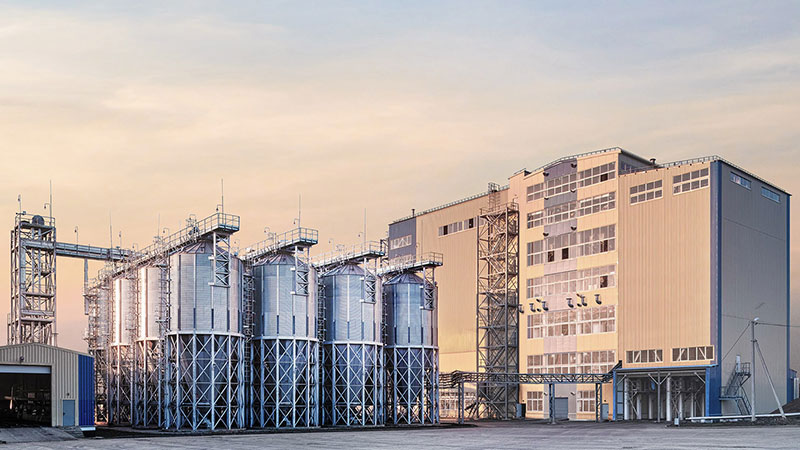
At RICHI, we go beyond project completion. With RICHI Servicee, we’re your dedicated partners in success. Count on us for expert guidance, minimal downtime, and optimized productivity. Choose RICHI for unmatched service and support.
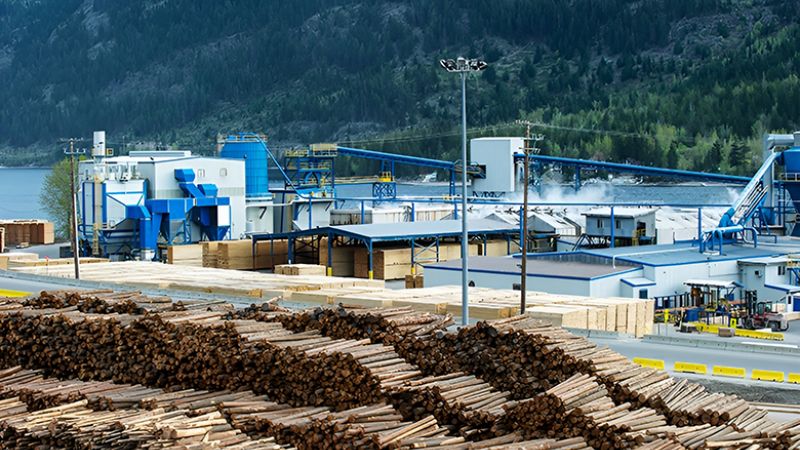


Meet global product demands and quality standards with industry-leading pellet plant design, engineering, equipment, and construction services for pellet processors.


Your Partner Beyond Project Completion
2000+ cases
RICHI is the leading designer, manufacturer and builder of pellet plants in the world, completing over 2000 projects in 140 countries across 6 continents.
Read More
Increase plant productivity, profitability, and safety by integrating high quality equipment into your pellet production line. Over the years, RICHI has become China's top pellet equipment manufacturer. At the same time, RICHI has established valuable partnerships with the world's leading component and raw material manufacturers to bring you the best there is in technology, automation, and efficiency in pelleting plant machinery.

For nearly 30 years, RICHI has been providing best-in-class pellet plant equipment and services to clients across a variety of industries, sizes, and needs. We pride ourselves on the knowledge and skill that each team member possesses – from our technical sales team to our process design engineers. You can count on RICHI Machinery to take your operation to the next level of innovation, quality, and success.
Need help with your pellet manufacturing plant project? Contact us today.
ANIMAL FEED
BIOMASS
WOOD
ORGANIC FERTILIZER
AQUA FEED
CAT LITTER
MUNICIPAL WASTE RECYCLING
SPECIAL PELLET PRODUCTION
RICHI Machinery continues to deliver world class pellet mill equipment, pellet plant engineering and project solutions that add value to our customers in the animal feed, wood waste, agriculture waste, organic fertilizer, cat litter and special pellet products industries. Throughout the years, we RICHI Machinery have built strong brand, becoming industry-leading pellet machine manufacturer. We value integrity, promise quality, and prioritize your success.
Learn MoreWith our expert team, we precisely implement your process engineering requirements in pellet mill and pelletizing plant systems. No matter which industry you’re in – we understand your needs and deliver solutions that meet the highest standards.
At RICHI, quality comes first. Our pellet making machine and related pellet line equipment undergo rigorous quality controls to ensure they meet the highest standards. Rely on products that are durable, safe, and efficient.
With decades of experience in pellet machine and pellet production line production, we have earned a reputation as a trusted partner in various industries. Our expertise allows us to cover a wide range of applications.
Not only do we offer premium pelleting equipment, but we are also experts at designing, building, installing, and maintaining facilities from the ground up. Our expertise is within pellt plant process design, discovering the most efficient, productive, and profitable way to handle your materials in an end-to-end cycle.
○ RICHI MACHINERY
Keeping in touch with us is an effective way to solve all your problems. If you have any needs or questions, please leave your contact information, then RICHI technical consultants will send design, quotation, videos to your mailbox. You can also contact us directly via WhatsApp: +86 13838389622
Copyright©2015-2026 by HENAN RICHI MACHINERY CO., LTD. All rights reserved.