
The 8t/h agricultural waste powder organic fertilizer production line in Argentina was born from a very practical challenge: a mid‑sized agricultural supplier in the Pampas region needed to solve a growing waste and soil fertility problem at the same time.
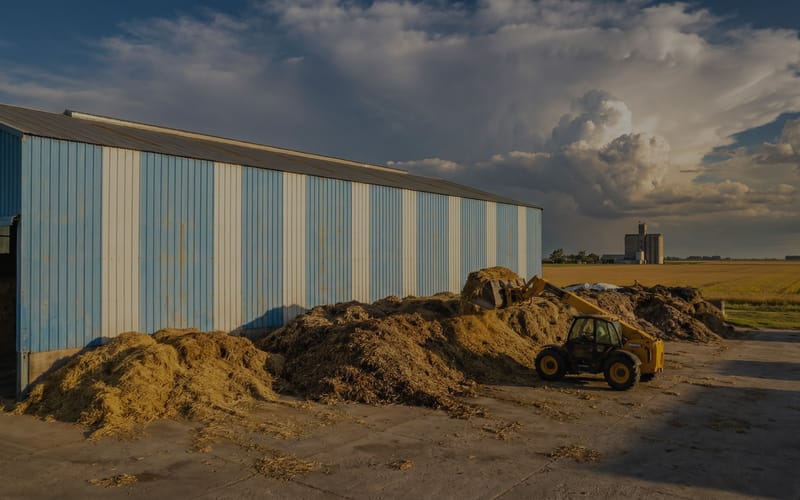
The 8t/h agricultural waste powder organic fertilizer production line in Argentina was born from a very practical challenge: a mid‑sized agricultural supplier in the Pampas region needed to solve a growing waste and soil fertility problem at the same time. On one hand, regional farms produce large volumes of agricultural residues — rice husks, straw, sugarcane bagasse and pond sludge — that are difficult and expensive to manage. On the other hand, local farmers were seeking cost‑effective organic fertilizer to improve soil structure without relying on imported chemical formulations.
Instead of buying off‑the‑shelf fertilizer that fluctuated in price and quality, the client envisioned a facility that could process agricultural waste into high‑value organic products. After several planning discussions, they opted for a production line with a processing capacity of 8 tons per hour, aiming at an annual output of 10,000 tons of traditional organic fertilizer and 10,000 tons of microbial fertilizer. This plant would serve not only local agricultural cooperatives but also emerging organic farming sectors focused on water‑retentive soils and sustainable cropping systems.
The 8t/h agricultural waste powder organic fertilizer production line in Argentina combines simple robust engineering with effective biological processing. The core idea was to let biological activity — not complex machinery — do most of the “work,” while maintaining good environmental controls and easy operation.
Name:
agricultural waste powder fertilizer line
Country:
Argentina
Date:
2025
Capacity:
8T/H
Product Type:
Organic Fertilizer& Organic Fertilizer
Fertilizer Form:
powder
Raw Materials:
straw, husks, bagasse, Manure, Pond Sludge
Annual Output:
20000 Tons
Choosing Argentina for this project was not random. The Pampas and neighboring provinces have:
Unlike highly industrialized fertilizer markets in Europe or North America, Argentina offered an opportunity to link waste valorization with local agricultural productivity. For the client, the 8t/h line was not about maximizing throughput alone — it was about making a product that farmers would use year after year.
The organic fertilizer production project covers a total site area of 10,510 m², with a 10,180 m² built facility that houses production, storage, and auxiliary spaces. The plant is organized to ensure smooth material flow from raw inputs to finished powder.
The plant was designed to achieve two product lines:
| Product Type | Annual Output (t) |
|---|---|
| Organic Fertilizer | 10,000 |
| Microbial Fertilizer | 10,000 |
These products meet Argentine agricultural standards for organic soil amendments, including:
The success of this 8t/h agricultural waste powder organic fertilizer production line in Argentina hinges on balanced raw inputs and consistent quality. The main raw materials were selected for availability and biological compatibility:
| Raw Material | Annual Usage (tons) | Description | Moisture |
|---|---|---|---|
| Agricultural Residues (straw, husks, bagasse) | 1,000 | Cellulose‑rich wastes for carbon source | ~20% |
| Pond Sludge | 2,000 | Sludge from farm ponds and irrigation sediment | ~50% |
| Furfural Residue | 3,000 | By‑product from furfural processing | ~40% |
| Poultry / Livestock Manure | 4,000 | Farm manure, mainly chicken manure | ~55% |
| Biological Deodorant | 10 | For odor control | — |
| Microbial Agents | 10 | Mixed strains for fermentation | — |
The original Argentine raw material mix was slightly wetter than anticipated during pilot tests. That influenced our recommendation on moisture control and aeration during mixing.
Equipment was selected to match the 8t/h agricultural waste powder organic fertilizer production line in Argentina capacity with ease of maintenance, given the region’s labor and parts availability.
| No. | Equipment | Quantity | Function |
|---|---|---|---|
| 1 | Front‑end Loader | 1 | Material handling |
| 2 | Excavator | 1 | Mixing and pile movement |
| 3 | Industrial Crusher | 1 | Size reduction of fermented material |
| 4 | Packaging Machine | 1 | Final packing |
| 5 | Mixing Tank | 2 | Blend raw inputs evenly |
Buildings were configured to place fermentation zones close to mixing, reducing material handling time.
Instead of a technical flowchart, here’s how the line actually operates on a day‑to‑day basis:
Environmental controls were designed in line with Argentine regulations and practical site constraints:
With 16 employees living onsite, the agricultural waste powder organic fertilizer production line in Argentina project adopted a two‑shift system (8 hours each) over 300 working days per year. Workers include:
This on‑site residency reduced commuting delays and ensured rapid response to unexpected issues like pile temperature spikes or equipment overloads.
All major processing equipment was shipped from Qingdao Port, China. The destination port in Argentina was Port of Buenos Aires, a major entry point with inland logistics access.
Estimated equipment and installation costs for this 8t/h agricultural waste powder organic fertilizer production line in Argentina were kept competitive:
Overall, the investment aligns with global averages for similar capacity plants and supports rapid payback through fertilizer sales.
Argentina’s agricultural sector is dynamic. Farmers increasingly seek organic solutions for:
Moreover, the organic fertilizer market in Argentina is growing at ~6–8% annually, driven by horticulture, viticulture, and sustainable cropping systems.
For projects like this, local cooperatives and export partners often value traceable, high‑quality organic inputs, creating opportunities beyond domestic use.
The 8t/h agricultural waste powder organic fertilizer production line in Argentina isn’t just a processing plant — it’s a bridge between sustainable waste management and profitable agricultural inputs.
From initial client discussions about “what to do with all this residue” to early production runs and first sales contracts, this project shows how practical engineering, proper raw material planning, and biological know‑how can turn challenges into value.
If you’re considering a similar project or want to evaluate your raw material mix for a site‑specific proposal, RICHI Machinery’re ready to walk through your numbers — raw moisture balances, microbial strategies, and realistic production estimates — with you.
Let’s talk about turning agricultural waste into soil‑improving products people actually want to use.
Having the right mix of reliable, high-quality pellet machine and pelletizing systems and expert support is essential to your success. Watch how our end-to-end feed pellet plant solutions have helped our customers optimize their performance.
Our customized and future-proofed turnkey pellet plant solutions is designed with you at the core. From vision to reality and beyond, our team stays connected with yours. Giving you peace-of-mind with an expert at your side.
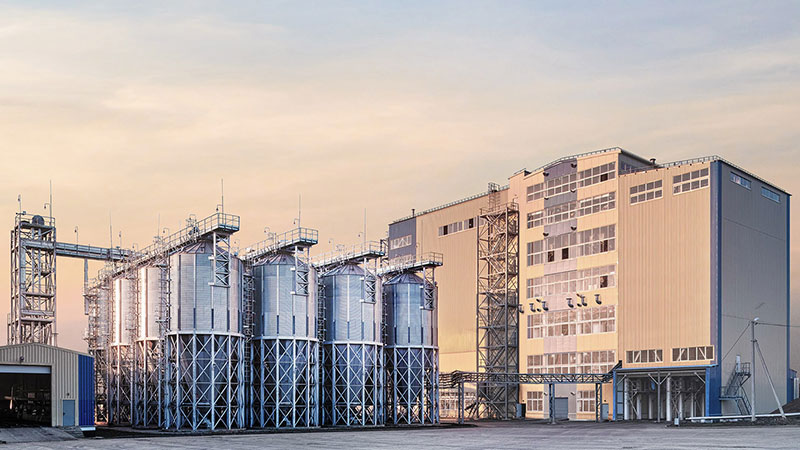
At RICHI, we go beyond project completion. With RICHI Servicee, we’re your dedicated partners in success. Count on us for expert guidance, minimal downtime, and optimized productivity. Choose RICHI for unmatched service and support.
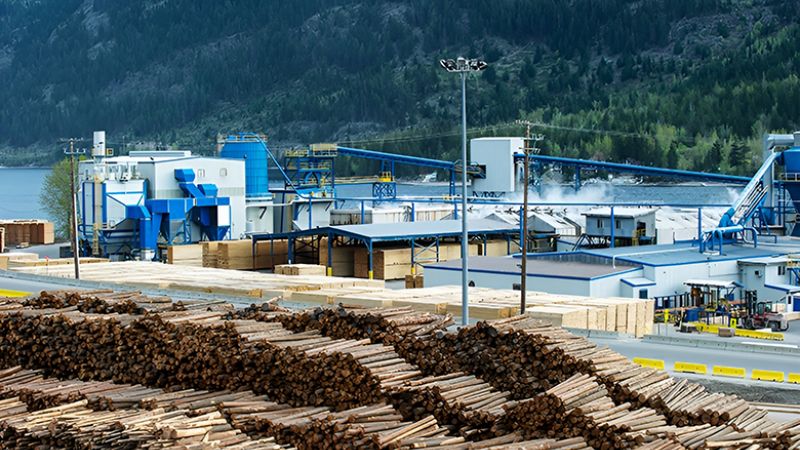


Meet global product demands and quality standards with industry-leading pellet plant design, engineering, equipment, and construction services for pellet processors.


Your Partner Beyond Project Completion
2000+ cases
RICHI is the leading designer, manufacturer and builder of pellet plants in the world, completing over 2000 projects in 140 countries across 6 continents.
Read More
Increase plant productivity, profitability, and safety by integrating high quality equipment into your pellet production line. Over the years, RICHI has become China's top pellet equipment manufacturer. At the same time, RICHI has established valuable partnerships with the world's leading component and raw material manufacturers to bring you the best there is in technology, automation, and efficiency in pelleting plant machinery.

For nearly 30 years, RICHI has been providing best-in-class pellet plant equipment and services to clients across a variety of industries, sizes, and needs. We pride ourselves on the knowledge and skill that each team member possesses – from our technical sales team to our process design engineers. You can count on RICHI Machinery to take your operation to the next level of innovation, quality, and success.
Need help with your pellet manufacturing plant project? Contact us today.
ANIMAL FEED
BIOMASS
WOOD
ORGANIC FERTILIZER
AQUA FEED
CAT LITTER
MUNICIPAL WASTE RECYCLING
SPECIAL PELLET PRODUCTION
RICHI Machinery continues to deliver world class pellet mill equipment, pellet plant engineering and project solutions that add value to our customers in the animal feed, wood waste, agriculture waste, organic fertilizer, cat litter and special pellet products industries. Throughout the years, we RICHI Machinery have built strong brand, becoming industry-leading pellet machine manufacturer. We value integrity, promise quality, and prioritize your success.
Learn MoreWith our expert team, we precisely implement your process engineering requirements in pellet mill and pelletizing plant systems. No matter which industry you’re in – we understand your needs and deliver solutions that meet the highest standards.
At RICHI, quality comes first. Our pellet making machine and related pellet line equipment undergo rigorous quality controls to ensure they meet the highest standards. Rely on products that are durable, safe, and efficient.
With decades of experience in pellet machine and pellet production line production, we have earned a reputation as a trusted partner in various industries. Our expertise allows us to cover a wide range of applications.
Not only do we offer premium pelleting equipment, but we are also experts at designing, building, installing, and maintaining facilities from the ground up. Our expertise is within pellt plant process design, discovering the most efficient, productive, and profitable way to handle your materials in an end-to-end cycle.
○ RICHI MACHINERY
Keeping in touch with us is an effective way to solve all your problems. If you have any needs or questions, please leave your contact information, then RICHI technical consultants will send design, quotation, videos to your mailbox. You can also contact us directly via WhatsApp: +86 13838389622
Copyright©2015-2026 by HENAN RICHI MACHINERY CO., LTD. All rights reserved.